




CRST Seeks Driver-In-Front-Seat Training Exemption
FMCSA is seeking comment on an exemption sought by CRST from the rule that requires the holder of a commercial learner's permit to always be accompanied by a commercial driver's license holder seated in the front seat while the CLP holder performs behind-the-wheel training on the road.


Image: CRST Expedited
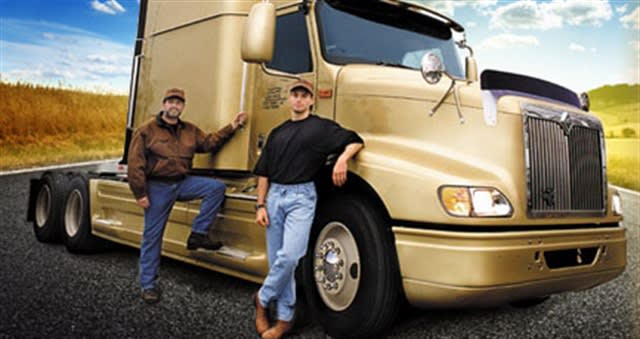
Image: CRST Expedited
The Federal Motor Carrier Safety Administration is seeking public comment on an exemption sought by CRST Expedited from the rule that requires the holder of a commercial learner's permit (CLP) to always be accompanied by a commercial driver's license holder (with the proper CDL class and endorsements) seated in the front seat of the vehicle while the CLP holder performs behind-the-wheel training on the road.
Per a notice posted in the Federal Register for Jan. 5, the agency said that “CRST states that the CDL holder would remain in the CMV at all times while the CLP holder is driving, but not necessarily in the passenger seat. CRST believes that the exemption, if granted, would promote greater productivity and help individuals who have passed the CDL skills test return to actively earning a living faster while achieving a level of safety that is equivalent to or greater than the level of safety provided by complying with the regulations.”
FMCSA advised that CRST indicates in its exemption request that the CDL holder will remain in the vehicle at all times while the CLP holder is driving-- just not in the front seat.
The motor carrier further requests that the CLP holder be allowed to drive for the remainder of the time available on the driver's CLP before expiration, provided the driver can supply evidence of passing the CDL exam to law enforcement personnel.
CRST contends that compliance with the current CDL rule negatively affects how they return a CLP holder who has passed his or her skills testing back to their State of domicile to obtain their CDL.
According to CRST, the two possible courses of action in this scenario are simple, yet costly: (1) CRST sends CLP holders to their home State by public transportation to obtain the CDL and hopes the drivers return to CRST for employment; and (2) CRST sends CLP holders back to their home State as passengers on one of its trucks.
FMCSA said CRST’s exemption request details the negative consequences of those courses of action. These include:(1) The new drivers would suffer financially because it could be several days or even weeks before they obtain their home State CDL and are available to return to work; (2) Safety would also be degraded in these situations because there will be a break in driving for CLP holders who have passed the skills test until they can receive their CDL and return to CRST to start work; (3) Increased costs to CRST for public transportation to return CLP holders who have passed the skills test in another State to their home State for issuance of the CDL; (4) Further financial loss as CRST would undoubtedly lose control of some CLP holders once they returned home and obtained their CDL—as they may find employment elsewhere, or in a different industry; and (5) If CRST elected to send CLP holders who have passed their skills test home on a CRST truck, CRST must operate at double the cost for half of the productivity.
Comments on CRST's application for exemption (Docket No. FMCSA-2015-0480)must be received on or before February 4, 2016 Comments may be submitted via any of these methods:
Federal eRulemaking Portal: www.regulations.gov. Follow the online instructions for submitting comments.
Fax: 1-202-493-2251
Mail: Docket Management Facility, U.S. Department of Transportation, 1200 New Jersey Avenue SE., West Building, Ground Floor, Room W12-140, Washington, DC 20590-0001.
Hand Delivery or Courier: West Building, Ground Floor, Room W12-140, 1200 New Jersey Avenue SE., between 9 a.m. and 5 p.m., Monday through Friday, except Federal holidays.
DOT posts all comments received-- without change-- to www.regulations.gov, including any personal information included.
More Drivers

Platform Science Adds Dispatch and Safety Tools
Four additions to PS Fleet help fleets monitor loads, manage driver coaching, share truck locations and adjust video system settings.
Read More →
When Language Stops the Truck: The Return of ELP Out-of-Service Orders
English language proficiency rules for commercial drivers aren’t new, but renewed out-of-service enforcement has raised the stakes. Here’s what carriers need to know before a driver reaches a roadside inspection.
Read More →
Samsara Launches Custom AI Agent Builder
Agent Studio lets fleets create AI tools for hours-of-service monitoring, reporting and driver support, including agents that communicate by phone.
Read More →
Trucker Path Expands Reserved Parking Network
Trucker Path has added close to 6,000 more truck parking spaces to its Trucker Path Reserved Parking Network with the addition of Safe Truck Parking.
Read More →
EEOC Sues Texas Trucking Company Over Driver Age Limits
The agency says Trancasa USA rejected applicants over 65 and applied tougher driving-record standards to those over 60.
Read More →
Nussbaum, Roehl Announce Second Driver Pay Increase This Year
This year has seen a swath of major truck driver pay increases as freight capacity has tightened.
Read More →
From One Generation to the Next: How Mentorship Builds Safer Truck Drivers
After three decades in trucking, Harold Perry shares what he's learned about driver safety, mentorship, and helping the next generation build confidence behind the wheel.
Read More →
Truck Drivers Need More Than Another Alert
Fleets have more visibility into truck health, safety events, and driver activity than ever. The next challenge is turning all that information into useful guidance for the person who has to decide what to do next.
Read More →
FMCSA Removes 110 Truck Driver Training Schools from Certified ELDT List
Federal regulators also are targeting more than 160 additional training providers and launching a nationwide audit of third-party CDL skills testers as part of a broader crackdown on trucking fraud.
Read More →
Hours of Service Pilot Programs: FMCSA Readies for 2027 Rollout
Two pilot programs could eventually reshape hours-of-service rules, giving truck drivers options to pause their 14-hour clock or use longer split sleeper rest periods.
Read More →