




Related: Webasto SmarTemp Control Available From the Factory
Driver Friendly Options Added to Cascadia and Cascadia Evolution
Freightliner has added driver-friendly options to its Cascadia and Cascadia Evolution models to add to comfort, safety, health and productivity.
by Staff
April 9, 2015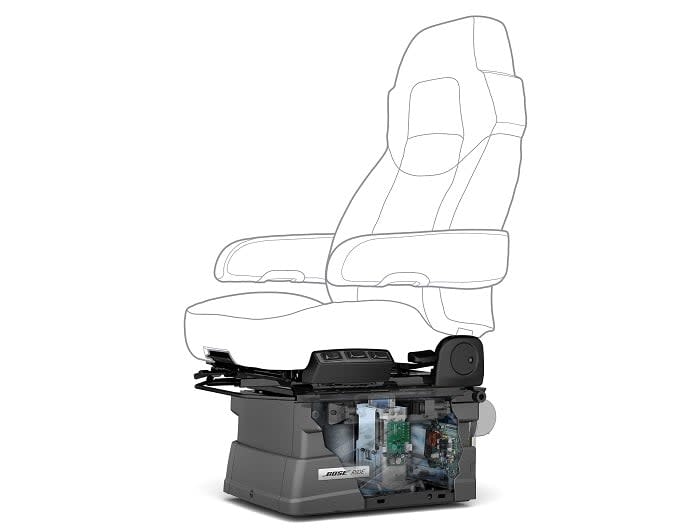
The Bose ride system coutneracts the shaking and jarring potentially experienced by drivers on the road. Image:Freightliner
2 min to read
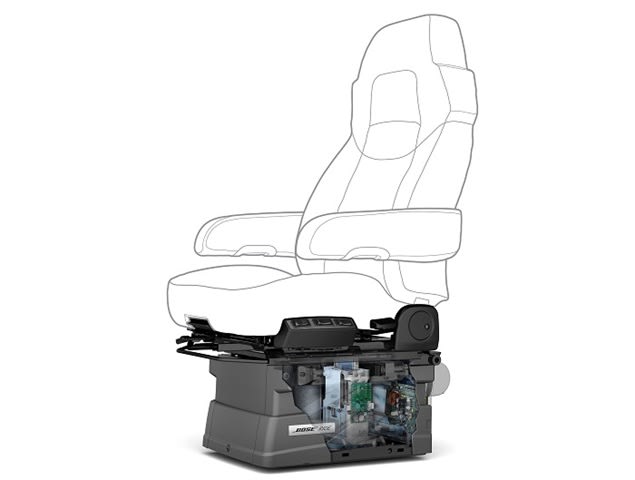
The Bose ride system coutneracts the shaking and jarring potentially experienced by drivers on the road.Image:Freightliner
Freightliner has added driver-friendly options to its Cascadia and Cascadia Evolution models to add to comfort, safety, health and productivity. Freightliner has also collaborated with Rolling Strong to offer the FIT Step– an in-cab cardio exercise and endurance enhancement system.
New options for the trucks include a Bose Ride system II truck seat suspension, SmarTire Tire Pressure Monitoring System from Bendix CVS and a Flat Screen TV mount with an antenna. The OEM said the Cascadia and Cascadia Evolution were built with driver experience in mind, which is why it offers options designed to appeal to drivers.
The Bose Ride system II truck seat suspension is designed to reduce fatigue and pain levels from sitting. The Bose features sensors and a regenerative electromagnetic motor to counteract the shaking and jarring experienced by drivers on the road.
This version of the Bose Ride features a ride-control selector allowing a driver to enhance their ride as well as improved seat-top ergonomics for better comfort. It also includes a built-in driver orientation module to help first-time users understand how to use the system.
The SmarTire TPMS from Bendix CVS shows real-time pressure and temperature status on a dash display, informing the driver of tire problems on the road. The sensor is mounted inside of the tire on the wheel to capture accurate tire temperature and pressure and to protect the sensor from damage.
Also, drivers of the Cascadia and Cascadia Evolution can now add a swivel TV mount for up to a 26-inch flat screen TV with an antenna that can be securely stored when not in use.
Lastly, the FIT Step is designed to work with the Freightliner In-Cab Training System, which provides full body strength and conditioning workouts. Developed by Daimler Trucks North America and Rolling Strong, the FIT System is an OEM designed and integrated in-cab exercise and flexibility system. FIT Step enhances the FIT System’s training by adding a cardiovascular and endurance workout to the comfort and safety of the truck’s cab.
The FIT Step fits conveniently in-between seats, and can easily be combined with FIT System bands, helping drivers maximize their fitness efforts in a short period of time.
For more information on these and other Freightliner products, click here.
More Drivers

Truck Drivers Need More Than Another Alert
Fleets have more visibility into truck health, safety events, and driver activity than ever. The next challenge is turning all that information into useful guidance for the person who has to decide what to do next.
Read More →
FMCSA Removes 110 Truck Driver Training Schools from Certified ELDT List
Federal regulators also are targeting more than 160 additional training providers and launching a nationwide audit of third-party CDL skills testers as part of a broader crackdown on trucking fraud.
Read More →
Hours of Service Pilot Programs: FMCSA Readies for 2027 Rollout
Two pilot programs could eventually reshape hours-of-service rules, giving truck drivers options to pause their 14-hour clock or use longer split sleeper rest periods.
Read More →
Medical Cards, English Proficiency Reshape Roadcheck Violations
Medical-card violations jumped to the top of the driver out-of-service list during CVSA’s 2026 International Roadcheck, while English-language proficiency violations appeared among the leading violations for the first time.
Read More →
Driver Trust Can Make or Break the Success of Fleet Safety Technology
New Teletrac Navman research suggests that onboarding, transparency about driver data, and positive feedback can play a significant role in how commercial drivers respond to safety and coaching technology.
Read More →
EEOC Sues KLLM Over Alleged Sex Discrimination in Driver Training
KLLM is facing a federal sex-discrimination lawsuit over policies the EEOC alleges put female truck driver trainees at a disadvantage.
Read More →
FMCSA Moves to Codify English Language Requirements for Commercial Drivers
By changing regulations on English-language proficiency requirements for commercial drivers, rather than relying on a guidance memo, the FMCSA said future administrations won't be able to walk back the Trump administration's stricter enforcement with just a memo.
Read More →
Drivers Put Western Star Trucks to the Test at Star Nation Experience
Watch to get an inside look at the Western Star trucks, technology, and community behind the Star Nation Experience 2026!
Read More →
Trump Administration Looks to Put More Veterans Behind the Wheel
The Freedom Haulers program pulls together existing and expanded programs at several federal agencies to recruit veterans to drive commercial heavy-duty trucks and cut the red tape for them to get a CDL, training, and employment.
Read More →
Putting Mack’s Command Steer to the Test
A test drive of Mack’s Command Steer active steering system evaluates how it can make truck driving easier and less tiring.
Read More →