




FMCSA Posts Plan to Negotiate Driver Training Rule
The Federal Motor Carrier Safety Administration is going ahead with its plan to negotiate the terms of a rule covering entry-level driver training.
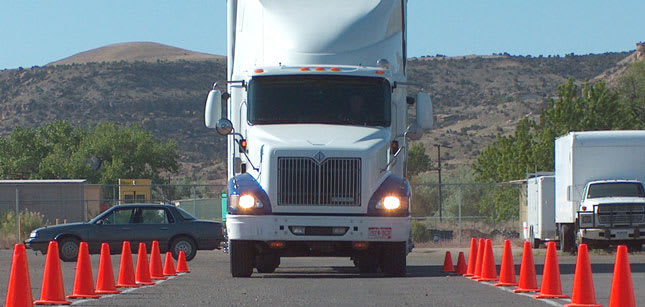
The Federal Motor Carrier Safety Administration is going ahead with its plan to negotiate the terms of a rule covering entry-level driver training.
The agency is opting for negotiations because it has not been able to reconcile the industry’s differences over such a rule. Carriers, driver groups, trainers, state agencies, safety advocates and insurance companies generally agree on the concept but cannot come to terms on how the rule should work.
In a notice scheduled for publication this week, the agency is proposing to establish an advisory committee representing all of the factions. It is asking for nominations of representatives from a wide range of industry interest groups, including the American Trucking Associations, the Commercial Vehicle Safety Alliance, the Owner-Operator Independent Drivers Association, Advocates for Highway and Auto Safety, the Teamsters union, state agencies, bus groups and Women in Trucking.
The agency intends to ask the committee to address training requirements including time behind the wheel, the costs and benefits of the rule, accreditation of schools and the possibility of a performance-based approach rather than prescribing how many hours the training should take.
The agency said it expects the committee to meet regularly between next February and June.
At the same time, the agency is working on a survey of newly licensed drivers concerning the relationship between their training and their safety performance.
Meanwhile, there is an outstanding legal action against the agency over this issue. Safety advocates and the Teamsters union have sued to force the agency to go ahead with the rulemaking.
More Drivers

Truck Drivers Need More Than Another Alert
Fleets have more visibility into truck health, safety events, and driver activity than ever. The next challenge is turning all that information into useful guidance for the person who has to decide what to do next.
Read More →
FMCSA Removes 110 Truck Driver Training Schools from Certified ELDT List
Federal regulators also are targeting more than 160 additional training providers and launching a nationwide audit of third-party CDL skills testers as part of a broader crackdown on trucking fraud.
Read More →
Hours of Service Pilot Programs: FMCSA Readies for 2027 Rollout
Two pilot programs could eventually reshape hours-of-service rules, giving truck drivers options to pause their 14-hour clock or use longer split sleeper rest periods.
Read More →
Medical Cards, English Proficiency Reshape Roadcheck Violations
Medical-card violations jumped to the top of the driver out-of-service list during CVSA’s 2026 International Roadcheck, while English-language proficiency violations appeared among the leading violations for the first time.
Read More →
Driver Trust Can Make or Break the Success of Fleet Safety Technology
New Teletrac Navman research suggests that onboarding, transparency about driver data, and positive feedback can play a significant role in how commercial drivers respond to safety and coaching technology.
Read More →
EEOC Sues KLLM Over Alleged Sex Discrimination in Driver Training
KLLM is facing a federal sex-discrimination lawsuit over policies the EEOC alleges put female truck driver trainees at a disadvantage.
Read More →
FMCSA Moves to Codify English Language Requirements for Commercial Drivers
By changing regulations on English-language proficiency requirements for commercial drivers, rather than relying on a guidance memo, the FMCSA said future administrations won't be able to walk back the Trump administration's stricter enforcement with just a memo.
Read More →
Drivers Put Western Star Trucks to the Test at Star Nation Experience
Watch to get an inside look at the Western Star trucks, technology, and community behind the Star Nation Experience 2026!
Read More →
Trump Administration Looks to Put More Veterans Behind the Wheel
The Freedom Haulers program pulls together existing and expanded programs at several federal agencies to recruit veterans to drive commercial heavy-duty trucks and cut the red tape for them to get a CDL, training, and employment.
Read More →
Putting Mack’s Command Steer to the Test
A test drive of Mack’s Command Steer active steering system evaluates how it can make truck driving easier and less tiring.
Read More →