




Carriers Look for HOS Flexibility to Ease Port Congestion
Trucking interests are preparing a request for temporary flexibility in the hours of service rules to help ease the congestion that is plaguing major ports. “We need some relief now,” said Curtis Whalen, executive director of the American Trucking Associations Intermodal Motor Carriers Conference.



Trucking interests are preparing a request for temporary flexibility in the hours of service rules to help ease the congestion that is plaguing major ports.
“We need some relief now,” said Curtis Whalen, executive director of the American Trucking Associations Intermodal Motor Carriers Conference.
Whalen said ATA is working with the California Trucking Association and the Southern California Harbor Trucking Association to craft a petition to the Federal Motor Carrier Safety Association.
Their immediate focus is the ports of Los Angeles and Long Beach but if they are successful they will expand their effort to other ports where congestion is a problem, such as New York, New Jersey and Virginia, Whalen said.
The petition will not be a one-size-fits-all solution, he said. Each port has its own operating characteristics and may require different treatment.
For the California ports, the carrier groups are looking at the possibility of a temporary waiver so waiting time will not be counted as on-duty time, Whalen said.
They also are considering asking for relief from the 34-hour restart provision, which requires drivers to take off two successive periods between 1 a.m. and 5 a.m. during their restart.
The problem, Whalen said, is that the restart can limit the effectiveness of the traditional methods of dealing with congestion, such as extending gate hours or opening gates on the weekend.
“We’re trying to figure out how we can get some relief there which does not impact safety,” he said.
The groups are meeting this week and if they can draft a suitable petition they will send it to the agency as soon as possible, he said.
At issue is the slowdown in container movements at West Coast ports due to bigger ships, seasonal high traffic volumes and uncertainty surrounding stalled labor negotiations between the International Longshore and Warehouse Union and the Pacific Maritime Association.
The labor contract expired last July and shippers and carriers are increasingly concerned that the situation could lead to a shutdown of West Coast ports.
A group of carrier interests, including ATA, recently joined shippers in a plea to President Obama for quick action, including support for a federal mediator.
“We have seen crisis levels of congestion at the ports since September,” they said in a Nov. 6 letter to Obama.
A related problem is that ports are losing drivers because they can’t make a living operating with the long wait times, Whalen said.
“They’re taking their CDLs and going to other areas of trucking, and there is no reason to expect that they will immediately come back, assuming we can solve congestion,” he said.
More Drivers

New Independent Contractor Rule Gives Trucking More Clarity
The Labor Department is once again changing how it determines who's an independent contractor. This time, the rule includes specific examples addressing trucking safety requirements, CDLs, and lease-purchase agreements.

Catching Driver Fatigue is One Thing. What You Do Next Matters Just as Much
Fleets are getting better at detecting driver drowsiness. Few have figured out what should happen next, and that gap is where the real risk still lives.

133 ELDs Revoked as ATA Pushes Certification Reform
FMCSA just removed a record number of electronic logging devices from its registry. ATA says it's time to rethink how ELDs get approved in the first place.

CVSA Sets 2027 International Roadcheck Dates
The annual 72-hour truck inspection blitz will take place May 11–13 across North America. Here's what fleets can expect and what inspectors found during the 2026 event.

FDA Eases Path for Oral-Fluid Testing
Federal actions could advance oral-fluid drug testing for truck drivers, but lab certification delays and marijuana rescheduling questions remain.

Why Hiring Truck Drivers Is Getting Harder
Higher recruiting costs, a shrinking driver pool, and renewed pay competition are raising the stakes for fleets heading into 2027.
Roehl Offers Truck Drivers $10,000 Retention Incentive
Payments begin after the first load and continue in mileage-based installments for eligible experienced drivers joining the fleet.
Platform Science Adds Dispatch and Safety Tools
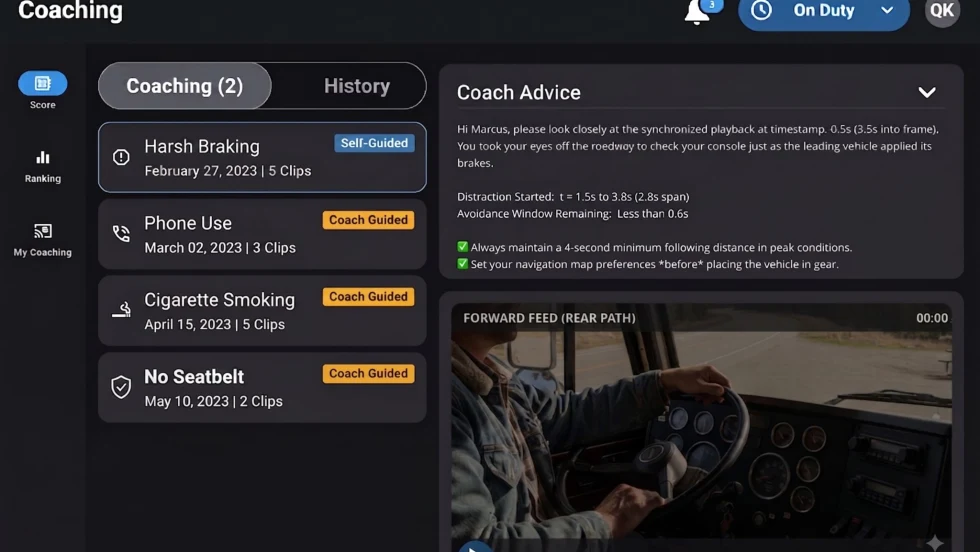
Four additions to PS Fleet help fleets monitor loads, manage driver coaching, share truck locations and adjust video system settings.

When Language Stops the Truck: The Return of ELP Out-of-Service Orders
English language proficiency rules for commercial drivers aren’t new, but renewed out-of-service enforcement has raised the stakes. Here’s what carriers need to know before a driver reaches a roadside inspection.

Samsara Launches Custom AI Agent Builder
Agent Studio lets fleets create AI tools for hours-of-service monitoring, reporting and driver support, including agents that communicate by phone.