




Ferro Discusses Split Sleep Study, CSA, Hours of Service, Electronic Logs at MATS Fleet Forum
MATS, LOUISVILLE -- While encouraging audience members to file their comments on recently proposed legislation for mandatory electronic logs and the agency's research into new-entrant requirements, Federal Motor Carrier Safety Administrator Anne Ferro last week also noted that the agency is going ahead with a pilot study of split sleep.

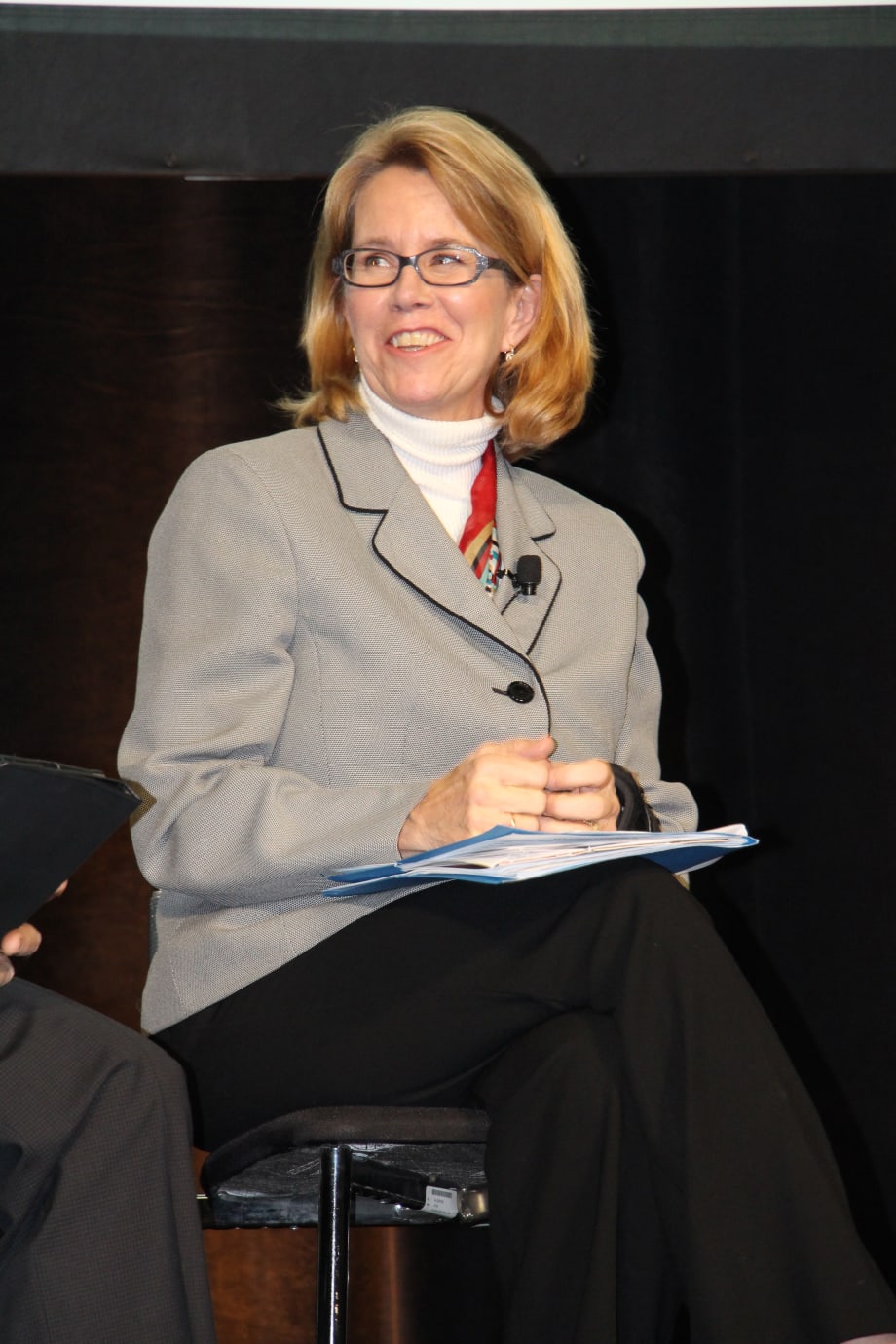
Anne Ferro during the MATS Fleet Forum. Photo: Evan Lockridge
Anne Ferro during the MATS Fleet Forum. Photo: Evan Lockridge
MATS, LOUISVILLE -- While encouraging audience members to file their comments on recently proposed legislation for mandatory electronic logs and the agency's research into new-entrant requirements, Federal Motor Carrier Safety Administrator Anne Ferro last week also noted that the agency is going ahead with a pilot study of split sleep, a provision of revised hours of service regulations that has been sorely missed by some team operations.
Speaking at the Mid-America Trucking Show Fleet Forum event prior to the Mid-America Trucking Show last week, Ferro noted that the agency does respond to feedback and criticism, whether it's from the trucking industry or oversight agencies like the General Accountability Office or the DOT's own inspector general.
Talking about the Compliance, Safety, Accountability enforcement program, Ferro said, "We've got a strong program out there but it’s a program that can always improve. We have an analysis from the GAO, that said we're using too much data … and the NTSB (National Transportation Safety Board) did a scathing analysis and said we're not using our data enough. We're in a little big of a Goldilocks situation."
"Congress has mandated that we reduce commercial motor vehicle crashes, regardless of fault," Ferro emphasized.
One thing you can expect to see, she said, are some changes in the DataQs system, which is used for challenging inaccurate CSA data. When a state violation is dropped, she said, the agency will remove those points from the fleet's CSA scores.
In addition to CSA, another one of FMCSA's recent changes that has drawn industry criticism is last year's new hours of service regulations, particularly the changes to the 34-hour restart.
Ferro addressed criticisms that the changes requiring rest from 1-5 a.m. during the restart are harmful to drivers who regularly drive the night shift.
"Even a nighttime scheduled driver tends to flip back to nighttime sleep when they're off," she said. She said research has shown that daytime sleep is the least recuperative. Night sleep is best, and split sleep is in between.
"Split sleep could be a better option for drivers overnight than what we have today," she said. Recognizing this, she said, and that soon-to-be-mandated electronic logging devices could help police driver behaviors, "we are moving ahead with a pilot study of split sleep to see how you can reintroduce some of that flexibility" that some in the industry lament losing under the latest HOS regs.
The agency is working with the American Trucking Associations, the Owner-Operator Independent Drivers Association and the National Association of Small Trucking Companies to craft a pilot study.
Another thing the agency is studying, she said, is the correlation between payment method and safety. Paying someone by piecework (by the mile) pushes individuals to do more in the same time. Add lengthy unpaid detention times to that, she said, and it can make the situation worse.
"So we are also doing a study on different methods and models of driver compensation. We'll probably have preliminary results on that near the end of 2015."
As head of the Maryland Motor Truck Association before becoming FMCSA Administrator, Ferro said, "I heard time and time again that the key is to get to a level playing field – if the agency is requiring this they need to make sure folks aren't cutting corners.
"We need to continue to work harder to make sure the ones that are cutting corners have what they need to know to get better, the incentives to get better, or the enforcement actions to get them off the street."
However, Ferro noted that "the rules -- the theories, the research and the data analysis behind those rules -- are realized on the road with that driver, that carrier, that piece of equipment. We need to be familiar with the industry and how it's operating within those rules."
To get a better sense of that, she said, last fall she did a ride-along with a small business owner-operator, an overnight trip ("he was kind enough to stay in hotel while I stayed in the truck.")
"I was trying to do more listening than talking as he shared the impact of the hours of service rules, what it was like operating in an environment of tremendous unpredictability."
More Drivers

New Independent Contractor Rule Gives Trucking More Clarity
The Labor Department is once again changing how it determines who's an independent contractor. This time, the rule includes specific examples addressing trucking safety requirements, CDLs, and lease-purchase agreements.

Catching Driver Fatigue is One Thing. What You Do Next Matters Just as Much
Fleets are getting better at detecting driver drowsiness. Few have figured out what should happen next, and that gap is where the real risk still lives.
133 ELDs Revoked as ATA Pushes Certification Reform
FMCSA just removed a record number of electronic logging devices from its registry. ATA says it's time to rethink how ELDs get approved in the first place.

CVSA Sets 2027 International Roadcheck Dates
The annual 72-hour truck inspection blitz will take place May 11–13 across North America. Here's what fleets can expect and what inspectors found during the 2026 event.

FDA Eases Path for Oral-Fluid Testing
Federal actions could advance oral-fluid drug testing for truck drivers, but lab certification delays and marijuana rescheduling questions remain.

Why Hiring Truck Drivers Is Getting Harder
Higher recruiting costs, a shrinking driver pool, and renewed pay competition are raising the stakes for fleets heading into 2027.
Roehl Offers Truck Drivers $10,000 Retention Incentive
Payments begin after the first load and continue in mileage-based installments for eligible experienced drivers joining the fleet.
Platform Science Adds Dispatch and Safety Tools
Four additions to PS Fleet help fleets monitor loads, manage driver coaching, share truck locations and adjust video system settings.
When Language Stops the Truck: The Return of ELP Out-of-Service Orders
English language proficiency rules for commercial drivers aren’t new, but renewed out-of-service enforcement has raised the stakes. Here’s what carriers need to know before a driver reaches a roadside inspection.

Samsara Launches Custom AI Agent Builder
Agent Studio lets fleets create AI tools for hours-of-service monitoring, reporting and driver support, including agents that communicate by phone.