




New Report Slams Port Trucking Business Practices
A new report claims to reveal the “enormous scale and shocking costs of an illegal business practice used by employers in the U.S. port trucking industry”
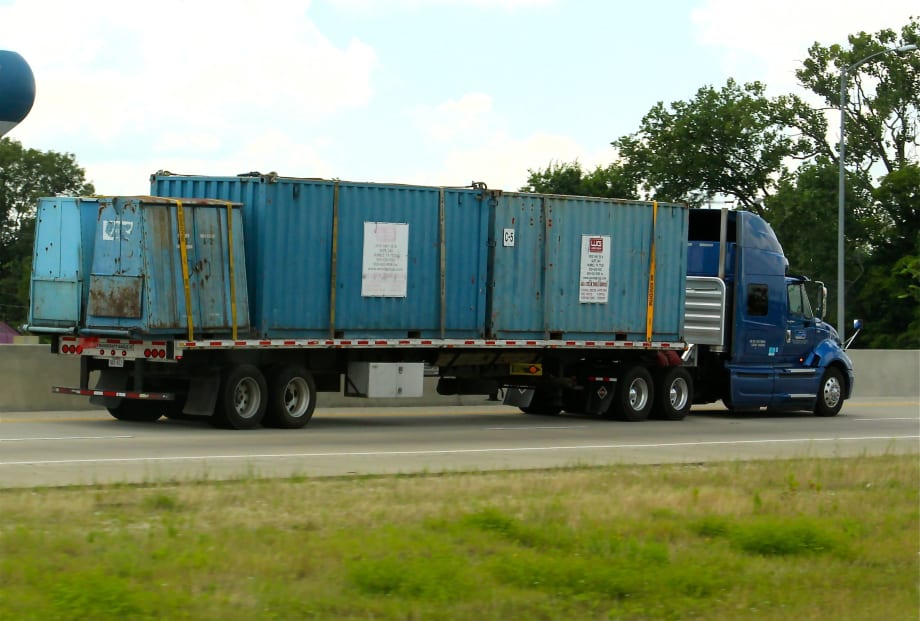
Are port drayage drivers being scammed?
Photo: Evan Lockridge

A new report claims to reveal the “enormous scale and shocking costs of an illegal business practice used by employers in the U.S. port trucking industry.”
“The Big Rig Overhaul: Restoring Middle-Class Jobs at America’s Ports Through Labor Law Enforcement” is a collaboration between the National Employment Law Project, the Los Angeles Alliance for a New Economy, and the Change to Win Strategic Organizing Center. The Teamsters Union is supporting the groups.
It details years of wage theft, labor law violations, safety hazards, and tax evasion through the illegal practice of misclassifying employee drivers as independent contractors, according to a release.
The groups claim worker misclassification has become the port trucking industry’s dominant business model. They describe it as “an unlawful scam amounting to billions of dollars in stolen back wages and lost tax revenue for federal and state governments.”
“As a result of the misclassification scam, port trucking companies are currently liable for an estimated $850 million in stolen wages per year in California alone,” according to the groups.
“Nationally, the total cost of lost tax revenue, compounded with violations of wage and hour laws, is an estimated $1.4 billion annually.”
They say this translates into wage theft amounting to $5,072 per driver per month.
Are Port Truck Drivers Misclassified as Independent Contractors?
The report finds that nearly 50,000 of the nation’s 75,000 port truck drivers are misclassified as independent contractors, rather than employee drivers. It says this artificially suppresses wages and deprives workers of basic labor protections and benefits such as workers’ compensation and unemployment insurance.
“For port truck drivers and many others in related occupations, proper classification can mean the difference between a decent, family-supporting job, and working in poverty,” said Jared Bernstein, senior fellow with the Center on Budget and Policy Priorities, former chief economic advisory to Vice President Joe Biden, and author of the report’s foreword.
“By properly classifying workers as regular employees when that’s what they are, we can lift the paychecks of workers, add to public coffers with the resources they’re owed, and reverse a dangerous tilt in the economic playing field.”
The groups are using the report to push for the passage of three bills in Congress: The Payroll Fraud Prevention Act, the Clean Ports Act of 2013, and the Fair Playing Field Act of 2012. They believe the legislation will, in part, “remedy legal conditions of employee misclassification and its damage to the American economy.”
They say port truck driving jobs were once solid middle-class jobs, but conditions have declined over last 30 years as “a result of deregulation, rampant misclassification, and workplace laws that have failed to keep up with a fast-changing economy,” creating what it calls “a case study in economic inequality and the hollowing out of the American middle class.”
More Drivers

Truck Drivers Need More Than Another Alert
Fleets have more visibility into truck health, safety events, and driver activity than ever. The next challenge is turning all that information into useful guidance for the person who has to decide what to do next.
Read More →
FMCSA Removes 110 Truck Driver Training Schools from Certified ELDT List
Federal regulators also are targeting more than 160 additional training providers and launching a nationwide audit of third-party CDL skills testers as part of a broader crackdown on trucking fraud.
Read More →
Hours of Service Pilot Programs: FMCSA Readies for 2027 Rollout
Two pilot programs could eventually reshape hours-of-service rules, giving truck drivers options to pause their 14-hour clock or use longer split sleeper rest periods.
Read More →
Medical Cards, English Proficiency Reshape Roadcheck Violations
Medical-card violations jumped to the top of the driver out-of-service list during CVSA’s 2026 International Roadcheck, while English-language proficiency violations appeared among the leading violations for the first time.
Read More →
Driver Trust Can Make or Break the Success of Fleet Safety Technology
New Teletrac Navman research suggests that onboarding, transparency about driver data, and positive feedback can play a significant role in how commercial drivers respond to safety and coaching technology.
Read More →
EEOC Sues KLLM Over Alleged Sex Discrimination in Driver Training
KLLM is facing a federal sex-discrimination lawsuit over policies the EEOC alleges put female truck driver trainees at a disadvantage.
Read More →
FMCSA Moves to Codify English Language Requirements for Commercial Drivers
By changing regulations on English-language proficiency requirements for commercial drivers, rather than relying on a guidance memo, the FMCSA said future administrations won't be able to walk back the Trump administration's stricter enforcement with just a memo.
Read More →
Drivers Put Western Star Trucks to the Test at Star Nation Experience
Watch to get an inside look at the Western Star trucks, technology, and community behind the Star Nation Experience 2026!
Read More →
Trump Administration Looks to Put More Veterans Behind the Wheel
The Freedom Haulers program pulls together existing and expanded programs at several federal agencies to recruit veterans to drive commercial heavy-duty trucks and cut the red tape for them to get a CDL, training, and employment.
Read More →
Putting Mack’s Command Steer to the Test
A test drive of Mack’s Command Steer active steering system evaluates how it can make truck driving easier and less tiring.
Read More →