




DOT's Truck Driver Life Expectancy Statistic Is in Question
Recent statements from the Department of Transportation concerning the life expectancy of truck drivers lack statistical backing. At a Nov. 8 conference on driver health in Baltimore, Federal Motor Carrier Safety Administration chief Anne Ferro said in a speech that the life expectancy of a commercial driver is 16 years shorter than the norm
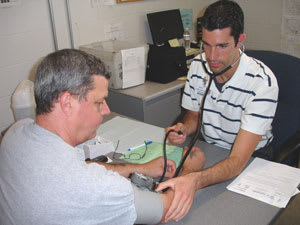
Although there are questions about a statistic on trucker life expectancy used by the FMCSA, the agency points out that there are plenty of other statistics indicating driver health is a problem. (Photo courtesy Celadon)
Recent statements from the Department of Transportation concerning the life expectancy of truck drivers lack statistical backing.
At a Nov. 8 conference on driver health in Baltimore, Federal Motor Carrier Safety Administration chief Anne Ferro said in a speech that the life expectancy of a commercial driver is 16 years shorter than the norm.
"It is a startling, frightening and frankly untenable figure," Ferro said. "There are a host of contributing issues but health is at the heart of it."
Ferro referenced the Centers for Disease Control and Prevention as the source of the statistic, as did Transportation Secretary Ray LaHood in his Sept. 2 Fast Lane blog: "According to the (CDC), the average life expectancy for a commercial truck driver is 61 years. That is 16 years lower than the national average, and I think you'll agree that gap is startling."
Truck driver life expectancy may be shorter than the norm, but the sources FMCSA cited do not support the figure of 16 years shorter. The agency supplied two references.
One is a note in the March 2008 edition of the Roemer Report, which cites a study by Toronto researcher Dr. Martin Moore-Ede. Roemer said the study found "that truck drivers have a 10- to 15-year lower life expectancy than the average American male, who lives on average to age 76."
In response to an inquiry from TruckingInfo, Moore-Ede, the chairman and CEO of the international fatigue management firm Circadian, said that the item is incorrect. "The Web has kept on churning up this incorrect story for over 10 years now," he said. "I have not done such a study (and) I am not a Toronto researcher."
The other reference is a report from a 2003 conference on truck driver occupational safety and health, including a Selective Literature Review. The conference was sponsored by the National Institute for Occupational Safety and Health, which is an arm of the CDC.
The report contains anecdotal references to truck driver life expectancy in the owner-operator and Teamster segments of the industry. John Siebert of the Owner-Operator Independent Drivers Association reported at the 2003 conference that OOIDA data suggests that the average age of death for its members is 55.7 years. Siebert also said that Teamsters union drivers have a life expectancy of 63, citing a union source.
The conference report concluded that these numbers merit further investigation. The first question to be answered, the report said, is whether or not they are accurate.
Health Concerns
In a statement in response to Truckinginfo's inquiry about verification of the 16-year life span deficit, an FMCSA spokesperson said, "We know that a broad range of medical research points to the health concerns that significantly impact the life expectancy of commercial drivers."
There was plenty of scientific evidence at the Baltimore meeting, the first International Conference on Commercial Driver Health and Wellness, to bear this out.
One presenter, Dr. Eric Wood of the University of Utah, reported that his study of mainly long-haul drivers found that half smoke tobacco, 28 percent suffer from hypertension (high blood pressure) compared to 17 percent of manufacturing workers, 25 percent had high cholesterol (compared to 16 percent), 10 percent had diabetes mellitus (compared to 5 percent) and almost 15 percent had sleep apnea. Only 58 percent are covered by health insurance.
Lawrence Cheskin, a professor at Johns Hopkins University, reported that 55 percent of truck drivers are obese with a body mass index of 30 or higher, compared to 33 percent of U.S. men.
"When a commercial truck or bus is in operation, the responsibility for safety rests in the hands of the driver," FMCSA said in its statement. That is why the health and wellness of commercial drivers are critical areas of importance for the (agency).
"FMCSA is eager to work with the commercial motor vehicle and medical communities to encourage a healthier lifestyle and working environment for drivers. We believe that healthier commercial drivers will result in safer drivers and safer roadways."
More Drivers

From One Generation to the Next: How Mentorship Builds Safer Truck Drivers
After three decades in trucking, Harold Perry shares what he's learned about driver safety, mentorship, and helping the next generation build confidence behind the wheel.
Read More →
Truck Drivers Need More Than Another Alert
Fleets have more visibility into truck health, safety events, and driver activity than ever. The next challenge is turning all that information into useful guidance for the person who has to decide what to do next.
Read More →
FMCSA Removes 110 Truck Driver Training Schools from Certified ELDT List
Federal regulators also are targeting more than 160 additional training providers and launching a nationwide audit of third-party CDL skills testers as part of a broader crackdown on trucking fraud.
Read More →
Hours of Service Pilot Programs: FMCSA Readies for 2027 Rollout
Two pilot programs could eventually reshape hours-of-service rules, giving truck drivers options to pause their 14-hour clock or use longer split sleeper rest periods.
Read More →
Medical Cards, English Proficiency Reshape Roadcheck Violations
Medical-card violations jumped to the top of the driver out-of-service list during CVSA’s 2026 International Roadcheck, while English-language proficiency violations appeared among the leading violations for the first time.
Read More →
Driver Trust Can Make or Break the Success of Fleet Safety Technology
New Teletrac Navman research suggests that onboarding, transparency about driver data, and positive feedback can play a significant role in how commercial drivers respond to safety and coaching technology.
Read More →
EEOC Sues KLLM Over Alleged Sex Discrimination in Driver Training
KLLM is facing a federal sex-discrimination lawsuit over policies the EEOC alleges put female truck driver trainees at a disadvantage.
Read More →
FMCSA Moves to Codify English Language Requirements for Commercial Drivers
By changing regulations on English-language proficiency requirements for commercial drivers, rather than relying on a guidance memo, the FMCSA said future administrations won't be able to walk back the Trump administration's stricter enforcement with just a memo.
Read More →
Drivers Put Western Star Trucks to the Test at Star Nation Experience
Watch to get an inside look at the Western Star trucks, technology, and community behind the Star Nation Experience 2026!
Read More →
Trump Administration Looks to Put More Veterans Behind the Wheel
The Freedom Haulers program pulls together existing and expanded programs at several federal agencies to recruit veterans to drive commercial heavy-duty trucks and cut the red tape for them to get a CDL, training, and employment.
Read More →