




New York to Ramp Up Off-Hour Delivery Program
The New York City Department of Transportation has expanded a pilot program that encourages trucks to make off-hour deliveries, rather than peak-hour deliveries
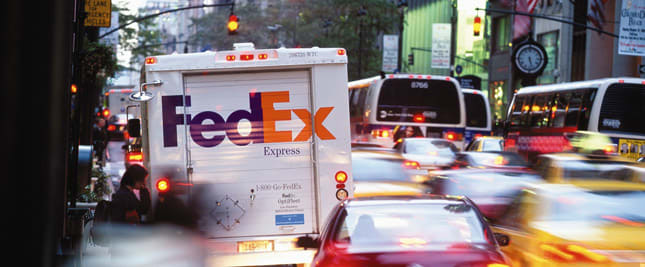
New York City is encouraging truck drivers to make deliveries at night, to avoid traffic congestion. (Photo by FedEx)
The New York City Department of Transportation has expanded a pilot program that encourages trucks to make off-hour deliveries, rather than peak-hour deliveries.
The pilot program, which ran from last September through January, asked 33 truck drivers and receivers to make deliveries between 7 p.m. and 6 a.m. The DOT found that those that participated experienced fewer delays, easier parking, reduced congestion and significant savings. Businesses also saw travel speeds improve by as much as 75 percent and a reduction in parking tickets and fines, which exceeded $1,000 a month for each truck.
"New York is a city that never stops, and neither should its businesses," said Transportation Commissioner Janette Sadik-Khan. "Time is money and this program is a signal to the entire industry that there's an economic model for off-hour deliveries that also helps reduce congestion and pollution."
Freight deliveries into the borough exceed 100,000 daily, with 80 percent made to wholesale, retail and food enterprises. The project was funded with a $1.2 million grant from the Research and Innovative Technology Administration and $640,000 from the project's coordinator Rensselaer Polytechnic Institute (RPI). The pilot also included participation by Rutgers University, New York University's Rudin Center for Transportation Policy and Management at NYU-Wagner and ALK Technologies.
With less competition for parking spaces accessible to the delivery location, trucks spent only 30 minutes stopped at the curbside making deliveries, instead of 100 minutes before the pilot. From beginning to end, delivery routes averaged 48 minutes faster during the pilot.
The project also focused on encouraging businesses to accept off-hour shipments through financial incentives and strategies to make the process easier, such as allowing "unassisted" deliveries-providing a key to the delivery team for a direct delivery or for delivery to a holding area, saving money for businesses that no longer had to have employees present to accept goods.
NYC DOT's Freight Mobility Program is now looking to encourage off-hour deliveries by recognizing and assisting the pilot participants, promoting the off-hour initiative between other carriers and receivers and identifying future supporters, participants and team members.
DOT recognized the participants for demonstrating commitment to sustainability, and gave awards to Sysco, Whole Foods Market, New Deal Logistics and Foot Locker.
"Sysco Metro New York was very pleased with the results of the Off-Peak Delivery Project," said Bobby Heim, vice president of operations, Sysco Metro New York. "Along with Rensselaer, we were able to grow from one route to five routes with the assistance of a program incentive to our customers. Although the program incentives are not in place anymore, we continue to benefit from the remaining four delivery routes."
In 2008, New York City attempted to charge drivers extra tolls to enter the city's most congested neighborhoods during peak hours, but the measure got shot down by the New York Assembly.
The "congestion pricing" proposal, backed by Mayor Michael Bloomberg, would have charged trucks $21 to enter Manhattan south of 60th Street between 6 a.m. and 6 p.m. on weekdays. Cars would have paid $8. City officials said the plan would reduce traffic by an estimated 6 percent, and proceeds would have gone for mass transport projects.
More Drivers

From One Generation to the Next: How Mentorship Builds Safer Truck Drivers
After three decades in trucking, Harold Perry shares what he's learned about driver safety, mentorship, and helping the next generation build confidence behind the wheel.
Read More →
Truck Drivers Need More Than Another Alert
Fleets have more visibility into truck health, safety events, and driver activity than ever. The next challenge is turning all that information into useful guidance for the person who has to decide what to do next.
Read More →
FMCSA Removes 110 Truck Driver Training Schools from Certified ELDT List
Federal regulators also are targeting more than 160 additional training providers and launching a nationwide audit of third-party CDL skills testers as part of a broader crackdown on trucking fraud.
Read More →
Hours of Service Pilot Programs: FMCSA Readies for 2027 Rollout
Two pilot programs could eventually reshape hours-of-service rules, giving truck drivers options to pause their 14-hour clock or use longer split sleeper rest periods.
Read More →
Medical Cards, English Proficiency Reshape Roadcheck Violations
Medical-card violations jumped to the top of the driver out-of-service list during CVSA’s 2026 International Roadcheck, while English-language proficiency violations appeared among the leading violations for the first time.
Read More →
Driver Trust Can Make or Break the Success of Fleet Safety Technology
New Teletrac Navman research suggests that onboarding, transparency about driver data, and positive feedback can play a significant role in how commercial drivers respond to safety and coaching technology.
Read More →
EEOC Sues KLLM Over Alleged Sex Discrimination in Driver Training
KLLM is facing a federal sex-discrimination lawsuit over policies the EEOC alleges put female truck driver trainees at a disadvantage.
Read More →
FMCSA Moves to Codify English Language Requirements for Commercial Drivers
By changing regulations on English-language proficiency requirements for commercial drivers, rather than relying on a guidance memo, the FMCSA said future administrations won't be able to walk back the Trump administration's stricter enforcement with just a memo.
Read More →
Drivers Put Western Star Trucks to the Test at Star Nation Experience
Watch to get an inside look at the Western Star trucks, technology, and community behind the Star Nation Experience 2026!
Read More →
Trump Administration Looks to Put More Veterans Behind the Wheel
The Freedom Haulers program pulls together existing and expanded programs at several federal agencies to recruit veterans to drive commercial heavy-duty trucks and cut the red tape for them to get a CDL, training, and employment.
Read More →