





Related: Feds Withdraw Sleep Apnea Pre-Rule
Scuttling of Sleep Apnea Screening Proposal Draws Heated Reactions
The Trump administration's move to halt progress on a proposal that would have required sleep apnea screening for truck drivers and train engineers was met with largely negative reactions in press reports from around the country and the world.
August 14, 2017

News reports on the Trump adminstration's move to halt a sleep apnea rule for truck drivers were mostly negative in their coverage. Photo: Volvo Group
3 min to read
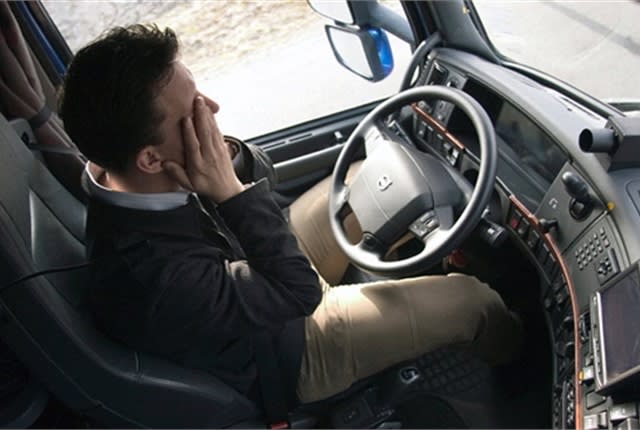
News reports on the Trump adminstration's move to halt a sleep apnea rule for truck drivers were mostly negative in their coverage. Photo: Volvo Group
The Trump administration's decision to halt progress on a sleep apnea screening and alleviation rule for truck drivers earlier this month sent shock waves through the trucking industry and the country at large. Reaction to the decision was decidedly mixed, with numerous commenters decrying the move as a serious safety issue with potentially disastrous consequences for the motoring public. Others zeroed in on the political implications of the Trump administration’s move, while still others felt the regulation was a burdensome overreach that would have hurt productivity.
The bulk of news and opinion pieces presented the news as negative or controversial in nature, with many of the articles focusing on the public safety aspect of the rule and questioning whether fleets and individuals could be counted on to take adequate steps on their own to keep tired drivers off the road.
Here are some of the more interesting and controversial takeaways from around the country (and globe):
One America News Network: “The Former President’s Needless Rules”
The conservative news outlet One America News posted video of truck drivers celebrating the decision to halt progress on a sleep apnea rule and outlining why they feel it is not needed.
Reason.com: “Hysteria Ensues” as “Obscure” Regulation is Blocked
The blog Reason.com, which supports “free minds and free markets,” suggested the onslaught of negative press in the wake of the decision was the “regulatory deep state, fighting tooth and nail to preserve and expand its power in the face of Trump's deregulatory push.”
The Hill: Sleep Apnea Decision “Ignites Safety Debate”
The Hill reports on Congress and federal-level regulatory issues and presented both sides of the issues fairly in its reporting on move to halt progress on a sleep apnea rule.
Fox Business: “Experts: Lives Are At Risk”
Fox News and its associated news outlets are usually reliably in President’s Trump’s corner and adamantly anti-regulation and red tape. This eyebrow-raising headline aside, Fox Business was notably neutral in its assessment of the sleep apnea decision and mainly focused on the train engineer aspect of the rule.
The Daily Mail: “Safety Experts Outraged” by Sleep Apnea Decision
News on the Trump Administration’s decision reached overseas to the U.K., where one of its leading newspapers say it could “put millions of lives at risk.”
North Jersey.com: “A Short-Sighted Move That Puts Profits Over Safety”
Hoboken, New Jersey, was the scene of a horrific commuter train crash just last year. Because of that, a slew of editorials from the Garden State were staunchly opposed to the dropping of the proposed sleep apnea rule.
Ashbury Park Press: “Lawmakers Should Defy Trump” on Sleep Apnea Decision
A letter to the editor in New Jersey’s Ashbury Park Press echoed a similar theme, suggesting that President Trump’s decision was based solely on undoing any position taken by the Obama administration.
New York Daily News: Trump Administration Decision “Will Risk Lives”
The New York Daily News, which has a long-running contentious relationship with President Trump, said the current administration is “asleep at the switch” when it comes to public safety.
El Dorado News-Times: Sleep Apnea Decision Evidence of “Ever-Shrinking Piece of Common Ground"
A journalist for this small Arkansas newspaper saw the Trump administration’s sleep apnea move in the context of the larger debate between regulations and overreach.
Subscribe to Our Newsletter
More Drivers

Why Hiring Truck Drivers Is Getting Harder
Higher recruiting costs, a shrinking driver pool, and renewed pay competition are raising the stakes for fleets heading into 2027.
Read More →
Roehl Offers Truck Drivers $10,000 Retention Incentive
Payments begin after the first load and continue in mileage-based installments for eligible experienced drivers joining the fleet.
Read More →
Platform Science Adds Dispatch and Safety Tools
Four additions to PS Fleet help fleets monitor loads, manage driver coaching, share truck locations and adjust video system settings.
Read More →
When Language Stops the Truck: The Return of ELP Out-of-Service Orders
English language proficiency rules for commercial drivers aren’t new, but renewed out-of-service enforcement has raised the stakes. Here’s what carriers need to know before a driver reaches a roadside inspection.
Read More →
Samsara Launches Custom AI Agent Builder
Agent Studio lets fleets create AI tools for hours-of-service monitoring, reporting and driver support, including agents that communicate by phone.
Read More →
Trucker Path Expands Reserved Parking Network
Trucker Path has added close to 6,000 more truck parking spaces to its Trucker Path Reserved Parking Network with the addition of Safe Truck Parking.
Read More →
EEOC Sues Texas Trucking Company Over Driver Age Limits
The agency says Trancasa USA rejected applicants over 65 and applied tougher driving-record standards to those over 60.
Read More →
Nussbaum, Roehl Announce Second Driver Pay Increase This Year
This year has seen a swath of major truck driver pay increases as freight capacity has tightened.
Read More →
From One Generation to the Next: How Mentorship Builds Safer Truck Drivers
After three decades in trucking, Harold Perry shares what he's learned about driver safety, mentorship, and helping the next generation build confidence behind the wheel.
Read More →
Truck Drivers Need More Than Another Alert
Fleets have more visibility into truck health, safety events, and driver activity than ever. The next challenge is turning all that information into useful guidance for the person who has to decide what to do next.
Read More →