




Would Your Brakes Pass Inspection?
Out-of-adjustment brakes and other brake system violations make up almost half of the out-of-service roadside inspection violations on commercial vehicles.
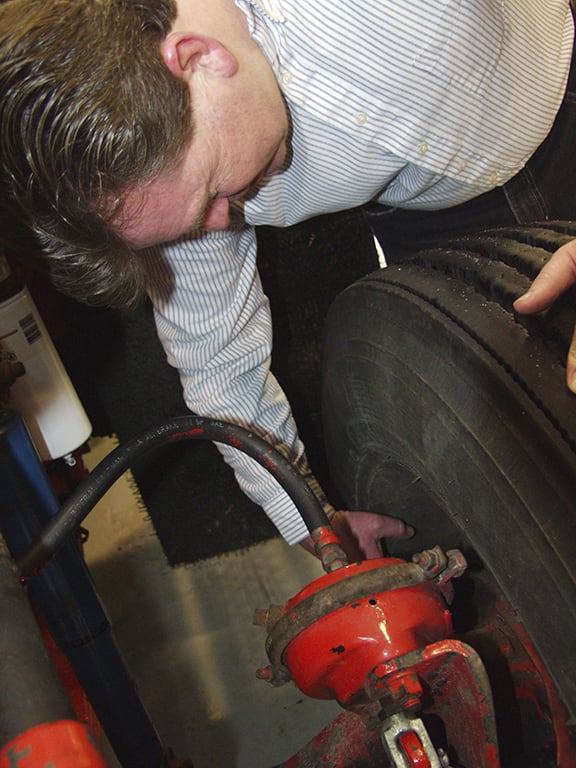
Photo: J.J. Keller
Photo: J.J. Keller
Out-of-adjustment brakes and other brake system violations make up almost half of the out-of-service roadside inspection violations on commercial vehicles.
The first part of making sure that a vehicle’s brake system is in good condition takes place before the vehicle leaves the yard. This involves a check of the brake system’s components and functioning during all preventive maintenance. Under this approach, any time the vehicle is in for scheduled maintenance or for any repair, the brake system is checked by a qualified technician.
The inspection should include the “at the wheel” components, including:
The slack adjuster for condition and free play
All connecting hardware (clevises, jam nuts, pins, connecting rods, etc.) for looseness, damage, and excessive wear
The brake chamber for leaks, mounting, and condition
The airline(s) supplying the chamber for condition, cuts, wear, and rubbing
The brake linings/pads for wear
The brake drum or rotor for wear and cracks
The technician should also conduct an operational check of the overall system, including that:
The system does not leak air
The low-air warning indicators function
The parking/emergency brake system will activate should air pressure fall below minimums
The “tractor protection valve” (unique to tractor-trailers) functions correctly
The other part of maintaining a good brake system is to train drivers on how to correctly inspect the brakes. This includes visually inspecting the “at the wheel” components discussed above, such as the brake chamber, the airlines going to the chamber, the pushrod, connecting hardware, the shoes/pads, and the drums/rotors.
During the walkaround portion of an inspection, the driver should also check all of the airlines, tanks, hoses, and fittings that he/she can see. Drivers need to know how to check all of these components, what to look for, and what is considered “passing and failing.”
Training should also involve teaching drivers how to conduct a “system check” that includes a leak check, a check of the low-air warning device, a test of the emergency brakes, a check of the compressor build-up rate, a check of the parking brakes, and a rolling check of the service brakes.
If maintenance experts are inspecting the brakes during all preventive maintenance checks and drivers are doing a good job with their daily inspections, the brake system should pass inspection – whether it’s Brake Safety Week or at any other time.
For a detailed white paper on how air brakes work, what can go wrong and how to keep them working properly, click here.
Betty Weiland is the senior manager of editorial for transportation at J.J. Keller & Associates. Article used with permission.
More Drivers

FMCSA Removes 110 Truck Driver Training Schools from Certified ELDT List
Federal regulators also are targeting more than 160 additional training providers and launching a nationwide audit of third-party CDL skills testers as part of a broader crackdown on trucking fraud.
Read More →
Hours of Service Pilot Programs: FMCSA Readies for 2027 Rollout
Two pilot programs could eventually reshape hours-of-service rules, giving truck drivers options to pause their 14-hour clock or use longer split sleeper rest periods.
Read More →
Medical Cards, English Proficiency Reshape Roadcheck Violations
Medical-card violations jumped to the top of the driver out-of-service list during CVSA’s 2026 International Roadcheck, while English-language proficiency violations appeared among the leading violations for the first time.
Read More →
Driver Trust Can Make or Break the Success of Fleet Safety Technology
New Teletrac Navman research suggests that onboarding, transparency about driver data, and positive feedback can play a significant role in how commercial drivers respond to safety and coaching technology.
Read More →
EEOC Sues KLLM Over Alleged Sex Discrimination in Driver Training
KLLM is facing a federal sex-discrimination lawsuit over policies the EEOC alleges put female truck driver trainees at a disadvantage.
Read More →
FMCSA Moves to Codify English Language Requirements for Commercial Drivers
By changing regulations on English-language proficiency requirements for commercial drivers, rather than relying on a guidance memo, the FMCSA said future administrations won't be able to walk back the Trump administration's stricter enforcement with just a memo.
Read More →
Drivers Put Western Star Trucks to the Test at Star Nation Experience
Watch to get an inside look at the Western Star trucks, technology, and community behind the Star Nation Experience 2026!
Read More →
Trump Administration Looks to Put More Veterans Behind the Wheel
The Freedom Haulers program pulls together existing and expanded programs at several federal agencies to recruit veterans to drive commercial heavy-duty trucks and cut the red tape for them to get a CDL, training, and employment.
Read More →
Putting Mack’s Command Steer to the Test
A test drive of Mack’s Command Steer active steering system evaluates how it can make truck driving easier and less tiring.
Read More →
Competition Heating Up for Truck Drivers
New report reveals rising driver hiring costs, the return of sign-on bonuses, growing AI advantages, and the operational factors shaping driver retention.
Read More →