




Q&A: Rep. Earl Blumenauer on His Bill to Raise the Fuel Tax
Rep. Earl Blumenauer, D-Ore., introduced a bill that would raise federal fuel taxes and index them to the cost of living to pay for more investment in roads and bridges. The bill would repeal the taxes by 2025 in anticipation of replacing them with a vehicle-mile tax.

Rep. Earl Blumenauer, D-Ore.
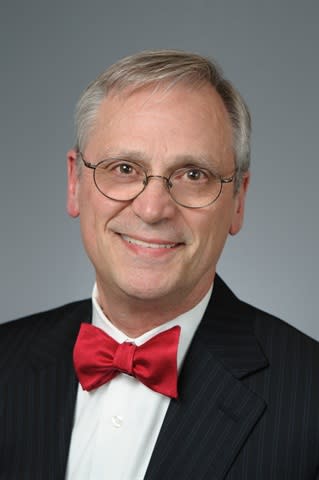
Rep. Earl Blumenauer, D-Ore.
Rep. Earl Blumenauer, D-Ore., introduced a bill that would raise federal fuel taxes and index them to the cost of living to pay for more investment in roads and bridges. The bill would repeal the taxes by 2025 in anticipation of replacing them with a vehicle-mile tax.
Specifically, the bill would raise gasoline and diesel taxes by 15 cents over three years, starting this year. The tax would be phased in: 8 cents a gallon this year, 4 cents more in 2015 and 3 more cents in 2016.
It is perhaps a quixotic move, considering congressional opposition to tax increases for any reason, but it challenges Members to respond to the funding shortfall that is the key issue in the highway bill they must write by next October.
Blumenauer is a former member of the House Transportation and Infrastructure Committee who now serves on the Budget Committee and the Ways and Means Committee, which will have jurisdiction over his bill.
Here is an edited version of his conversation Wednesday with HDT Washington Editor Oliver Patton.
HDT: Many in the transportation community have called for a fuel tax hike but you’re the first Congressman to step forward with a bill. Why you and why now?
Blumenauer: We’ve had lots of people who have been dancing around the issue, but we really haven’t seen action. So I’m offering up a bill because we need a vehicle to organize around.
We’ve got to finance our nation’s infrastructure needs. We can talk about policies, hours of service, streamlining this and multimodal that. I don’t mean to minimize that, I love the details of how we provide infrastructure, but at the end of the day we’ve got to finance what we’ve got and invest in the future.
I think that’s my responsibility as a member of the Budget Committee and Ways and Means, and as somebody who cares deeply about it. We’ve got our work cut out for us. Unless and until we have a bill I think we just continue to tread water.
HDT: There’s general recognition that the country needs to reinvest in infrastructure but neither the White House nor Congress shows any appetite for a tax increase. Is this bill a Quixotic quest, or is there a real chance it will advance?
Blumenauer: The real quixotic quest is assuming that if you never consider a bill, that somehow the infrastructure fairy is just going to provide resources.
You are correct that there has been less appetite to move forward, in part because somebody’s always waiting for somebody else.
I honestly believe President Obama believes that we should invest in infrastructure. He’s been somewhat constrained by a campaign promise of five years ago, that he would not raise taxes on families that make under $250,000.
Ronald Reagan could comfortably raise the gas tax a nickel a gallon back when that was real money because it was a user fee, but the Obama administration has been sort of frozen in place and, candidly, my Republican colleagues would have beaten the tar out of him for going back on a pledge.
The House is waiting for the Senate and Congress is waiting for the President and the President is waiting for Capitol Hill and everybody’s standing around looking at each other, so that’s why I think it’s important to have a bill.
HDT: Is there a companion bill in the Senate yet?
Blumenauer: Not yet, although there have been some expressions of interest.
I think this winter and spring, as various legislative conferences come to town and people visit Capitol Hill, there will be very significant expressions of support. I’ve been gratified that people acknowledge that it’s time for adult conversation.
One of the reasons it’s a little different now is that we’ve kind of run out our string.
We’ve been able to keep the program afloat by general fund transfers but in less than nine months I think we’re kind of running out of tin cans to shake and cushions to look behind. There is no money in the Highway Trust Fund for new projects and we’re staring at 30% reduction over the course of the next decade.
HDT: It will be exceptionally difficult for House Members to vote for a tax increase. What do you say to your colleagues to get them over the hump?
Blumenauer: We’re not asking the right question. The question is not, do you feel comfortable raising the gas tax, or do you like the gas tax. I don’t like the gas tax. It’s nearing the end of its useful life as a funding mechanism for transportation.
The question is, how are we going to fund our ongoing transportation requirements, to say nothing of what we need to invest for the future.
After thousands of conversations, reviewing hundreds of documents, countless meetings and two presidential commissions from the Bush administration, there is to the best of my knowledge no more viable short-term solution to get us through the next five or 10 years than a significant adjustment in the fuel tax.
So people shouldn’t be coming to town asking how comfortable you feel about raising the gas tax. The question is, how are you going to fund it? What is your solution if you don’t support this?
People have been clear to me that they want Congress to adjust the gas tax, so there’s a large reservoir of support when people are ready to have this adult conversation.
HDT: One scenario has Congress raising the fuel tax by making it part of a larger tax reform package that perhaps includes some restructuring of entitlements and tax expenditures, the sort of package that Chairman David Camp of the Ways and Means Committee might put together with Chairman Max Baucus of the Senate Finance Committee. What’s your take on that approach?
Blumenauer: That would certainly be an approach but I would make a countervailing argument to Chairman Camp and Chairman Baucus: That moving forward with resolving this infrastructure problem will actually help move a larger tax reform agenda.
We’ve sort of lost track of how to do big things any more. We can’t even do relatively minor things, like adjust the gas tax. I welcome Ways and Means and Senate Finance coming forward and doing a deeper dive, but I think that this bill will make it more likely rather than less. It certainly looks that a large comprehensive approach is not on the immediate horizon.
One of the reasons I introduced the legislation when I did was because I had argued to some of these negotiators that a user fee increase was a way to provide the revenues that Democrats said they wanted and do so in a fashion that would not be scored by many of the traditional anti-tax groups because it is a user fee.
I still think there is hope for that longer-term approach, but as I mentioned earlier, we’ve run out of time.
If we do not have additional revenues, then we risk a legislative food fight similar to what you saw a couple of years ago. The Ways and Means Committee never had a hearing on transportation finance, and the proposal that was sort of air-dropped in as part of the deliberations of the T&I Committee basically dealt with the shortfall by eliminating guaranteed funding. That blew up.
People understand that we need a balanced transportation system. When you have a broad coalition of stakeholders working together, rather than fighting over table scraps, that’s where you’re successful.
HDT: One longstanding objection to raising the fuel tax has been that the money was ill-spent or wasted due to earmarks, poorly managed projects or organizational flaws at the Department of Transportation. These are problems that were supposed to be corrected by the current highway law, MAP-21. Can you now say to the public, you can trust us to spend your money wisely and well?
Blumenauer: I think it’s important to point out that accountability is being improved in a number of areas as a result of MAP-21. I absolutely agree that earmarking got entirely out of control. They just exploded and there was a lack of accountability.
Some of us dealt with that. I proudly worked to direct some transportation funding where I had an opportunity to influence it, but all of those were consistent with our regional plans, I posted them on our website, it was totally transparent.
I think some people who were on sort of a jihad against congressionally directed funding – the earmarks – are now starting to recognize that, gee, they just turned all of the discretion over to the Obama administration. Hmm. How comfortable do they really feel with that?
I do think there’s a legitimate role for those of us in Congress who work on these issues to be able to help share in that direction. I don’t think we’re going to back to an era of the lack of transparency and having it explode. I think there’s a way to manage it.
There is an effort in MAP-21 to have greater accountability in terms of operations, but some of the projects that some people dismissed as a kind of leakage actually built capacity.
It’s no secret that I am a strong proponent of cycling. Every person who’s in a bike lane next to you is not in a car in front of you. And we’ve been able to improve mobility at a relatively modest cost, and do it faster and cheaper, than other solutions.
I think there’s greater accountability, greater transparency and I think there’s greater sophistication now of looking at overall transportation needs, being able to plan for them and being able to explain them.
One of the beneficiaries of this has been freight movement. I’ve been deeply troubled in the past that there wasn’t enough priority given to the movement of freight, and I think we’ve turned a corner.
HDT: Please put the tax increase in the context of the other financing ideas that are on the table, such as greater use of tolling, public-private partnerships, a national infrastructure bank or, as the Obama administration has suggested, a one-time $50 billion infrastructure shot in return for reforming corporate taxation.
Blumenauer: I want to be clear that I am inclined to be supportive of an all-of-the-above approach, but none of them is a substitute for a sustained, steady, significant source of transportation finance.
In fact, they will be enhanced if we are able to get the Highway Trust Fund to a sustainable level over time. That will give us more leverage with an infrastructure bank. There will be opportunities for public-private partnerships. There will be ways to enhance it with selective utilization of tolls. If, as part of other tax reform, we get some breathing room with a one-time infusion of revenue, OK. But what we need is that backbone. We need the trust fund to be made whole and sustainable.
Part of the problem is that spending time and attention on these temporary fixes or enhancements actually sort of stand in the way of the big picture because they take time and energy away.
HDT:There is little enthusiasm in Washington for a vehicle mile tax, although some states including Oregon are pilot-testing the technique. What’s the outlook for a VMT?
Blumenauer: Adjusting the user fee to reflect actual road use is going to happen, and it will happen some time in the next two decades. I hope it will happen this decade.
Basing financing on gallons of fuel consumed locks you into a downward spiral. It encourages a misallocation of use and responsibility, which is already occurring. We have hyper-efficient diesel trucks, we have hybrids, electric cars and increasingly there are people on the road paying a fraction of what they would have paid 21 years ago when we last increased the gas tax.
And there’s increasing variations among different users. People who can get the latest fuel-efficient trucks get less cost per mile than some of the folks who maybe can’t afford to upgrade their fleet.
This is something we need to do, and I think we will.
It’s interesting, your observation about the lack of enthusiasm, because when we provide in-depth briefings on the Oregon experience, we find that people are intrigued.
They understand as we have developed, you don’t need to keep track of where people go to monitor how far they travel. By giving people choices about how they want their user fee to be calibrated, we basically diminish if not eliminate the basic objection.
If we are able to put in place the technology on a mass scale, which is already available – 80% of trucking fleets could comply with this in six months – we’ll be able to do more than just finance the Highway Trust Fund. We’ll be able to give drivers real-time traffic information. We’ll be able to help businesses better track their costs and utilization. We’ll be able to have automatic tolls for bridges and highways that are tolled, where it’s all one uniform, seamless system. We’ll be able to have that motorist not only pay for parking but tell them where they can park. I think the technological applications will be staggering, once we get started.
The difference it will make for individual drivers, and particularly for the trucking industry, in improving the efficiency of the overall system and better data management will be profound.
HDT:While trucking interests support a fuel tax increase, they are less enthusiastic about a VMT, in part because they see it as an inefficient way to collect revenue. The gas tax is cheap to administer. What do you say to them?
Blumenauer: It used to be cheap to administer but now we’re in a different era. Now it is more complicated going forward and there are huge costs by being locked into this system of the past.
The trucking industry probably is suffering more than any other sector of our economy from our failure to adequately fund infrastructure. They pay the penalty for lack of maintenance, for congestion and, frankly, for political gridlock and fighting.
I think that in the long run the trucking industry will be the greatest beneficiary of a system that’s adequately financed and has instant data to better manage it. That’s going to translate to their bottom line and it’s going to solve some of their practical, logistic and political problems.
More Fleet Management

Color Match Smarter: Tools That Restore & Perform
For fleet managers and collision repair professionals keeping heavy-duty trucks on the road, getting the color right the first time isn't just about appearance — it's about efficiency, turnaround time, and bottom-line results. Discover how today's digital color tools are transforming the repair process from guesswork to precision.
Read More →
FMCSA Pauses Biennial-Update Enforcement Amid Motus Transition
Carriers whose updates were due on or after June 1 have more time, while FMCSA works to stabilize its new registration system and warns of phishing sites impersonating its new carrier registration system, Motus.
Read More →
2026 Blueprint for Countering Smarter Supply Chain Theft
Cargo theft is no longer just the cost of doing business. It's a multi-billion-dollar criminal enterprise exploiting vulnerabilities across your fleet, drivers, and supply chain.
Read More →


How Telematics Improves Visibility, Control, and Performance in Refrigerated Fleets
Explore how telematics help refrigerated fleets improve visibility, uptime, efficiency, compliance, and cargo protection across connected cold chain operations.
Read More →
What the U.S.-Canada Trade War Means for Trucking
Escalating U.S.-Canada tariffs could disrupt cross-border freight, reduce truck volumes, raise costs, and create new uncertainty for carriers on both sides of the border.
Read More →
What Are Trucking’s Top Concerns for 2026?
The American Transportation Research Institute wants to know what's worrying trucking fleet managers, drivers, and other stakeholders in its annual Industry Issues survey.
Read More →
American Trucking Associations Looks for a New Leader
ATA President and CEO Chris Spear abruptly left his job at the association on August 21, at a pivotal time for the trucking industry.
Read More →
Public Wi-Fi Cybersecurity Risks: How Truck Drivers and Fleets Can Protect Their Data
Public Wi-Fi can expose truck drivers and fleets to credential theft, malware, and other cyber threats. Here’s how to reduce the risk on the road.
Read More →
For Nicky Cupp, Fleet Innovation Starts With Frustration
HDT Truck Fleet Innovator Nicky Cupp turns everyday pain points at Fraley & Schilling into opportunities for better technology and smarter processes.
Read More →
Adam Buttgenbach’s Approach to Electric Trucks: Start With Where They Fit
HDT Truck Fleet Innovator Adam Buttgenbach helped PepsiCo build one of North America’s largest EV fleets by focusing on where electric trucks make operational sense.
Read More →