




Preparation the Key to Handling Winter Weather
While most of the impact of a winter storm will directly affect drivers, many of the disruptions can be prevented by a well-maintained and prepared fleet.

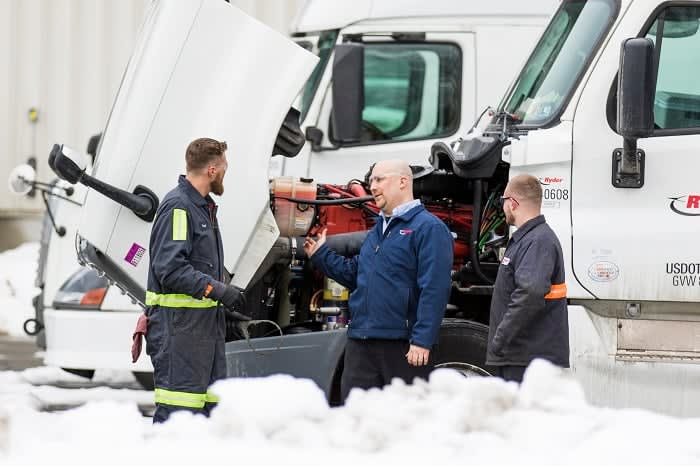
A key way that fleets can ensure that trucks are prepared for winter and drivers are able to get help if they need it, is to have a comprehensive maintenance partner. Photo: Ryder System

A key way that fleets can ensure that trucks are prepared for winter and drivers are able to get help if they need it, is to have a comprehensive maintenance partner.Photo: Ryder System
When Winter Storm Grayson blew through the Northeast, bringing snow, winds and freezing temperatures HDT spoke with Ryder System Vice President of Maintenance Operations and Engineering Bill Dawson about how to deal with bad winter weather.
While most of the impact from a winter storm will directly affect drivers, Dawson said that drivers are professionals, and many of the disruptions caused by a storm can be traced back to fleet preparedness.
“The last thing drivers want is to have an interruption because they’re the ones stuck by the side of the road -- they’re a participant, not the root cause of disruptions,” said Dawson. “The most common mistakes are made by not taking preventive measures that you need to take before winter arrives.”
All fleets should remember to prepare trucks for driving in difficult conditions by keeping trucks up to date on regularly scheduled maintenance and by keeping them prepped for cold conditions, such as by providing fuel that is treated and blended for low temperatures, said Dawson.
For instance, Winter Strom Grayson could bring temperatures as low as -40 degrees to parts of the U.S. and below zero temperatures up and down the entire East Coast. Diesel exhaust fluid can freeze at temperatures below 10 degrees Fahrenheit, even while a vehicle is idling, and low fuel tanks can trap condensation, which is prone to freezing, Dawson told HDT.
Fleets should have a well-thought-out process for keeping trucks that are not in operation from freezing during extremely cold temperatures so they are ready to go when needed.
Fleets also need to regularly keep drivers up to speed on training for winter driving, starting as early as September to discuss these topics with drivers. All drivers, including new drivers and drivers who are based in warmer climates that might be passing through winter weather, should have regular refreshers.
But beyond all fleet preparedness tactics, drivers are the ones who will be faced with dangerous conditions from snow, cold, and high winds. And the most important thing a fleet can do is allow the driver to make the right decision for the situation.
“Make sure they understand that they’re the captain of the ship, that they are able to make the decision and are supported by the management of the organization,” said Dawson. “If they don’t feel that the operation is safe, then they don’t need to complete that operation.”
“That’s not an easy thing to put in place because you run the risk of disrupting your supply chain, upsetting a customer – any number of things. But the truth is, anything less than that level of responsibility down at the driver level is asking for trouble.”
For drivers, there are obvious steps they can take to stay safer in winter:
Wear a seat belt
Watch the dashboard lights for maintenance problems
Be mindful of current conditions
Give 20 or more feet of additional space for safe stopping distance
Avoid hitting the brakes suddenly
Be careful about trucks idling at extremely low temperatures
Get snow and ice off of the roof for the safety of other motorists
Have a checklist to stay prepared for the worst
Have an emergency supply of water, blankets, clothes, and non-perishables in case they get stranded

Photo: Ryder System
It is also important for drivers to perform a high-quality pre-trip inspection to make sure a vehicle is ready to go. The idea is to avoid any maintenance problems if possible, especially those that might have been spotted beforehand. But despite all of the preparation, should a driver become stranded, getting help is the most important thing they can do to prevent disaster.
“Get in immediate contact with somebody that can help. Having someone you can reach out to immediately is extremely important,” said Dawson. “If you don’t think you’re going to have help provided quickly, call 911.
“Do not be a hero; do not leave yourself in harm’s way," he added. "Somebody needs to come get you if you’re stuck because it’s not going to get better by itself.”
A key way that fleets can ensure that trucks are prepared for winter and drivers are able to get help if they need it, is to have a comprehensive maintenance partner, either in-house or outsourced, Dawson suggested.
“Be smart. Start thinking about this in the autumn season and have a plan and make sure somebody or multiple people in your organization are directly responsible for executing that plan.”
A good source of information on winter weather is Ryder System’s winter preparedness website, which offers tips for fleets and drivers on vehicle maintenance and preparation and explains what Ryder does for fleets that partner with it for maintenance services.
More Drivers

Platform Science Adds Dispatch and Safety Tools
Four additions to PS Fleet help fleets monitor loads, manage driver coaching, share truck locations and adjust video system settings.
Read More →
When Language Stops the Truck: The Return of ELP Out-of-Service Orders
English language proficiency rules for commercial drivers aren’t new, but renewed out-of-service enforcement has raised the stakes. Here’s what carriers need to know before a driver reaches a roadside inspection.
Read More →
Samsara Launches Custom AI Agent Builder
Agent Studio lets fleets create AI tools for hours-of-service monitoring, reporting and driver support, including agents that communicate by phone.
Read More →
Trucker Path Expands Reserved Parking Network
Trucker Path has added close to 6,000 more truck parking spaces to its Trucker Path Reserved Parking Network with the addition of Safe Truck Parking.
Read More →
EEOC Sues Texas Trucking Company Over Driver Age Limits
The agency says Trancasa USA rejected applicants over 65 and applied tougher driving-record standards to those over 60.
Read More →
Nussbaum, Roehl Announce Second Driver Pay Increase This Year
This year has seen a swath of major truck driver pay increases as freight capacity has tightened.
Read More →
From One Generation to the Next: How Mentorship Builds Safer Truck Drivers
After three decades in trucking, Harold Perry shares what he's learned about driver safety, mentorship, and helping the next generation build confidence behind the wheel.
Read More →
Truck Drivers Need More Than Another Alert
Fleets have more visibility into truck health, safety events, and driver activity than ever. The next challenge is turning all that information into useful guidance for the person who has to decide what to do next.
Read More →
FMCSA Removes 110 Truck Driver Training Schools from Certified ELDT List
Federal regulators also are targeting more than 160 additional training providers and launching a nationwide audit of third-party CDL skills testers as part of a broader crackdown on trucking fraud.
Read More →
Hours of Service Pilot Programs: FMCSA Readies for 2027 Rollout
Two pilot programs could eventually reshape hours-of-service rules, giving truck drivers options to pause their 14-hour clock or use longer split sleeper rest periods.
Read More →