




Commentary: It's Time to Think About Hourly Pay
Seriously evaluating how we pay drivers is something trucking needs to do as the industry faces a worsening shortage, suggests Editor in Chief Deborah Lockridge in her November editorial.


Deborah Lockridge

Deborah Lockridge
When Charles “Shorty” Whittington was chairman of the American Trucking Associations a decade ago, the founder of Grammar Industries called for the industry to look at paying drivers by the hour, he recalled last month during a panel discussion at the ATA’s annual Management Conference & Exhibition. “And I was about tarred and feathered.” Trucking companies told him to do so would be “business suicide.”
But things are changing.
Seriously evaluating how we pay drivers is something trucking needs to do as the industry faces its worst shortage of drivers since ATA first started keeping numbers. The shortage is projected to hit 50,000 by the end of the year. One Northeast fleet manager I talked to said he’s 15-18% short of where he needs to be on drivers.
Grammer Industries is one of a number of fleets — many in the tanker and bulk business — who have been quietly experimenting with hourly pay. Some of Whittington’s friends in the industry who have done so, he says, have seen their driver turnover drop to 20%.
Admitting that getting customers to accept the rates they’ll need to pay in order to make that happen is just one challenge in making this transition, he said, “but I think this industry has done a terrible job in communicating with the shippers.”
With the upcoming electronic logging device mandate, however, many in the industry have agreed that this kind of communication is going to be vital. And it also could mean that moving to hourly pay would make sense, at least in some situations.
It’s understandable how the mileage rate became the standard and accepted pay structure for the industry. With drivers out on the road for days and even weeks at a time, with no way to know much of anything about what they were doing other than the miles you could be reasonably sure they were traveling from origin to destination, mileage was the one number you could use to make calculations.
But with ELDs, that’s all changed. Used properly, you’ll know how many hours they’re driving, how many hours they’re sitting at the dock waiting to load or unload, and how many hours they’re off duty.
And for drivers who are leery of electronic logs, wouldn’t that be a lot easier to swallow if it meant they were actually going to get paid for every hour they worked?
Whittington said his company enjoys low turnover and spends very little on advertising for drivers. While he said the company culture values drivers, and that’s part of it, the hourly pay is a definite draw.
Louisiana-based Dupre Logistics has been paying drivers by the hour for years, and notes that it positively affects driver safety — when drivers are paid based on mileage or a percentage, it can push them to work when tired.
Not that such a move is easy. As Whittington said, “it puts a lot of strain on dispatch when you start down that path.” During the recent hurricanes in Texas, Louisiana, and Florida, “we paid out over $200,000 to truck drivers who didn’t move during those storms,” he said. “Was that tough? It was damn tough. But we’ve got people coming to work for us because we treat them right.”
More Drivers

Driver Trust Can Make or Break the Success of Fleet Safety Technology
New Teletrac Navman research suggests that onboarding, transparency about driver data, and positive feedback can play a significant role in how commercial drivers respond to safety and coaching technology.
Read More →
EEOC Sues KLLM Over Alleged Sex Discrimination in Driver Training
KLLM is facing a federal sex-discrimination lawsuit over policies the EEOC alleges put female truck driver trainees at a disadvantage.
Read More →
FMCSA Moves to Codify English Language Requirements for Commercial Drivers
By changing regulations on English-language proficiency requirements for commercial drivers, rather than relying on a guidance memo, the FMCSA said future administrations won't be able to walk back the Trump administration's stricter enforcement with just a memo.
Read More →
Drivers Put Western Star Trucks to the Test at Star Nation Experience
Watch to get an inside look at the Western Star trucks, technology, and community behind the Star Nation Experience 2026!
Read More →
Trump Administration Looks to Put More Veterans Behind the Wheel
The Freedom Haulers program pulls together existing and expanded programs at several federal agencies to recruit veterans to drive commercial heavy-duty trucks and cut the red tape for them to get a CDL, training, and employment.
Read More →
Putting Mack’s Command Steer to the Test
A test drive of Mack’s Command Steer active steering system evaluates how it can make truck driving easier and less tiring.
Read More →
Competition Heating Up for Truck Drivers
New report reveals rising driver hiring costs, the return of sign-on bonuses, growing AI advantages, and the operational factors shaping driver retention.
Read More →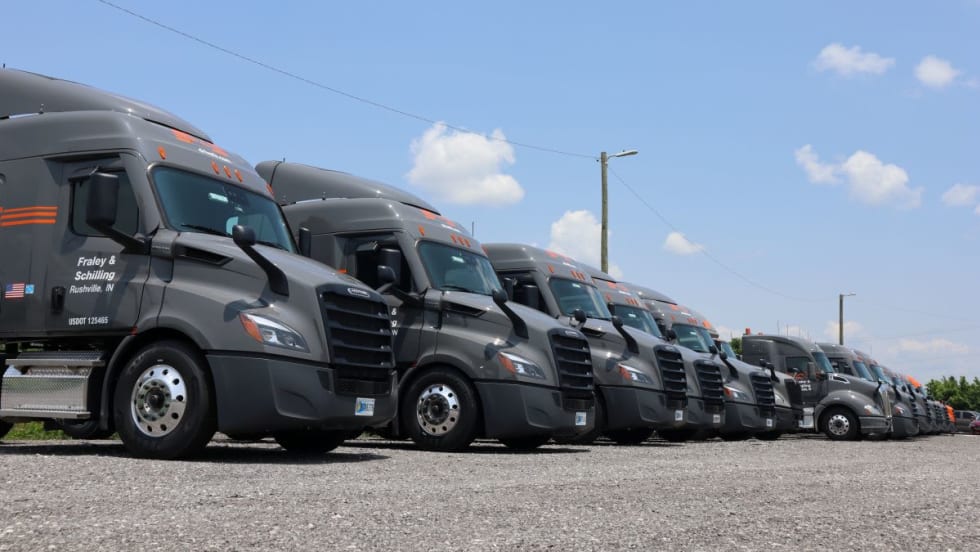
How Fraley & Schilling Improved Logbook Compliance by Over 50%
Fraley & Schilling needed a way to close a compliance workflow gap in its ELD system without adding more work from driver training, reminders, and back-office follow-ups. It found the answer in a custom driver app.
Read More →
Volvo Goes Gaming
Volvo has roared into American Truck Simulator with two new flagship trucks.
Read More →
What the Best Fleets to Drive For Teach About Driver Retention
Survey fatigue, AI-powered routing, owner-operator expectations, and the decline of social media all emerged as themes from this year's Best Fleets to Drive For program.
Read More →