




Commentary: Innovation Comes from the Top - and yet it Doesn't
If someone comes up with an idea and it’s ignored, dismissed, or laughed at, what’s going to happen the next time they have an idea? Editor in Chief Deborah Lockridge examines transformational thinking in her June editorial.


Deborah Lockridge

Deborah Lockridge
As part of an audience exercise at HDT’s inaugural Heavy Duty Trucking Exchange event last month, table groups brainstormed reasons that people don’t think, why they don’t innovate. A common theme was that people are not expected to, not challenged to — and when they do come up with an idea, they aren’t listened to. So why bother?
“You can’t transform an organization until you transform its thinking,” said keynote speaker Tim Richardson. His message was that leaders need to teach people how to think, give them some freedom to do so, and thank them when they do. If someone comes up with an idea and it’s ignored, dismissed, or laughed at, what’s going to happen the next time they have an idea — maybe one that might have been a game-changer? Doubtful they’re going to try again.
Also at HDTX, as part of the Truck Fleet Innovator panel discussion, Randy Obermeyer, terminal manager for Batesville Logistics, talked about how he not only uses Lean processes and tools to make his shop more efficient, but he also teaches his technicians how to use those tools to come up with waste-cutting ideas of their own.
At U.S. Xpress, they’re recruiting for management talent outside of the industry and putting them through a two-year program to learn the ropes (read more about the Xpress Elite program on page 88.) But not only are the future managers learning about how the various departments of the truckload carrier work, they also are bringing in best practices and ideas from other industries that can be applied in trucking. And U.S. Xpress is listening.
Yet one of the most overlooked sources for good ideas may be drivers.
At HDTX, Jeff Sass, Navistar’s senior vice president of North America truck sales and marketing, shared some stories about how the truck maker designed the new International cab based on input from drivers, including things like bringing back the air horn lanyard. In an early version, engineers put two 12-volt chargers on the dash behind the cup holders. In getting driver feedback, it took no time at all for drivers to tell them that wouldn’t work — the chargers would be blocked by Big Gulp size cups in the holders. So the chargers were moved to the center of the panel, where they could be accessed between the cups.
I’ve spoken in the past to researchers at the firm Strategic Programs about their in-depth surveys on why drivers leave companies, and while pay may be a big issue, they’ve learned that lack of respect in many ways is an even bigger problem. Your drivers are the ones out there on the road; they know what the issues are. They often have ideas for how to fix them. Hear them out and you’ll not only potentially gain some innovative ideas for your company, but you’ll also make them feel respected and much more a part of the team.
Richardson singled out one of the fleet executives he met at HDTX, Tom McKellar, vice president of transportation and terminals for Plastic Express in California’s City of Industry. The Plastic Express fleet is a rainbow of different-colored trucks, orange and green and turquoise and more — because it gives each driver a truck that is uniquely his or her own. But that’s just a symbol of the company’s attitude toward drivers.
“Our turnover is around 5%,” McKellar said. “That’s the philosophy of the company. You give the drivers a sense of duty, they are important to us, they make it happen. The dispatchers are there to support the drivers, the managers are there to support the dispatchers, I’m there to support the managers. Everyone respects the drivers, and that’s the way it used to be and that’s the way it should be again.”
Everyone’s heard the old saw about the definition of insanity being the act of continuing to do the same thing and expecting different results. When you’re looking for something different to try, keep in mind that good ideas can come from anywhere in the organization, from bottom to top. The key for the people at the top is to encourage innovative thinking — and to make sure to listen.
More Fleet Management
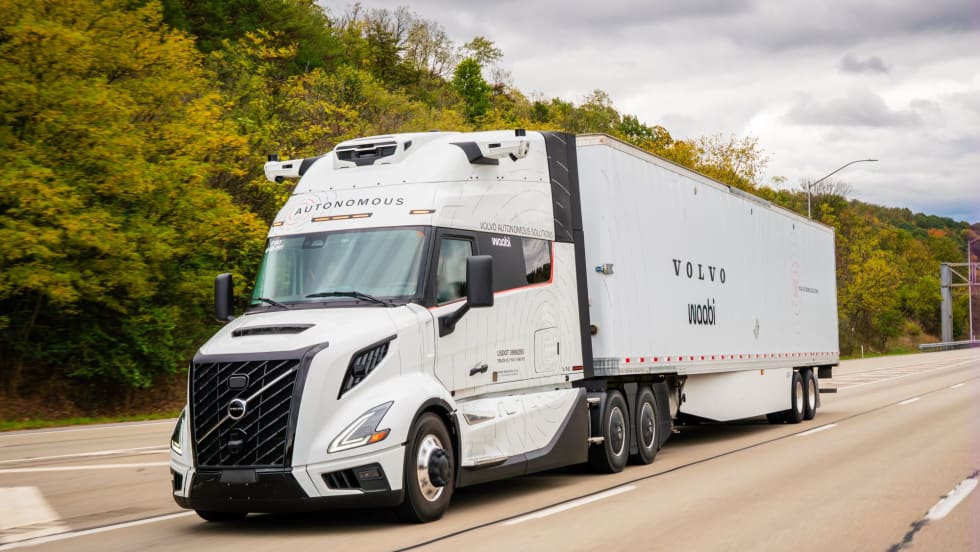
Volvo, Waabi Start Commercial Autonomous Operations in Texas
Volvo VNL Autonomous trucks, powered by the Waabi Driver, are hauling freight directly to third-party facilities for a customer in Texas.
Read More →
Samsara Launches Custom AI Agent Builder
Agent Studio lets fleets create AI tools for hours-of-service monitoring, reporting and driver support, including agents that communicate by phone.
Read More →
Geotab Links Fleet Card to Vehicle Data
The new card combines fuel discounts with telematics-based purchase controls. Geotab’s analysis also points to potential savings from choosing lower-priced fuel stops.
Read More →

How MFA Helps Protect Trucking Fleets
Multi-factor authentication adds protection when passwords are stolen. Here’s how it works and where fleets should start.
Read More →
How Better Freight Data Helps Trucking Teams Get Ahead of Disruption
Trucking and logistics teams have plenty of data. The problem is getting the right information in front of the right people soon enough to act. Better-connected data can help teams spot trouble earlier and make smarter decisions before small problems become big ones.
Read More →
Trimble: Taking Artificial Intelligence in Trucking Beyond Faster Tasks
At Insight 2026, Trimble executives argued that fleets may need to redesign workflows to get more from AI as it introduced new products and enhancements. AI’s value will depend on how fleets combine automation with their people's knowledge.
Read More →
Build a bulletproof fleet: Uniting ELDs and dash cams for total compliance
An ELD can prove compliance, but it cannot always prove what happened on the road. Discover how uniting accurate ELD data with AI-powered dash cam video can help your fleet strengthen compliance, defend against liability, protect drivers and reduce operational costs.
Read More →
Nominations Open for HDT Emerging Leaders
Heavy Duty Trucking is looking for accomplished trucking fleet professionals under 40 who are making an impact and helping lead the industry forward.
Read More →
Why Private Fleets Are Taking More Freight
Private fleets are putting their own trucks on demanding customers and high-cost lanes as companies seek greater control over service, costs, and capacity.
Read More →
Color Match Smarter: Tools That Restore & Perform
For fleet managers and collision repair professionals keeping heavy-duty trucks on the road, getting the color right the first time isn't just about appearance — it's about efficiency, turnaround time, and bottom-line results. Discover how today's digital color tools are transforming the repair process from guesswork to precision.
Read More →