





Related: Petroleum Institute Campaigns to Educate About New Oils
It's Time to Look at Lower-Viscosity Oils for Fuel Savings
New engine oil categories call for a closer look at your engine oil strategies and offer opportunities for improving mpg.
August 17, 2016

5 min to read
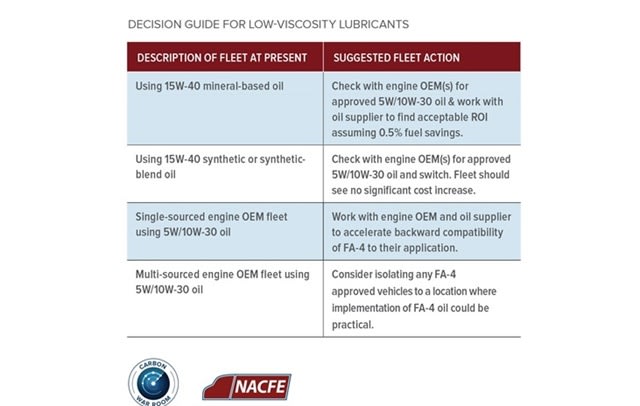
Come December, you’ll see a new API oil classification with lower-viscosity parameters designed to be used in the next generation of fuel-efficient engines. In fact, you’ll see two different oil categories.
This splitting of the oil category means a lot of fleets will need to do some careful planning about their oil strategies going forward. While you’re doing that, you should take into account the findings of a new report from the group Trucking Efficiency about using lower-viscosity oils for fuel savings in your existing engines.
The new oil category
Earlier this year, the American Petroleum Institute approved the two new diesel engine oil standards, API CK-4 and FA-4. They will first appear in the API Service Symbol “Donut” on Dec 1. The new oil categories were the results of a years-long process to develop new standards and tests, a process during which the new oils were known as PC-11.
It’s really the first time we’ve had two different oil categories. That’s because FA-4 was designed for use in new 2017-model engines that are required to get better fuel economy for lower greenhouse gas emissions.
While lower-viscosity oils, in general, have been shown to improve fuel economy, the FA-4 oils must perform to a more stringent “high-temp/high-shear” viscosity test to stand up to the more punishing environment in the new engines.
The different viscosity parameters needed in these oils generally won’t work well in older engines, so in general, FA-4 oils are not considered backward-compatible. That’s why the CK-4 category was developed, to designate oils that will better protect existing diesel engines.
Most truck and engine makers will likely recommend truck owners that are currently using CJ-4 engine oils start using CK-4 oils as soon as they are available, says API.
But within that CK-4 category, you’ll still be able to get lower-viscosity, fuel-saving oils for your current engines. In fact, a new report concludes that most fleets should look at adopting lower-viscosity engine oils for fuel savings.
Low-viscosity oils for fuel savings
The latest Confidence Report from Trucking Efficiency, a collaborative effort of the North American Council for Freight Efficiency and Carbon War Room, finds that Class 8 over-the-road fleets can realistically expect fuel savings in the range of 0.5% to 1.5% by switching from 15W-40 to 5W-30 or 10W-30 engine oil. (When the new FA-4 oil comes online, the report says it’s expected to add a further 0.4–0.7% of fuel savings.)
Since 2003, the report found, fleets have been ramping up their investment in lower viscosity lubricants. However, adoption rates, even among the most efficiency-conscious fleets, only recently crossed 40%, while the adoption rates for the industry as a whole remain at only about 20%.
The report combines research, conversations at trucking industry events, and interviews with fleets, truck OEMs, oil manufacturers, and certifying bodies.
Misperceptions may have hindered the wide-scale adoption of lower-viscosity oils so far, notes the report. There is a generally held belief that heavier, or “thicker,” engine oil protects engines better. But modern engines subject oil to a variety of temperature and lubricating conditions, and the ability of the engine oil to perform under these conditions depends on many more factors than simply the oil’s viscosity, notes the report.
Before any particular engine oil is approved, both the engine OEM and the oil suppliers will have tested it extensively. All approved engine oils meet the durability requirements of every major OEM, regardless of viscosity, and all major North American engine OEMs have approved lower-viscosity 5W/10W-30 engine oil for over-the-road applications.
“Lower viscosity engine oils deliver fuel savings, and concerns over lower engine protection are simply not valid anymore,” says Yunsu Park, NACFE Study Manager.
“What we learned is that there’s just much more to what makes an oil work and not work other than viscosity,” Park explained. “The amount of work and testing that goes into oil is so extensive. We had one manufacturer tell us that after analysis, the low viscosity oil actually showed less wear when you take the components apart and examine them very closely. Viscosity itself is just one of many characteristics of an oil.”
Stumbling blocks
While engine protection may not be a valid reason not to switch to lower-viscosity oils, cost and compatibility with the entire fleet are another story.
For fleets using non-synthetic 15W-40 oils, there is a cost in switching to low-viscosity engine oil. Much of the 15W-40 oil on the market today is mineral-based, while most XW-30 engine oils are synthetic or synthetic-blends. A change only in viscosity does not result in a significant cost increase, but synthetic and synthetic-blend oils are positioned as premium products and command a premium price. At the retail level, concludes the report, a switch from a mineral-based oil to a synthetic blend typically increases the cost by 30-40%.
Fleets interviewed for the report said they need compatibility with all their equipment when adopting a new engine oil. Lower-viscosity 5W/10W-30 oil versions of CJ-4/CK-4 oil have been approved for engines going back to at least the 2010 model year. So if you’re running engines older than that, you’ll need to check with your engine maker before changing viscosity grades.
While fleets want to be able to run a single oil, as the new 2017 engines start being brought into fleets requiring the FA-4 oils, that’s going to be increasingly difficult anyway.
In the meantime, the Confidence Report suggests that fleets considering a switch to lower-viscosity engine oil use a conservative 0.5% in calculating the payback they will earn from switching. If an acceptable return on investment is shown with this low level of fuel savings, fleets should be able to confidently make the switch, working with their engine and oil suppliers.
Subscribe to Our Newsletter
More Maintenance
Oil Crisis Squeezes Trucking Lubricant Supplies
Fleets report higher lubricant costs as Middle East disruptions tighten supplies of ingredients used in synthetic engine oils and some driveline lubricants.
Read More →
Shell Prepares Rotella Oils for 2027
New CL-4 and FB-4 formulations will begin arriving in early 2027, with improved protection against oil breakdown, wear and deposits, according to Shell.
Read More →
Mack Expands Extended Coverage With Four Chassis System Plans
Mack Trucks' new system-specific coverage options allow heavy-duty fleets to select protection for driveline, cab, HVAC, electronics, and advanced safety components.
Read More →
What an Out-of-Service Order Really Costs, and How to Plan for One
The repair invoice is the first number you see — and often one of the smallest. Here’s what else an out-of-service order can cost a fleet, and how planning can reduce the damage.
Read More →
International Launches Online Truck Parts Store
Fleetrite.com lets fleets and repair shops find OEM and all-makes parts, check prices and availability, and order without calling a parts counter.
Read More →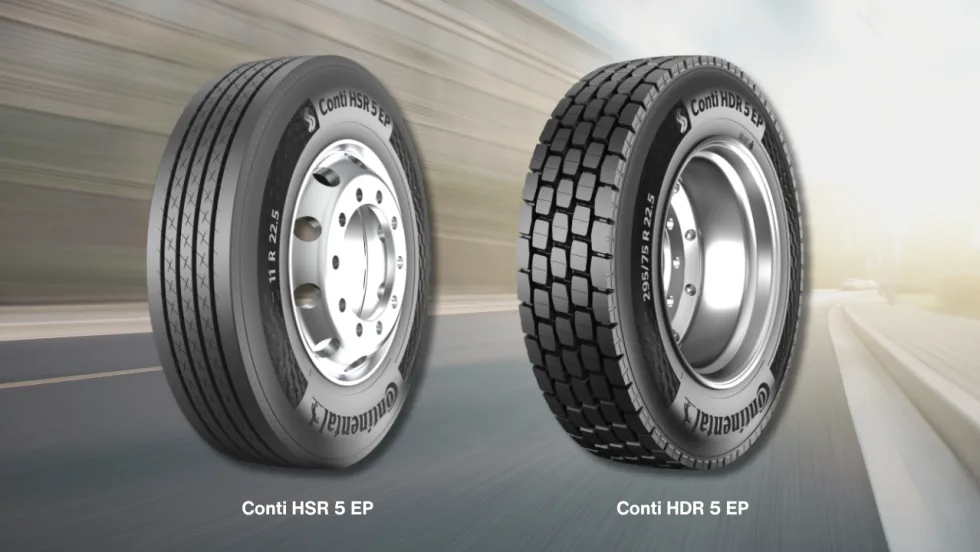
Continental Introduces New Regional Truck Tires
Continental says its new Generation 5 steer and drive tires for regional operations offer longer tread life, with estimated mileage gains of 22% and 19%, respectively.
Read More →
Sponsored•October 1, 2026
How AI Can Help Your Techs’ Efficiency
The technician shortage isn't going away, and no single fix can close the gap on its own. Trent Broberg makes the case that AI's real job in the shop is protecting the billable hours and job satisfaction of the techs you already have, not asking them to work faster.
Read More →
Color Match Smarter: Tools That Restore & Perform
For fleet managers and collision repair professionals keeping heavy-duty trucks on the road, getting the color right the first time isn't just about appearance — it's about efficiency, turnaround time, and bottom-line results. Discover how today's digital color tools are transforming the repair process from guesswork to precision.
Read More →
Wrong Repair Prompts Recall of Freightliner, Western Star 4x2 Trucks
DTNA is recalling more than 2,400 trucks that received an incompatible software fix instead of the hardware repair required to address brake valve corrosion.
Read More →
Truck Drivers Need More Than Another Alert
Fleets have more visibility into truck health, safety events, and driver activity than ever. The next challenge is turning all that information into useful guidance for the person who has to decide what to do next.
Read More →