




Related: Daimler Achieves 115% Efficiency Improvement with SuperTruck
Volvo Concept Truck Boasts 30% Lower Fuel Use
With almost one-third lower fuel consumption. Volvo Trucks’ new concept vehicle shows how it is possible to drastically boost productivity in long-haul operations.
by Rolf Lockwood
June 10, 2016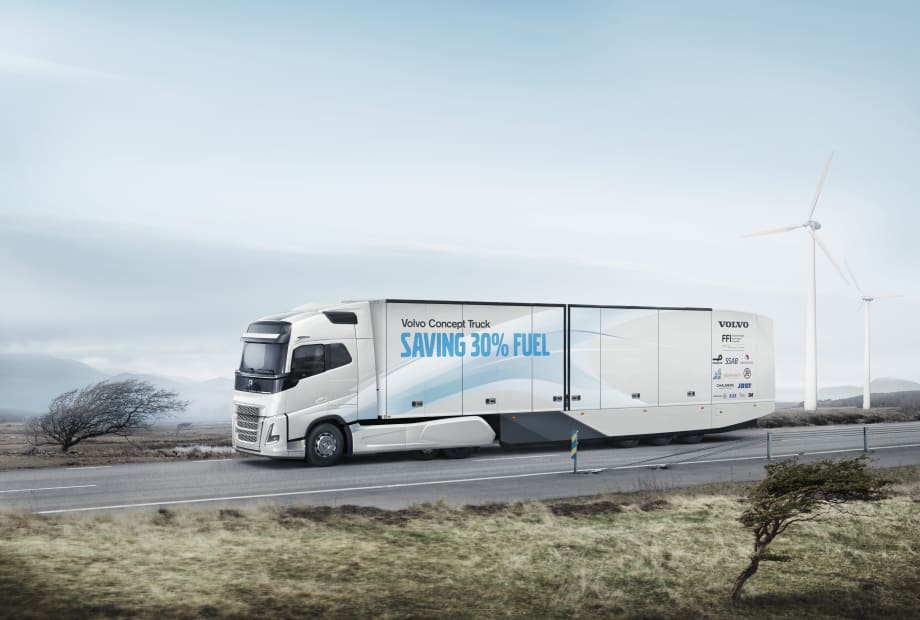
2 min to read
With almost one-third lower fuel consumption, Volvo Trucks’ new concept vehicle shows how it is possible to drastically boost productivity in long-haul operations.
With support from the Swedish Energy Agency, Volvo developed a new concept vehicle, the result of a five-year-long research project aimed at creating more energy-efficient vehicles. The new concept truck is said to cut fuel consumption by more than 30%.
"Our concept truck showcases the immense power of on-going technical advances,” says Claes Nilsson, Volvo Trucks president and CEO. One of the key factors behind the low fuel consumption is its massive 40% improvement in aerodynamic efficiency that has benefited both the tractor and trailer.
Engineers modified the entire rig, a Volvo FH 420 with a Volvo D13 Euro 6 engine, and optimized it for improved aerodynamics as much as possible. For instance, it uses cameras instead of rear-view mirrors to cut air resistance. Aerodynamically optimized chassis side-skirts cover the rear wheels on the tractor and all the trailer wheels. Aerodynamic spoilers extend the trailer and cut air resistance, and it features optimized air flow for the engine’s cooling system. It's designed with minimized air resistance at the front of the tractor, the wheel housings and entry steps.
In addition to the aerodynamic improvements, the concept vehicle is fitted with newly developed tires with lower rolling resistance. The trailer weighs two tonnes less than the reference standard trailer, which translates into either lower fuel consumption or the possibility of higher payload.
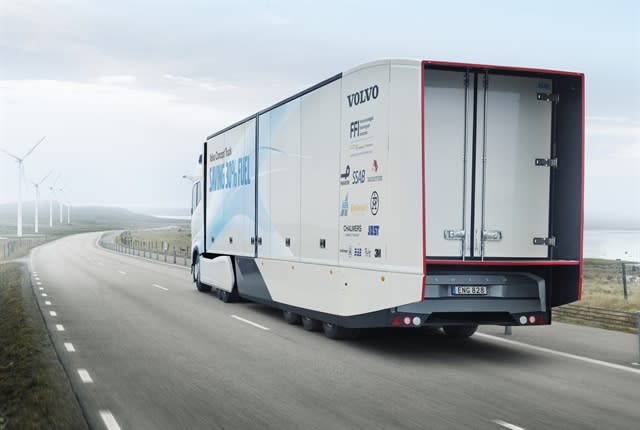
The project also includes an improved driveline. The rig was test driven on Swedish roads late last year.
The aim is to improve the efficiency of long-haul truck transportation by 50%.
Since the concept vehicle is part of a research project it won't be available on the market. But some of its aerodynamic features have already been implemented on Volvo’s series-produced vehicles, and more of its techno-trickery may be fitted in the future.
It's not unlike other concept trucks from other manufacturers, especially the SuperTrucks produced in recent years by Freightliner and others on these shores in conjunction with the U.S. Environmental Protection Agency.
Subscribe to Our Newsletter
More Fuel Smarts
Electric Yard Tractors Move Beyond Pilots
Operating-cost savings have overtaken sustainability goals as the leading reason surveyed fleets are adopting battery-electric terminal tractors, according to new NACFE research.
Read More →
Geotab Links Fleet Card to Vehicle Data
The new card combines fuel discounts with telematics-based purchase controls. Geotab’s analysis also points to potential savings from choosing lower-priced fuel stops.
Read More →
Fleet Economics Shape Electric Truck Outlook
ACT Research expects costs, charging infrastructure, and technology improvements to drive zero-emission commercial vehicle adoption as federal regulations and incentives retreat.
Read More →

Wex Adds Cardless Fuel Payments for Over-the-Road Customers
A new fuel card feature for Wex customers offers convenience and security.
Read More →
New California Law Could Shed Light on Electric Truck Prices
Why do battery-electric Class 8 trucks remain so expensive? A California bill signed by Gov. Gavin Newsom would give fleets and state agencies more visibility into what manufacturers charge.
Read More →
How Volvo Updated Its D13 for EPA 2027 [Watch]
Volvo’s updated D13 promises lower emissions without sacrificing performance or fuel economy. Take a closer look at what changed inside the engine in this HDT Spotlight video.
Read More →
Diesel Price Spike Shortens Payback for Natural Gas Trucks, Report Says
Energy Vision estimates fleets could recover the higher purchase price of an RNG-fueled Class 8 tractor in 1.3 to 2.8 years under current fuel-price scenarios.
Read More →
Calstart Becomes Catalyst Mobility, Reflecting Broader Focus
Calstart is now Catalyst Mobility, reflecting the nonprofit’s growing national role in clean transportation, including zero-emission trucks, infrastructure and incentive programs.
Read More →
Record Diesel Prices Squeeze Trucking Fleets
Average U.S. diesel prices have climbed to nearly $6 a gallon, surpassing the 2022 record as tight refinery capacity and Middle East disruptions keep fuel costs elevated.
Read More →
Sponsored•September 9, 2026
How Fuel Delivery Shapes Engine Performance
Fuel delivery depends on more than what happens at the injector. For fleet, maintenance and technical professionals, looking at the full path from pump to injector can provide useful context for understanding engine performance.
Read More →