




Breaking the 10 MPG Barrier
10 mpg is more of a line in the sand than the barrier it was once thought to be. Can 11 mpg be far off?


10 mpg is more of a line in the sand than the barrier it was once thought to be. Can 11 mpg be far off?

10 mpg is more of a line in the sand than the barrier it was once thought to be. Can 11 mpg be far off?
During the mid-1950s, when the first Interstate highways were opened, a fleet was doing well to run 4 of 5 miles on a gallon of fuel. Today, a fleet is doing equally well to turn an average of 8 mpg.
You might think that’s not much of an improvement in 60 years, but over that time, we added 20 feet to the length of the trailer and upped allowable gross weights by nearly 7,000 pounds. We also saw a switch from bias ply to radial tires and from naturally aspirated engines to turbocharged engines, and later to electronically controlled diesels. We also saw road speeds climb from 40 and 50 to 65 or 70 mph and beyond. In truth, we have nearly doubled fuel efficiency while substantially increasing demand on our engines, and that has to be considered a fairly remarkable achievement.
But it’s probably not as remarkable as the challenge that lies ahead in pushing the average up from 8 to 10 mpg. If previous gains could be described as being in feet and inches, we’re now down to metaphoric millimeters of incremental improvement.
“The 25% jump from 8 to 10 mpg is huge,” notes Chuck Blake, senior technical sales support manager at Detroit Diesel and a former task force chairman of TMC’s S.11 Energy Conservation study group. “We like to see a couple of percent improvement year over year, but trying to bite off that much is going to take a while.”
Blake says fleets that can claim an 8-mpg year-round average, factoring in weather, congestion, idling, stop-and-go traffic and everything else, are doing “phenomenally” well. Those fleets are likely to be the early adopters of existing technologies and the ones most likely to embrace emerging techniques and technologies.
One of those is Ryder System. Scott Perry, vice president of supply management and global fuel products, has vehicles running well over 8 mpg in certain applications using existing technology. But with what’s on the horizon with the federal government’s second phase of greenhouse gas/fuel economy regulations on the way, 10 mpg and higher “is absolutely realistic,” he says. “It will be interesting to see which technologies we ultimately deploy to get there, but between aero and some of the advanced engine strategies we are hearing about, I absolutely see a pathway to 10 mpg and maybe 11 or beyond.”
While there are fleets out there today with trucks running north of 10 mpg under certain conditions, they aren’t the norm, to be sure, and they aren’t averaging 10 mpg. The estimated national average fuel economy is often cited as 6.5 mpg. Getting to 10 from there will require a daunting 53% improvement.
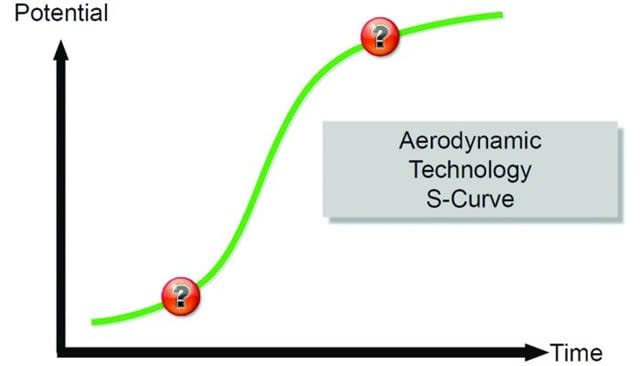
Model of the aerodynamic technology S curve. New technology struggles at first with getting established (the lower marker), with only marginal improvements. Over time the rate of improvement accelerates, until it begins to plateau where improvement becomes increasingly costly for marginal gains (the top marker).
Where are we on the curve?
Understanding the potential for improvement requires a big-picture view of where we’ve come from and where we are on the S-curve of technological change.
Emerging technologies follow predictable patterns, said Rick Mihelic of Mihelic Vehicle Consulting, a former design engineer with Peterbilt, in a presentation last fall on the evolution and future of truck aerodynamics. They begin with a fairly low rate of adoption, then go through a period of rapid adoption with additional changes, before moving to a point where the evolution plateaus because further change is either too costly or because it’s nearly fully optimized, or both.
We have made great advances in trailer aerodynamics over the past six or seven years, from the introduction of trailer side skirts, followed by trailer boat tails and finally to the integration of the two systems. Refinements and improvements occurred along the way, and additional components were added, such as nose fairings, aero mudflaps, add-on tractor tandem fairings and others that have nearly optimized what we call the contemporary aero profile of a tractor-trailer.
However, the technology appears to have hit the leading edge of the plateau phase Mihelic described, with the dramatic improvements behind us and the flow of smaller, incremental improvements ebbing because of cost or other impracticalities. The question is, how far can we expect further improvements in trailer aerodynamics to take us toward GHG Phase 2 goals without significant changes being forced elsewhere on the truck?
“The Cummins/Peterbilt SuperTruck we tested in 2014 demonstrated a 25% improvement in freight efficiency over a typical 2009 tractor-trailer with no aerodynamic treatments at all,” Mihelic told the audience of mostly aerodynamicists and engineers during the presentation at the Society of Automotive Engineers Commercial Vehicle Conference. “To achieve those sorts of gains required a substantial reduction in trailer tare weight to accommodate the aero fitments. Lighter but more expensive components had to be used to offset the weight of the aero components. There’s no free ride.”
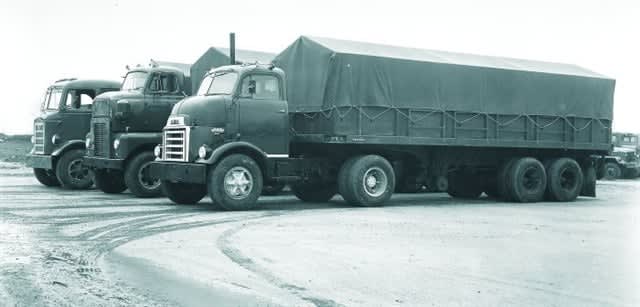
Three trucks used in a General Motors fuel economy test in 1954. Then, 6 mpg was seen as the holy grail of fuel efficiency.Photo: Chuck Blake, Detroit Diesel
While the Cummins/Peterbilt and the Daimler Trucks North America SuperTruck projects clearly demonstrated the benefits of advanced trailer aerodynamics, including full-length side skirts that came nearly right to the ground and highly sculpted nose and rear treatments, the question remains: Is industry prepared to pay the acquisition price for the technology, and then to maintain it? (Not to mention some of many other technologies on those SuperTrucks beyond the aerodynamics, such as waste heat recovery.)
As a sobering adjunct, Mihelic noted that improvements in aero and other technologies that depend on fuel savings to recoup the costs could be left high and dry if demand for diesel drops and prices tumble.
“I’m pretty sure not one of us predicted in 2008 that [diesel prices] would be 40% less today [late 2015] than they were then,” he said. “Supply, demand, innovation, technology and regulation are very hard to predict. So picture a scenario in 15-20 years where electric vehicles have gained traction or natural gas finally gains wide support. If a significant portion of the truck population is driven by something other than diesel fuel, we will have an awful lot of oil on our hands, and not a great deal of demand. Such a scenario isn’t unlikely and therefore needs to be considered.”
In other words, it could be pure folly to bank on future fuel savings to fund the presumed $32,000 price increase for new trucks in the final years of the GHG-Phase 2 rule.
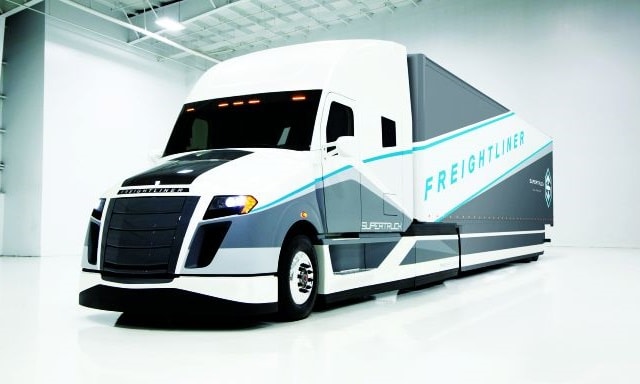
Daimler’s SuperTruck broke 12 mpg without any really advanced technology, but would fleets tolerate the maintenance and repair requirements on the aero fittings?Photo: Daimler
Try something new
With that awkward possibility still nearly a decade away, there are still many options available to truck owners that can up fuel efficiency by a mile per gallon or more.
Cumberland International in Nashville, Tenn., built a fuel-efficient prototype called the RX-C10, which it allows customers to borrow for a week or a few to prove out the benefits for themselves.
“It’s fun to watch the customers’ reactions,” says Patrick Mendenhall, fleet sales representative at Cumberland. “At the end of their trial, we’ll give them an ECM download so they can see the numbers themselves, but they often don’t believe it. They’ll ask for another week just to prove it to themselves.”
Mendenhall says the test is as transparent as it could be. The fleet gets the truck for a period of time to use on its own runs, with its own customers and its own loads. Before and after comparisons couldn’t be cleaner or simpler, and nearly impossible to refute.
Mendenhall claims some of the fleets report mpg results from the trials of between 7.2 and 9.9 mpg, which represents improvements over the fleets’ standard spec of up to 2 mpg in some cases.
Mendenhall says his boss, Matt Smart, director of fleet sales, spec’d the truck for optimum fuel efficiency. It’s an International ProStar with full factory aero trim, an Eaton/Cummins SmartAdvantage powertrain, 6x2 drive axles, wide-single tires and a few more proprietary items.
“It’s not a SuperTruck by any means,” Mendenhall says. “It’s a pretty typical leading-edge fuel-efficiency spec, but it shows fleets how much of a difference such a spec can make, even if they don’t believe it’s possible at first.”
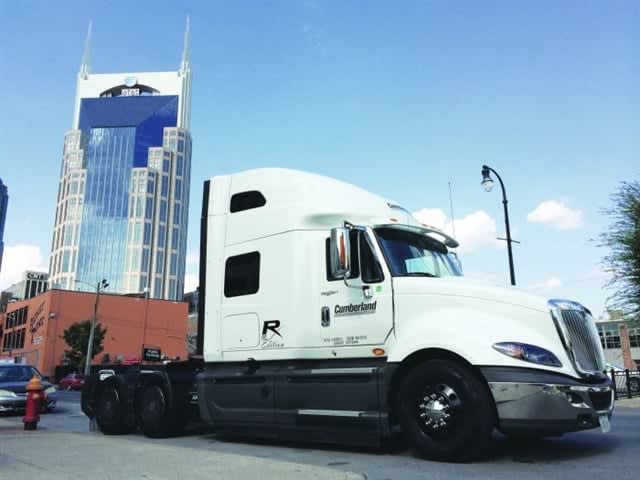
Cumberland International in Nashville, Tenn., built a fuel-efficient prototype called the RX-C10, which it allows customers to borrow for a week or a few to prove out the benefits for themselves.Photo: Cumberland International
While Cumberland’s C10 project is primarily an over-the-road truck, there are still plenty of options open to fleets that are not exclusively on-highway.
Ryder has had plenty of opportunity to put technology into service and evaluate its performance, and Perry claims there’s a long list of options that do produce results and are suitable to nearly any application, among them automated manual transmissions, low-rolling-resistance tires and low-viscosity lubricants.
“Overall, there are a number of different levers that can be coupled together in the right combination that help get to the standard we are looking to achieve without getting way out on the periphery with some of the far-reaching technologies like waste-heat recovery and the like,” says Perry, adding, “Fleets will always default to the simple and proven no-touch, low-maintenance technologies. I think it’s going to take a regulatory standard to push this beyond that tipping point for the emerging technologies. I’m also a firm believer that while 2027 is the end date for GHG-Phase 2, that won’t be the end date for regulators pushing for deeper and deeper standards for efficiency or emissions.”
More Fuel Smarts

Trucking’s Diesel Squeeze Isn’t Letting Up
With diesel topping $6 a gallon nationally, ATA's Bob Costello explains why fleets should prepare for continued pressure at the pump.
Read More →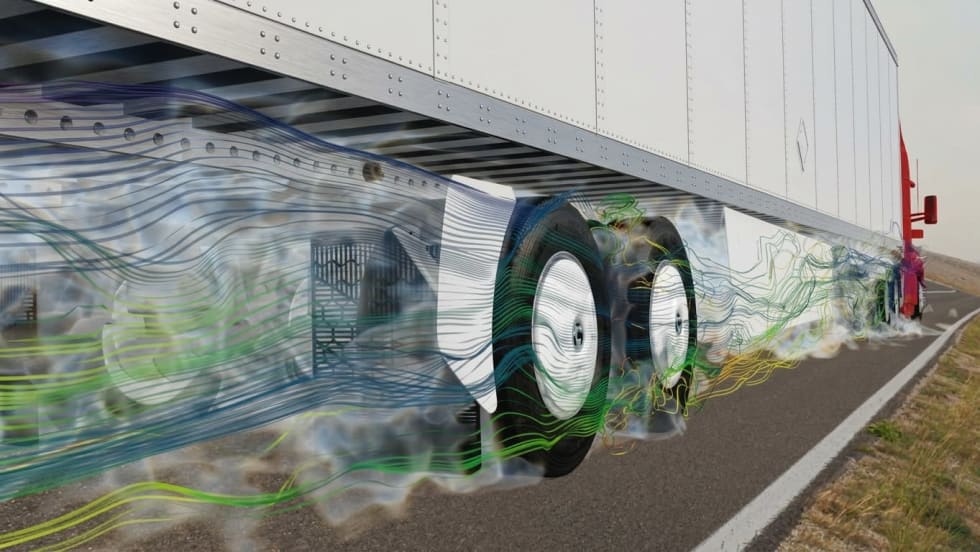
FlowBelow Redesigns Trailer AeroSlider to Cut Fuel Use
The lighter trailer aerodynamic system installs in less than 45 minutes, according to the company, with potential payback in under a year depending on fuel prices and trailer mileage.
Read More →
Why Diesel Price Relief Efforts May Fall Short
Diesel prices have eased from September’s record high, but doubts about additional Russian supply and limits on dyed-diesel tax relief mean trucking fleets still face expensive fuel. And prices could go higher.
Read More →
Why Small Fuel Savings Matter in Trucking
Can better fuel economy help pay for driver raises? In this podcast, GP Transco explains how small efficiency gains create room to reinvest in its people.
Read More →
How GP Transco Cuts Trucking Fuel Costs, a Tenth of a Gallon at a Time
What’s another tenth of a mile per gallon worth? GP Transco shares how equipment upgrades and driver coaching turn small gains into meaningful fuel savings.
Read More →
Electric Yard Tractors Move Beyond Pilots
Operating-cost savings have overtaken sustainability goals as the leading reason surveyed fleets are adopting battery-electric terminal tractors, according to new NACFE research.
Read More →
Geotab Links Fleet Card to Vehicle Data
The new card combines fuel discounts with telematics-based purchase controls. Geotab’s analysis also points to potential savings from choosing lower-priced fuel stops.
Read More →
Fleet Economics Shape Electric Truck Outlook
ACT Research expects costs, charging infrastructure, and technology improvements to drive zero-emission commercial vehicle adoption as federal regulations and incentives retreat.
Read More →
Wex Adds Cardless Fuel Payments for Over-the-Road Customers
A new fuel card feature for Wex customers offers convenience and security.
Read More →
New California Law Could Shed Light on Electric Truck Prices
Why do battery-electric Class 8 trucks remain so expensive? A California bill signed by Gov. Gavin Newsom would give fleets and state agencies more visibility into what manufacturers charge.
Read More →