





Related: The Future of Fuel Economy
9 Ways You Can Use Technology to Cut Fuel Use
Whether you’re looking to improve mpg or reduce overall fuel use and cost, automated routing and dispatching systems, telematics, in-cab nav, analytics and other systems improve efficiencies, reduce unproductive miles and monitor drivers and equipment.
June 22, 2016
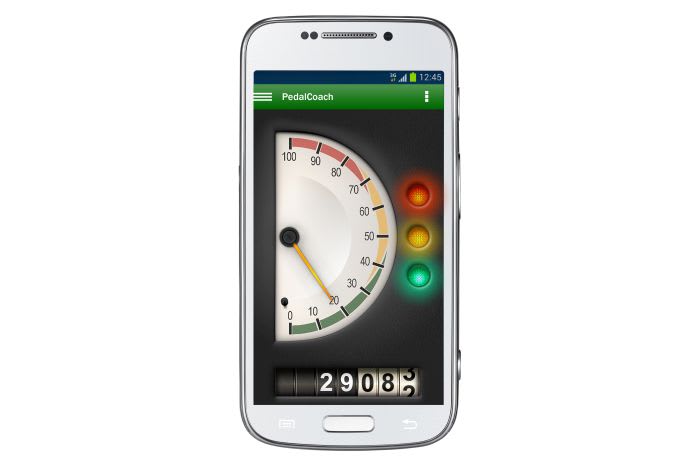
LinkeDrive’s Pedal Coach provides instant feedback on driver performance delivered to the driver’s smartphone. Photo: LinkeDrive
5 min to read
LinkeDrive’s Pedal Coach provides instant feedback on driver performance delivered to the driver’s smartphone.Photo: LinkeDrive
Whether you’re looking to improve mpg or reduce overall fuel use and cost, automated routing and dispatching systems, mobile communications/telematics, in-cab navigation, business analytics and other systems improve efficiencies, reduce unproductive miles and monitor drivers and equipment.
1. Automate the routing and dispatching process.
Most carriers already use routing and dispatching software. If your fleet hasn’t automated those processes, or if you are using an obsolete system, you are leaving fuel dollars on the table.
Today’s routing software packages designed for LTL and delivery fleets go way beyond creating efficient routes. They also allow fleets to improve pricing and invoicing functions. Some include dock software that directs dock workers on what to load first, making the delivery driver’s job easier and reducing the time spent at each stop. Many routing systems include real-time traffic reporting functions that can automatically re-route trucks en route to avoid accidents or bottlenecks.
2. Monitor the plans.
Automated routing and dispatching systems can use location data to monitor whether or not drivers follow their route plan. A number of software tools not only monitor route adherence, but also will alert the driver and tell them how best to get back on the route. Sometimes, there may be very good reasons a driver has gone off-route – an accident or road construction for instance. Other times, no. Unless a fleet monitors their route plans, they will never know the difference.
3. Stay connected.
In addition to delivery, load and route information, mobile communications/telematics systems provide fleet managers a wealth of data they can use to improve their fleet’s fuel efficiency. This includes engine diagnostic and driver performance information. Mangers can know right away when a truck’s engine generates a fault code, when a driver is speeding or when a truck is idling – each of which has an impact on fuel economy.
4. Use a fueling network.
Negotiating price discounts with fuel providers can save money on each gallon of fuel a fleet buys on the road. Software can generate a fueling plan with the route plan, identifying fueling locations along the route that are in a fleet’s network. The systems can generate fueling plans as detailed as recommending the number of gallons to take on at each stop.
5. Monitor your fuel cards.
While providing drivers with a fueling plan along with their route is a first step, integrating fuel card data into your TMS can also help save fuel. Integrating fuel card data with fleet telematics data allows fleets to know when and where a fuel card was used, which vehicle was fueled, time of day and other information. This integration of data alerts managers if the driver fuels at a location that’s off-route or not part of the plan. The data will also show whether or not a truck took on too much fuel, which could indicate possible fuel theft.
6. Set fleet mpg standards and reinforce good driver behavior.
Much of the data generated by the various technologies fleets deploy, such as telematics, will quickly identify which drivers are meeting fleet mpg targets and which are not.
Telematics data can show which drivers need more coaching in maintaining the right engine speed, reducing idling and avoiding quick starts and stops. Many systems allow fleet managers to monitor these things in real time, so immediate action can be taken if necessary.
In addition to coaching poor drivers, reward those who meet mpg and other targets, whether that be in the form of a bonus or company-wide recognition. Many fleets use telematics data to develop scorecards that allow drivers to measure their performance against company standards and other drivers. Mobile apps are another way drivers can check on their performance.
7. Provide driver feedback.
Mobile apps and in-cab communications devices allow fleets to provide real-time feedback to drivers. For instance, some routing packages include a mobile app that will show delivery drivers how much time they are spending at each stop, where they are in terms of their schedule and other information. Smartphone apps are available that show drivers if they are maintaining proper speeds while they are driving.
8. Use big data.
Modern trucks are loaded with sensors that produce enormous amounts of data that can be sliced, diced and analyzed. Aggregating performance data across the fleet can reveal which units are the most fuel-efficient.
Business analytics can identify trends that may not have been obvious. For instance, one terminal location may have consistently lower mpg than others. That unit could have a large group of under-achieving drivers, or it could be an equipment issue – a mismatch between truck specs and operational territory, for instance, or poor maintenance practices.
The data can also identify the best-performing drivers beyond mpg targets. For instance, a driver who posts the best mpg might also miss delivery deadlines or have a high rate of out-of-route incidents.
9. Start today.
The technology options available are quite impressive – even intimidating. TMS offerings run the gamut from full-blown enterprise systems capable of handling thousands of trucks and drivers and multiple locations, to cloud-based systems designed for mobile devices. Some products are tailored for LTL, local delivery or service-fleet operations, while others are more suited for truckload, regional or long-haul operations. Many offer specific functions that help track fleet mpg and driver performance. Others may require third-party add-ons, which can be as simple to deploy and use as a smartphone app.
Regardless of the system you use, take advantage of its capabilities. If there is a scorecard module, activate it. If not, get a third-party app that integrates with your existing system. Start monitoring driver and vehicle performance. A simple thing such as reducing idling can save thousands of gallons of fuel each year. But as the old adage goes, “you can’t manage it unless you measure it.” And that’s where these technologies can deliver.
Subscribe to Our Newsletter
More Fleet Management

Sponsored•September 16, 2026
Color Match Smarter: Tools That Restore & Perform
For fleet managers and collision repair professionals keeping heavy-duty trucks on the road, getting the color right the first time isn't just about appearance — it's about efficiency, turnaround time, and bottom-line results. Discover how today's digital color tools are transforming the repair process from guesswork to precision.
Read More →
FMCSA Pauses Biennial-Update Enforcement Amid Motus Transition
Carriers whose updates were due on or after June 1 have more time, while FMCSA works to stabilize its new registration system and warns of phishing sites impersonating its new carrier registration system, Motus.
Read More →
Sponsored•September 14, 2026
2026 Blueprint for Countering Smarter Supply Chain Theft
Cargo theft is no longer just the cost of doing business. It's a multi-billion-dollar criminal enterprise exploiting vulnerabilities across your fleet, drivers, and supply chain.
Read More →


Sponsored•September 1, 2026
How Telematics Improves Visibility, Control, and Performance in Refrigerated Fleets
Explore how telematics help refrigerated fleets improve visibility, uptime, efficiency, compliance, and cargo protection across connected cold chain operations.
Read More →
What the U.S.-Canada Trade War Means for Trucking
Escalating U.S.-Canada tariffs could disrupt cross-border freight, reduce truck volumes, raise costs, and create new uncertainty for carriers on both sides of the border.
Read More →
What Are Trucking’s Top Concerns for 2026?
The American Transportation Research Institute wants to know what's worrying trucking fleet managers, drivers, and other stakeholders in its annual Industry Issues survey.
Read More →
American Trucking Associations Looks for a New Leader
ATA President and CEO Chris Spear abruptly left his job at the association on August 21, at a pivotal time for the trucking industry.
Read More →
Public Wi-Fi Cybersecurity Risks: How Truck Drivers and Fleets Can Protect Their Data
Public Wi-Fi can expose truck drivers and fleets to credential theft, malware, and other cyber threats. Here’s how to reduce the risk on the road.
Read More →
For Nicky Cupp, Fleet Innovation Starts With Frustration
HDT Truck Fleet Innovator Nicky Cupp turns everyday pain points at Fraley & Schilling into opportunities for better technology and smarter processes.
Read More →
Adam Buttgenbach’s Approach to Electric Trucks: Start With Where They Fit
HDT Truck Fleet Innovator Adam Buttgenbach helped PepsiCo build one of North America’s largest EV fleets by focusing on where electric trucks make operational sense.
Read More →