




Quick Spin: Sneak Peak of the Cummins 2017 X15
We get behind the wheel of the newest fuel-efficient version of the Cummins ISX and find there’s much to look forward to.

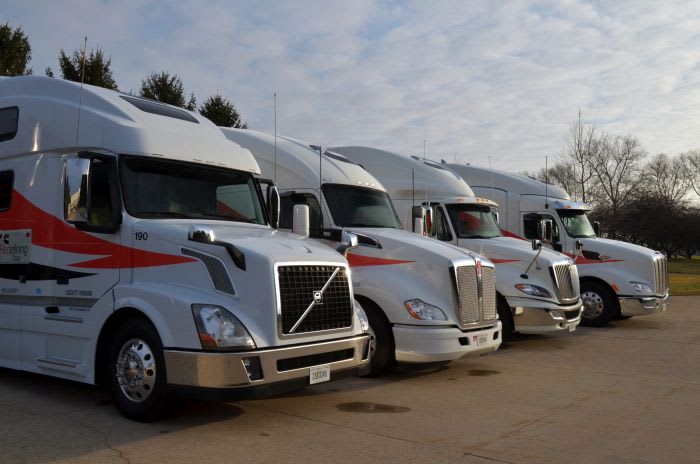
We drove all the trucks except the Volvo. The ProStar had the Fuel Efficient version of the new X15, and the Peterbilt had the Performance version. The Kenworth has a current engine for comparison. Photos: Jim Park
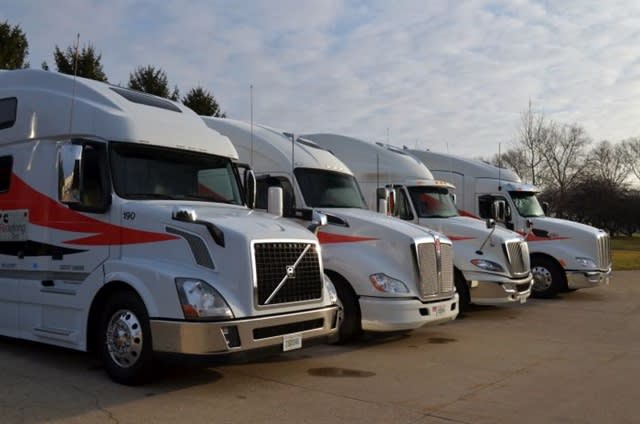
We drove all the trucks except the Volvo. The ProStar had the Fuel Efficient version of the new X15, and the Peterbilt had the Performance version. The Kenworth has a current engine for comparison.Photos: Jim Park
As engine platforms go, Cummins’ ISX has to be considered slightly remarkable. It was introduced in 1998, although the program that brought the engine to life began in 1994. It survived the transition to exhaust gas reduction (EGR) and then to selective catalytic reduction (SCR) aftertreatment (while several other engines did not) and it’s still very much alive and kicking today. We spent a day test driving a couple of production-intent versions of the 2017 X15 (as it’s now known) and a current ISX15 for comparison.
Coming in 2017 are two distinct versions of the engine, one tuned for fuel economy, the other for performance. Most of the changes are electronic, but Cummins has made some physical changes to the air handling system and reduced internal parasitic drag on both models. In the case of the performance version, Cummins has optimized the combustion hardware and improved what it calls the combustion recipe.
The impact of the enhancements is subtle but noticeable. In plain English, the 2017 models felt peppier, a little quicker and smoother to respond and generally had a firmer feeling to them. The engine brake performance at very low rpm was quite a surprise, and even more so in the performance version, which boasts a new and improved version of the venerable Cummins Variable Geometry Turbocharger.
With trends in engine speed drifting lower with each passing year, drivers were becoming dissatisfied with the engine brake performance, apparently not realizing or forgetting that a simple downshift would restore the massive retarding power available from a 15-liter engine. That downshift is no longer required, but be prepared for a treat if you decide to drop it down a gear.
Electronically speaking, it’s pretty clear that Cummins and Eaton have been spending a lot of time together in the lab and on the track. The 2017 version of the SmartAdvantage powertrain is as smooth and perfectly integrated as any of the vertically integrated powertrains it competes against. Clutch engagement on the Eaton side is dramatically improved over earlier versions, and slipping between the top two small-step gears was barely noticeable on Indiana’s modest Interstate grades.
The close ratio-step between 9th and 10th is meant to keep the engine close to its fuel efficiency sweet spot for as much time as possible. Interestingly, the 2016 engine would lug – if we can still use that term (it hardly applies anymore) – down to 1,070 rpm before making a downshift on a grade, whereas the 2017 dipped down to 1,040 before giving up a gear, starting from a cruise rpm of between 1,100 and 1,125. If for some reason you aren’t using cruise control, the 2017 version will deliver peak torque all the way down to 975 rpm.
Both of the fuel-efficient versions of the engines I drove had the ADEPT suite (Advanced Dynamic Efficient Powertrain Technology) featuring SmartCoast and SmartTorque2 (ST2). The 2017 version also had Cummins’ own predictive cruise control (PCC) feature, currently available only on Paccar products. Cummins will have its own PCC package for 2017 and it will be available across all OEs.
SmartTorque has been around for a few years, but the latest evolution, ST2, provides additional torque when sensors in the transmission detect the vehicle is on an uphill grade.
SmartCoast was new in 2016. It disengages the engine from the transmission on modest downgrades for almost drag-free coasting with the engine at idle. Coupled with SmartCruise, customers can set their own droop settings (between 3 mph below and 6 mph above cruise set speed) for reengagement and engine brake activation on grades so they can harvest the maximum amount of momentum from a hill.
Previous versions of SmartCoast dropped the engine to a 600-rpm idle, but for 2017 Cummins is so confident in faster transient response from the new air handling system that it’s comfortable letting the engine drop to 500 rpm with no worries about rapid re-engagement.
The performance version of the engine I drove did not have ADEPT because it had a manual transmission. ADEPT is designed to work with the SmartAdvantage powertrain only, featuring an Eaton AMT.
On the road
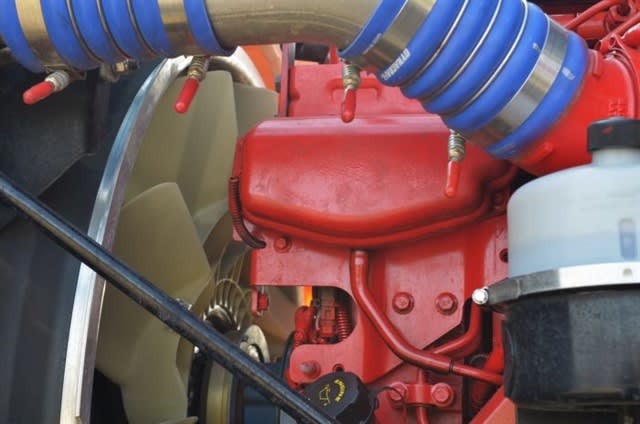
One of the few external changes to the ISX for 2017, the crankcase breather is much smaller and now maintenance-free.
For each truck, we ran about 40 miles south of Cummins’ hometown of Columbus, Ind., on I-65. There were a few modest 2-3% grades en route to get a sense of how it all worked.
The PCC feature was interesting. It has GPS maps loaded into the computer, and with the aid of terrain mapping and inclinometers built into the engine and transmission, PCC looks about 2 miles ahead to get a picture of what’s coming. PCC manages throttle and gearing based on the terrain, and does a really good job of it. It would begin to roll on a bit of power just ahead of a grade to build up momentum before climbing, and it would throttle back just as we began to crest the hill to take advantage of gravity on the downside.
It’s nothing more than a real pro driver would do, but even the best of us have lapses in attention. We might miss an opportunity or six along the way to conserve a little more fuel. Not PCC. It’s as alert to changing terrain at the end of an 11-hour day as it is early in the morning.
Before leaving the plant in Columbus, Mario Sanchez-Lara, director of on-highway marketing communications and my tour guide for the day, reset the fuel economy display for a fresh start. Granted, it was a short run, but we saw the average fuel economy trending upward throughout the run, from 6.6 mpg at the beginning to 7.7 with the 2017 engine and from 6.1 to 7.2 with the 2016 engine when we got back to the plant.
In real world reporting on a round trip from the Cummins Engine Plant in Columbus to the Jamestown, N.Y., plant, the 2017 engine logged an average of 8.4 mpg with an average road speed of 54 mph pulling a trailer loaded to 66,000 lbs. gross vehicle weight. It also had 213 SmartCoast events on the trip where the engine was disengaged from the transmission and the truck was coasting for free.
My feeling, after a day out with the two generations of engine, is that Cummins has made a good thing better. Even with the automated transmission and a lack of direct involvement in operating the engine and transmission, that peppy and tight feeling was obvious. It’s simply a nicer running version of the ISX15.
I have always been inclined to let an engine drift into the lower end of the rpm range to take advantage of the torque down there, but various older Cummins and Eaton products didn’t always cooperate. They are now completely over their aversion to low-rpm operation, and the two (really one now under the SmartAdvantage banner) handle it very well.
I’ll save my report on the performance engine for a future Quick Spin feature, but I would say that engine had all the performance attributes of the fuel-efficient version, but with 605 horsepower and 1,850 lb-ft of torque to play with. Sweet!
The rating of the 2016 ISX15 engine and the 2017 X15 engine were the same: 450 hp with ST2 1,550/1,750 lb-ft. The 2017 engine goes into limited production in October of this year, with full production slated to begin in January.
More Equipment
More Trailer Data Through the Same Seven-Way [Video]
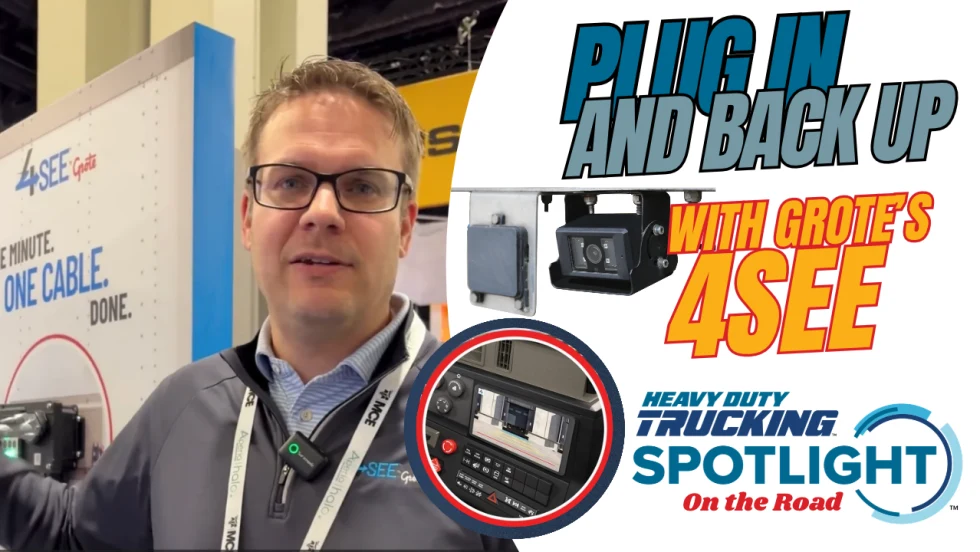
Can trucking’s standard seven-way connector handle more cameras and trailer data? Grote’s Adam Slade shows HDT how the company is using new technology with its 4See trailer system, not only to add a new backup camera but also to expand other capabilities — without adding another connection.
Read More →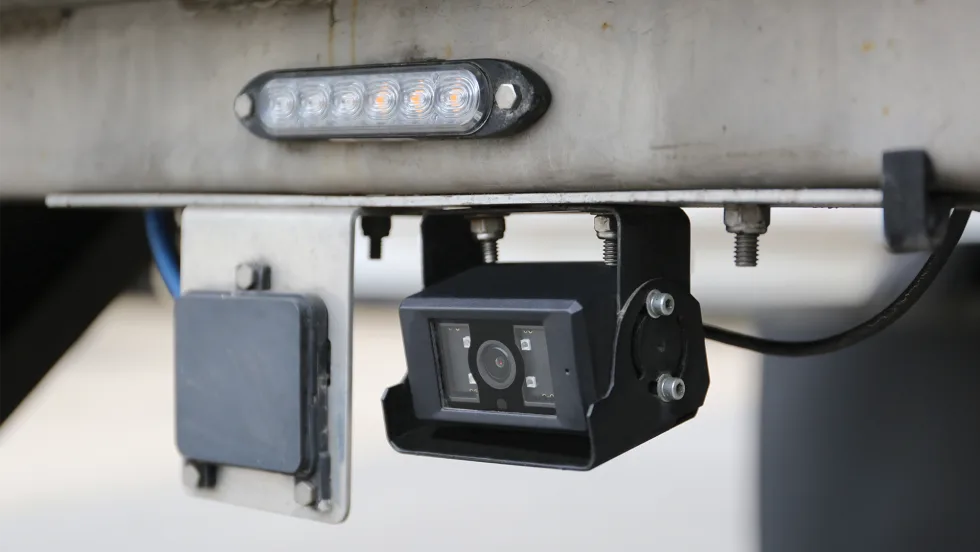
Grote: More Cameras, Same Seven-Way Connector
The next-generation 4See rear-view backup camera from Grote uses the standard seven-way connector and supports additional cameras and other trailer data.
Read More →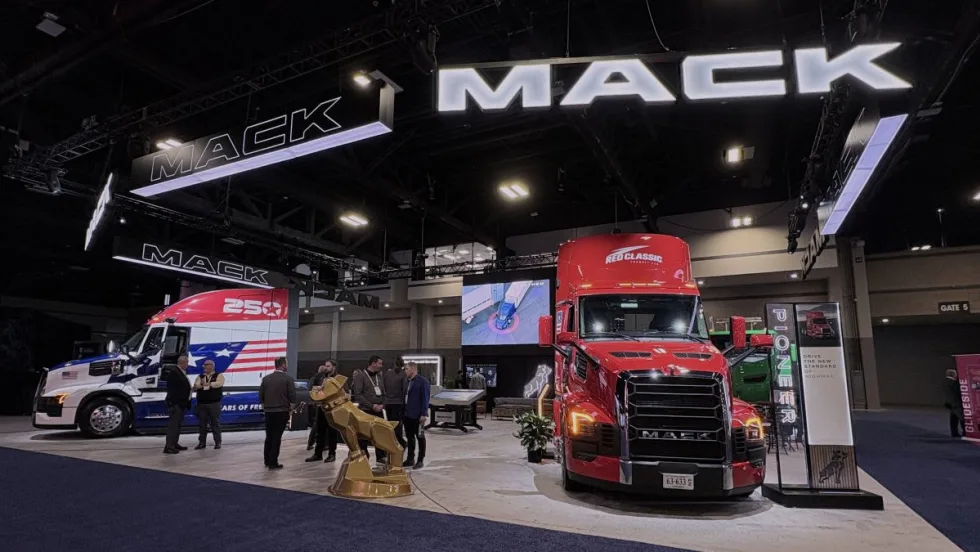
Trucks at ATA's 2026 MC&E in Charlotte, North Carolina [Photos]
From rigs decked out in patriotic America's 250 paint schemes to autonomous trucks and more, check out these photos from ATA's 2026 Management Conference & Exhibition.
Read More →
Help HDT Find Trucking’s Top Products
Have you come across a new product that could make a difference for trucking fleets? Nominate it for HDT’s 2027 Top 20 Products Awards by November 9.
Read More →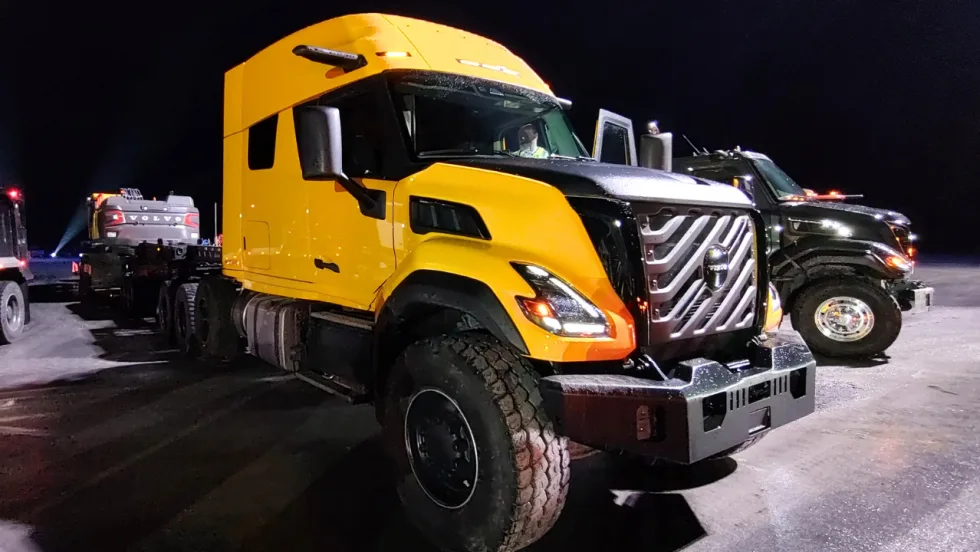
Volvo Unveils New VNX Heavy-Haul and Vocational Truck
Volvo Trucks has launched the VNX, a new vocational truck also available as a tractor in day cab and two sleeper configurations, with one heavy-haul model. The Volvo VNX is powered by Volvo's D13 platform, which delivers up to 540 horsepower and 1,950 pound-feet of torque and is EPA 2027-compliant.
Read More →
How GP Transco Cuts Trucking Fuel Costs, a Tenth of a Gallon at a Time
What’s another tenth of a mile per gallon worth? GP Transco shares how equipment upgrades and driver coaching turn small gains into meaningful fuel savings.
Read More →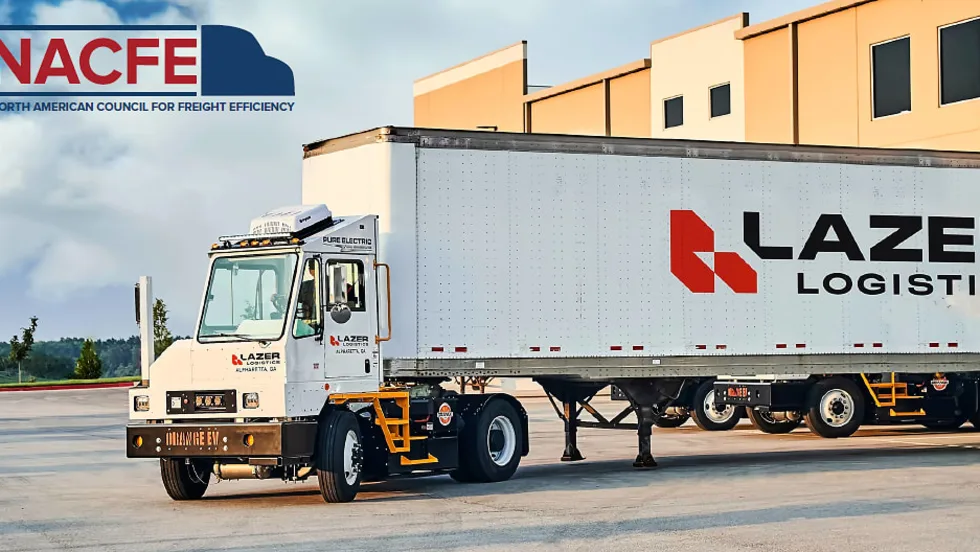
Electric Yard Tractors Move Beyond Pilots
Operating-cost savings have overtaken sustainability goals as the leading reason surveyed fleets are adopting battery-electric terminal tractors, according to new NACFE research.
Read More →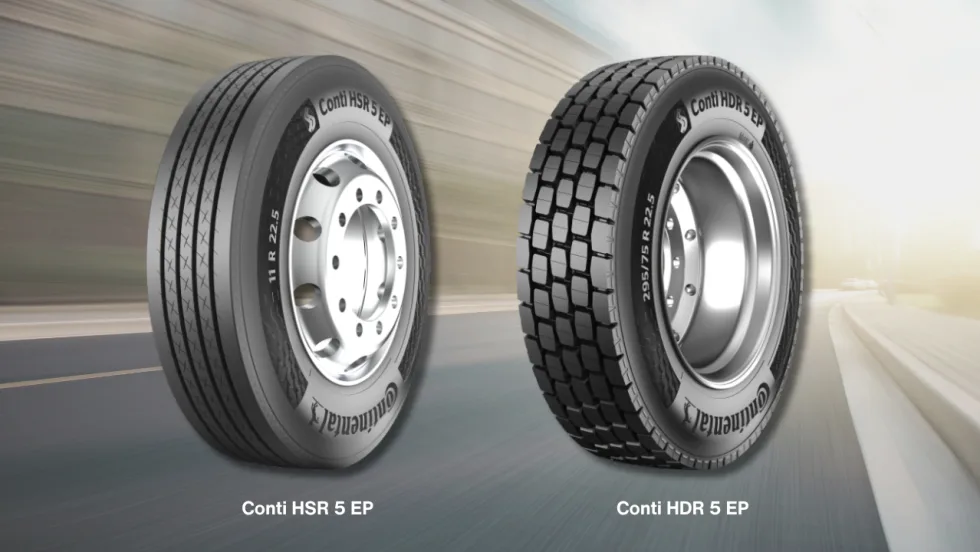
Continental Introduces New Regional Truck Tires
Continental says its new Generation 5 steer and drive tires for regional operations offer longer tread life, with estimated mileage gains of 22% and 19%, respectively.
Read More →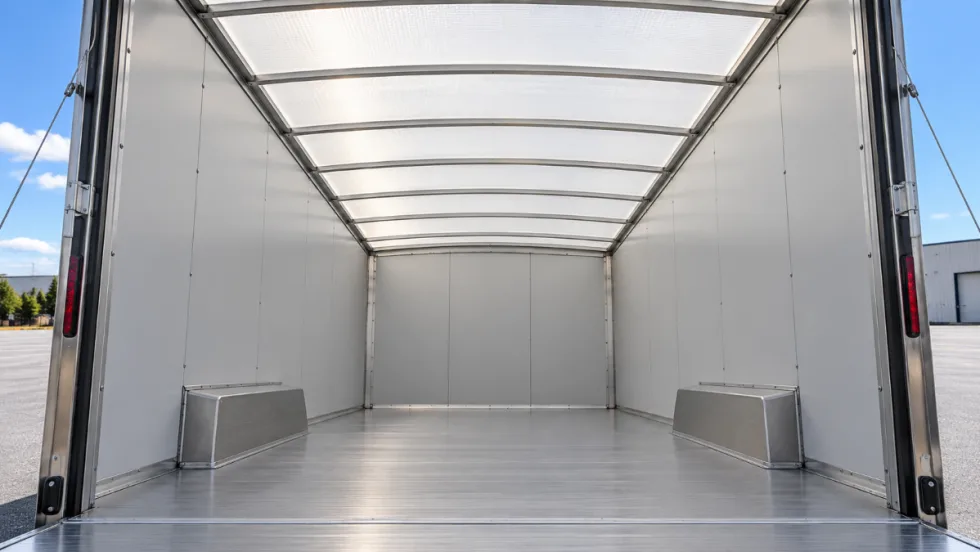
Tekmodo Introduces CargoBright Brand for Translucent Trailer Roofs
CargoBright is designed to diffuse daylight across the cargo area while performing as a working vehicle roof.
Read More →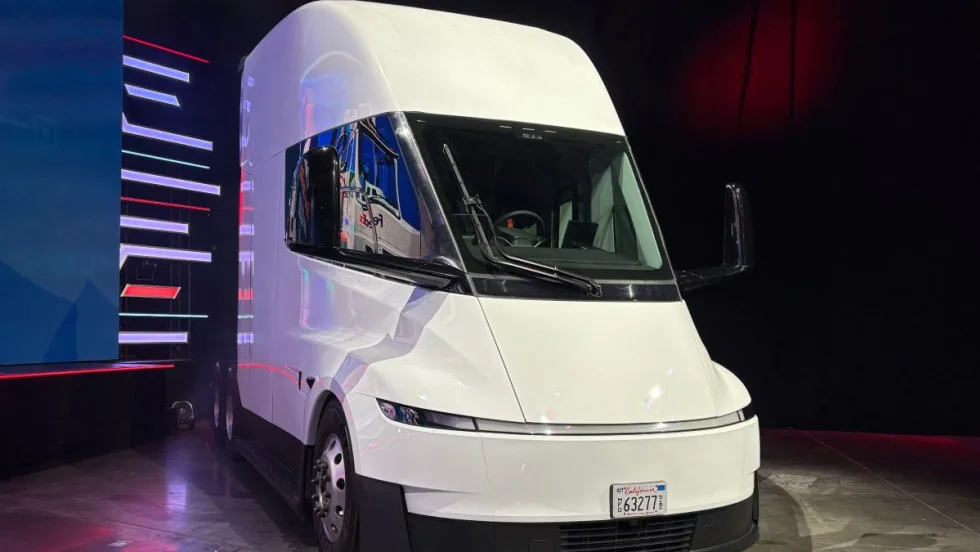
Fleet Economics Shape Electric Truck Outlook
ACT Research expects costs, charging infrastructure, and technology improvements to drive zero-emission commercial vehicle adoption as federal regulations and incentives retreat.
Read More →