





Related: CNG: From an Idea to a Solution
Customers Make LNG ‘No-Brainer’ for Florida Fleet
The Jacksonville-based truckload carrier's transition to LNG was driven by three factors: addressing customers’ sustainability goals, contributing to U.S. energy independence, and lowering fuel costs for the 500-truck fleet.
October 7, 2015
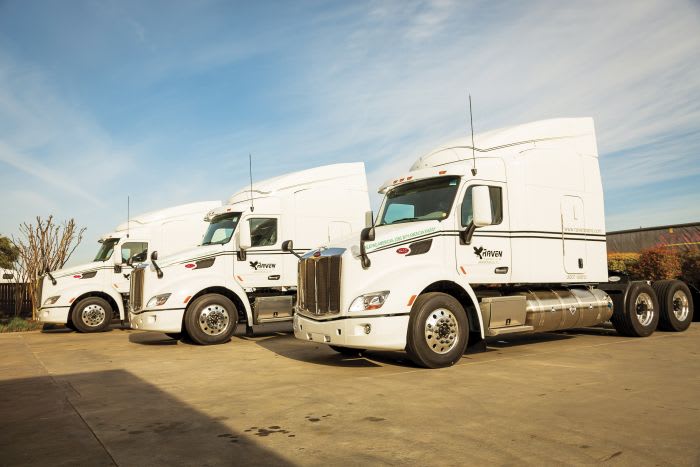
Photo: Raven Transport
2 min to read
Photo: Raven Transport
About two years ago, Raven Transport started switching its over-the-road tractor fleet to operate on liquefied natural gas. It expects to be running 100% on LNG by 2019.
Stephen Silverman, chief operating officer of the Jacksonville, Fla.-based truckload carrier, explains the transition was driven by three factors: addressing customers’ sustainability goals, contributing to U.S. energy independence, and lowering fuel costs for the 500-truck fleet.
“When we began buying LNG trucks in 2013,” he says, “we made the decision to go to LNG on day cabs as our first step. Then when [our customer] P&G included us in their sustainability program if we committed to LNG, it became a no-brainer.”
He points out that LNG power dovetails with Raven’s willingness to tailor its operations to the needs of customers. “Environmental stewardship and cost-effective logistics are central to the operating principles of our customers, which is why our investment in a natural gas fleet makes sense.”
In putting together its LNG truck fleet, Raven’s executives met with Clean Energy Fuels founder T. Boone Pickens. Silverman says they were impressed by his argument for the need to reduce the nation’s dependence on foreign oil by making more use of domestic natural gas.
The carrier was also intrigued by the potential per-gallon cost savings from running on LNG versus diesel. However, Silverman agrees that it’s difficult to quantify the effect on overall fuel costs today because of significantly lower oil and diesel prices. He also points out that it’s still “too early to tell about the impact on maintenance costs, since most of our historical maintenance costs escalate in the third and fourth years.”
The first order in the fall of 2013 was for day cabs, and earlier this year the fleet began to bring on LNG-fired sleeper trucks. Its natural-gas fleet now consists of 115 sleepers and 69 day cabs with 20 more on order. The fleet consists of Peterbilts powered by the Cummins Westport 12-liter engine, but Raven is looking at other tractor vendors as well.
The LNG day cabs can handle a 54,500-pound payload and have a range of around 670 miles, while the sleeper payload is 48,400 pounds and the range extends to just under 1,100 miles.
“The day cabs were purchased for our business partner MillerCoors and the sleepers with our long-term business partner P&G in mind, but we provide service with these trucks to other customers as well.”
About 98% of Raven’s LNG fueling is done at “truck-friendly” stations opened across the Southeast and in Texas, through a multi-year agreement the fleet signed with Clean Energy Fuels.
Subscribe to Our Newsletter
More Fuel Smarts

How GP Transco Builds Fuel Savings a Fraction at a Time
Aerodynamic specs, solar panels, and driver incentives help GP Transco turn small efficiency gains into savings it can reinvest in its people.
Read More →
Trucking’s Diesel Squeeze Isn’t Letting Up
With diesel topping $6 a gallon nationally, ATA's Bob Costello explains why fleets should prepare for continued pressure at the pump.
Read More →
FlowBelow Redesigns Trailer AeroSlider to Cut Fuel Use
The lighter trailer aerodynamic system installs in less than 45 minutes, according to the company, with potential payback in under a year depending on fuel prices and trailer mileage.
Read More →
Why Diesel Price Relief Efforts May Fall Short
Diesel prices have eased from September’s record high, but doubts about additional Russian supply and limits on dyed-diesel tax relief mean trucking fleets still face expensive fuel. And prices could go higher.
Read More →
Why Small Fuel Savings Matter in Trucking
Can better fuel economy help pay for driver raises? In this podcast, GP Transco explains how small efficiency gains create room to reinvest in its people.
Read More →
How GP Transco Cuts Trucking Fuel Costs, a Tenth of a Gallon at a Time
What’s another tenth of a mile per gallon worth? GP Transco shares how equipment upgrades and driver coaching turn small gains into meaningful fuel savings.
Read More →
Electric Yard Tractors Move Beyond Pilots
Operating-cost savings have overtaken sustainability goals as the leading reason surveyed fleets are adopting battery-electric terminal tractors, according to new NACFE research.
Read More →
Geotab Links Fleet Card to Vehicle Data
The new card combines fuel discounts with telematics-based purchase controls. Geotab’s analysis also points to potential savings from choosing lower-priced fuel stops.
Read More →
Fleet Economics Shape Electric Truck Outlook
ACT Research expects costs, charging infrastructure, and technology improvements to drive zero-emission commercial vehicle adoption as federal regulations and incentives retreat.
Read More →
Wex Adds Cardless Fuel Payments for Over-the-Road Customers
A new fuel card feature for Wex customers offers convenience and security.
Read More →