




Q&A: Chris Hornady on Becoming Part of Daseke
Chris Hornady is the third-generation leader of Alabama-based flatbed carrier Hornady Transportation. We spoke with him Monday shortly after the company announced it was becoming part of Daseke.

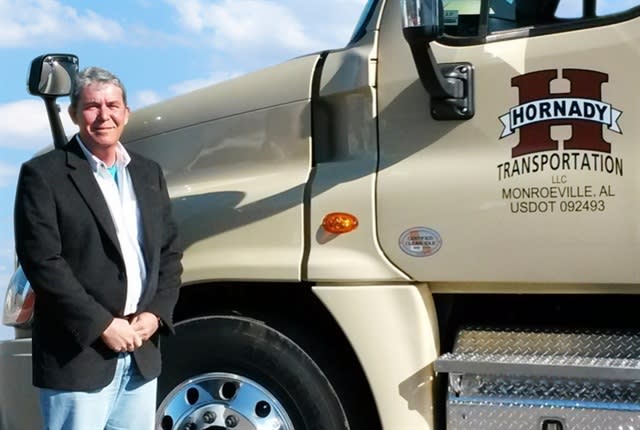
Photo courtesy of Hornady
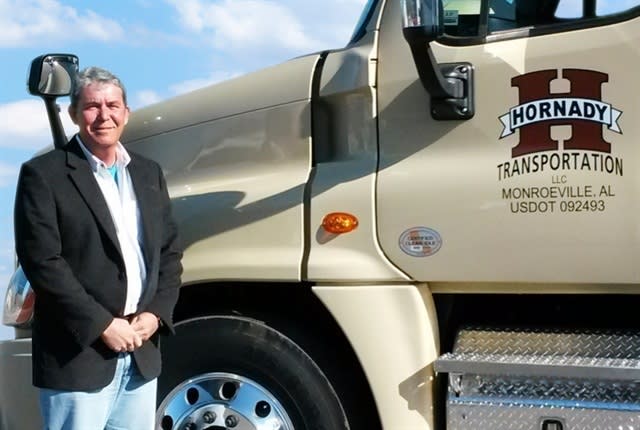
Photo courtesy of Hornady
Chris Hornady is the third-generation leader of Alabama-based flatbed carrier Hornady Transportation. The company was founded by his grandfather G.E. Hornady in 1928, then later led by his father, B.C. Hornady. We spoke with him Monday shortly after the company announced it was becoming part of Daseke Inc., a fast-growing company offering flatbed, open-deck and specialized trucking capacity. (This interview has been lightly edited for clarity.)
Q: Tell me a little bit about your operations.
A: We operate in the eastern two-thirds of the United States. Our headquarters are located in Monroeville in the southern part of Alabama. From a large facility in Birmingham, we run our fleet of trucks and trailers – hauling steel, aluminum, and building materials.
Q: Tell me why you decided to do the deal with Daseke.
A: Daseke provides us capital to grow our business. Daseke’s strong healthcare and 401K plans allow us to offer more generous benefits to our employees. They offer greater purchasing power with fuel, parts and maintenance, placing us at buying power levels we couldn’t reach on our own. Another benefit was the $100 million umbrella liability, which is significant in this market. I think those were some of the main reasons I felt it was good all around for our people, for our drivers, for my family. Daseke’s philosophy is to allow us to run autonomously, while providing us the resources and the mentorship to grow.
Q: That methodology is a bit unusual but must have been attractive.
A: Very attractive – with Daseke’s methodology, you keep your name, you keep your company, and you keep things moving along; it’s business as usual, only with a lot more resources. Daseke supplies you with the capital and purchasing power that allows you to accomplish things you couldn’t do on your own. Then there’s the networking among the families of other carriers. You can work with them on best practices, safety programs, maintenance programs – that's where the real value comes in joining Daseke. It is unique; most times you see these companies come in, buy up everything and then change and consolidate the operation to better reflect the way they do things. That’s not the case at all with Daseke.
Q: Were you looking to sell, or did Daseke come to you with one of those offers you can't pass up?
A: My family and I were not looking to merge; we were approached a little over a year ago.
Q: What will you do with the extra availability of capital made possible by the merger?
A: I think the additional capital will allow us to accomplish three things:
First, we can invest in our drivers by offering them pay that’s more in line with the responsibilities required of them; second, we can invest in new equipment that will help our drivers be comfortable and more productive; third, we can acquire new technology that will improve our operation and help us meet new regulatory challenges.
Q: What are the things unique about your company that made it attractive to Daseke?
A: We've got such a good group of people. They push real hard, they're very customer-focused. Plus, we maintain great relationships with our drivers.
Q: What sort of trends do you see in the flatbed business? What are your concerns?
A: I think we're seeing more and more challenging regulations such as those associated with hours of service. We’re also seeing fewer candidates enter the driver market. The driver shortage results, in part, from the challenge we face in paying drivers wages that are in line with their expected workload. Then, there’s the impact the job demands can have on their family life. The pay has got to be there to support the type of work they’ve been asked to do. And a good work-life balance must be maintained to make the job attractive to more young people.
Q: When you're talking about expected workload, I'm sure in your business that load securement is a factor.
A: Yes. Because the freight is not contained in a van, load securement on flatbed trailers is absolutely critical. Drivers must be highly trained to properly secure those loads. Being a part of Daseke will give us access to the knowledge and expertise other Daseke companies can offer.
Q: So how much harder does that make it to find good drivers?
A: It's very challenging to get quality drivers right now due to the type of work they're being required to do. And I think that challenge is going to be out there for a while until the pay falls in line with the responsibilities.
Q: While there have been very large dry van fleets for quite a while, flatbed companies have typically been smaller and more regional. Do you think we will see more mergers?
A: I just think you're going to see these companies that started in the '20s and '30s and '40s start to merge. The challenges ahead require a lot of capital and you need those synergies in order to be more competitive in the marketplace.
More Fleet Management

Nomination Deadline Extended for HDT Emerging Leaders
Just a few more days to nominate accomplished trucking fleet professionals under 40 who are making an impact and helping lead the industry forward for the HDT Emerging Leaders award. Deadline extended to October 20!
Read More →
What Will ATA’s New Leader Bring to Trucking's Table?
Incoming President and CEO Mark Colson’s record in Alabama offers clues about his priorities and approach following Chris Spear’s abrupt departure as the head of the American Trucking Associations.
Read More →
Volvo, Waabi Start Commercial Autonomous Operations in Texas
Volvo VNL Autonomous trucks, powered by the Waabi Driver, are hauling freight directly to third-party facilities for a customer in Texas.
Read More →
Samsara Launches Custom AI Agent Builder
Agent Studio lets fleets create AI tools for hours-of-service monitoring, reporting and driver support, including agents that communicate by phone.
Read More →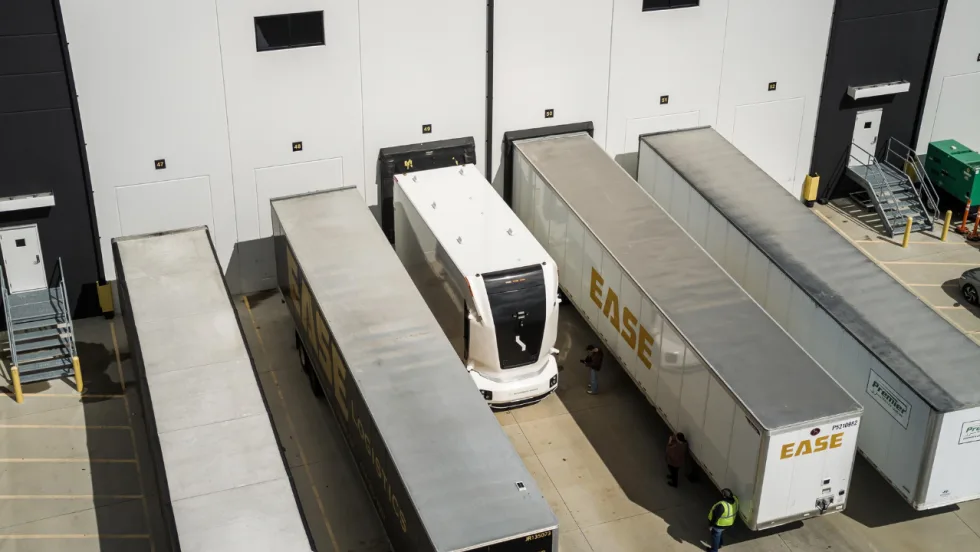
Einride Driverless Electric Trucks Begin Daily Freight Operations in Ohio
Two cabless electric trucks are hauling freight between EASE Logistics facilities in Marysville, Ohio, as part of a multi-state truck automation project.
Read More →
Geotab Links Fleet Card to Vehicle Data
The new card combines fuel discounts with telematics-based purchase controls. Geotab’s analysis also points to potential savings from choosing lower-priced fuel stops.
Read More →
How MFA Helps Protect Trucking Fleets
Multi-factor authentication adds protection when passwords are stolen. Here’s how it works and where fleets should start.
Read More →
How Better Freight Data Helps Trucking Teams Get Ahead of Disruption
Trucking and logistics teams have plenty of data. The problem is getting the right information in front of the right people soon enough to act. Better-connected data can help teams spot trouble earlier and make smarter decisions before small problems become big ones.
Read More →
Trimble: Taking Artificial Intelligence in Trucking Beyond Faster Tasks
At Insight 2026, Trimble executives argued that fleets may need to redesign workflows to get more from AI as it introduced new products and enhancements. AI’s value will depend on how fleets combine automation with their people's knowledge.
Read More →
Build a bulletproof fleet: Uniting ELDs and dash cams for total compliance
An ELD can prove compliance, but it cannot always prove what happened on the road. Discover how uniting accurate ELD data with AI-powered dash cam video can help your fleet strengthen compliance, defend against liability, protect drivers and reduce operational costs.
Read More →