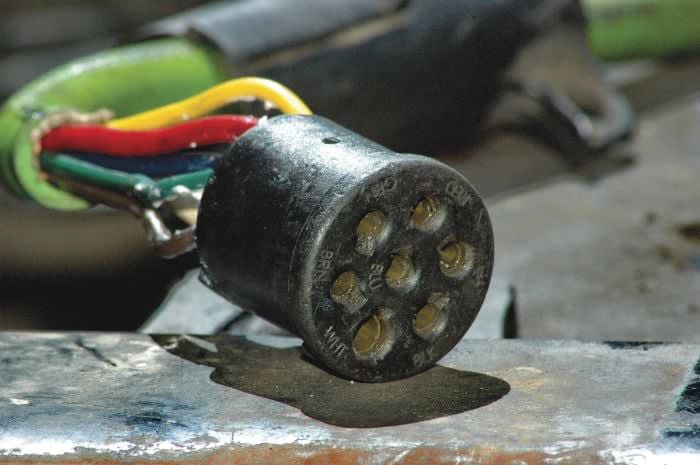
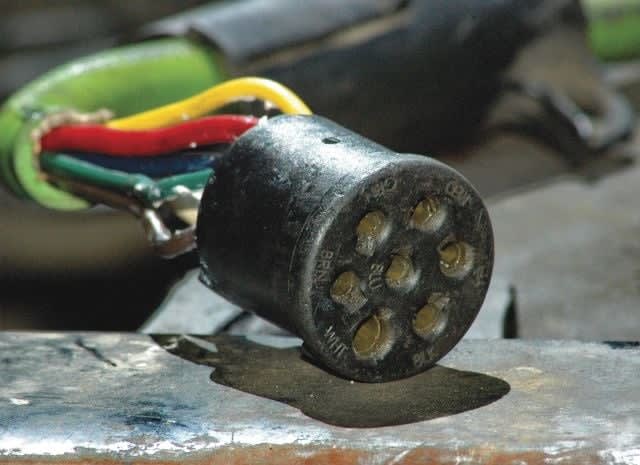
Corrosion wreaks havoc on big robust connectors like this. What do you think happens in systems that need to detect changes of mere millivolts?
5 min to read
Corrosion wreaks havoc on big robust connectors like this. What do you think happens in systems that need to detect changes of mere millivolts?
The day will come when trucks no longer have hood latches. Where the latch was will be a sticker that says, “Do not open. No user-serviceable parts inside.”
Ad Loading...
Until then, we will still have electrical problems to repair: corroded wires and connectors, bad sensors, reams of fault codes, lighting problems and, ohhh, the emissions systems problems.
Many of the daily headaches are caused by very basic wiring problems.
Ad Loading...
For instance, just because a sensor appears to have failed doesn’t mean it’s the sensor. “It could easily be the wiring to the sensor, a connection or a bad ground somewhere else in the system,” says Charlie Groeller, a retired electrical engineer formerly with Mack Trucks. “Corrosion, if that’s the problem, can cause voltage and current flow degradation, which a sensor could interpret as a system fault.”
Which brings us to the fundamentals of electrical maintenance: keeping corrosion out of the system and making proper repairs the first time.
For example, paying attention to cable routing to prevent chafing and abrasion damage.
Bruce Purkey, president of Purkey’s Fleet Electric, has a customer who had experienced several truck fires. He was called in for a consultation and found 27 more that were ready to catch fire, all because of cable routing.
“They had done several clutch replacements,” Purkey says. “To get into the clutch they had to cut away and move a lot of wiring, including the cabling to the starter. Do you think they put it all back the way the truck came from the factory?”
Ad Loading...
Purkey doesn’t point fingers entirely at technicians. The OE, he says, shares some of the blame.
“The OEs bundle wiring into a real bird’s nest sometimes in order to gain some standardization in manufacturing. That causes problems at the fleet level when techs need to get in there and work on something. Still, the techs have to be mindful of the need to put all the wiring back properly and to tie it off so as prevent it from chafing or rubbing through. That can cause a fire in a worst-case scenario, but more likely a short could trigger a fault code that will mean opening up that mess again.”
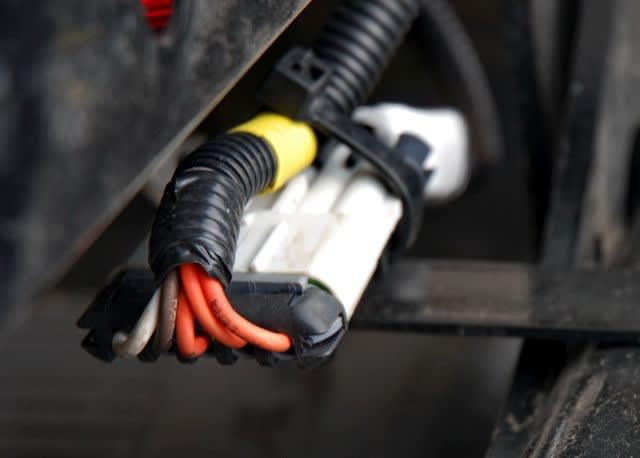
Wires leading into a connector are a pathway for corrosion. Wires should have a drip-loop to keep water out of the connector.
Better wiring
Basic wiring remains a sore point with many carriers. Tom Riddle, fleet maintenance specialist at Air Products & Chemicals in Canada, attributes many of the carrier’s electrical problems to what he says is poor quality wire insulation.
“It’s very common to see spots along harnesses worn through the insulation on trucks less than two years old,” Riddle says. “Once the wire is exposed, the wicking begins and systems start failing. These wear points often occur in areas you would never expect and are usually in the hardest spots to reach.”
Riddle says he’d like to see OEs use better quality wiring in their expensive-to-replace harnesses, and he wants an end to the one-size-fits-all harness with four extra feet of wire stuffed into the frame rail at the factory.
Ad Loading...
“I know it would cost more, but it would pay huge dividends from a maintenance perspective,” he says. “We also need more anti-cap wiring on critical systems to prevent corrosive moisture from wicking back to those $2,000 ECUs.”
Kevin Tomlinson feels Riddle’s pain. He’s the director of maintenance at Ohio-based South Shore Transportation and the newly elected general chairman and treasurer of the American Trucking Associations’ Technology & Maintenance Council.
“If you look at the wiring on engine components, the internal strength and diameter of wire leaves a lot to be desired,” he says. “I do understand that wiring is sized for its task, but what happens when it is compromised, even a bit? If there was a little redundancy in the wiring, it might a be a little stronger and better able to withstand a problem.”
At the same time, Tomlinson readily admits he himself might be part of the problem.
“I can take the blame for some of this because I want the lightest and least expensive truck I can get,” he admits. “But for the cost of a few strands of wire and some decent wire coating, I think wiring problems are worse today than they should be.”
Ad Loading...
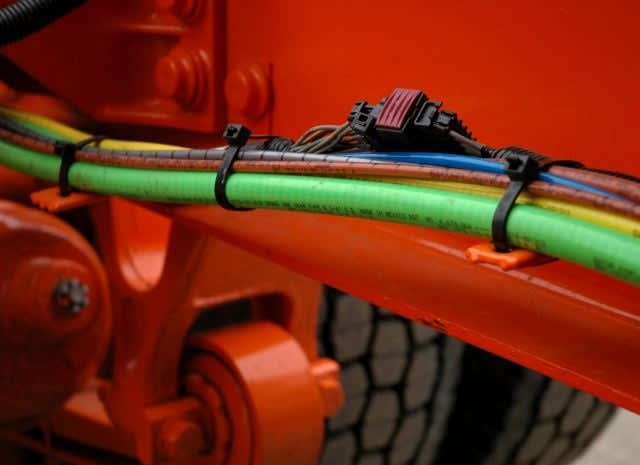
Chafing is a major source of wire damage. Make sure cables are routed away from sharp surfaces and secured with cable ties to keep them from rubbing.
Dave Phillips, executive vice president of Phillips Industries, says while some fleets are willing to pay more to eliminate problems, many are still stepping over the proverbial dollar to pick up a dime.
“There are wiring solutions out there that will solve a lot of these problems, but some fleets are reluctant to try something new,” he says. “With all of the sealed connectors on the market, fleets still seem to prefer, as an example, a metal plug on the J560 trailer connector. That’s a hotbed for corrosion, and solutions are out there, but the old habits seem hard to break. If it’s price, the upcharge for a premium connector is only about 10%. That’s not a lot to pay to reduce that sort of grief.”
Trucks are throwing fault codes at an unprecedented pace, and each code, it seems, has its own diagnostic tree for technicians to follow. Some of the processes involve using specialized tools, some just a basic multimeter.
“My feeling is the larger fleets and the dealers have the resources to maintain a good technician training program, but it would very expensive for a smaller fleet to stay current,” Groellern says. “And even if they are well trained, do they have the information they need about the system they are working on to, for example, recognize the voltage difference from a hot or a cold temperature sensor?”
With still greater system complexity ahead of us, it’s ironic that one of the oldest and humblest enemies of anything metallic — oxidation — can still bring a Class 8 truck to its knees.
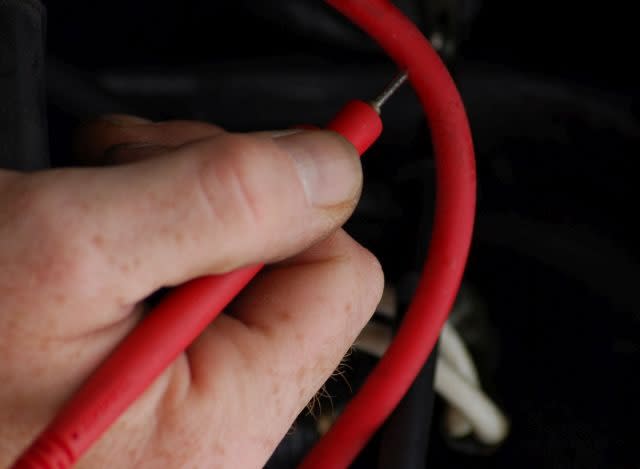
Dispose of all your test lights. Once wire insulation has been pierced by the probe, it’s open to corrosion-inducing elements.
Top 3 electrical maintenance tips
George Arrants, director of training at WheelTime, has seen it all. While he trains his technicians in proper electrical repair, lots of trucks come through his shops whose maintenance providers have not had similar training. His top suggestions:
Don’t ever use a test light with a piercing probe. Those poke holes in the wire that open up a gateway for moisture. Once wire is wet, corrosion sets in immediately.
Don’t use non-sealed butt connectors. These are fast and simple, but offer no protection from corrosion. Use soldered and/or crimped connections with double-walled heat-shrink tubing to seal and insulate the connection.
Learn how to repair electrical connectors properly. There are procedures for repairing various sealed connectors supplied by the manufacturers. Follow them. If there’s dielectric grease or some other insulator inside a connector, make sure you refill the repaired connector.
Can trucking’s standard seven-way connector handle more cameras and trailer data? Grote’s Adam Slade shows HDT how the company is using new technology with its 4See trailer system, not only to add a new backup camera but also to expand other capabilities — without adding another connection.
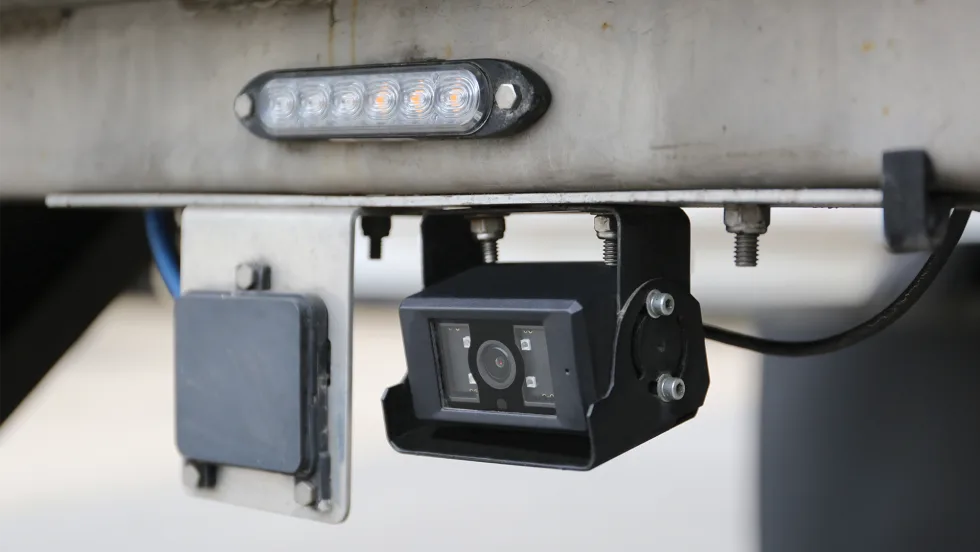
The next-generation 4See rear-view backup camera from Grote uses the standard seven-way connector and supports additional cameras and other trailer data.
From rigs decked out in patriotic America's 250 paint schemes to autonomous trucks and more, check out these photos from ATA's 2026 Management Conference & Exhibition.
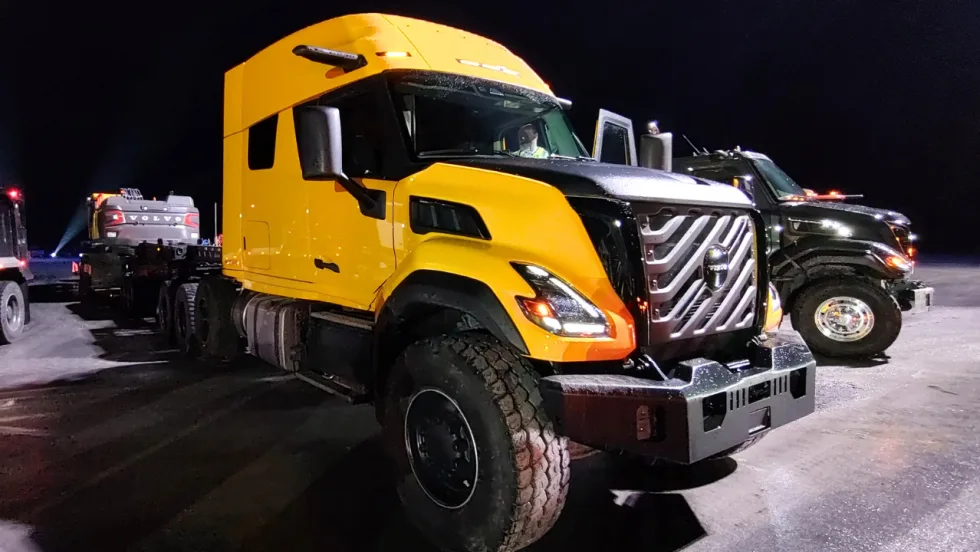
Volvo Trucks has launched the VNX, a new vocational truck also available as a tractor in day cab and two sleeper configurations, with one heavy-haul model. The Volvo VNX is powered by Volvo's D13 platform, which delivers up to 540 horsepower and 1,950 pound-feet of torque and is EPA 2027-compliant.
What’s another tenth of a mile per gallon worth? GP Transco shares how equipment upgrades and driver coaching turn small gains into meaningful fuel savings.
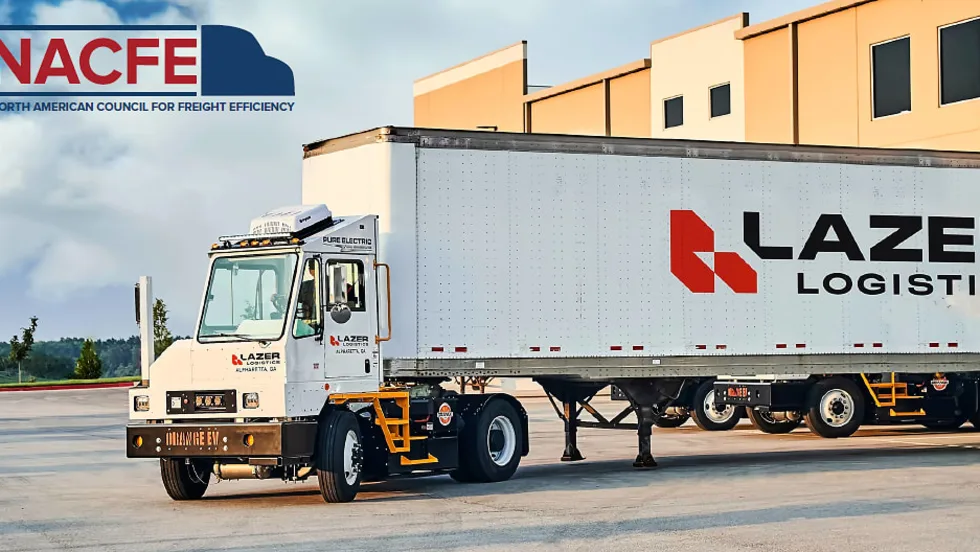
Operating-cost savings have overtaken sustainability goals as the leading reason surveyed fleets are adopting battery-electric terminal tractors, according to new NACFE research.
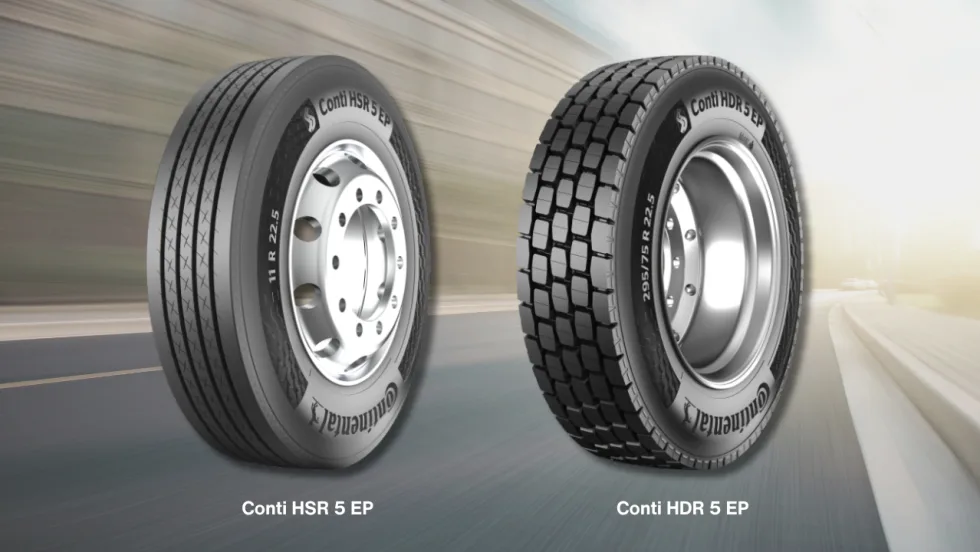
Continental says its new Generation 5 steer and drive tires for regional operations offer longer tread life, with estimated mileage gains of 22% and 19%, respectively.
ACT Research expects costs, charging infrastructure, and technology improvements to drive zero-emission commercial vehicle adoption as federal regulations and incentives retreat.