




Hours of Service Hot Button Questions, Part 2
Every year, hours-of-service questions from drivers and carriers make up the vast majority of inquiries concerning the Federal Motor Carrier Safety Regulations. In this article, the second of a three-part series, we'll look at the 30-minute rest break requirement.
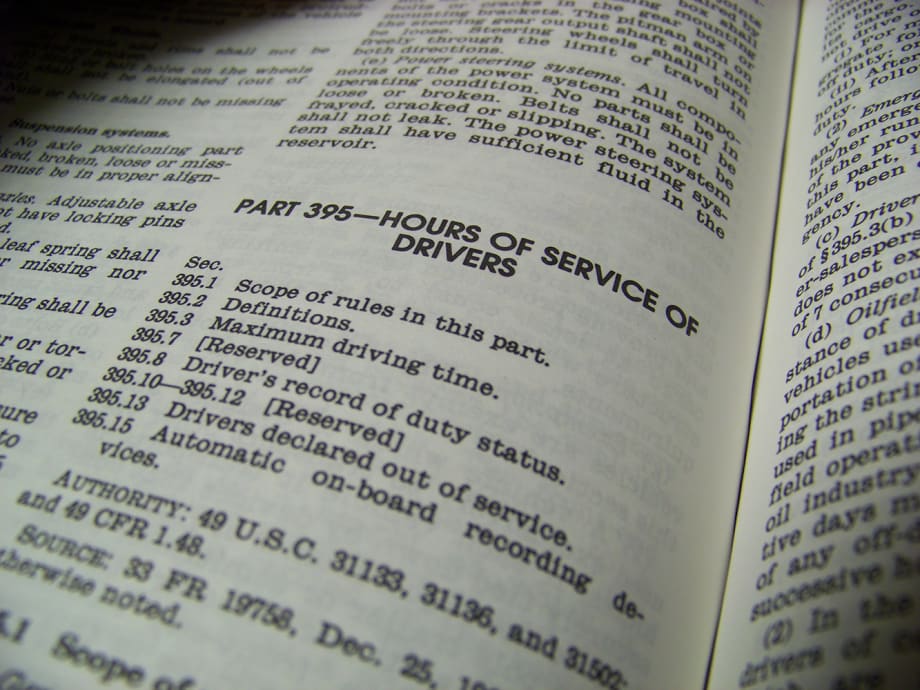
Every year, hours-of-service questions from drivers and carriers make up the vast majority of inquiries concerning the Federal Motor Carrier Safety Regulations. This year, concerns dealt with three main topic areas: electronic logging devices, 30-minute rest breaks, and restarts.
In this article, the second of a three-part series, we'll look at the rest break.
Rest break questions generally fall into one of three categories: Does the rule apply to me? May I take the rest break at a customer? When does the 8-hour clock begin and end?
Here are several examples:
Question:My driver begins his day at 7 a.m. and works in the warehouse until 2 p.m., at which time he is needed to make a delivery in a CMV. The delivery should only take two hours; does he need a rest break?
Answer: Yes. The 8-hour clock begins when the driver reports and goes on duty. It measures all elapsed time since coming on duty, but only affects the ability to drive after the 8th hour. The clock resets with each off-duty period of 30 minutes or more.
Since the driver began his day at 7:00 a.m., seven hours passed between when he went on duty and when he was asked to drive. His 8-hour clock will expire before he can return. He needs to either take a 30-minute rest break before departing or within the first driving hour (by 3 p.m.).
Question: My driver has a three-hour delay at a customer. Can he use that time as a rest break?
Answer: Shortly after the 30-minute rest break requirement went into effect last year, the FMCSA revised its guidance and says that "drivers may record meal and other routine stops, including a rest break of at least 30 minutes intended to satisfy 49 CFR 395.3(a)(3)(ii), as off-duty time provided:
The driver is relieved of all duty and responsibility for the care and custody of the vehicle, its accessories, and any cargo or passengers it may be carrying.
During the stop, and for the duration of the stop, the driver must be at liberty to pursue activities of his/her own choosing.
When the FMCSA issued the revised guidance, they included this explanatory text in the Federal Register: “The revised guidance also emphasizes that periods of time during which the driver is free to stop working, and engage in activities of his/her choosing, may be recorded as off-duty time, irrespective of whether the driver has the means or opportunity to leave a particular facility or location.”
If the driver is in a queue line, expected to monitor a CB channel, or needs to stay in a condition of being ready to work, the off-duty criteria would not be met and the driver needs to log the time as on-duty, not driving. If the conditions in the interpretation above are met, the driver may log the time as off-duty, thereby resetting the 8-hour break clock.
Question: I work in the <fill in the blank> industry, hauling <fill in the blank> commodities. Do I need to take a 30-minute rest break?
Answer: Probably. Only one type of driver is exempt from rest breaks: short-haul drivers who qualify for one of the exemptions in Section 395.1(e). Shortly after the rest break rule began on July 1, 2013, the FMCSA published guidance relating to short-haul drivers, and then changed the wording of §395.3(a)(3)(ii) to: “Except for drivers who qualify for either of the short-haul exceptions in §395.1(e)(1) or (2), driving is not permitted if more than 8 hours have passed since the end of the driver's last off-duty or sleeper-berth period of at least 30 minutes.”
The FMCSA may, at times, provide additional exemptions to the rest break rule. There is currently an exemption for livestock haulers in effect until June 11, 2015.
Drivers transporting Division 1.1, 1.2, and 1.3 explosives as well as certain drivers operating for the Department of Defense or the Department of Energy are allowed to use 30 continuous minutes of “attendance” time as the rest break. They are not, however, exempt from the rest break rule.
More Drivers
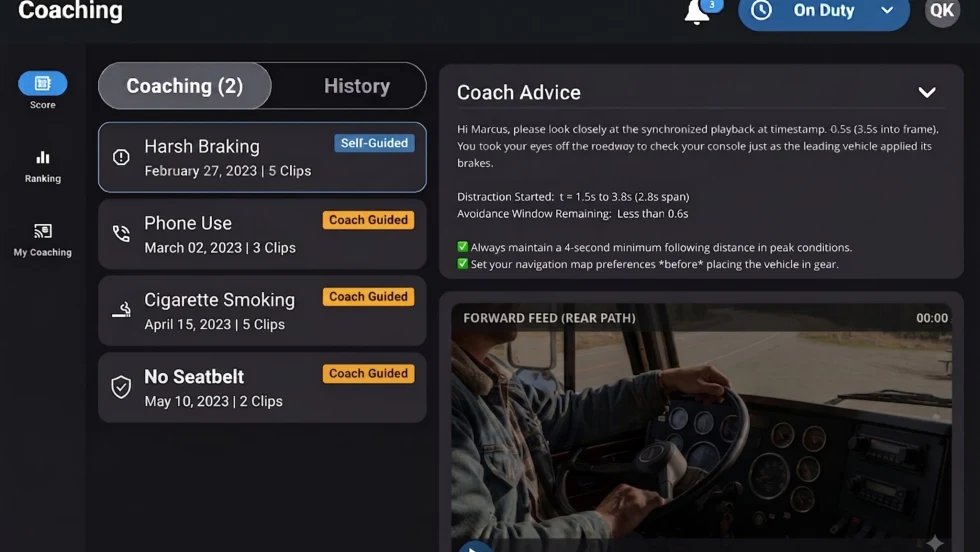
Platform Science Adds Dispatch and Safety Tools
Four additions to PS Fleet help fleets monitor loads, manage driver coaching, share truck locations and adjust video system settings.
Read More →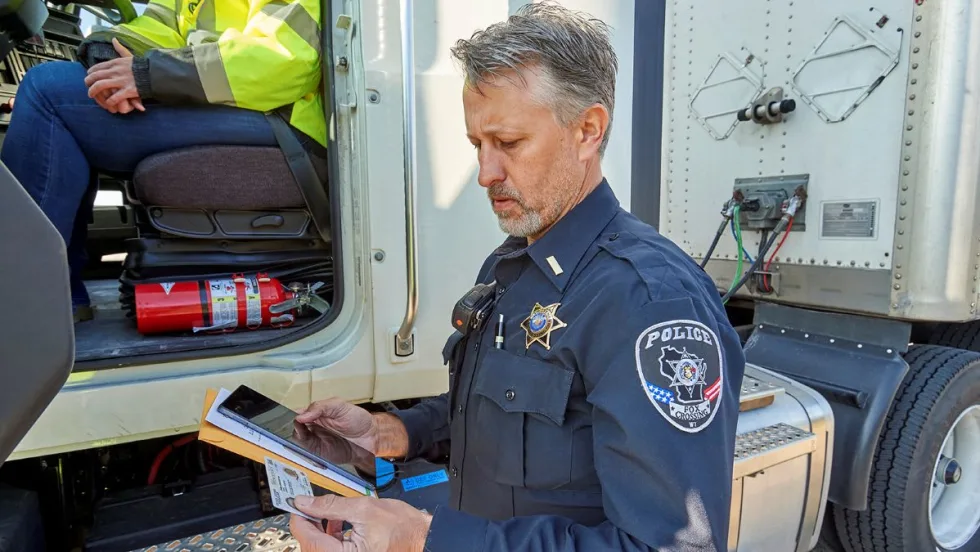
When Language Stops the Truck: The Return of ELP Out-of-Service Orders
English language proficiency rules for commercial drivers aren’t new, but renewed out-of-service enforcement has raised the stakes. Here’s what carriers need to know before a driver reaches a roadside inspection.
Read More →
Samsara Launches Custom AI Agent Builder
Agent Studio lets fleets create AI tools for hours-of-service monitoring, reporting and driver support, including agents that communicate by phone.
Read More →
Trucker Path Expands Reserved Parking Network
Trucker Path has added close to 6,000 more truck parking spaces to its Trucker Path Reserved Parking Network with the addition of Safe Truck Parking.
Read More →
EEOC Sues Texas Trucking Company Over Driver Age Limits
The agency says Trancasa USA rejected applicants over 65 and applied tougher driving-record standards to those over 60.
Read More →
Nussbaum, Roehl Announce Second Driver Pay Increase This Year
This year has seen a swath of major truck driver pay increases as freight capacity has tightened.
Read More →
From One Generation to the Next: How Mentorship Builds Safer Truck Drivers
After three decades in trucking, Harold Perry shares what he's learned about driver safety, mentorship, and helping the next generation build confidence behind the wheel.
Read More →
Truck Drivers Need More Than Another Alert
Fleets have more visibility into truck health, safety events, and driver activity than ever. The next challenge is turning all that information into useful guidance for the person who has to decide what to do next.
Read More →
FMCSA Removes 110 Truck Driver Training Schools from Certified ELDT List
Federal regulators also are targeting more than 160 additional training providers and launching a nationwide audit of third-party CDL skills testers as part of a broader crackdown on trucking fraud.
Read More →
Hours of Service Pilot Programs: FMCSA Readies for 2027 Rollout
Two pilot programs could eventually reshape hours-of-service rules, giving truck drivers options to pause their 14-hour clock or use longer split sleeper rest periods.
Read More →