




Scania: Sleeping Giant in Emerging VW Truck Portfolio?
Volkwagen's takeover of Scania may seem like it should only matter to Europeans, but the German automaker's goal is to be able to compete in commercial vehicles alongside global rivals Volvo and Daimler. North America is likely in its game plan.

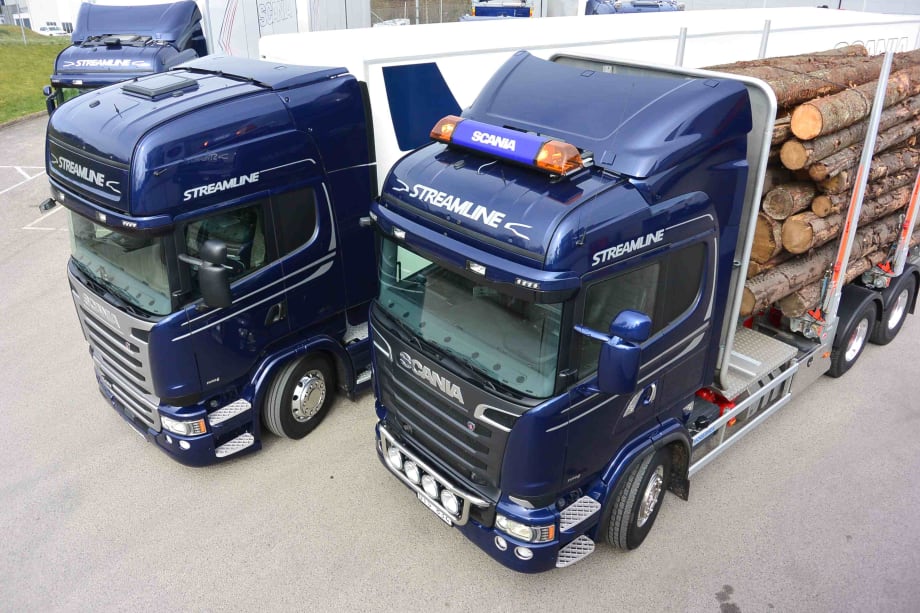
Recently HDT visited the Scania Demo Center for Western Sweden. Here we test drove the most powerful engine
variant, the R730 in 6x4 version. Photo: Sven-Erik Lindstrand
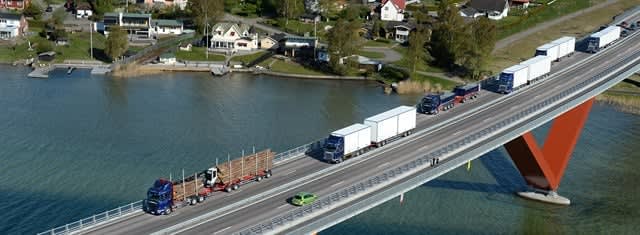
A convoy of Scania demo vehicles on their way to a dealer open house in Sweden in May. Photo: Tommy Holl
Who is Scania, and why should you care?
Unlike Volkswagen, which is a household name in the U.S. because of its cars, the Scania name is not well-known here – although if you've been in the business for a long time, you may remember Scania's unsuccessful attempt to introduce its trucks to the U.S. market in the mid-'80s.
Last month, Volkswagen, which already controlled more than 89% of the voting rights in the Swedish truck maker, made a 6.7 billion euro ($9.2 billion) takeover bid.
VW's goal is to combine Scania with its Volkswagen Commercial Vehicles business and the German truck maker MAN. VW gained full control of MAN last year after taking a majority stake in 2011.
This is a big step in the German automaker's plan to create a massive trucks alliance to compete in global markets against rivals Volvo and Daimler – both of which have U.S. truck operations as well.
Observers believe North America will be included in these worldwide efforts. There are already some cross-Atlantic ties. Navistar shares engineering and engine development with MAN, Cummins with Scania. Rumors have long circulated that VW wants to buy a U.S. truck maker, such as Navistar or even Paccar.
"We can now take the next logical and consistent step in our strategy to strengthen the operating integration of Scania, MAN and VW commercial vehicles," said Chief Executive Martin Winterkorn at VW's annual shareholder meeting in Hanover, Germany.
Another big step was the recent hiring of Andreas Renschler to head the VW Truck Group. Before, for almost 10 years, Renschler was at the helm of Daimler Commercial Vehicles. With Daimler Trucks North America holding the market share leader position in the U.S., Renschler has valuable experience with the commercial truck market here.
Europe's biggest automotive group, VW has the financial muscles to replicate in trucks the success of its multi-brand strategy in passenger cars.
The VW-led alliance aims to deepen cooperation in areas including drivetrains, chassis and electronics. Because VW's commercial vehicle experience is primarily with cargo vans, it needs the heavy-truck muscle of MAN and Scania, especially Scania's expertise in advanced technology and top production skills and its high-end brand reputation.
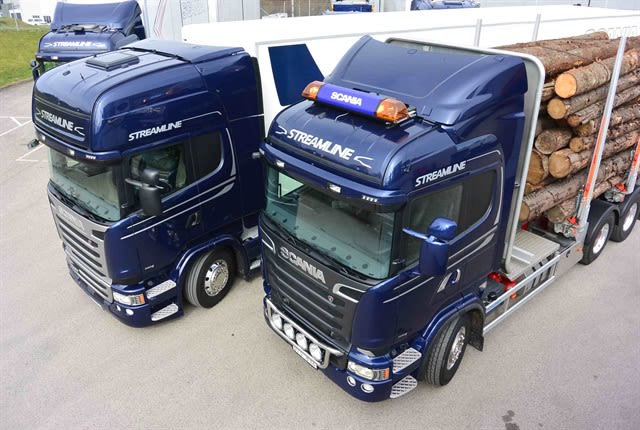
Recently HDT visited the Scania Demo Center for Western Sweden. Here we test drove the most powerful engine
variant, the R730 in 6x4 version. Photo: Sven-Erik Lindstrand
So who is Scania?
Employing some 41,000 people, Scania operates in more than 100 countries throughout the world. It is a leading manufacturer of trucks and buses for heavy transport applications and of industrial and marine engines. The company already sells engines in the U.S. for boats and for construction, agriculture and stationary equipment.
In 2013, net sales totaled SEK 86.8 billion ($13.10 billion) and net income amounted to SEK 6.2 billion (almost $1 million). Like Paccar in the U.S., Scania has a history of consistently showing profits.
On the technical front, Scania has a long-established cooperation with America’s Cummins on fuel injection technology like XPI.
Production takes place in Europe and South America, with facilities for global interchange of both components and complete vehicles. There are production facilities in Sweden, Poland, the Netherlands, France, Russia, Brazil and Argentina. Scania also has assembly operations in another 10 countries, operating in Africa, Asia and Australia.
Scania’s product range is based on a unique modular system that allows a large variety of truck models to be built using a limited number of components and sub-assemblies. Some are also shared between trucks and buses. Scania’s production methods and environmental standards are the same the world over. Models and components are interchangeable between factories and continents.
In theory, using far fewer than 20,000 components, Scania can produce almost 2 billion variants.
During its 120 years of operation, Scania has built 1.6 million trucks and buses, of which more than 600,000 are considered to still be in regular operation. The company’s millionth truck was built in 2002.
Only V-8 diesel meeting Euro 6
Today, Scania is the only manufacturer to offer V-8 truck engines that live up to the Euro 6 emissions standards, in 520, 580, and 730 horsepower versions. Euro 6 standards are similar to EPA 2010 standards in the U.S.
This 16.4-liter V-8 engine was launched in 2000 as a completely new design, based on the unit cylinder use in all Scania engines for 9-, 12-, 13- and 16-liter engines.
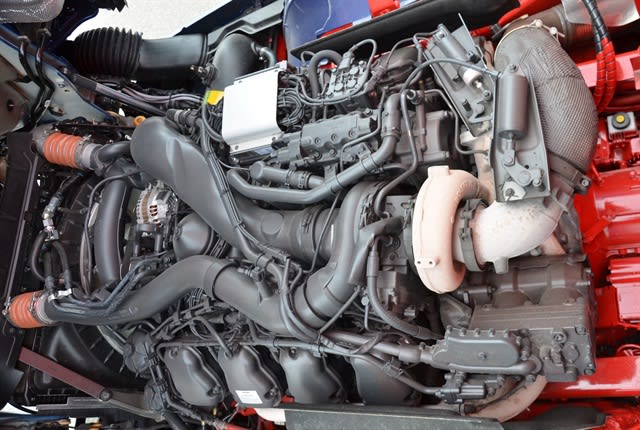
It is well packed under the cab floor around a V-8 engine. Photo: Sven-Erik Lindstrand
Scania has long been known for its powerful V-8 engines. Its first was introduced in 1969. The 14-liter with 350 horsepower at the time was Europe's most powerful truck engine – a title this engine kept for many years.
As early as the summer of 2011, Scania let the press test-drive engines meeting Euro 6 requirements. The 13-liter, in-line six-cylinder engines with 440 and 480 horsepower were ready two and a half years before the standard took effect at the start of 2014. The 520- and 580-horsepower models followed by late summer 2013 and the 730-horsepower debuted in early winter 2013.
How it started
In 1911, two companies named Vabis and Scania merged to form Scania-Vabis.
Scania can be described as one of the pioneers in the European vehicle industry, as its roots go back to 1891.
Scania started with the production of bicycles and extended its operations to automobiles in the early 1900s. Its first truck appeared in 1902 and carried 1.5 tons of cargo. It was equipped with a 2-cylinder engine with 12 horsepower, placed under the driver’s seat. Scania was named after the Latin word for the province where it was located, "Skåne."
Vabis (a Swedish acronym) was a manufacturing company founded in 1891 to produce railway carriages. It produced its first automobile in 1897 and then went for commercial vehicles. In 1902 Vabis built its first truck. It had a 2-cylinder, 12-horsepower engine and 1.5 ton-payload. Top speed was 12 km/hour, which was twice the speed of the ordinary trot of a work horse.
The new combined company produced cars, complete buses, trucks, and special vehicles such as fire engines. Production of bicycles and railway carriages was discontinued.
Click here for a photo gallery to learn more about Scania.
More Equipment

PlusAI Going Public to Fund Autonomous Truck Launch
A SPAC deal could provide PlusAI with up to $300 million as it works toward a 2027 commercial launch of factory-built autonomous trucks.
Read More →
NHTSA Moves to Rewrite Truck Fuel-Economy Rules
The National Highway Traffic Safety Administration says it lacks authority to regulate medium- and heavy-duty truck engines separately from complete vehicles, but the existing standards have not yet been eliminated.
Read More →
Detroit Opens Orders for EPA 2027 Engines
Detroit isn’t starting from scratch to meet EPA 2027 diesel emissions standards. Its Gen 6 DD13 and DD15 engines keep much of today’s platform while updating the fuel and aftertreatment systems.
Read More →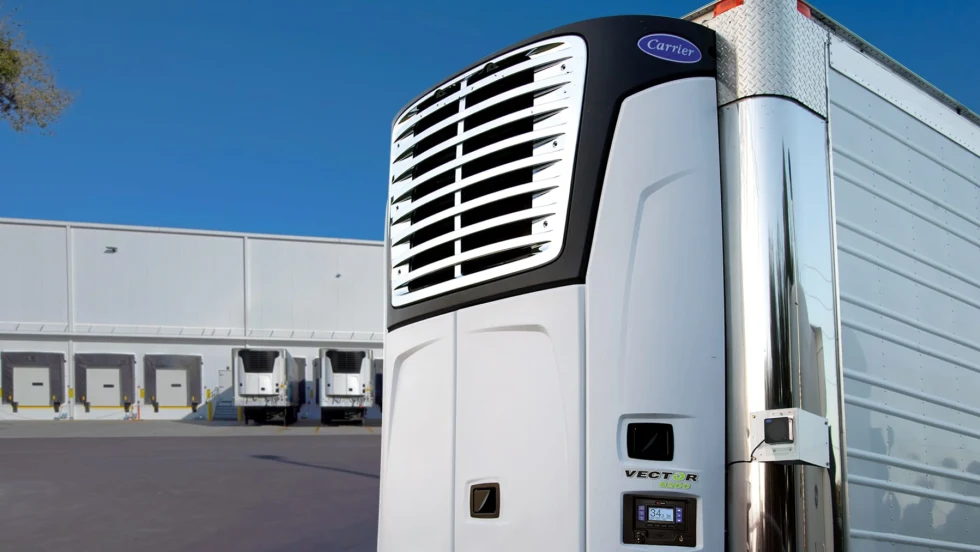
Carrier Transicold Adds All-Electric TRU for Stationary Cold Storage
Carrier Transicold’s new Vector 8200 all-electric transport refrigeration unit gives fleets a diesel-free option for temporary refrigerated and frozen trailer storage.
Read More →
A Closer Look at Kenworth’s Electric T880E Vocational Truck [Video]
Learn more about Kenworth's T880E battery-electric vocational truck at the Paccar Technical Center, including its range, applications, upfitting considerations, and PTO options, in this HDT Spotlight video.
Read More →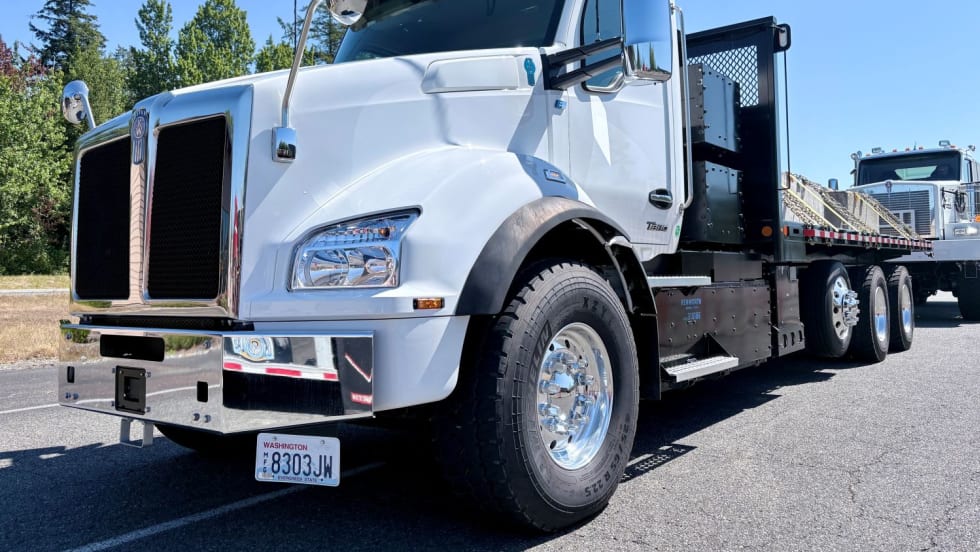
Kenworth T880E Brings EV Power to Vocational Trucks
A closer look at the Kenworth T880E’s range, charging, powertrain and upfit options — and where fleets are showing the most interest.
Read More →
What the U.S.-Canada Trade War Means for Trucking
Escalating U.S.-Canada tariffs could disrupt cross-border freight, reduce truck volumes, raise costs, and create new uncertainty for carriers on both sides of the border.
Read More →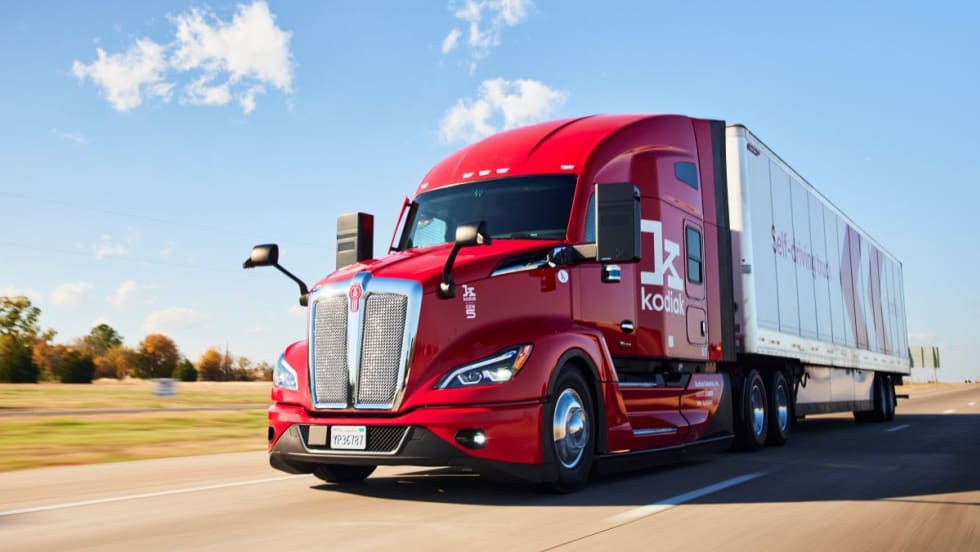
Autonomous Truck Testing Moves Ahead in California as Teamsters Challenge Rules
California has begun permitting heavy-duty autonomous truck testing, with Aurora and Kodiak among the first to receive approval, as the Teamsters sue the DMV over the new regulations.
Read More →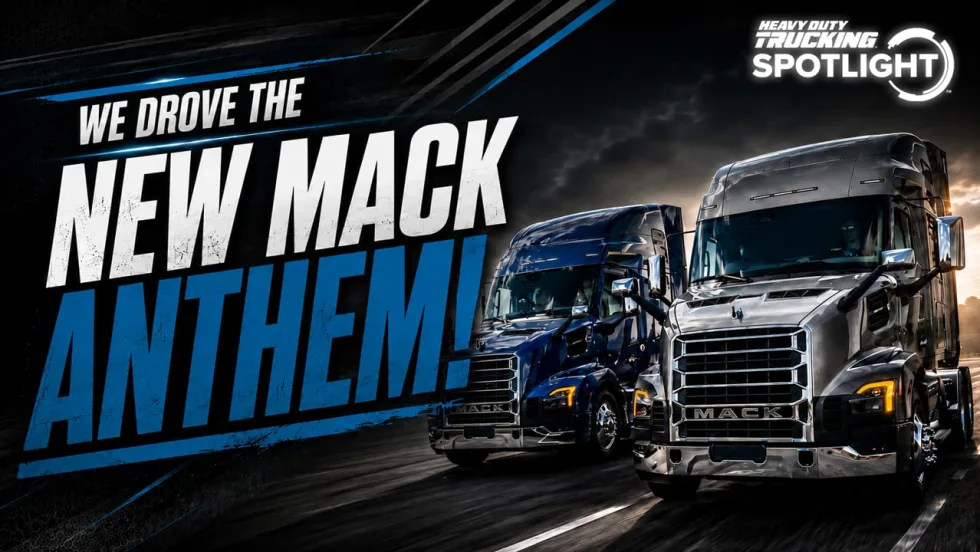
Behind the Wheel of the New Mack Anthem [Video]
HDT takes the new Mack Anthem around Mack’s Pennsylvania test track to see how its driver-focused design, technology, visibility and handling perform from behind the wheel.
Read More →
DTNA Plans New U.S. Truck Plant as Manufacturing Footprint Shifts
Daimler Truck North America is evaluating sites for a new assembly plant expected to open in 2029 while winding down operations at its longtime Portland manufacturing facility.
Read More →