




Three Simple Ways to Prevent Forklift Accidents
There’s a lot that can go wrong in any workplace, but this is especially true in industrial warehouses. Complex machinery, uncontrolled traffic, and the desire to optimize productivity means that every employee must be aware of risk factors at all times.
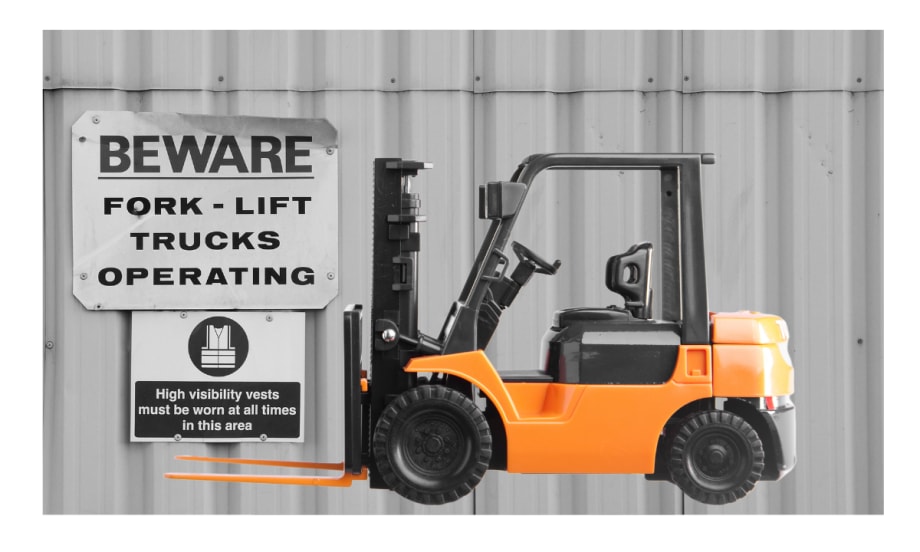
Forklift safety means protecting both drivers and pedestrians.
Image: HDT Graphic
There’s a lot that can go wrong in any workplace, but this is especially true in industrial warehouses. Complex machinery, uncontrolled traffic, and the desire to optimize productivity means that every employee must be aware of risk factors at all times.
But with adequate planning and training programs, risks of injury and accidents can be substantially reduced. In regard to forklift operation, safety standards not only keep employees healthy, but they also prevent damage to equipment and inventory.
The three most common causes of accidents related to forklift operation are tip-overs, irresponsible driving, and pedestrian accidents. If these three factors are addressed, the risk of workplace injury will decrease substantially.
1. Prevent Forklift Truck Tip-Overs
When a forklift tips over, the initial reaction of many drivers is to jump off of the truck. Unfortunately, this is a leading cause of serious injury. Forklifts can weigh several tons, so if the truck lands on an employee, it can easily break bones or worse.
Here are a few ways to minimize the chance of a tip-over:
Reduce speed before turning. This slow speed should be maintained throughout the turn, and the steering wheel should be rotated slowly.
While operating the forklift, lower the forks and tilt them back to keep the load stable.
Keep loads low, and make sure the mast is tilted back for stability. The truck can tip if heavy loads are angled too far backward or forward.
Do not load the forks beyond the max capacity of the truck.
Unstable loads should not be moved.
Oddly shaped loads that are tall or wide must be moved carefully and slowly.
Assessments are integral parts of any training program. Make sure the forklift test examines the employee’s ability to avoid tip-overs.
2. Address Horseplay and Irresponsible Forklift Driving
Horseplay should be immediately addressed by supervisors. The driver must understand that by driving the forklift irresponsibly, not only are they putting themselves at risk, but they are compromising the safety of other employees and pedestrians.
Forklift trucks are extremely heavy and often unstable. Even experienced drivers can make mistakes, so if a driver is operating in an unsafe fashion, especially if it’s intentional, they should be disciplined.
3. Ensure Safety of Surrounding Pedestrians and Workers
Forklift drivers are responsible for avoiding pedestrians. Just like driving a vehicle on a road, pedestrians always have the right-of-way, even if they are walking in the forklift driving path.
To avoid surrounding workers, the driver should always be looking in the direction the forklift is moving, whether it be forward or backward. At blind spots and intersections, always honk the horn.
Employees in the work area may not be paying attention. Even if the floor is adequately marked and warning signs are placed throughout the workplace, always assume that pedestrians are not being observant. If you think the employee might be unaware of the truck, stop moving until making eye contact. Never let employees near the forklift unless they are operating it, even if the forklift is not moving.
If visibility is blocked due to a high load, drive the truck backward. If this is not possible, have a spotter act as your eyes. Make sure no employees are near the path of travel, and move slowly.
Never let an employee walk beneath raised forks, even if there is no load. Never lift a load that requires another person to position or hold the load while the forklift is moving. This is incredibly risky and presents a high chance of injury.
Even if strict guidelines are in place to prevent forklift accidents, it’s still important that all employees understand the risks involved. Periodic assessments can help here, as can addressing issues or irresponsible behavior immediately.
Tom Reddon is a forklift specialist and blog manager for New Jersey-based used-forklift distributor National Forklift Exchange. He is also part of the executive dialogue board for the Material Handling Equipment Distributors Association.
More Safety & Compliance
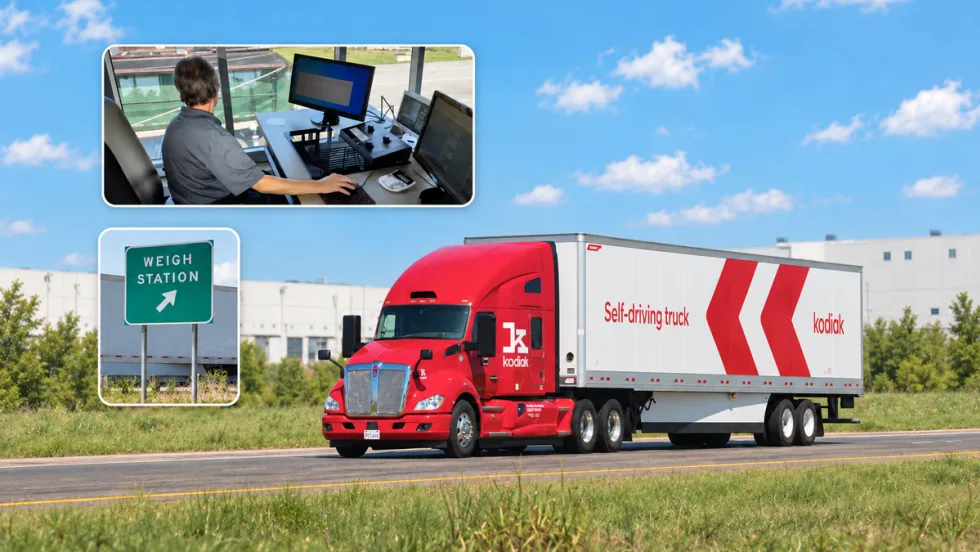
PrePass, Kodiak Connect Driverless Trucks to Roadside Enforcement
The system will allow enforcement agencies to verify Enhanced Inspection information and decide whether Kodiak’s autonomous trucks can bypass roadside screening sites.
Read More →
From One Generation to the Next: How Mentorship Builds Safer Truck Drivers
After three decades in trucking, Harold Perry shares what he's learned about driver safety, mentorship, and helping the next generation build confidence behind the wheel.
Read More →
FMCSA Pauses Biennial-Update Enforcement Amid Motus Transition
Carriers whose updates were due on or after June 1 have more time, while FMCSA works to stabilize its new registration system and warns of phishing sites impersonating its new carrier registration system, Motus.
Read More →
ZF Expands Commercial Vehicle Push in North America
ZF is expanding its North American commercial-vehicle presence with new transmission applications, electrification, trailer technology and autonomous-driving systems.
Read More →
Truck Drivers Need More Than Another Alert
Fleets have more visibility into truck health, safety events, and driver activity than ever. The next challenge is turning all that information into useful guidance for the person who has to decide what to do next.
Read More →
Tesla Wants a Self-Driving Semi. Are Cameras Enough?
Could Tesla’s camera-only autonomous driving technology work on an 80,000-pound Semi? In this commentary, HDT's Deborah Lockridge takes a look at Tesla, Cybercab, and how autonomous trucks see the road.
Read More →
What DOT’s Automated Vehicle Strategy Means for Trucking
The U.S. Department of Transportation issued a new automated-vehicle strategy that outlines plans for driverless-truck regulations, cross-state freight corridors, and federal safety standards.
Read More →
NYC Expands Speed, Pedestrian Safety Tech Across Fleet
New York City is expanding intelligent speed assistance and pedestrian-alert systems across its municipal fleet, moving the technologies from pilot programs into vehicle procurement and retrofit requirements.
Read More →
FMCSA Removes 110 Truck Driver Training Schools from Certified ELDT List
Federal regulators also are targeting more than 160 additional training providers and launching a nationwide audit of third-party CDL skills testers as part of a broader crackdown on trucking fraud.
Read More →
Beyond DOT Compliance: What Makes a Trucking Fleet Truly Safe?
A trucking fleet can follow every rule and still make unsafe decisions. The real test comes when safety conflicts with freight, productivity, or cost.
Read More →