




Get Ready to Say Goodbye to Paper Logs
After 28 years of proposals, studies, drafts, revisions, legal battles and technological innovations – not to mention an Act of Congress – federal regulators are close to requiring most interstate commercial drivers to keep track of their work hours with an electronic device.


After 28 years of proposals, studies, drafts, revisions, legal battles and technological innovations – not to mention an Act of Congress – federal regulators are close to requiring most interstate commercial drivers to keep track of their work hours with an electronic device.
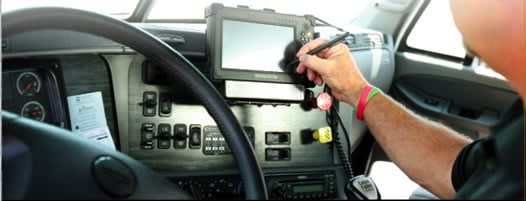
The Federal Motor Carrier Safety Administration’s proposed electronic log mandate, published last month, addresses a broad range of issues but still must go through a comment period and faces possible legal challenges before it becomes final.
At the core of the 256-page proposal is the requirement that interstate drivers who fill out paper logs must eventually switch to electronic logs.
It also covers technical standards for the electronic logging devices, as they are now termed (or ELDs) and the supporting documents regulators need to confirm compliance. And it sets requirements to ensure that electronic logs are not used to harass drivers.
The agency will take comments on the proposal until about mid-May. After it reviews the comments and publishes a final rule, perhaps later this year, carriers will have two years to comply. Carriers that already have recording devices that meet current specifications would have an additional two years to bring their devices into compliance with the new specifications.
It remains to be seen how the various constituents will react.
While larger trucking companies generally support ELDs, they may have concerns about some of the technical details, the supporting documents requirements or the agency’s approach to grandfathering devices already in use.
Owner-operators have long opposed ELDs and may not be satisfied by the agency’s approach to harassment prevention.
The rule will apply to drivers who have to prepare paper logs. Drivers who don’t have to prepare logs may use the electronic devices but won’t have to. Drivers who use timecards will not have to use the devices. And drivers who use logs intermittently can stick with paper logs unless they use them more than eight days in 30 days.
Device details
The technical specifications spell out how ELDs should work.
The basic requirement is that the device record specific information – date, time, location, engine hours, mileage and driver, vehicle and carrier identification – and make it available to inspectors.
The driver must be identified by his full license number and the state where his license is issued.
The device has to be synchronized with the engine to record on/off status, the truck’s motion, mileage and engine hours.
The device will have to automatically record a driver’s change of duty and hourly status while the truck is moving. It also must track engine on/off, and the beginning and end of personal use or yard moves.
The agency is proposing that the devices use automatic positioning services: either the satellite-based Global Positioning System, land-based systems, or both.
Many carriers now have onboard information systems that warn the driver when he’s approaching his hourly limits, but the agency is not requiring that capability in its proposal.
The devices won’t have to print out the log, but may have that feature as an option. They will have to produce a graph grid of a driver’s daily duty status, either on a digital display unit or on a printout. This is the first time the agency has proposed using a printer, and it’s looking for comments on the costs and benefits of that approach.
The primary communications methods will be wireless web services, Bluetooth 2.1 or email. The backup will be wired USB 2.0 or scannable Quick Response code.
FMCSA is working with its state enforcement partners on a software system, eRODS, that will be the platform for transmitting and viewing the log data.
These requirements will be of particular interest to the enforcement community, which has expressed concern about how roadside inspectors will get access to the logs.
To guard against tampering, the device must not allow changes in original information about the driver’s records or in the source data streams that provide the information. It also must be able to check the integrity of the information.
Also, the device must be able to monitor and record compliance for malfunctions and inconsistencies.
The agency is proposing that the devices be certified by the manufacturer, and that certified devices be registered on the FMCSA website to make it easier for carriers to shop.
Harassment and more
The agency projects net annual benefits of about $454 million, based on an average annual cost of about $495 per truck for the device and services. It based its calculations on Omnitracs' MCP50 system, describing it as an appropriate example of the current state-of-the-art device, although it looked at other products as well.
Among the benefits are reduced paperwork costs for carriers – no more paper logs – as well as 1,425 fewer truck crashes and 20 fewer fatalities a year due to fatigue prevention, the agency said.
The supporting documents portion of the proposal eliminates the requirement that carriers keep paper that verifies driving time, since the electronic log takes care of that. It retains the requirement that carriers keep a variety of documents, ranging from bills of lading, dispatch records, expense receipts or payroll records.
The agency would prohibit carriers from using ELD information to harass drivers, and is proposing procedural and technical provisions to protect drivers from harassment.
For instance, the device must have a mute or low-volume capability so the carrier can’t interrupt a driver when he’s in the sleeper berth. And the driver would have to approve any changes the carrier makes in his data.
The agency plans to propose another rule to protect drivers from coercion by carriers, shippers, receivers or transportation intermediaries. This proposal, which is awaiting clearance at the White House Office of Management and Budget, will include ways for drivers to report coercion as well as penalties for violators.
Many trucking companies support electronic logging, and early reaction from the American Trucking Associations was generally positive.
“ATA supports FMCSA’s efforts to mandate these devices in commercial vehicles as a way to improve safety and compliance in the trucking industry and to level the playing field with thousands for fleets that have already voluntarily moved to this technology,” said President and CEO Bill Graves in a statement.
ATA Executive Vice President Dave Osiecki said he’s particularly pleased that the agency is proposing to allow paper printouts of logs, but not requiring their use.
The Owner-Operator Independent Drivers Association, which has long opposed ELDs, is taking a more cautious stance.
“The agency must address the serious safety issue of how (ELDs) are used to harass and coerce truck drivers into continuing to drive regardless of driving conditions,” said spokesperson Norita Taylor in a statement.
The group also is worried about some of the technical details and whether or not ELDs will improve safety, Taylor said.
“This is the first stage in the regulatory process for the agency’s latest attempt to craft a rule on this topic, and OOIDA and small business truckers will certainly be weighing in and providing comments,” she said.
More Drivers

From One Generation to the Next: How Mentorship Builds Safer Truck Drivers
After three decades in trucking, Harold Perry shares what he's learned about driver safety, mentorship, and helping the next generation build confidence behind the wheel.
Read More →
Truck Drivers Need More Than Another Alert
Fleets have more visibility into truck health, safety events, and driver activity than ever. The next challenge is turning all that information into useful guidance for the person who has to decide what to do next.
Read More →
FMCSA Removes 110 Truck Driver Training Schools from Certified ELDT List
Federal regulators also are targeting more than 160 additional training providers and launching a nationwide audit of third-party CDL skills testers as part of a broader crackdown on trucking fraud.
Read More →
Hours of Service Pilot Programs: FMCSA Readies for 2027 Rollout
Two pilot programs could eventually reshape hours-of-service rules, giving truck drivers options to pause their 14-hour clock or use longer split sleeper rest periods.
Read More →
Medical Cards, English Proficiency Reshape Roadcheck Violations
Medical-card violations jumped to the top of the driver out-of-service list during CVSA’s 2026 International Roadcheck, while English-language proficiency violations appeared among the leading violations for the first time.
Read More →
Driver Trust Can Make or Break the Success of Fleet Safety Technology
New Teletrac Navman research suggests that onboarding, transparency about driver data, and positive feedback can play a significant role in how commercial drivers respond to safety and coaching technology.
Read More →
EEOC Sues KLLM Over Alleged Sex Discrimination in Driver Training
KLLM is facing a federal sex-discrimination lawsuit over policies the EEOC alleges put female truck driver trainees at a disadvantage.
Read More →
FMCSA Moves to Codify English Language Requirements for Commercial Drivers
By changing regulations on English-language proficiency requirements for commercial drivers, rather than relying on a guidance memo, the FMCSA said future administrations won't be able to walk back the Trump administration's stricter enforcement with just a memo.
Read More →
Drivers Put Western Star Trucks to the Test at Star Nation Experience
Watch to get an inside look at the Western Star trucks, technology, and community behind the Star Nation Experience 2026!
Read More →
Trump Administration Looks to Put More Veterans Behind the Wheel
The Freedom Haulers program pulls together existing and expanded programs at several federal agencies to recruit veterans to drive commercial heavy-duty trucks and cut the red tape for them to get a CDL, training, and employment.
Read More →