Executive Contributing Editor Rolf Lockwood discusses the potential of the interesting opposed-piston/opposed-cylinder engine.
by Rolf Lockwood, Executive Contributing Editor
April 17, 2014
Rolf Lockwood
3 min to read
Rolf Lockwood
The diesel engine, we’ll all agree, is a terrific machine and is likely to be with us for many, many years to come. Will it always run on diesel fuel? Clearly not, at least not exclusively. But what would you say if I suggested it might well drink gasoline?
Ad Loading...
And do you remember the mighty interesting “opoc” engine I wrote about three years ago? Navistar once had an agreement with Michigan-based EcoMotors International to help bring the latter’s opposed-piston/opposed-cylinder engine to market. That fell apart, but the engine is now going to be produced in China…next year.
As a gearhead, I love this stuff.
Ad Loading...
The diesel engine that runs on gasoline is apparently a real option, and it’s been getting quite spectacular results in a lab at Sweden’s Lund University. We’re talking about wildly better efficiency and 50% of the fuel consumption we now expect from a diesel.
Lund, a big university founded in 1666, has a department devoted to combustion engines. Their engine has been developed to achieve the right amount of ignition delay between fuel injection and combustion. During that delay, the mixing that happens produces minimal amounts of soot and nitrogen oxide – so little that aftertreatment isn’t needed. The concept is called partially premixed combustion.
The Lund engine currently has 57% indicated efficiency, almost a world record, and they’re hoping to hit 60%. A reasonably efficient engine today would be in the range of 40% to 42%.
Back in 2011 the opoc engine looked like a game-changer for sure, and it still does. Not only was Navistar in on it, but so was another unnamed OEM, and Bill Gates of Microsoft was – and remains – a key investor.
Ad Loading...
That year it won a bunch of awards, including Popular Mechanics magazine’s Breakthrough Innovator Award and Popular Science magazine’s Best of What’s New, Grand Award, in the automotive category.
EcoMotors has just signed a joint-venture deal with First Auto Works Jingye Engine Company to manufacture, sell and service the opoc engine technology in China. The venture will initially focus on diesel versions of the engine for the Chinese commercial truck market. They say they’ll be selling engines in 2015 with an estimated annual production capacity of 100,000 to 150,000 after breaking ground on a $200 million plant this year.
In my mind the opoc is a game-changer because it has two to three times the power density of conventional engines with 50% fewer parts and at least 15% better fuel efficiency – rising as power rises to as high as 55% – with dramatic reductions in emission levels. Its mechanical simplicity means it should cost 20% less to manufacture, and its small size brings significant packaging gains and thus truck designs that could better exploit aerodynamics.
The prototype I wrote about three years ago, model EM100, produced 325 horsepower and 664 pounds-feet of torque, yet weighed only 296 pounds. That’s an astounding power-to-weight ratio of 1.1 horsepower per pound. Yet it displaced just 2.5 liters. In fact, the opoc equivalent to the 15-liter diesel of today might only be 7 liters.
The new joint-venture players say it has the potential to revolutionize the commercial vehicle market both in China and the U.S., and I wouldn’t argue the point. The Chinese will first produce a diesel version and then develop others that use natural gas and methanol. The opoc can run on pretty much any fuel, including gasoline and even hydrogen.
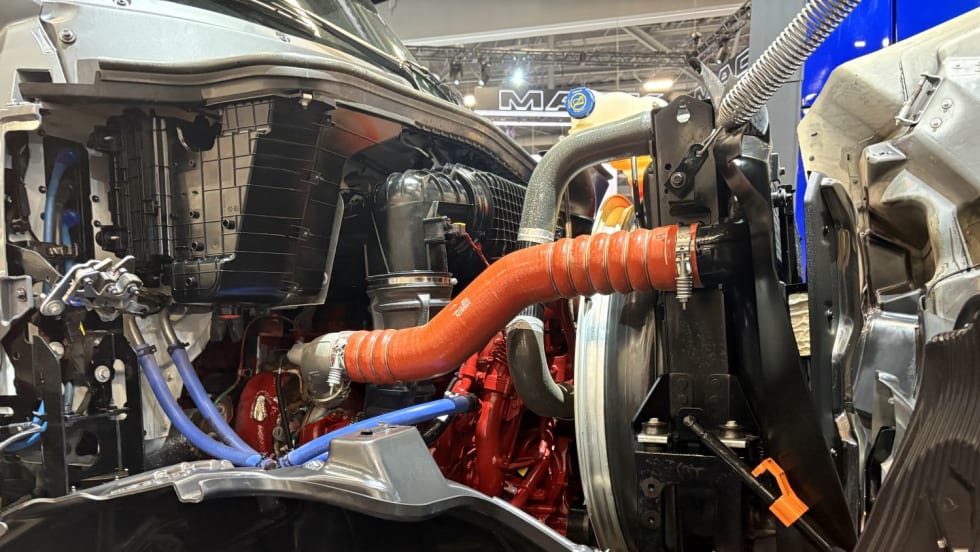
Along with unveiling its EPA 2027-compliant MP13 engine, Mack outlined powertrain changes across its Class 6-8 lineup, including new Cummins-based X10 engines.
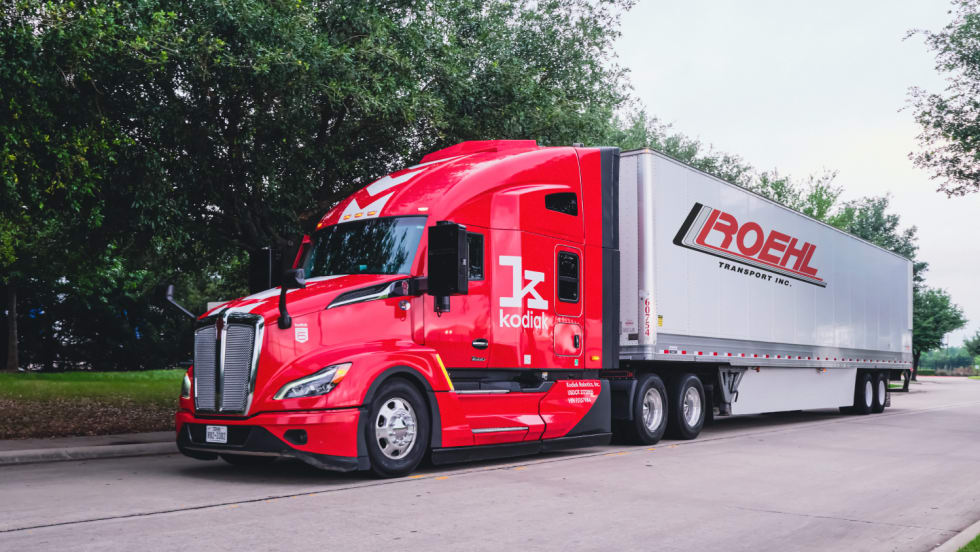
Kodiak AI and Roehl Transport have begun autonomous freight operations on a regular Dallas-Houston route, marking another step toward Kodiak’s planned driverless launch by the end of 2026.
Volvo says advances in combustion and aftertreatment helped its new EPA 2027 D13 engine avoid the fuel-economy penalties many once expected from tighter NOx emissions limits.
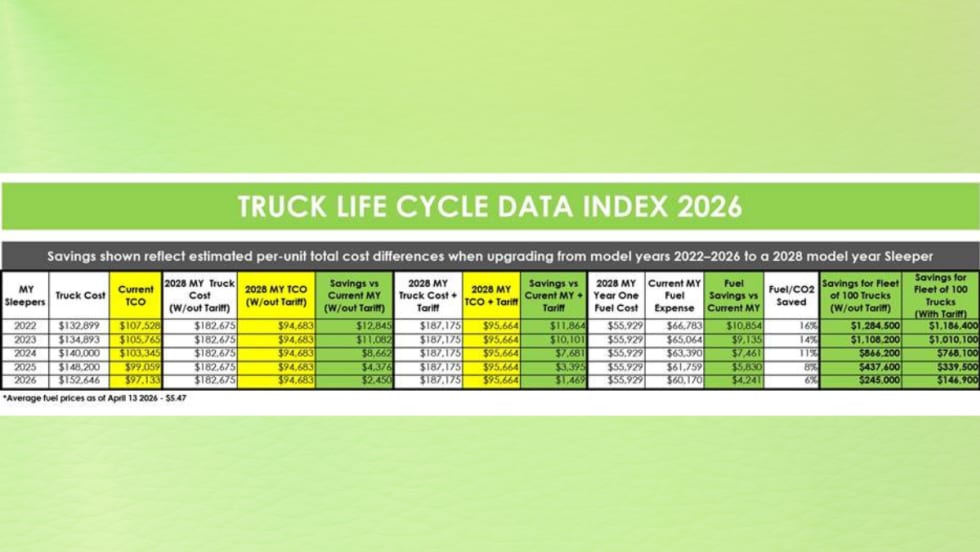
Fleet Advantage’s latest Truck Life Cycle Data Index shows fleets operating older Class 8 trucks could face significantly higher costs as diesel prices rise, while newer 2028 equipment may deliver savings of more than $12,000 per truck annually.
Tesla’s Semi chief at ACT Expo outlined production growth, lower-cost models, charging expansion, and why the company believes fleets are leaving money on the table by waiting on electric trucks.
Mack Trucks is introducing ImpactShield, the first Class 8 truck windshield to use Corning Fusion5 Glass, designed to improve durability, reduce damage and help fleets minimize downtime.
Volvo Autonomous Solutions and Aurora expand their freight network with a new Dallas–Oklahoma City route, moving closer to scaled driverless operations.
Westport and Volvo are demonstrating a 500-hp truck with diesel-like efficiency — one that also offers what Westport says is a better pathway to using hydrogen fuel in trucks.