




NOTE: Personal conveyance guidelines changed in 2018. Read: 6 Things You Should Know About Personal Conveyance
When Can Driving Time be Considered Off-Duty Time?
This question has to do with what has been termed “personal conveyance.” This is a situation where a driver is using his/her commercial vehicle as a personal vehicle to commute to and from a personal destination.
by Tom Bray, J.J. Keller & Associates
August 27, 2013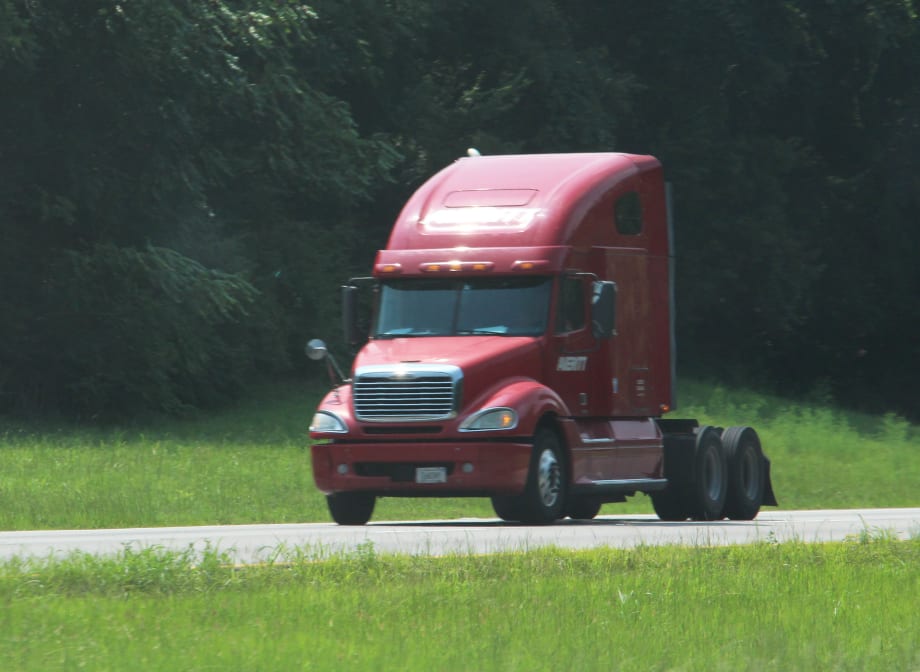
One of the requirements is the vehicle must not be “laden.” If you drive a tractor-trailer, this means not even pulling a trailer. (Photo by Evan Lockridge)
4 min to read
One of the requirements for personal conveyance is the vehicle must not be “laden.” If you drive a tractor-trailer, this means not even pulling a trailer.(Photo by Evan Lockridge)
Under normal circumstances, all time spent at the controls operating a commercial vehicle must be logged as driving time (on-duty time if the driver is using one of the exceptions that allows the use of time records).
However, what happens with a driver is using his or her commercial vehicle as a personal vehicle to commute to or from a personal destination?
The concept of “off-duty driving time” is not actually in the regulations; however, it is discussed in the interpretations to Part 395. Interpretations are guidances published by the Federal Motor Carrier Safety Administration to provide a better understanding of the rules.
Personal conveyance: It can be done if you follow the rules
To be able to log personal conveyance time as off duty, there are several conditions that must be met. These conditions are the same whether a company driver is taking his/her company truck home or an owner-operator is taking his/her truck home (or to another personal destination).
First, you must be relieved of all responsibilities and conduct no on-duty activities. No work for the company is allowed during the personal conveyance. For example, you cannot bring the truck in for maintenance and call the trip personal conveyance.
Second, the trip and destination must be purely personal in nature. Moving to pick up your next load, bringing the truck into the terminal from your last destination, and running to the parts store for parts cannot be considered personal conveyance. You must be commuting to a personal destination, such as home, a restaurant, or a motel, and back.
Third, the vehicle must not be “laden.” In other words, you cannot be carrying any freight during the personal conveyance. If you drive a tractor trailer, this means not even pulling a trailer.
Fourth, you must not be “repositioning” the equipment. If you go from your company’s terminal to home, and then are dispatched to go get a trailer somewhere else, you have repositioned and cannot call the trip personal conveyance.
Fifth, you cannot be using the vehicle as a personal conveyance if you have been placed out of service for an hours-of-service violation.
Finally, the personal conveyance distance needs to be “reasonable.” You are not allowed to travel several hundred miles and call it personal conveyance. One definition of reasonable is, “Could the driver get 8 hours of sleep after arriving at the personal destination if the driver only took 10 hours off?” If the answer is no, then the distance may not be considered reasonable.
The Canadian regulations are a little more specific in this area. A driver in Canada cannot use the commercial vehicle for personal conveyance for more than 75 kilometers per day.
But they’re not paying me!
In certain situations, carriers may tell their drivers or owner-operators that they can just “head for home.” In many cases, when the carrier does this they do not pay the driver or owner-operator for their time or miles.
Does this change the situation? No, it does not. Pay is not a determining factor in whether a driver is on duty or off duty. The driver’s activity is what determines whether the driver should be logging on or off duty. If the driver is not relieved of all responsibilities, does work along the way, has a laden vehicle, or is repositioning equipment, the driver cannot claim the time is personal conveyance and the trip must be logged as on-duty and/or driving.
The only time pay is an issue when it comes to logging is if payroll records can prove that the driver was on duty. An example of this is paying a driver for loading or unloading. If the driver was specifically paid to load or unload, then the driver should have logged the time as on-duty time.
As you can see, there are several conditions that must be met to consider a trip with a commercial vehicle to be “personal conveyance.” The best advice is that when looking at the trip, if you are not sure you can meet one of the requirements, your best bet is to just keep logging the “regular” way.
Thomas Bray is Sr. Editor – Transportation Management for J.J. Keller & Associates Inc. He spent more than 20 years in the motor carrier industry prior to joining J.J. Keller’s Transport Editorial Team eight years ago. His industry experience ranges from over-the-road driver and trainer to claims manager, lead instructor, and safety director.
Subscribe to Our Newsletter
More Drivers

From One Generation to the Next: How Mentorship Builds Safer Truck Drivers
After three decades in trucking, Harold Perry shares what he's learned about driver safety, mentorship, and helping the next generation build confidence behind the wheel.
Read More →
Truck Drivers Need More Than Another Alert
Fleets have more visibility into truck health, safety events, and driver activity than ever. The next challenge is turning all that information into useful guidance for the person who has to decide what to do next.
Read More →
FMCSA Removes 110 Truck Driver Training Schools from Certified ELDT List
Federal regulators also are targeting more than 160 additional training providers and launching a nationwide audit of third-party CDL skills testers as part of a broader crackdown on trucking fraud.
Read More →
Hours of Service Pilot Programs: FMCSA Readies for 2027 Rollout
Two pilot programs could eventually reshape hours-of-service rules, giving truck drivers options to pause their 14-hour clock or use longer split sleeper rest periods.
Read More →
Medical Cards, English Proficiency Reshape Roadcheck Violations
Medical-card violations jumped to the top of the driver out-of-service list during CVSA’s 2026 International Roadcheck, while English-language proficiency violations appeared among the leading violations for the first time.
Read More →
Driver Trust Can Make or Break the Success of Fleet Safety Technology
New Teletrac Navman research suggests that onboarding, transparency about driver data, and positive feedback can play a significant role in how commercial drivers respond to safety and coaching technology.
Read More →
EEOC Sues KLLM Over Alleged Sex Discrimination in Driver Training
KLLM is facing a federal sex-discrimination lawsuit over policies the EEOC alleges put female truck driver trainees at a disadvantage.
Read More →
FMCSA Moves to Codify English Language Requirements for Commercial Drivers
By changing regulations on English-language proficiency requirements for commercial drivers, rather than relying on a guidance memo, the FMCSA said future administrations won't be able to walk back the Trump administration's stricter enforcement with just a memo.
Read More →
Drivers Put Western Star Trucks to the Test at Star Nation Experience
Watch to get an inside look at the Western Star trucks, technology, and community behind the Star Nation Experience 2026!
Read More →
Trump Administration Looks to Put More Veterans Behind the Wheel
The Freedom Haulers program pulls together existing and expanded programs at several federal agencies to recruit veterans to drive commercial heavy-duty trucks and cut the red tape for them to get a CDL, training, and employment.
Read More →