




Trailers: The Next Generation
There aren’t many things less aerodynamic than a box. And a dry van trailer is basically a 53-foot box on wheels. The drag caused by that box and its effect on fuel economy is a challenge that has been taken up by the SuperTruck program.


This is what a tractor-trailer could look like following the work being done through the SuperTruck program.

This is what a tractor-trailer could look like following the work being done through the SuperTruck program.
There aren’t many things less aerodynamic than a box. And a dry van trailer is basically a 53-foot box on wheels. The drag caused by that box and its effect on fuel economy is a challenge that has been taken up by the SuperTruck program.
Much like Superman is much more than a regular Joe on the street, the coming SuperTruck is going to be much more than your typical Class 8 tractor-trailer on the road today.
In a public-private partnership partially funded by the U.S. Department of Energy’s Office of Energy Efficiency and Renewable Energy, the SuperTruck project’s objective is to design the next generation of heavy-duty Class 8 tractor-trailers.
The cost-shared, five-year research and development project has a goal of a demonstrated 50% improvement in overall freight efficiency, which will in turn improve fuel efficiency.
The program dictates that 30% of the improvements come from changes to the tractor-trailer and the remaining 20% from the engine. There are a number of teams of manufacturers who have taken up the gauntlet and are working to meet the project’s goal by 2015.
Two of the teams are headed up by Daimler Trucks North America and Volvo Trucks. Each team is taking a comprehensive look at the tractor-trailer as a whole.
At this point neither team has completely redesigned the concept of a dry van.
“Physical changes to trailer geometry will affect the efficiency of the transport infrastructure and may not be feasible without changes to loading docks, pallet sizes, highway safety regulations, etc.,” explains Pascal Amar, senior project manager overseeing Volvo Group’s involvement in the SuperTruck program. “Our efforts focus on identifying near-term efficiency improvements, so we use a stock 53-foot dry van trailer.”
Daimler’s team is also limiting what physical changes they make to the trailer.
“DTNA has defined specific rules regarding what physical changes are or are not allowed,” says Derek Rotz, senior manager, Advanced Engineering NAFTA with Daimler Trucks North America. “For example, the interior volume of the trailer is fixed to ensure freight volumes do not change. Internal dimensions also remain the same in order to … accommodate forklift loading and unloading.”
But a complete redesign of the concept of the dry van may come in the future.
“We intend to perform an analytical study to fully explore the potential for further improvements through alternate trailer geometries once we have optimized the current trailer,” says Amar.
Meanwhile, the teams have been digging into the details and focused on making changes to a standard trailer that improve aerodynamics and decrease weight.
Streamlining a 53-foot box
To meet the lofty goal of a 30% improvement in freight efficiency, when looking at the trailer part of the tractor-trailer combination, both companies agree that aerodynamics is key.
The task of turning an inherently non-aerodynamic, bulky box on wheels into an efficient, streamlined trailer called for some additional hardware.
Volvo Trucks, which isn’t working with a specific trailer manufacturer, focused on designing add-on devices to optimize the aerodynamic performance without modifying the shape or functionality of the box. Volvo is working with Freight Wing to develop a system of aerodynamic devices.
“While we know that there are aerodynamic benefits in altering the trailer body geometry, the most practical approach for real-world application is to first use add-on aerodynamic devices to optimize current trailers,” Amar says.
The Volvo team added Freight Wing aerodynamic attachments to the front face, rear and undercarriage of the trailer. The undercarriage device is a prototype full-length side skirt that completely encloses the bottom of the trailer and has an access panel for the wheel components.
Other ways they are working to reduce drag include adding a front gap fairing and a boat-tail, as well as using ultra-thin marker lights.
DTNA has partnered with trailer manufacturer Strick for the SuperTruck project, and aerodynamics is part one of their two-pronged approach to making improvements on today’s trailer.
“We’re taking a comprehensive approach to reduce aerodynamic drag, by treating the tractor and trailer as a single system,” Rotz says. “This provides engineers total design freedom to develop concepts and strategies for managing airflow across the entire length of the tractor/trailer. This approach enables us to explore optimization, which hasn’t been done before.”
DTNA added aerodynamic treatments to the trailer, including optimized trailer side skirts and a boat tail at the rear.
“We are also developing options for reducing or eliminating the gap between the tractor and trailer by various means,” Rotz adds.
Dropping weight
As a means of improving freight efficiency, both companies are as focused on the need to shed some pounds as overweight New Year’s resolution makers are on Jan. 1.
DTNA’s Rotz says, “We are looking at both lightweight designs as well as the use of lightweight materials that are not only cost effective, but also meet the harsh operating and durability requirements.”
In the Volvo project, they are reducing the weight of the trailer in many ways. For example, they are shedding pounds by using Hendrickson’s slider/suspension system, which was retrofitted on to Volvo’s test trailer.
“Our all-LED lighting solution provided by Grote has reduced electrical consumption, which allowed our team to use a lighter gauge harness system that also yields weight savings,” Volvo’s Amar says.
No specific numbers were shared in terms of what each company is seeing in fuel savings, but both companies are confident that they will meet the 30% freight efficiency goal for the tractor-trailer by the 2015 deadline.
More Fuel Smarts

California Bill Could Shed Light on Electric Truck Prices
Why do battery-electric Class 8 trucks remain so expensive? A California bill headed to Gov. Gavin Newsom would give fleets and state agencies more visibility into what manufacturers charge.
Read More →
Detroit Opens Orders for EPA 2027 Engines
Detroit isn’t starting from scratch to meet EPA 2027 diesel emissions standards. Its Gen 6 DD13 and DD15 engines keep much of today’s platform while updating the fuel and aftertreatment systems.
Read More →
Zero-Emission Truck Corridor Planned for West Coast
California, Oregon, Washington, British Columbia and Baja California are coordinating plans for truck charging and hydrogen fueling from Canada to Mexico.
Read More →
A Closer Look at Kenworth’s Electric T880E Vocational Truck [Video]
Learn more about Kenworth's T880E battery-electric vocational truck at the Paccar Technical Center, including its range, applications, upfitting considerations, and PTO options, in this HDT Spotlight video.
Read More →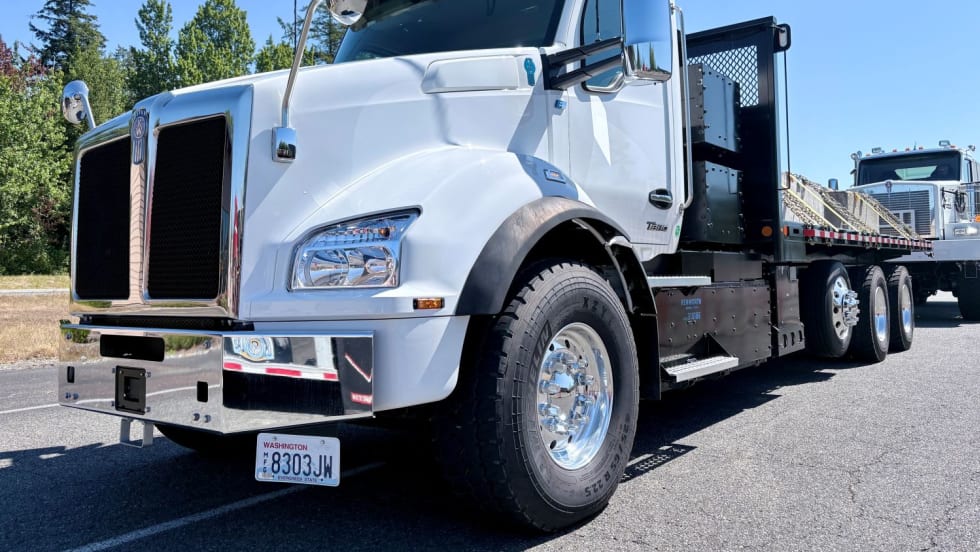
Kenworth T880E Brings EV Power to Vocational Trucks
A closer look at the Kenworth T880E’s range, charging, powertrain and upfit options — and where fleets are showing the most interest.
Read More →
Jennie Abarca Is Proving Electric Trucks Can Do the Job
HDT Truck Fleet Innovator Jennie Abarca is building confidence in fleet electrification one load at a time while openly sharing the challenges she encounters along the way as a small-fleet owner.
Read More →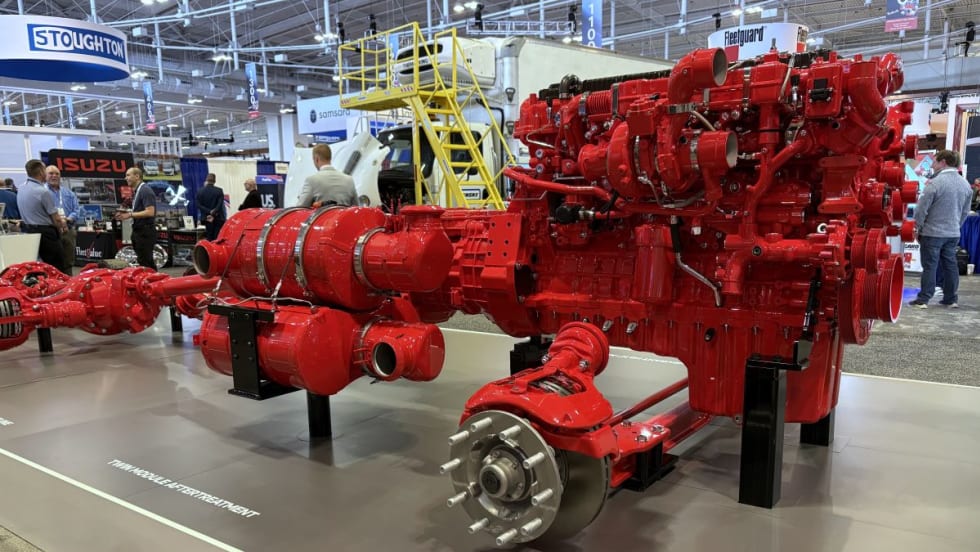
Cummins Adjusts 2027 Engine Rollout After EPA Proposal
The engine maker will gradually introduce its new Model Year 2027 diesel engines while continuing to offer current models during the transition, citing the EPA's proposed emissions rule changes.
Read More →
EPA Proposal Could Ease 2027 Truck Costs and Buying Uncertainty
The proposal doesn't change the tougher NOx standard, but it would revise key implementation requirements that manufacturers say have driven up costs and complicated fleet purchasing decisions.
Read More →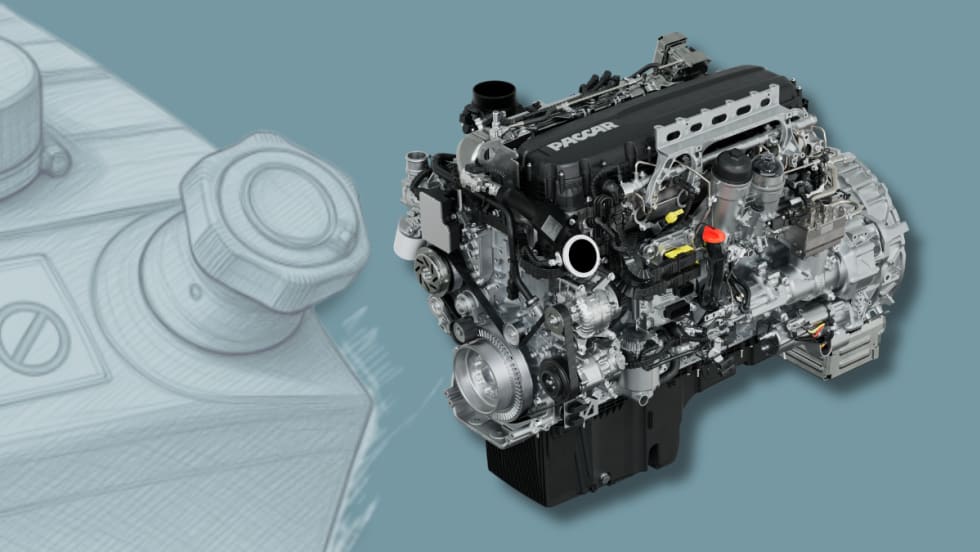
Cummins, Paccar Ease DEF Derates After EPA Guidance
Updated diesel engine software gives truck operators more time to address emissions-system issues while staying compliant with EPA emissions standards.
Read More →
Maintenance in the Messy Middle Part 3: Biodiesel
Biodiesel can reduce emissions, improve fuel-system lubricity and use existing diesel infrastructure. But NACFE’s Messy Middle maintenance report says fleets must actively manage storage, cold-weather operation, filters and oil drain intervals to avoid problems.
Read More →