




How to Improve Fuel Efficiency on the Road
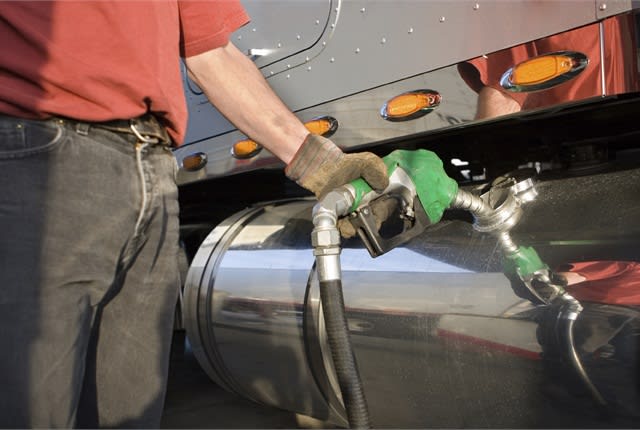
According to AAA, the national average price of diesel is $3.888 - call it $3.89 - per gallon at the time of this writing. Given that your truck likely has a fuel capacity of 150 to 300 gallons, it would cost $583 to over $1,167 per fill-up at the current rate. In other words, as you may have already noticed, fueling up for a long-haul is quite expensive.

According to AAA, the national average price of diesel is $3.888 - call it $3.89 - per gallon at the time of this writing. Given that your truck likely has a fuel capacity of 150 to 300 gallons, it would cost $583 to over $1,167 per fill-up at the current rate. In other words, as you may have already noticed, fueling up for a long-haul is quite expensive.

Fortunately, there are several ways to improve fuel efficiency. Doing so will result in less fuel usage, which will improve your bottom line. Let’s take a look at how to improve fuel efficiency on the road.
Manage Your Speed
While seeing the many sights across the US and beyond may be great, driving day after day can be a chore. It may be tempting to drive as fast as possible from point A to point B to get it over with or earn extra money. However, doing so has a major downside - more money spent on diesel.
On average, every 1 mph increase in speed results in a 0.14 miles per gallon decrease in fuel economy.
Now, suppose that you drive 2,500 miles per week and decide to increase your average speed by 10 mph to save time. As the average 18-wheeler gets 5.9 mpg, your truck’s fuel economy would drop to 4.5 mpg. Thus, by increasing your average speed by 10 mph, your truck would consume approximately 132 extra gallons of fuel at a cost of nearly $513. Is that 10 mph increase really worth $513 per week?
According to Jim Phillips, quality service manager for Equinox Business Solutions, “Fortunately, there are two key ways you can manage your speed. One is to do so voluntarily by simply slowing down. If you have a lead foot or otherwise are inclined to speed, you can have your truck’s ECM set so the road speed limiter restricts the truck to a practical speed.”
For example, you could set the road speed limiter to 65 mph, which will allow you to drive near, at or even above (not recommended) many modern speed limits without going overboard.
Take a Load Off
Your truck already carries tens of thousands of pounds of items across thousands of miles each week. Avoid adding unnecessary items to your truck.
Such items add to its total weight and, as a result, increase the amount of fuel it uses. Try to keep truck and in-cab accessories to a minimum.
Monitor Tire Pressure
Improperly-inflated tires decrease fuel economy. As such, routinely check all tires to ensure that they are properly inflated.
Add or remove air, when necessary. Also, replace or repair any tires that seem to lose air frequently.
Don’t Floor It
Rapid acceleration places a lot of strain on your truck’s engine and results in wasted fuel. Remember - you’re not in a drag race. So, avoid flooring it when the light turns green and you’ll save some greenbacks.
Minimize Idling
When your truck is stopped and you leave it running unnecessarily, fuel is wasted. Of course, it would be impractical to turn it off and on at every minor traffic jam, but avoid leaving it running for extended periods of time when it is unnecessary to do so.
For example, if you stop at a rest area and don’t plan to hit the road for another 30 minutes, turn your truck off.
Conclusion
Improving fuel efficiency only requires a minimal effort on your part. However, doing so can save you hundreds of dollars per week.
Be sure to manage your speed and minimize idling. Also, increase speed gradually instead of rapidly accelerating. Additionally, avoid adding unnecessary accessories to your truck and monitor its tire pressure regularly. Finally, you may want to invest in a larger wallet to handle all the money you’ll save.
More Drivers

From One Generation to the Next: How Mentorship Builds Safer Truck Drivers
After three decades in trucking, Harold Perry shares what he's learned about driver safety, mentorship, and helping the next generation build confidence behind the wheel.
Read More →
Truck Drivers Need More Than Another Alert
Fleets have more visibility into truck health, safety events, and driver activity than ever. The next challenge is turning all that information into useful guidance for the person who has to decide what to do next.
Read More →
FMCSA Removes 110 Truck Driver Training Schools from Certified ELDT List
Federal regulators also are targeting more than 160 additional training providers and launching a nationwide audit of third-party CDL skills testers as part of a broader crackdown on trucking fraud.
Read More →
Hours of Service Pilot Programs: FMCSA Readies for 2027 Rollout
Two pilot programs could eventually reshape hours-of-service rules, giving truck drivers options to pause their 14-hour clock or use longer split sleeper rest periods.
Read More →
Medical Cards, English Proficiency Reshape Roadcheck Violations
Medical-card violations jumped to the top of the driver out-of-service list during CVSA’s 2026 International Roadcheck, while English-language proficiency violations appeared among the leading violations for the first time.
Read More →
Driver Trust Can Make or Break the Success of Fleet Safety Technology
New Teletrac Navman research suggests that onboarding, transparency about driver data, and positive feedback can play a significant role in how commercial drivers respond to safety and coaching technology.
Read More →
EEOC Sues KLLM Over Alleged Sex Discrimination in Driver Training
KLLM is facing a federal sex-discrimination lawsuit over policies the EEOC alleges put female truck driver trainees at a disadvantage.
Read More →
FMCSA Moves to Codify English Language Requirements for Commercial Drivers
By changing regulations on English-language proficiency requirements for commercial drivers, rather than relying on a guidance memo, the FMCSA said future administrations won't be able to walk back the Trump administration's stricter enforcement with just a memo.
Read More →
Drivers Put Western Star Trucks to the Test at Star Nation Experience
Watch to get an inside look at the Western Star trucks, technology, and community behind the Star Nation Experience 2026!
Read More →
Trump Administration Looks to Put More Veterans Behind the Wheel
The Freedom Haulers program pulls together existing and expanded programs at several federal agencies to recruit veterans to drive commercial heavy-duty trucks and cut the red tape for them to get a CDL, training, and employment.
Read More →