




DEF: Here to Stay
In 2007, as many truck and engine makers started announcing they would use selective catalytic reduction to meet 2010 federal emissions regulations a new term entered our trucking dictionary: diesel exhaust fluid. As we soon learned, SCR is an aftertreatment technology that injects small amounts of DEF, a water-based solution containing urea, into an engine’s hot exhaust stream to reduce emissions of nitrogen oxides (NOx).

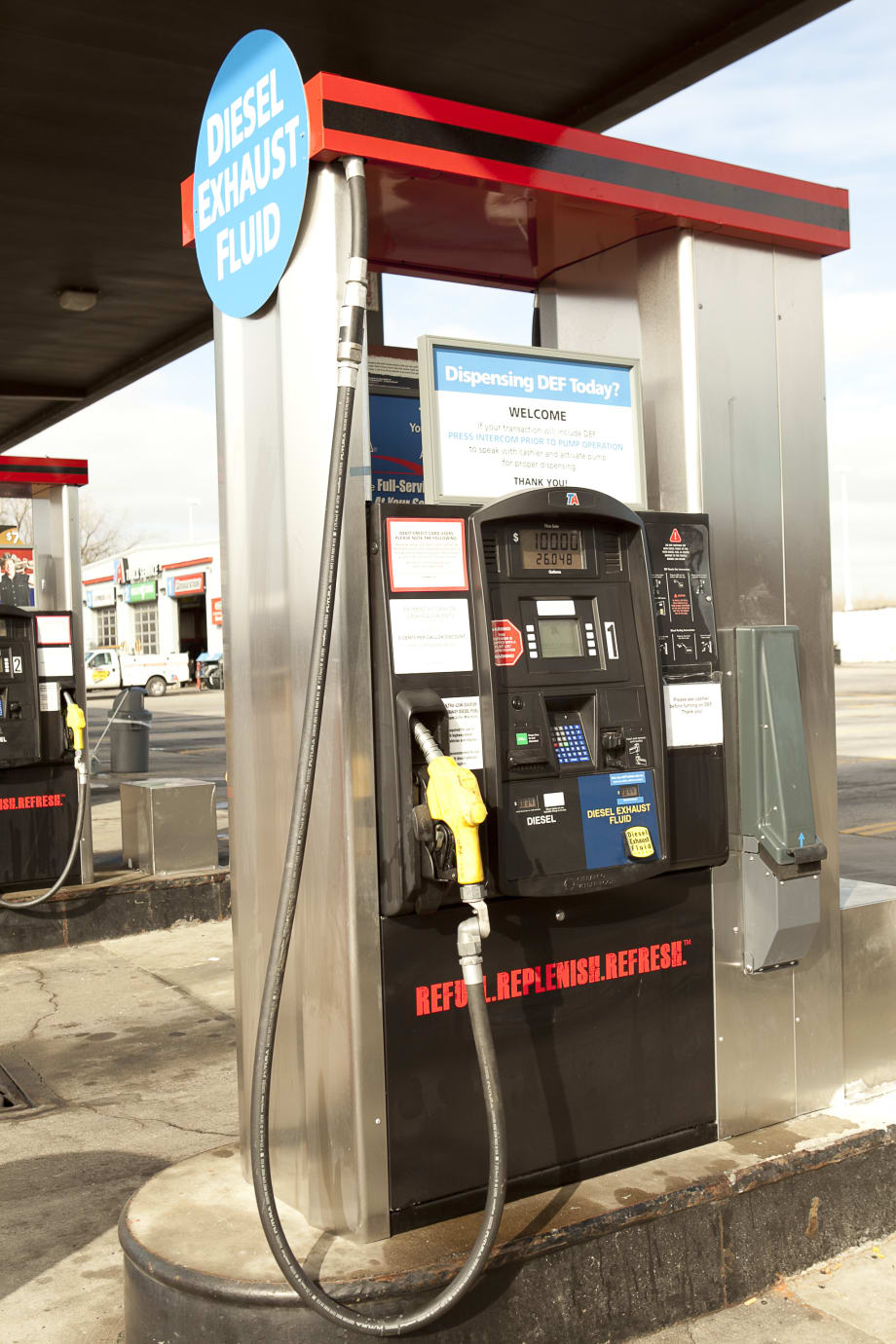
TravelCenters of America’s DEF dispensers, which it calls the “DEF+1,” pump both diesel fuel and DEF and are available at nearly all locations. Drivers can authorize diesel and DEF transactions at the same time at the same dispenser, pump both products in any order, and pay for both fills at the same time.
TravelCenters of America’s DEF dispensers, which it calls the “DEF+1,” pump both diesel fuel and DEF and are available at nearly all locations. Drivers can authorize diesel and DEF transactions at the same time at the same dispenser, pump both products in any order, and pay for both fills at the same time.
In 2007, as many truck and engine makers started announcing they would use selective catalytic reduction to meet 2010 federal emissions regulations, a new term entered our trucking dictionary: diesel exhaust fluid.
As we soon learned, SCR is an aftertreatment technology that injects small amounts of DEF, a water-based solution containing urea, into an engine’s hot exhaust stream to reduce emissions of nitrogen oxides (NOx).
In the exhaust, DEF vaporizes and forms ammonia and carbon dioxide, explains Mark Ulrich, director of customer support for Cummins Emissions Solutions. When the exhaust gas and ammonia are then passed over a catalyst, NOx is converted into harmless nitrogen and water.
DEF is a necessity to make this happen. Kept in a separate reservoir tank from the diesel fuel, it’s a solution of 32.5% high-purity urea mixed with very high-purity water. Urea is an organic nitrogen-containing compound commonly used in agriculture as a fertilizer.
However, you can’t just buy fertilizer and make your own DEF. The urea used to make DEF is known as automotive grade or environmental grade, a higher grade than the kind used for fertilizer.
Although it meant a new technology and a new fluid to deal with, the good news was, SCR meant fuel savings. Because engineers no longer had to optimize the in-cylinder combustion process for NOx control, they instead were able to tune the engine for better fuel economy.
Manufacturers and suppliers were soon meeting to discuss developing an infrastructure to distribute DEF. There was controversy as Navistar International, which was attempting to develop an emissions solution that did not involve the add-on liquid, claimed DEF would be expensive, hard for drivers to deal with, even toxic.
With Navistar’s decision last year to go the SCR route after all, it’s clear that DEF is here to stay.
“The naysayers were those who originally wanted to go with a non-SCR technology,” says Frank Cook, senior vice president of new product development at Old World Industries, which sells Peak BlueDEF. “In reality the engines and systems are running better with SCR (and less EGR) and drivers have gotten used to DEF quickly.”
Brian Hoover, national sales director of DEF at Mansfield Oil, notes “any time there is a change or a new product to be monitored and managed by the driver community, there will be some resistance. However, we see a general acceptance that has been adopted over the past 24 months, and DEF is becoming more of a common practice of implementation.”
However, drivers and fleets new to SCR typically have questions about DEF relative to storage, safe handling and availability.
Availability and price
There are almost three quarters of a million Class 4-8 SCR-equipped vehicles on the road in North America today, according to Integer Research, the leading DEF market analyst.
DEF consumption in North America by Class 4-8 vehicles is expected to reach 204 million gallons by the end of the year, according to Ed Wells, director of sales, Air1, for DEF supplier Yara North America.
Integer predicts this will double to 402 million gallons by 2015.
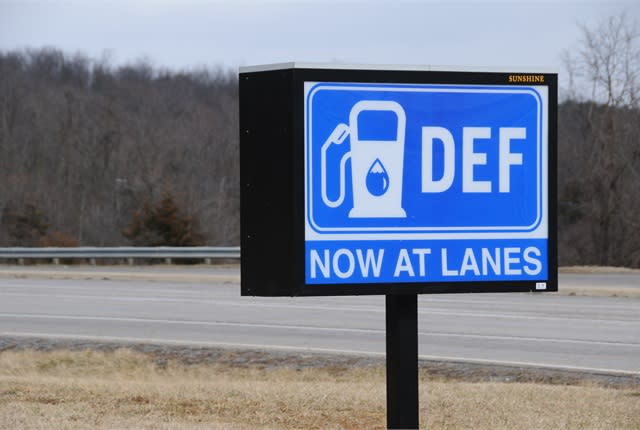
Truckstops, truck dealers, aftermarket parts stores and other outlets carry DEF in 1-gallon and 2.5-gallon containers. A growing number of truckstops carry it at the fuel island. In fact, the number of truckstops offering DEF at the fuel island topped 1,000 earlier this year.
Pilot Flying J accounts for over a third of the DEF pump network, offering it at more than 3,000 lanes, followed by Love’s and TravelCenters of America.
In addition, many fleets have chosen to use 55-gallon drums, 275-gallon or 330-gallon totes, or other bulk supply options for their own facilities.
Jeff Lewis, vice president of sales for Airgas Specialty Products, which sells AiRx DEF, explains that there are only a handful of companies that actually make urea. It’s a very capital-intensive process, requiring billion-dollar facilities. Instead, many companies that sell DEF buy dry or concentrated urea and “solutionize” it with high-quality water to meet ISO standards.
The per-gallon price for DEF is highest in jug form, according to Integer’s DEF Tracker, running about $6.25 per gallon as of April. At the pump, the price was running an average of $2.79, while tote refills were 27% less at $2.04.
“Going beyond totes, getting into permanent storage units of 1,000 or more gallons, they can really get a better price at that point,” says ChrisGoodfellow, an analyst with Integer Research.
“North America has historically enjoyed a surplus in production of DEF,” notes
Cummins’s Ulrich. “It’s reasonable to expect DEF prices to remain steady, or potentially even decline, due to free market completion and abundant retail infrastructure.”
On the other hand, urea also is a publicly traded commodity subject to fluctuations, as crude oil is. The biggest driver in that marketplace is fertilizer, so there could be seasonal fluctuations in the price based on projections of what’s going to happen in the agriculture business.
Handling and storage
The biggest concern in handling and storage is contamination, followed by the slight corrosiveness of DEF. Equipment used for DEF needs to be dedicated, both to address contamination concerns and because DEF will corrode some metals, such as copper and brass. That’s why DEF tanks on trucks are plastic.

Totes like this one offer about a 27% savings on DEF over the pump price. Bulk options can mean even more savings.
“While DEF does have a pungent aroma similar to that of ammonia, it is a non-toxic, non-polluting, and non-flammable substance that is safe to handle and store and poses no serious risk to humans, animals, equipment or the environment when handled properly,” Ulrich says.
You do need to keep DEF in a temperature-controlled location and out of direct sunlight.
High temperatures will shorten the life of the product, and DEF does freeze at about 12 degrees. However, freezing doesn’t harm the product or the engine, and SCR systems are designed to deal with DEF that may be frozen or slushy when the truck starts up, explains Thomas Kalagher, product development manager for Prestone Performance Chemicals, which earlier this year introduced its Command brand of DEF.
Airgas’s Lewis says DEF does have a tendency to crystalize when it get exposed to air. “It almost looks like frost, but it’s just crystallizing. It also has a tendency to creep a little bit, but regular care and maintenance will take care of a lot of that.”
Despite concerns that DEF can “go bad” quickly, Hoover says, “DEF will be just fine for years when stored properly.”
The importance of purity
When you do hear of problems with DEF, the culprit is often poor quality or contamination. Buy from a reputable source that is API registered and meets the ISO 22241 standard. Beyond that, different brands of DEF all basically work the same.
“Impurities can cause premature failure of the catalyst, and that can cost $8,000 to $15,000 to replace,” says Prestone’s Kalagher.
“There’s some risk if you’re not buying from a reputable source just to save a penny a gallon.”
“Based on what we’ve seen in Europe and the U.S., we know that 80% of contamination happens at fleet terminals,” says Yara’s Wells.
To safeguard against DEF contamination, he recommends a few simple tips:
1. Keep DEF away from materials such as fuel, oil, grease, water, dust, dirt, metal and detergent.
2. If the DEF fueling equipment at your terminal needs to be cleaned, rinse it with de-mineralized water - NOT tap water.
3. Only use dedicated DEF equipment for storing and dispensing DEF. Do not use funnels or bottles that have been used for other fluids.
4. While a DEF pump’s magnetic guard will prevent you from accidentally putting DEF into the wrong tank, be sure to insert the DEF nozzle into the truck’s DEF inlet to avoid contaminating the spout.
5. Do not refill previously used DEF containers, as they may be contaminated.
More Fleet Management

What the U.S.-Canada Trade War Means for Trucking
Escalating U.S.-Canada tariffs could disrupt cross-border freight, reduce truck volumes, raise costs, and create new uncertainty for carriers on both sides of the border.
Read More →
What Are Trucking’s Top Concerns for 2026?
The American Transportation Research Institute wants to know what's worrying trucking fleet managers, drivers, and other stakeholders in its annual Industry Issues survey.
Read More →
American Trucking Associations Looks for a New Leader
ATA President and CEO Chris Spear abruptly left his job at the association on August 21, at a pivotal time for the trucking industry.
Read More →
Public Wi-Fi Cybersecurity Risks: How Truck Drivers and Fleets Can Protect Their Data
Public Wi-Fi can expose truck drivers and fleets to credential theft, malware, and other cyber threats. Here’s how to reduce the risk on the road.
Read More →
For Nicky Cupp, Fleet Innovation Starts With Frustration
HDT Truck Fleet Innovator Nicky Cupp turns everyday pain points at Fraley & Schilling into opportunities for better technology and smarter processes.
Read More →
Adam Buttgenbach’s Approach to Electric Trucks: Start With Where They Fit
HDT Truck Fleet Innovator Adam Buttgenbach helped PepsiCo build one of North America’s largest EV fleets by focusing on where electric trucks make operational sense.
Read More →
Deen Albert: Let Automation Do the Math, People Make the Decisions
HDT Truck Fleet Innovator Deen Albert makes sure people are still at the heart of operations at Grand Island Express, even while adopting artificial intelligence tools. AI-assisted dispatch helped boost revenue 25% with the same number of trucks.
Read More →
Trimble’s New AI Agent Takes Aim at Fleet Back-Office Busywork
Arc Agent works across Trimble TMS products to automate repetitive tasks such as freight orders, maintenance, invoices, fuel costs and more.
Read More →
How HDT’s 2026 Truck Fleet Innovators Are Rethinking Fleet Operations
Meet five trucking leaders who are challenging assumptions, solving operational problems, and putting innovative ideas to work.
Read More →
Tight Trucking Capacity Pushes Rates Higher Even as Freight Volumes Fall
“Spot rates moving ahead of contract rates have historically signaled a tightening market, but we haven’t seen a capacity-driven market quite like this one,” said DAT's Dean Croke.
Read More →