




Driving impressions: Electronic Assist Systems Help New Sprinter’s Handling
The day after its introduction in Dusseldorf, in northern Germany, we reporters had a chance to drive Mercedes-Benz’s new Sprinter van for a few hours on various surfaces, from a test track to a dirt road and on a nearby Autobahn.

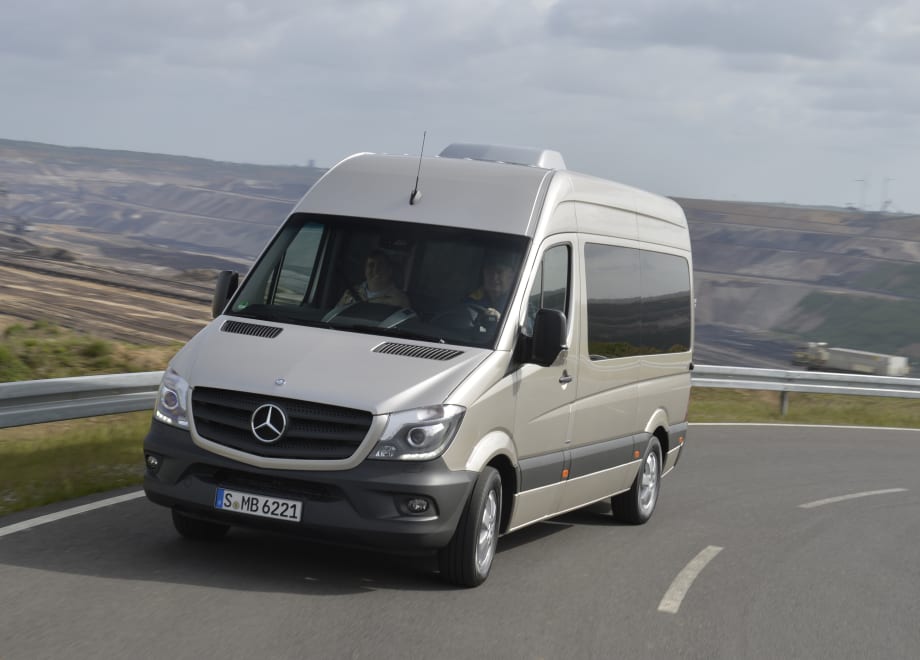
The Sprinter chassis features independent wheel suspension at the front with transverse leaf springs, something that contributed to a comfortable ride and an absence of feeling tracks and bumps in the more worn parts in the pavement.

The day after its introduction in Dusseldorf, in northern Germany, we reporters had a chance to drive Mercedes-Benz’s new Sprinter van for a few hours on various surfaces, from a test track to a dirt road and on a nearby Autobahn.
Our vehicle was a truck-based crew bus with a wheelbase of 3.665 meters (144.3 inches) and a GVW of 3.5 tons (7,112 pounds). This bus was powered by the standard 2.1-liter 4-cylinder twin turbo diesel rated at 161 horsepower and 265 pounds-feet, and had a 7-speed fully automatic transmission with torque converter. Acceleration was very good, and gears changed very smoothly and seamlessly without any loss of torque or forward momentum.
The Sprinter has an electronic governor that limits top road speed to 160 km/h (100 mph), although we did not pass 150 km/h on the few occasions when traffic so allowed. This speed is legal because the German Autobahn allows unlimited speed unless other is posted. Still, this is an impressive velocity for a big van like the model that we tried. Noticeable was the silence inside the cab with a minimum of wind noise.
The Sprinter chassis features independent wheel suspension at the front with transverse leaf springs, something that contributed to a comfortable ride and an absence of feeling tracks and bumps in the more worn parts in the pavement.
We also noticed that the Crosswind Assist worked well when exposed to heavy artificially created side winds on a special private test circuit. The wind felt like a punch from the side, but the vehicle stayed in its place in the lane, unlike the previous Sprinter model that we also tested for comparison. That one wobbled and went out of course almost a meter to the side.
Crosswind Assist is a feature of the Electronic Stability Program, and braking sounds from individual wheels could be heard as the van kept its direction.

Part of the demonstration was a ride with one of the engineers behind the adaptive technology, Dietmar Munz, who heads development of these assist systems at Mercedes Vans in Stuttgart.
A mock-up inflated car was towed at a speed of 20 km/h while we approached at twice the speed. When getting closer, warning signals were given both with sound and visually. Munz touched the brake pedal, thus giving a “go” for the system to take over. It then performed perfect emergency braking to a standstill without running into the “car” in front.
The new Sprinter also included the standard Blind Spot Assist as well as the optional Lane Keeping Assist and Highbeam Assist. Apart from the headlamp feature, which we didn’t try because we were running in daylight, the new safety systems performed as intended.
Traditionally the Sprinter has been a pioneer for driver assistance systems. In the new Sprinter, the added assistance systems – including some world premieres in the van segment, according to executives – will most likely help to reduce the number of accidents even further.
Chris Wolski of HDT’s sister magazine, Work Truck, contributed to this article.
More Equipment
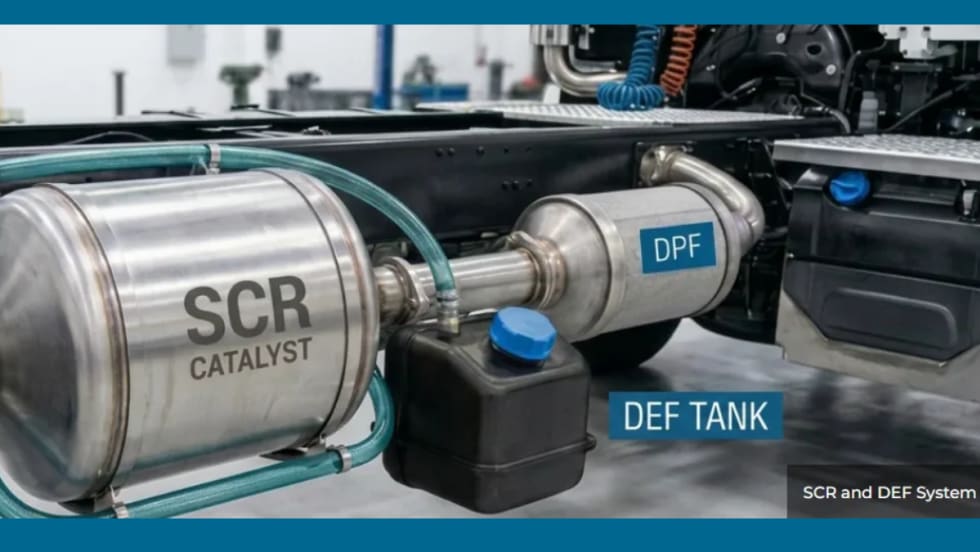
Engine Technology Forum Launches SCR, DEF Resource Center Amid Emissions Debate
The Engine Technology Forum’s new online hub aims to provide fleets, policymakers, and equipment owners with fact-based information about selective catalytic reduction technology, diesel exhaust fluid and emissions compliance.
Read More →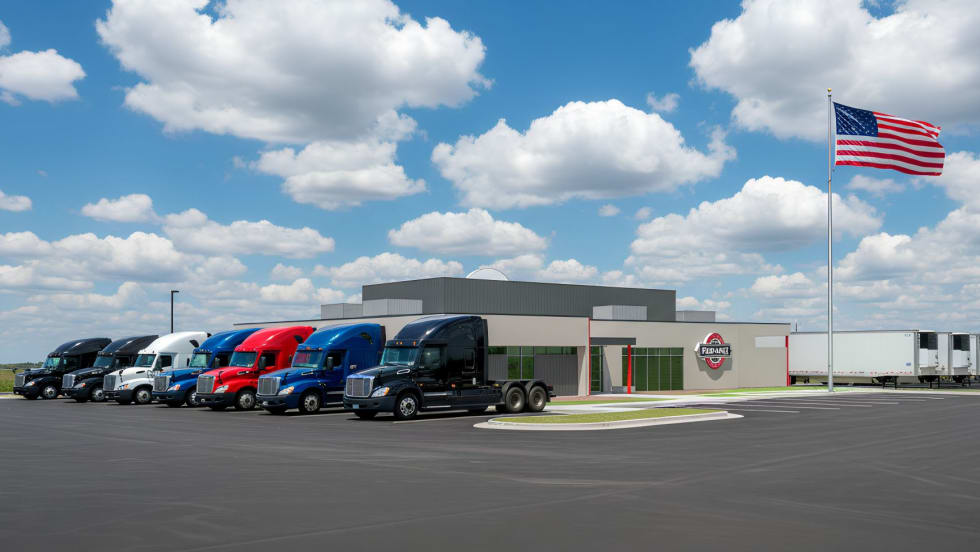
Prime Inc. to Open $7.9M Flagship Used-Truck Dealership
A new driver-focused facility to sell Prime Inc's used trucks and trailers will be the first purpose-built location in the company's history.
Read More →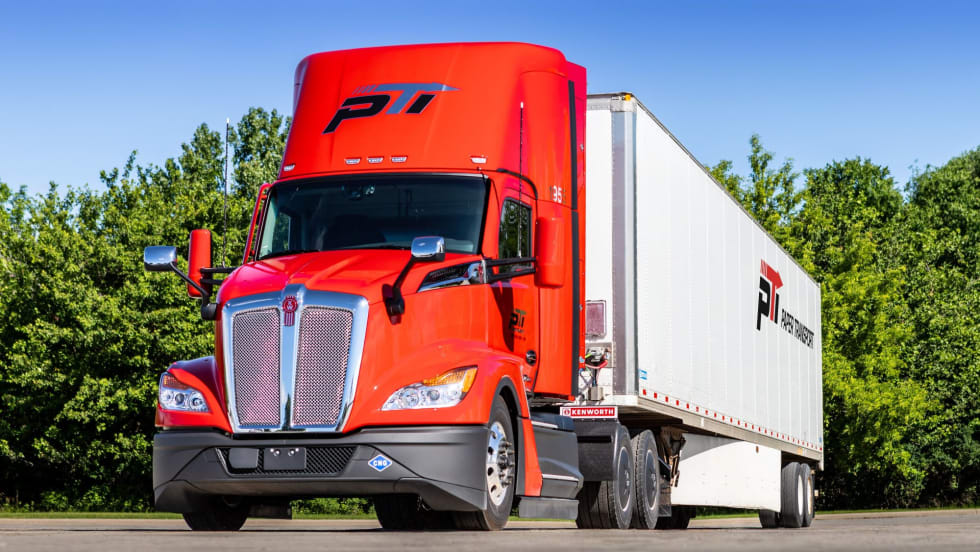
Lessons Learned About Alternative Fuels: Start Small, Stay Flexible
Practical advice on adopting alternative fuels and ZEVs from HDT's 2026 Top Green Fleets, from renewable diesel and natural gas to electric trucks.
Read More →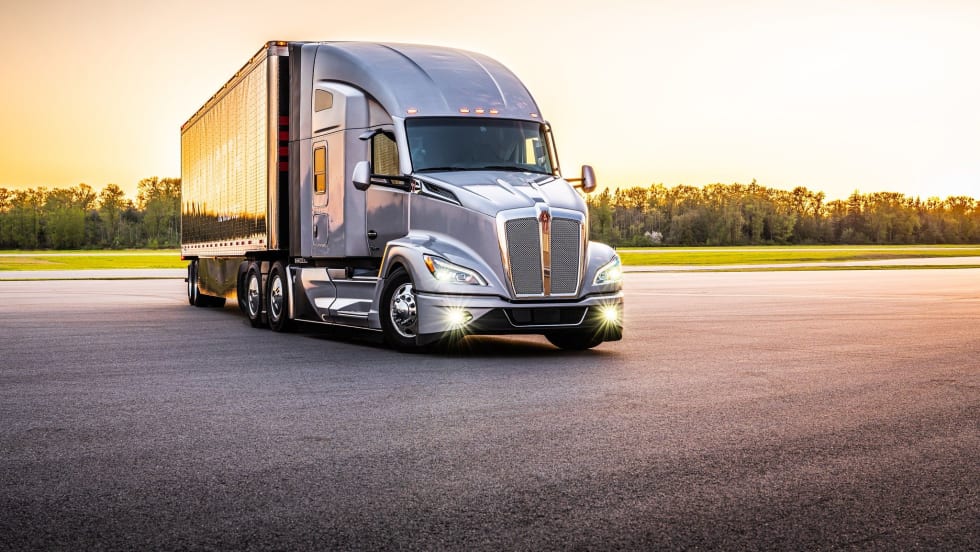
Kenworth Names Peter Ahrens General Manager
Leadership changes at Kenworth take effect July 1 as the OEM promotes two longtime Paccar executives to key management roles.
Read More →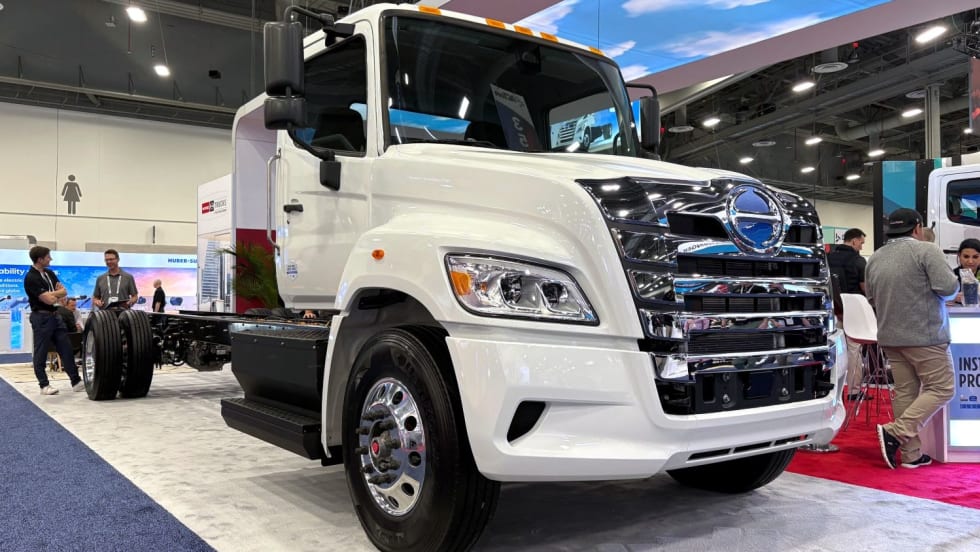
Hino Adds Electric Class 6/7 Truck
Hino says the Le Series is an important step in the company's efforts to reduce environmental impact and support its customers’ sustainability goals.
Read More →
ACT Expo 2026: Highlights in Photos
The 2026 Advanced Clean Transportation Expo featured a broad range of commercial vehicle technologies, from EVs to autonomous trucks to the latest diesel and alternative-fuel engines.
Read More →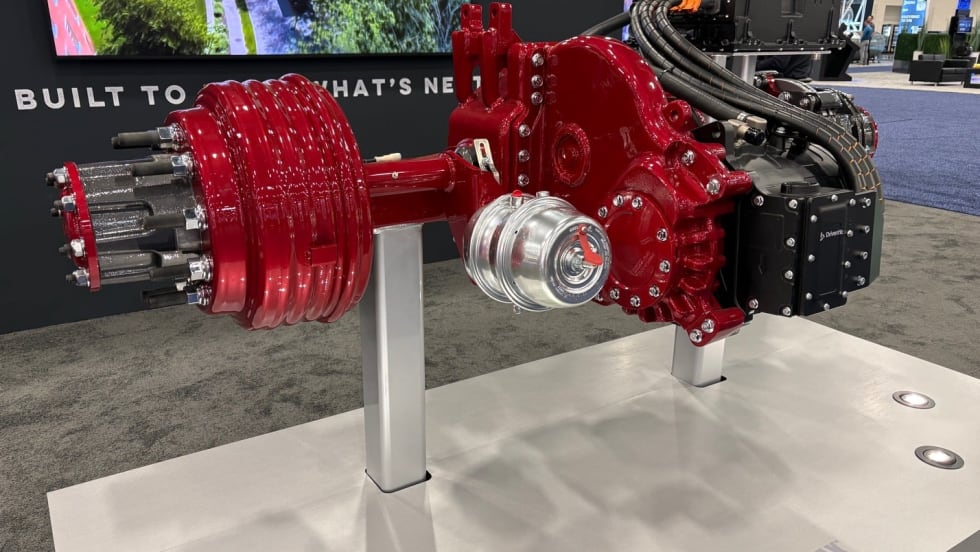
Hendrickson Debuts Electraax E-Axle for Medium-Duty Trucks
Developed with Driventic, Hendrickson's new integrated e-axle is designed to improve efficiency, reduce weight, and extend range in Class 6-7 EV applications.
Read More →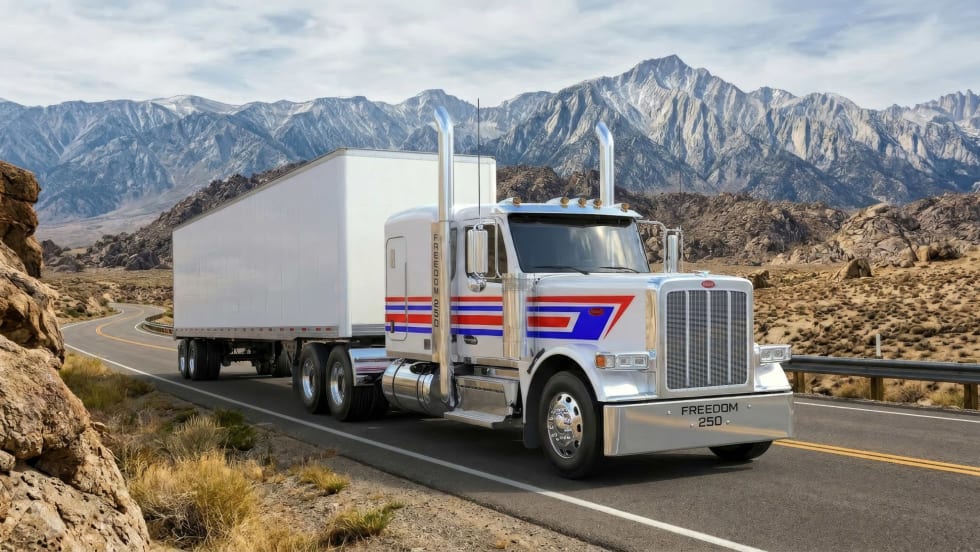
Peterbilt Unveils Freedom 250 Special Edition Model 589
Peterbilt’s just-announced limited-run patriotic Model 579 tractor celebrates America’s 250th birthday with custom styling and premium features.
Read More →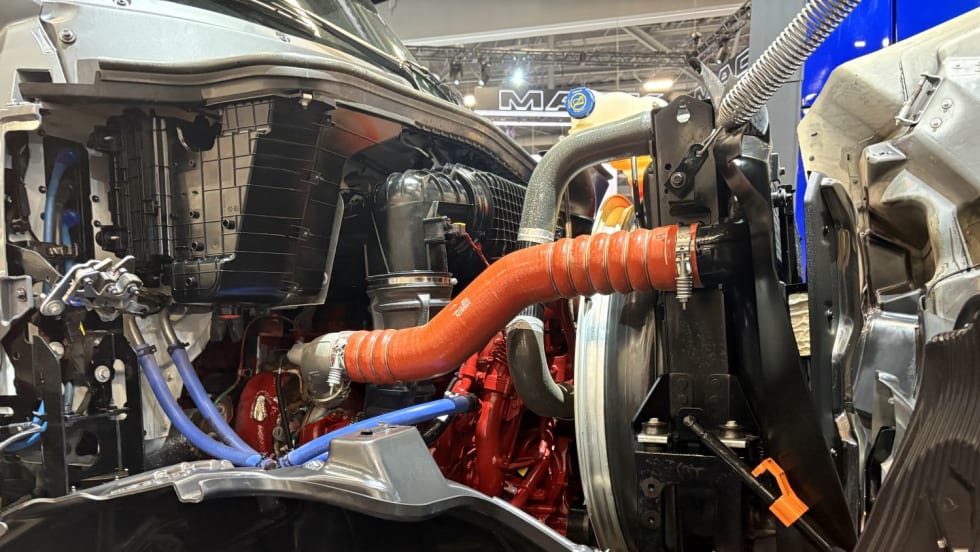
Mack Unveils EPA 2027-Compliant MP13 Engine With More Power, Better Fuel Economy
Along with unveiling its EPA 2027-compliant MP13 engine, Mack outlined powertrain changes across its Class 6-8 lineup, including new Cummins-based X10 engines.
Read More →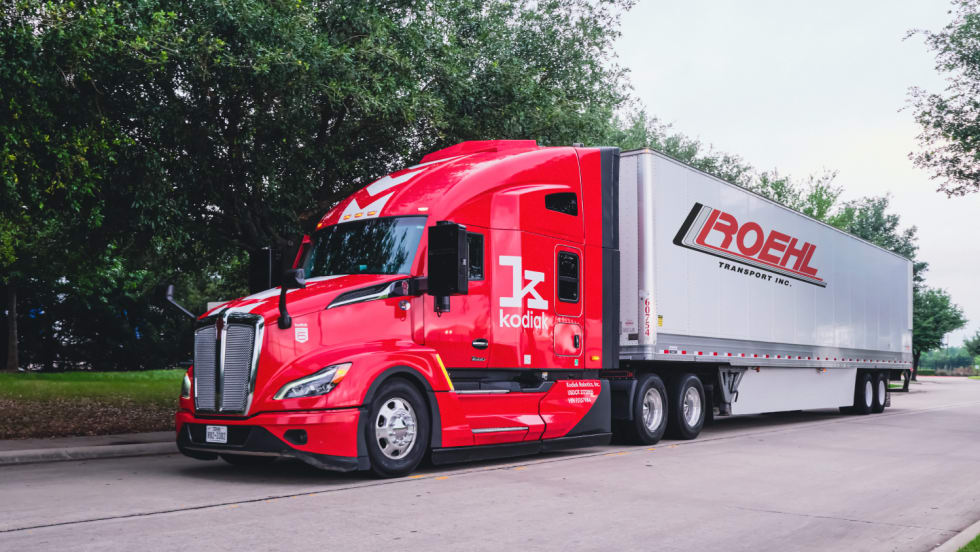
Kodiak and Roehl Transport Launch Autonomous Route Between Dallas and Houston
Kodiak AI and Roehl Transport have begun autonomous freight operations on a regular Dallas-Houston route, marking another step toward Kodiak’s planned driverless launch by the end of 2026.
Read More →