




The Hard Road to Highway Funding
In my January editorial, as part of three resolutions I'd like to see this year, I called on Congress to fix highway funding.

In my January editorial, as part of three resolutions I'd like to see this year, I called on Congress to fix highway funding.
“There's simply no way around the fact that we need to raise more money,” I said. “The federal fuel tax hasn't gone up since 1993. We'd need to be paying 39 cents per gallon of diesel instead of 24.4 cents just to make up for inflation.”
There may have been some confusion about what I meant by that last line. I was simply trying to illustrate how far behind the fuel tax has fallen. I was not saying that Congress should immediately hike the diesel fuel tax by more than 14 cents per gallon. That, of course, is the last thing our industry needs, on top of all the other increased costs we've faced in recent years, from more expensive trucks to meet emissions regulations to healthcare costs.
But the truth remains: There needs to be some sort of increase in highway funding. Fuel taxes have not begun to keep up with the price of maintaining and improving our nation's highways and bridges.
Trying to make up that shortfall all at once would harm not only the industry but also the nation's economy. Any increase in the fuel tax or other funding mechanism needs to be gradual, phased in over a number of years.
In fact, the American Trucking Associations has endorsed a gradual increase in the fuel tax, as has the U.S. Chamber of Commerce, which is headed up by former ATA Chief Tom Donohue.
Longer-term, we're going to have to look for different ways to pay for infrastructure than a per-gallon fuel tax. Trucks and cars alike are becoming more fuel-efficient, so fewer gallons will be purchased. And vehicles that are powered by electricity (full-electric or hybrid), natural gas or propane don't pay their fair share under a system that charges by diesel or gasoline gallons purchased.
A bipartisan blue-ribbon commission several years ago recommended that we move to a tax based on vehicle miles traveled, or VMT. It makes total sense from the standpoint of a fair and accurate way to charge user fees. And with the prevalence of GPS tracking today, it's technologically feasible, even more so than when the report came out. A new report out from The Hamilton Project even says a VMT tax could help cut the federal deficit.
However, there are a lot of questions about privacy concerns. And as The Hamilton Project points out, “A major potential advantage of a mileage-based charging system over traditional taxes is the flexibility to design into such a system the ability to incorporate differential pricing based on time of day, type of vehicle, and so on.”
What do you want to bet “type of vehicle” would mean an effort by some to unfairly target trucks?
Good idea or not, a VMT tax does not seem to have gained much traction on Capitol Hill. Nor have other funding ideas.
In the absence of leadership from Congress, states are stepping up to fill the funding gap. Bonding, fuel and vehicle taxes and other fees are their main funding tools. Around half of the states are using public-private partnerships and tolling, while 37% are using a sales tax to fund transportation. The vehicle mile tax is way down on the list, at 1.4%, although Washington state is trying it out in a pilot project.
At press time, the Virginia General Assembly had just passed a landmark transportation package that replaced the per-gallon fuel tax with a wholesale tax, plus other revenue raisers. I suspect we'll see the 6% wholesale tax on diesel passed on to some extent at the pump, and when it's fully implemented in five years, the package will produce $880 million per year for the state's transportation program, according to supporters.
Whether it's a flat per-gallon fuel tax, a sales tax, a VMT tax, or other funding mechanism, the hard truth is, the trucking industry is going to have to pay its fair share if we want better highways.
But be sure you're in touch with your state and federal elected officials to try to ensure the “fair” part of that.
More Fleet Management

Geotab Links Fleet Card to Vehicle Data
The new card combines fuel discounts with telematics-based purchase controls. Geotab’s analysis also points to potential savings from choosing lower-priced fuel stops.
Read More →
How MFA Helps Protect Trucking Fleets
Multi-factor authentication adds protection when passwords are stolen. Here’s how it works and where fleets should start.
Read More →
How Better Freight Data Helps Trucking Teams Get Ahead of Disruption
Trucking and logistics teams have plenty of data. The problem is getting the right information in front of the right people soon enough to act. Better-connected data can help teams spot trouble earlier and make smarter decisions before small problems become big ones.
Read More →

Trimble: Taking Artificial Intelligence in Trucking Beyond Faster Tasks
At Insight 2026, Trimble executives argued that fleets may need to redesign workflows to get more from AI as it introduced new products and enhancements. AI’s value will depend on how fleets combine automation with their people's knowledge.
Read More →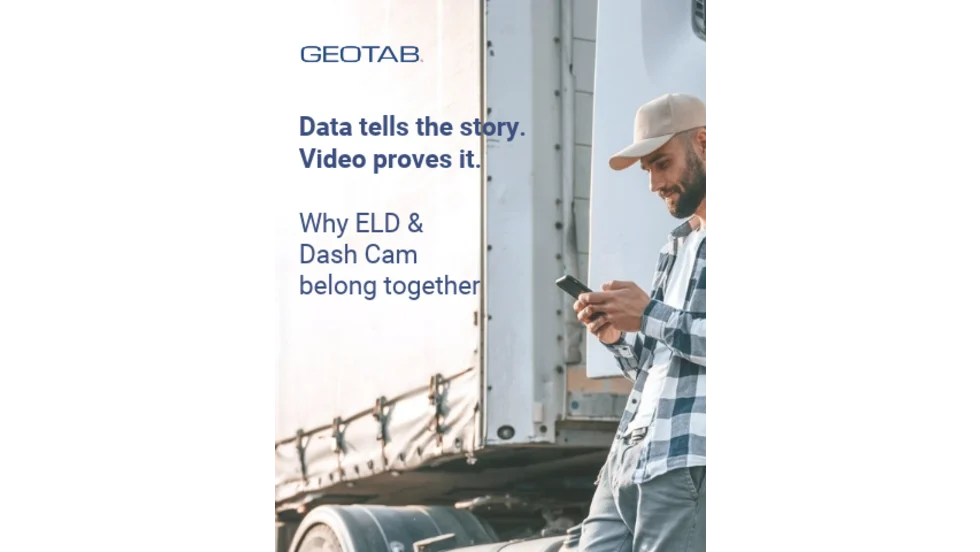
Build a bulletproof fleet: Uniting ELDs and dash cams for total compliance
An ELD can prove compliance, but it cannot always prove what happened on the road. Discover how uniting accurate ELD data with AI-powered dash cam video can help your fleet strengthen compliance, defend against liability, protect drivers and reduce operational costs.
Read More →
Nominations Open for HDT Emerging Leaders
Heavy Duty Trucking is looking for accomplished trucking fleet professionals under 40 who are making an impact and helping lead the industry forward.
Read More →
Why Private Fleets Are Taking More Freight
Private fleets are putting their own trucks on demanding customers and high-cost lanes as companies seek greater control over service, costs, and capacity.
Read More →
Color Match Smarter: Tools That Restore & Perform
For fleet managers and collision repair professionals keeping heavy-duty trucks on the road, getting the color right the first time isn't just about appearance — it's about efficiency, turnaround time, and bottom-line results. Discover how today's digital color tools are transforming the repair process from guesswork to precision.
Read More →
FMCSA Pauses Biennial-Update Enforcement Amid Motus Transition
Carriers whose updates were due on or after June 1 have more time, while FMCSA works to stabilize its new registration system and warns of phishing sites impersonating its new carrier registration system, Motus.
Read More →
2026 Blueprint for Countering Smarter Supply Chain Theft
Cargo theft is no longer just the cost of doing business. It's a multi-billion-dollar criminal enterprise exploiting vulnerabilities across your fleet, drivers, and supply chain.
Read More →