




HDT Fleet Innovator Robert E. Low Shows Appreciation for his Drivers
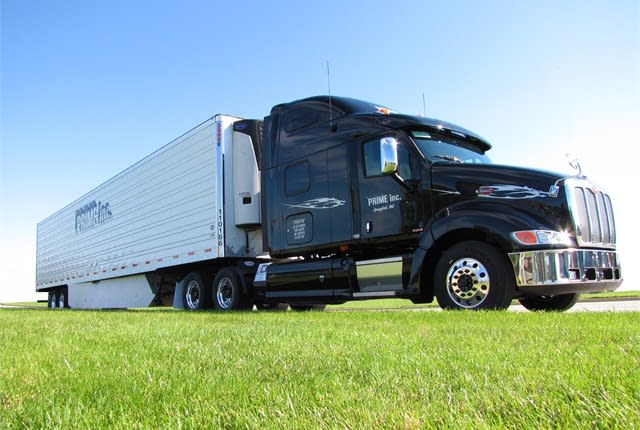
Prime Inc. is headquartered in Springfield, Mo., the “Show-Me State,” and President Robert E. Low says showing drivers genuine appreciation is the key to the company’s relatively low turnover rate and tremendous growth over the years.


Robert Low, President and Founder - Prime Inc., Springfield, Missouri

Robert Low, President and Founder - Prime Inc., Springfield, Missouri
Prime Inc. is headquartered in Springfield, Mo., the “Show-Me State,” and President Robert E. Low says showing drivers genuine appreciation is the key to the company’s relatively low turnover rate and tremendous growth over the years.
What would become Prime Inc. got its start when Low bought a dump truck while attending college in the early ‘70s.
He later traded the dump truck for a road truck, then dropped his pursuit of a degree for trucking.
Low doubled the size of the fleet every year from 1972 through 1979, when, at age 29, he made a million dollars. Within two years, however, he paid the price for that rapid growth and landed in bankruptcy court.
Not only had deregulation hit, but the company had too much debt.
“When the prime interest rate went to 21.5%, that ate up that million dollars in profit pretty quickly,” Low says. “We spent three and a half years in Chapter 11. It was really dark times, but we developed a lot of the culture and business practices that we employ today, that have been the touchstones to Prime’s success.”
One of those touchstones is Prime’s independent contractor business model.
“The driver as the owner of the truck is the best way to pay drivers, and the most powerful way to motivate them to act like business-people and be rewarded for the right business practices such as fuel efficiency and productivity,” he says.
The practice started out as a necessity. Prime couldn't get credit to buy new trucks. However, it was able to use available tax incentives to get third-party investors to buy equipment. Prime then teamed up drivers with the investors in a sort of profit-sharing program.
“When Prime came out of Chapter 11, we
kind of took the investors’ place and we continued to refine the program,” Low says.
Today, although about 300 of Prime's contractors own their equipment or are financing it through other sources, most contractors lease their trucks through a Prime subsidiary called Success Leasing.
Then they turn around and lease the truck to Prime under an operating lease. Contractors who decide the grass might be greener at another company are free to sign on elsewhere and keep up their lease payments with Success Leasing.
After the lease is up, drivers can turn in the truck and start a new one. About 15% of the time, Low says, they go ahead and set up a loan with Success Leasing to buy out the residual value and own the truck outright.
Building a smart owner-operator
It's not enough, however, to team up a driver and a truck and expect to have a successful owner-operator.
“We want our drivers to be as capable and as qualified and as knowledgeable and as smart as they can be,” Low says. “They don't have the time and resources the company has to research the most fuel-efficient equipment and driving techniques, so we have programs that help them with that.”
Prime's Associate Career Enhancement, or ACE, program, teaches classes based on Small Business Administration guidelines on how to be in business for yourself, how to create a cash flow report, how to compute miles per gallon, etc.
Today, Prime has more than 5,000 trucks in its fleet, and two-thirds of those are independent contractors. In addition to the individual owner-operators, Prime has a division for small fleets who form their own LLC entities, acquire their own operating authority, get their own insurance, and operate under a brokerage agreement with Prime.
“Some of these guys started here and are up to 50 or 60 trucks,” Low says. “We love seeing that.”
Showing the love
There's a lot more that Prime offers its contractors, as well, which helps explain why its turnover is around 50% although Low says there is still room for improvement.
Training: Prime uses its experienced contractors as CDL training instructors, along with some classroom training, simulators and a private training pad, to help train new drivers.
Trainees must have 80,000 to 100,000 miles in the program as second seats before they're allowed to hit the road on their own.
“They have a good solid foundation from a real quality trainer in a one-to-one teacher-to-student ratio,” Low says.
The amount they're paid is a function of the longevity of the trainee, so the trainers tend to stay in touch with former trainees to help them work through some of the questions and challenges new drivers have, which also helps retention.
Driver Amenities: “We take a lot of pride in our driver amenities,” Low says, believing that by investing in such facilities Prime is showing in a concrete way that it values its contractors.
Its Millennium facility at its headquarters opened in 2000 and features a fitness facility including a basketball court (where Low frequently plays a game with drivers and other employees), a spa, a salon, an upscale cafeteria, a 55-seat movie theater, child care, a physician's office with a company doctor, driver lounges, laundry facilities, sleeping rooms — all the conveniences of home.
Another facility in Scranton, Pa., has many of the same amenities.
Driver Health: As the Truckload Carriers Association chairman this year, Low has made driver health his primary initiative, expanding on work done at Prime Inc.
“If you really love your drivers, what are you doing about their health?” he asks, adding, “The only truly safe driver is a healthy driver.”
Prime has a dedicated driver fitness coach, Siphiwe Baleka, a triath-lete who went through Prime's driver training and lease program.
He runs small groups of drivers through a 13-week program, teaching them how to eat and exercise to lose weight and stay fit.
“It's become very popular to say, ‘We love our drivers,'” Low says. “We try to do things so it's more than that. If you're not walking the talk, it rings hollow.”
More Fleet Management

Geotab Links Fleet Card to Vehicle Data
The new card combines fuel discounts with telematics-based purchase controls. Geotab’s analysis also points to potential savings from choosing lower-priced fuel stops.
Read More →
How MFA Helps Protect Trucking Fleets
Multi-factor authentication adds protection when passwords are stolen. Here’s how it works and where fleets should start.
Read More →
How Better Freight Data Helps Trucking Teams Get Ahead of Disruption
Trucking and logistics teams have plenty of data. The problem is getting the right information in front of the right people soon enough to act. Better-connected data can help teams spot trouble earlier and make smarter decisions before small problems become big ones.
Read More →

Trimble: Taking Artificial Intelligence in Trucking Beyond Faster Tasks
At Insight 2026, Trimble executives argued that fleets may need to redesign workflows to get more from AI as it introduced new products and enhancements. AI’s value will depend on how fleets combine automation with their people's knowledge.
Read More →
Build a bulletproof fleet: Uniting ELDs and dash cams for total compliance
An ELD can prove compliance, but it cannot always prove what happened on the road. Discover how uniting accurate ELD data with AI-powered dash cam video can help your fleet strengthen compliance, defend against liability, protect drivers and reduce operational costs.
Read More →
Nominations Open for HDT Emerging Leaders
Heavy Duty Trucking is looking for accomplished trucking fleet professionals under 40 who are making an impact and helping lead the industry forward.
Read More →
Why Private Fleets Are Taking More Freight
Private fleets are putting their own trucks on demanding customers and high-cost lanes as companies seek greater control over service, costs, and capacity.
Read More →
Color Match Smarter: Tools That Restore & Perform
For fleet managers and collision repair professionals keeping heavy-duty trucks on the road, getting the color right the first time isn't just about appearance — it's about efficiency, turnaround time, and bottom-line results. Discover how today's digital color tools are transforming the repair process from guesswork to precision.
Read More →
FMCSA Pauses Biennial-Update Enforcement Amid Motus Transition
Carriers whose updates were due on or after June 1 have more time, while FMCSA works to stabilize its new registration system and warns of phishing sites impersonating its new carrier registration system, Motus.
Read More →
2026 Blueprint for Countering Smarter Supply Chain Theft
Cargo theft is no longer just the cost of doing business. It's a multi-billion-dollar criminal enterprise exploiting vulnerabilities across your fleet, drivers, and supply chain.
Read More →