




Future Reefers
Carbon dioxide, condemned for being a greenhouse gas and the target of diesel emissions regulations about to go into effect, is actually good when used as a refrigerant


Carbon dioxide, condemned for being a greenhouse gas and the target of diesel emissions regulations about to go into effect, is actually good when used as a refrigerant.
Experts say it's far less harmful than synthetic refrigerants if released into the atmosphere, so it has the potential to become the preferred compound in truck and trailer refrigeration units.
Carrier Transicold and Thermo King displayed CO2 reefers at the recent IAA commercial vehicle show in Germany. Carrier's has a low-emissions diesel with a particulate filter. TK's is all electric, so emits no pollutants at all. TK also showed a cryogenic reefer using CO2.
Representatives said current compounds such as R-404a, now widely used in transport refrigeration units, might be outlawed in Europe within a decade.
Carbon dioxide is likely to be its replacement. CO2, designated R-744 in the refrigeration industry, is a natural compound that has comparatively little global warming potential, so is given the GWP number 1. By contrast, R-404a, a synthetic compound that's a mixture of other refrigerants, has the GWP number of 3,922 -meaning it's almost 4,000 times as harmful.
If released, neither CO2 nor R-404a harms the ozone layer, a nasty trait of some chlorofluorocarbons that caused government agencies in Western countries to ban them more than 20 years ago. The best known of these banned chemicals is R-12, DuPont's Freon. Chlorofluorocarbons chemically break down the ozone and allow harmful ultraviolet rays to beat down on the planet.
Zero Emissions unit
Thermo King's Zero Emissions unit shown at IAA looked ordinary enough, though the cabinet seemed slimmer than normal and the grille was offset to one side. Inside was an all-electric operating system and, of course, its refrigerant is CO2.
It uses an advanced multi-functional power management system that was developed by Ingersoll-Rand engineers in the Czech Republic, said Mark Watson, TK's vice president, strategic product planning. The electronics package was behind a window in the cabinet.
"The electric unit takes its power from any source, whether that's a generator mounted on the truck, a genset mounted under the trailer, shore power at night, future fuel cells, battery technology - it doesn't care where the power comes from," Watson explained. "Once it has the power, it conditions it to drive the fans, the gas cooler, the compressor, at infinitely variable speeds depending on the capacity that's required."
Thermo King could apply the CO2 closed-loop refrigeration technology used at the show to any refrigeration system in the future, he said.
"There's pending legislation here in Europe around engine emissions. This doesn't have an engine, so you're exempt straightaway. The other regulation that's likely to be coming is around refrigerants. We now know that the 404a which is commonly used in our industry probably has a sunset in the next seven to 10 years."
Quietness has become an issue for reefers in Europe, because deliveries to stores overnight are often done in neighborhoods with many nearby apartments and houses. An electric reefer is ideal in such circumstances because it's virtually silent.
"It's an extremely quiet machine," Watson said of the Zero Emissions unit. "We just ran a test where we found that its maximum frequency was 57 dbA. So it's probably the quietest trailer unit out there using some sort of closed-loop system."
Another CO2 unit displayed by Thermo King at IAA was a next-generation CryoTech transport refrigeration system. The concept unit expands on the available range of proven products by further increasing efficiency, lowering maintenance costs and reducing environmental impact, Watson said. With an advanced SR-3 controller, it offers extremely fine single- and multi-temperature control of up to three zones, improving temperature control up to 50% over existing CryoTech systems.
The SR-3 controller offers fleet tracking capabilities as well, enabling users to retrieve diagnostics using a thumb drive. This unit will also feature the industry's first dual-mode cellular/WiFi monitoring capabilities delivered through the Thermo King TracKing system. Because they are powerful, reliable and exceptionally quiet, CryoTech systems are ideal for urban distribution, Watson said.
Carrier's carbon dioxide unit
In the Carrier Transicold booth at IAA, there was a concept unit that uses CO2 refrigerant and an advanced control system similar to those used in automotive and heavy equipment controls.
Dave Kiefer, director of marketing and product management in the company's North America Truck Trailer Rail Division, said sophisticated electronics and separation of functions results in high reliability, efficiency and flexibility. The unit's diesel has a particulate filter to help reduce soot emissions.
"Carrier has had considerable success with the natural refrigerant, CO2," he said. "Our CO2-OLtec stationary refrigeration systems are growing in popularity in European supermarkets. And Carrier Transicold's Container Products Group is well along in its sea trials of the NaturaLine container refrigeration unit, which also uses CO2." Designed for global marine shipping applications, NaturaLine units also will be seen on North American highways and railways in intermodal operations.
At IAA, Carrier also showcased the Supra City Z hydraulic truck reefer unit. Designed for the European market, the unit substitutes a hydraulic motor for a diesel engine and relies on the vehicle's Euro V-compliant truck engine to power it, Kiefer said.
This significantly reduces emissions of nitrogen oxide, carbon monoxide, hydrocarbons and particulate matter. Eliminating the secondary diesel engine also eliminates the primary source of noise from the refrigeration system.
Other engineless units
In Oregon, Truck Transport Refrigeration is readying a hydraulic-powered trailer unit that eliminates the reefer's diesel. Gene Holt, the company's CEO, explained that a hydraulic pump spun by the tractor's engine sends pressurized fluid to a hydraulic generator mounted behind the cab or sleeper. That produces power to run the reefer, which is electric. It uses R-404a, which runs at lower pressure and causes fewer problems than CO2, he said.
While on the road, power will come from the on-board generator that supplies 15 kW of usable voltage at engine idle, Holt said.
"That power is available all through the engine's operating envelope. Part of the energy that is developed under normal operating conditions goes up the stack in all modern engines. TTR units tap into that source of energy, which improves the efficiency of the truck engine."
Under normal highway conditions, the TTR electric unit will only require about 2 tenths of a gallon per hour, he said, compared to 1 to 1.5 gallon per hour for existing units. Generating power is supplied from the engine by the hydraulic pump mounted on it.
"The hydraulic pump is not your everyday gear pump seen on a lot of equipment," Hold said. "It is a variable volume pressure compensated pump that is designed to run continually. The pump supplies all the required oil and pressure at 650 RPM to drive the 15 kW generator at full capacity. Each TTR electric unit saves about $2,000 a month in diesel fuel at the present rates."
While backed into a loading dock, the trailer's reefer can be plugged into a 220-volt, 3-phase outlet if it's available. There's no battery backup on the trailer.
In addition, the unit saves weight, at least 1,000 pounds have been removed from the front of the trailer, Hold notes. Because there aren't any fuel requirements, they also don't come under the rules such as CARB in California or any upcoming regulations being formulated at the federal level. Maintenance, he said, is minimal.
Wheel-powered unit
In Florida, another firm is close to introducing its "Wedway" reefer system, which is powered by the trailer's wheels as they roll down the highway. Mike Quill, who sits on the board of directors of Emerald Technology Partners LLC, credits Brian Arnold, another director, for designing and developing the system.
Wedway uses "a mechanical interface that captures the rotation of the tire on the trailer," Quill said, declining to further describe that apparatus. This spins a generator that sends electricity to a battery for use by the electric-powered reefer. This replaces the diesel engine, and would be especially valuable in California with its strict anti-emissions regulations.
No fuel is needed by the reefer, and the amount of fuel used by the tractor is also reduced because a "patented tether device will be able to connect to the tractor to power the air conditioning and heating systems without idling the main engine" during rest periods, Quill said.
For extended stops, the system can be plugged into shore power, which keeps the battery charged. Standing alone, a "custom battery" will run the reefer for 36 hours, and there'll be an option for 72 hours of operation. The system is lighter than a diesel-powered reefer, adding pay- load capacity, Quill said. It is now being road tested. Without the en gine, Wedways would cut 63 billion pounds of CO2 emissions annually if extensively used by American truckers, he said in a radio inter view on Extreme Trucker earlier this year.
From the December issue of HDT magazine.
More Equipment
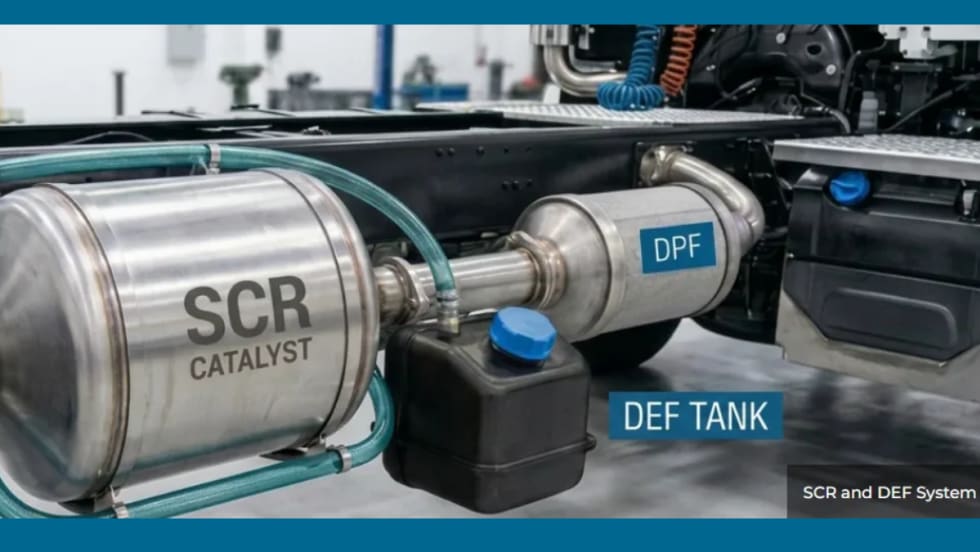
Engine Technology Forum Launches SCR, DEF Resource Center Amid Emissions Debate
The Engine Technology Forum’s new online hub aims to provide fleets, policymakers, and equipment owners with fact-based information about selective catalytic reduction technology, diesel exhaust fluid and emissions compliance.
Read More →
Prime Inc. to Open $7.9M Flagship Used-Truck Dealership
A new driver-focused facility to sell Prime Inc's used trucks and trailers will be the first purpose-built location in the company's history.
Read More →
Lessons Learned About Alternative Fuels: Start Small, Stay Flexible
Practical advice on adopting alternative fuels and ZEVs from HDT's 2026 Top Green Fleets, from renewable diesel and natural gas to electric trucks.
Read More →
Kenworth Names Peter Ahrens General Manager
Leadership changes at Kenworth take effect July 1 as the OEM promotes two longtime Paccar executives to key management roles.
Read More →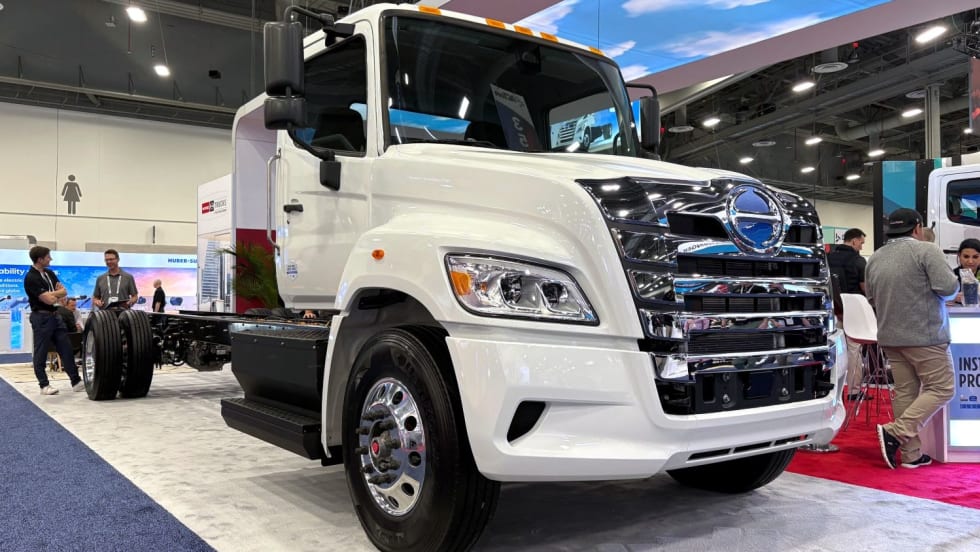
Hino Adds Electric Class 6/7 Truck
Hino says the Le Series is an important step in the company's efforts to reduce environmental impact and support its customers’ sustainability goals.
Read More →
ACT Expo 2026: Highlights in Photos
The 2026 Advanced Clean Transportation Expo featured a broad range of commercial vehicle technologies, from EVs to autonomous trucks to the latest diesel and alternative-fuel engines.
Read More →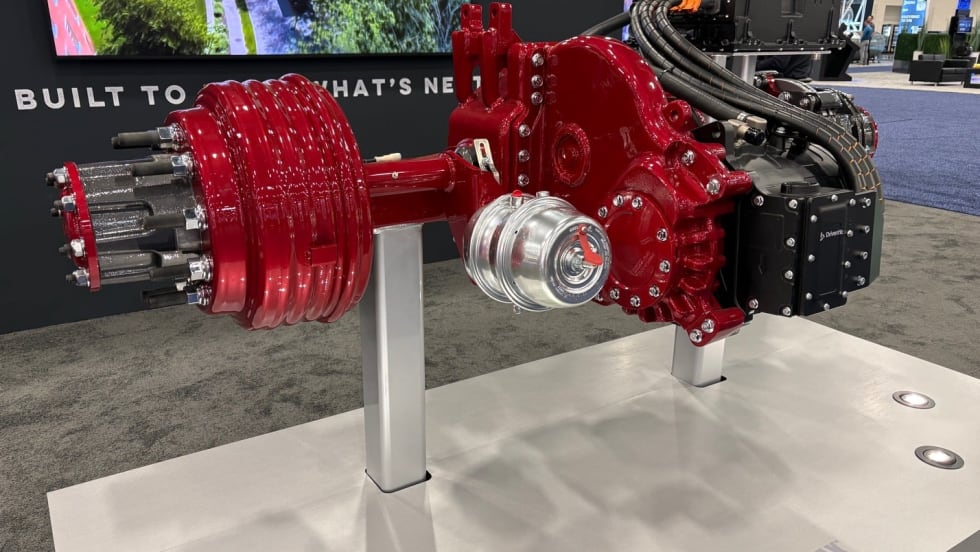
Hendrickson Debuts Electraax E-Axle for Medium-Duty Trucks
Developed with Driventic, Hendrickson's new integrated e-axle is designed to improve efficiency, reduce weight, and extend range in Class 6-7 EV applications.
Read More →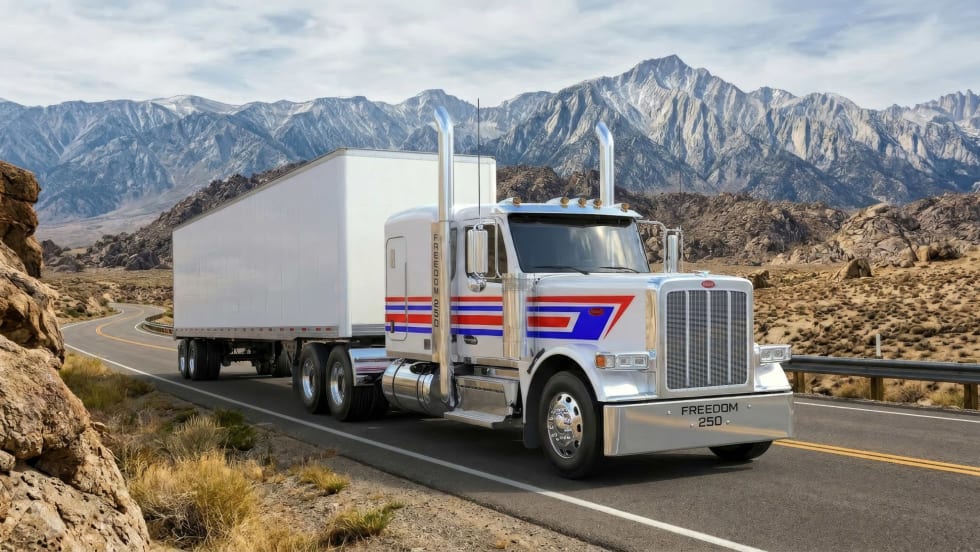
Peterbilt Unveils Freedom 250 Special Edition Model 589
Peterbilt’s just-announced limited-run patriotic Model 579 tractor celebrates America’s 250th birthday with custom styling and premium features.
Read More →
Mack Unveils EPA 2027-Compliant MP13 Engine With More Power, Better Fuel Economy
Along with unveiling its EPA 2027-compliant MP13 engine, Mack outlined powertrain changes across its Class 6-8 lineup, including new Cummins-based X10 engines.
Read More →
Kodiak and Roehl Transport Launch Autonomous Route Between Dallas and Houston
Kodiak AI and Roehl Transport have begun autonomous freight operations on a regular Dallas-Houston route, marking another step toward Kodiak’s planned driverless launch by the end of 2026.
Read More →