




Carriers Need to get 'Ducks in a Row' on Hazmat for CSA 3.0
In the coming days, the Federal Motor Carrier Safety Administration will unveil version 3.0 of its Safety Measurement System under the Compliance, Safety, Accountability program, and the changes will mean increased scrutiny of hazmat compliance, even for companies not considered hazmat carriers


In the coming days, the Federal Motor Carrier Safety Administration will unveil version 3.0 of its Safety Measurement System under the Compliance, Safety, Accountability program, and the changes will mean increased scrutiny of hazmat compliance, even for companies not considered hazmat carriers.
Vigillo, which analyzes fleet CSA data for fleets in scorecard format, offered an overview of the changes expected to be unveiled in a series of free webinars this week, explaining that there are three main thrusts to the changes:
1. The Cargo BASIC is going away, with the securement violations lumped into the Maintenance BASIC, easing what was seen as unfair treatment of open-deck carriers.
2. The new Hazmat BASIC, which will put increased focus on hazmat compliance, even for carriers not considered hazmat carriers.
3. New violations and changes in severity/points rankings.
The FMCSA has only said these changes will come out in December, but Vigillo believes they will likely coincide with the SMS monthly update, which is scheduled for the week of Dec. 3.
It is possible additional changes will be released, but this is what they know so far:
The Vehicle Maintenance BASIC gets another 100-plus violations that used to be in the Cargo category, meaning Vehicle Maintenance, which already was the largest in terms of violations, is now even more so.
Drew Anderson, director of sales for Vigillo, notes that violations in other BASICs often tie back to the Maintenance category, because inspections that uncover them are often triggered by observable maintenance defects. With the additional cargo securement violations, he says, "that's only going to be amplified as this rolls out in 2013."
The change was made because open-deck carriers were subject to increased scrutiny under the Cargo BASIC because the cargo is visible to inspectors. "With the non-hazmat cargo violations rolling over into maintenance, the impact of what was those relatively high point-value violations has been pretty significantly diluted," Anderson explained. "Number one, they sort of get lost in this vast sea of maintenance violations. In addition, they've altered the severity rates of quite a few of those cargo violations, so their impact will not be nearly as significant as they were."
In fact, he said, looking at the Vigillo customer base under the test program the agency has had in place, looing at violations by rank, you have to go all the way down to 41 in the Maintenance BASIC to find a cargo violation.
"The change in hazmat is significant," warned Sloan Morris, director of client services for Vigillo.
The new Hazmat BASIC includes the hazmat-related violations from the old Cargo BASIC and adds more than 100 additional violations.
Perhaps most importantly, this BASIC has an intervention threshold score of 80 for all carriers, regardless of their carrier classification. This differs from the other BASICs, where a carrier who is considered a "hazmat carrier" is subject to a stricter threshold than a non-hazmat carrier.
One area of concern, Morris said, is that the Hazmat BASIC contains even thinner data than the Cargo BASIC did. Among Vigillo customers, about 50% fewer violations.
"What that means is a few violations can cause spikes" in CSA scores, he said.
As Anderson noted, "Up to this point, the most sensitive BASIC has been Driver Fitness. It doesn't take very many violations to drive up your scores. Hazmat will usurp Driver Fitness."
As an example, he showed the CSA data for 1,900-truck carrier, with an alert in the Hazmat BASIC and a score of 91.7. "But if you dig into the violations, over the last two years, they tallied up 10 violations, maybe a dozen to 15 incidents. And erally only one of them, 'package not secure in vehicle,' is the only really 'safety-related' violation. The others are all compliance," including vehicle not placarded as required, placard not reading horizontally, emergency response information not available.
"Whether you are designated hazmat or non-hazmat, you need to make sure you've got your ducks in a row on hazmat," Anderson said.
The terminology and criteria for who is considered a hazmat carrier have also changed. There are three tests to determine who is "subject to the placardable hazmat threshold," including having at least two hazmat placardable inspections in the past 24 months, at least one in the past 12 months, and at least 5% of total inspections being hazmat placardable inspections.
"They don't want carriers who stopped carrying hazmat 14 months ago to still be considered a hazmat carrier," Morris explained.
Because of concerns about the changes, the agency will keep the hazmat BASIC scores private for a year.
There have been a number of changes in the violations themselves, both adding violations and changing severity/points values. Some of the main ones:
- In the Driver Fitness BASIC, violations related to driving with a suspended or disqualified CDL have been split up so it is clear if they are non-safety related, such as licenses being revoked for nonpayment of child support.
- In the Unsafe Driving BASIC, speeding violations for 1-5 mph over the limit are being removed.
- There will be better alignment of the SMS with intermodal equipment provider regulations, taking into account whether the IEP has a DOT number, if the driver did a pretrip inspection, and whether the violation should have been apparent to the driver during the pretrip. According to Anderson, the FMCSA believes this actually will result in an increase in violations for motor carriers.
- In the SMS display, crashes with injuries will be separated from fatal crashes.
Noting that many of these changes were made in response to trucking industry concern s, Anderson said, "A lot of folks I've talked to certainly welcome these changes and anticipate some relief. But I would caution you that you may or may not be relieved. These changes not only are going to affect you; they're going to affect all the peers you are being compared to. Because you're graded on a curve, you may walk in after the update and see little or no change."
More Safety & Compliance

How Waste Connections is Using Data, Telematics, and AI
How do you manage and maintain more than 18,000 connected trucks? Data. Lots of it.
Read More →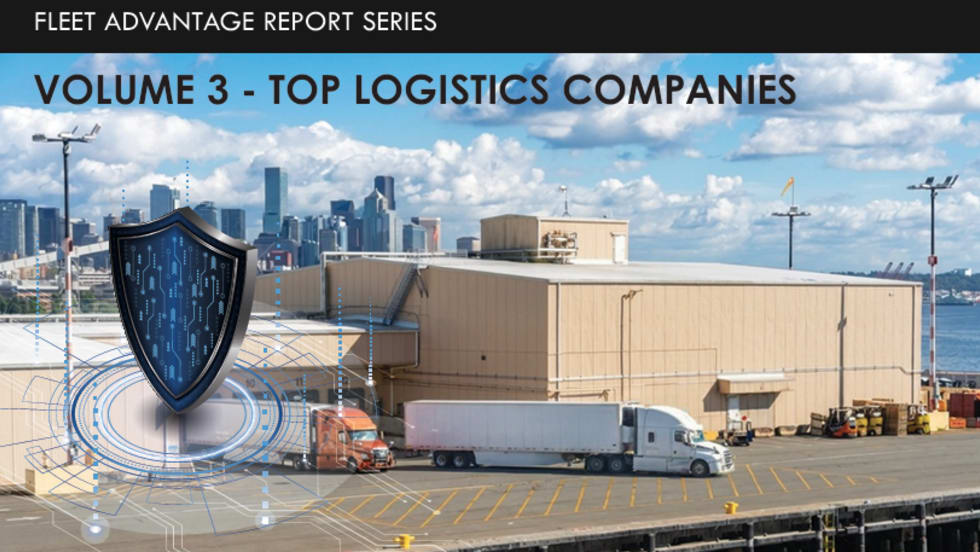
Fleet Advantage: Top Logistics Fleets Outperform National Safety Benchmarks
Fleet Advantage's latest TRUST Safety Index found leading logistics fleets maintained significantly lower out-of-service rates and stronger safety scores than national averages, while highlighting persistent challenges related to tires, brakes, and unsafe driving behaviors.
Read More →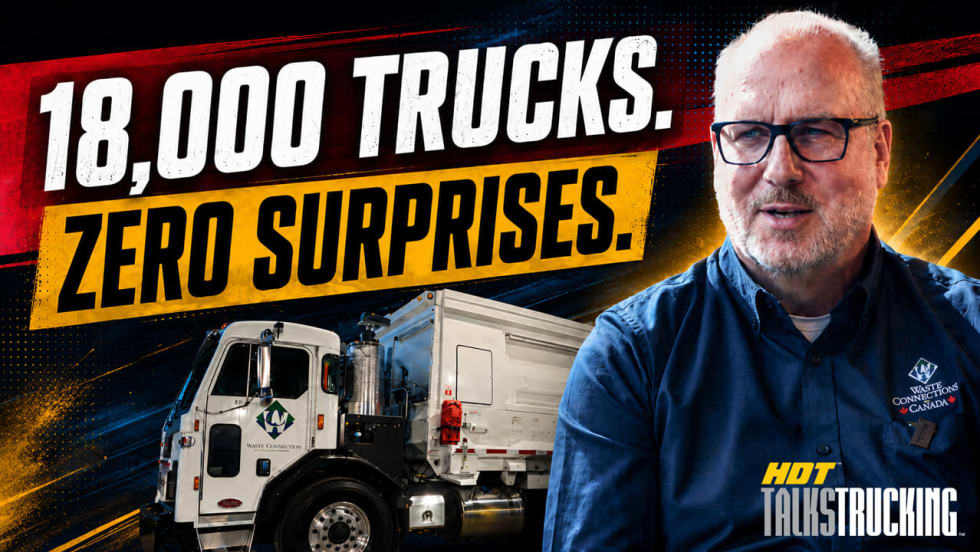
Why Fleet Data Matters More Than Ever at Waste Connections [Watch]
Waste Connections' Chuck Palmer explains how telematics, predictive maintenance, safety analytics, and AI help keep vehicles on the road and drivers safe in this episode of HDT Talks Trucking.
Read More →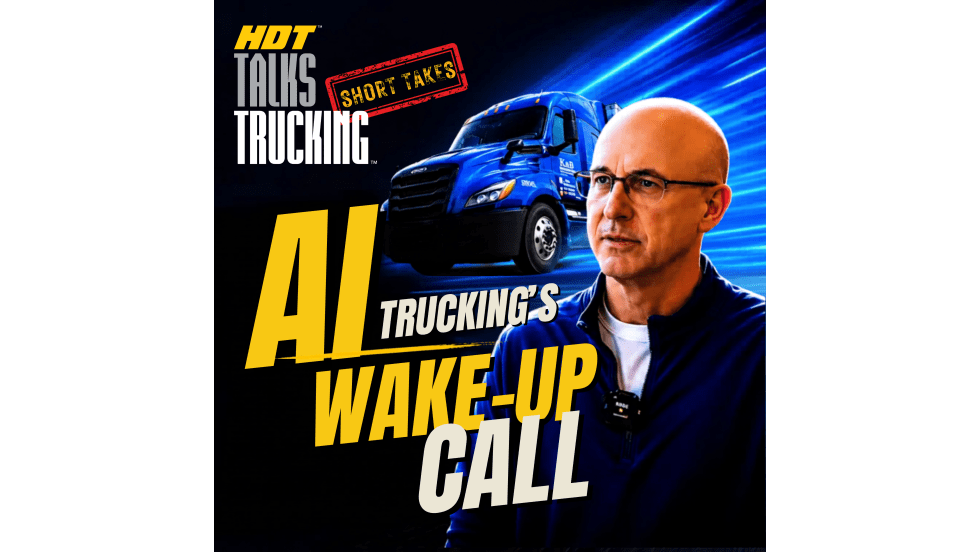
Short Takes: How K&B is Using AI
Fleets need to "get on board the train" with AI, says Lance Evans of K&B Transportation in this HDT Talks Trucking Short Takes episode.
Read More →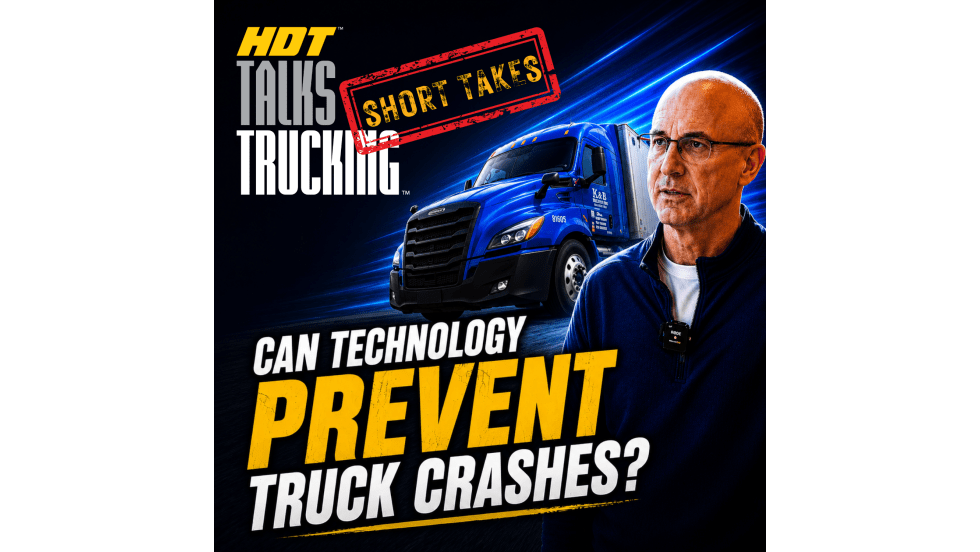
Short Takes: Inside K&B’s Truck Safety Tech
Listen to learn how K&B Transportation uses cellphone-blocking technology, speed management systems, weather geofencing, bridge avoidance tools, and more to improve driver safety.
Read More →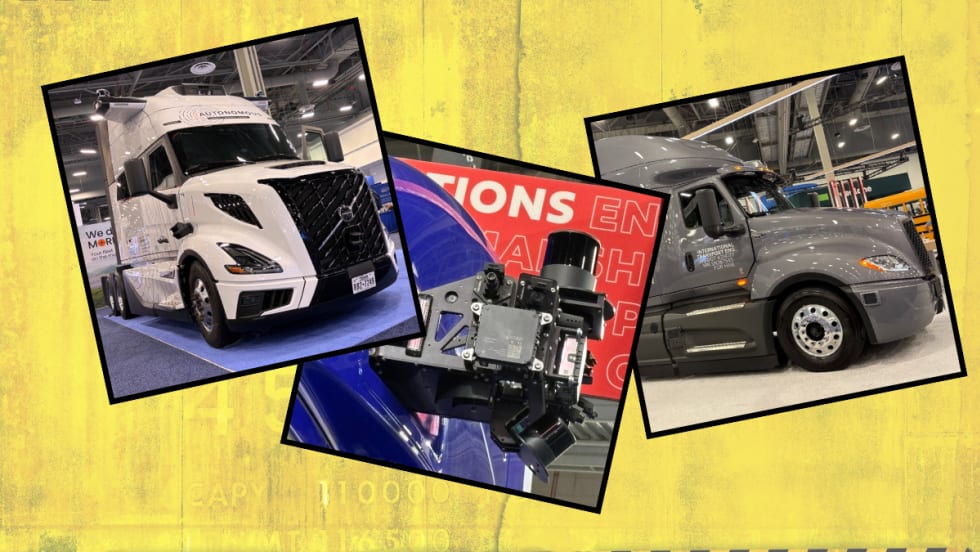
The Biggest Gap in Driverless Trucking Isn’t Tech. It’s Safety Validation
Nauto’s Stefan Heck says autonomous trucks are advancing quickly but proving they’re safe enough for large-scale deployment may be the industry’s hardest challenge.
Read More →
Truck Crash Rates Are Down. So Why Do Insurance Costs Keep Rising?
ATRI’s latest research points to litigation, social inflation, and soaring claims costs as key drivers behind record-high liability premiums for trucking fleets. But there are things motor carriers can do.
Read More →
FMCSA Removes More Than a Dozen ELDs from Registered List
The FMCSA continues its efforts to fight electronic logging devices that don't meet federal requirements, removing more than a dozen from the registered ELD list in May.
Read More →
How the Supreme Court Broker Liability Ruling Could Reshape Trucking’s Safety Landscape
The Supreme Court’s May 11 broker-liability ruling may not radically rewrite transportation law overnight. But industry experts say it will intensify pressure on brokers, carriers, and shippers to prove they are prioritizing safety.
Read More →
Recall of Fontaine Fusion Flatbeds Warns Owners Not to Use the Trailers
Some Fontaine Fusion flatbed trailer manufactured between February 2025, and March 2026 could have mainbeams weakened by hydrogen embrittlement because of a problem in the galvanizing process.
Read More →