




Upcoming Changes for Commercial Driver's License Holders
Regulations for commercial vehicle drivers are changing, in particular with regards to medical cards
Regulations for commercial vehicle drivers are changing, in particular with regards to medical cards.
The changes affect various kinds of drivers differently. The rules remain the same as to which drivers need a federal medical certificate while operating a commercial vehicle, but drivers will now have to provide an up-to-date copy of this card to the DMV when they obtain it.
As part of this process, all CDL holders will have to self-certify the type of classification in which they operate as well (which will determine their requirements for filing their Fed Med card with the state) by 2014, and some may have to do so earlier than that.
Currently, all trucking companies are responsible for tracking the expiration of medical cards for their drivers. If a Fed Med card expires, the company usually reminds the driver to get a medical exam and get a new card.
By January 2014, the states will be required to take this over and centralize tracking of which drivers are maintaining a valid Fed Med card. If the state's DMV doesn't have a card on file for a driver, they'll suspend their license. Most states are starting this process now to ensure compliance by 2014, beginning with those who are receiving Fed Med cards and CDLs for the first time or renewing them.
In all states, drivers who are required to file a Fed Med card will have to comply by Jan. 30, 2014. In most states you are now required to show your Fed Med card when renewing a CDL license for interstate commerce. If you renew your CDL but don't show your medical card, you may be restricted to intrastate only travel as a result.
A number of our clients have reported that their drivers have visited the DMV, renewed their license without showing the Fed Med card (since they haven't had to in the past), and have later realized the license they got was restricted to intrastate commerce. Make sure your drivers are aware of the new requirements. Those who are renewing without realizing the new requirement are ending up with a restricted license.
From now, on any time drivers get a new medical card (good for two years) they will need to notify the DMV when it expires. For specifics on requirements in your state, verify with the DMV.
By Jan. 30, 2014, all CDL holders will have to self-certify their type of vehicle operation, which will determine if they need to submit a Fed Med Card to the DMV or not.
The new regulations do not change who is required to maintain a Fed Med card but they do require drivers to report their exemption if they have one. CDL holders who do not file a Fed Med card with the DMV or report an exemption will be assumed to be non-compliant, and their licenses will be suspended Jan. 30, 2014.
To determine whether a driver needs to file a Fed Med card with the state, you need to know two things: are they an interstate or intrastate driver, and are they in an excepted industry? A driver is interstate if their load crosses state lines at any point during a normal trip. You are intrastate if your business is all conducted within the borders of one state.
Exceptions are a little more difficult to determine. Each state can determine their own additional exceptions, but the Department of Transportation exceptions are:
All school bus operations
Any transportation for a political subdivision
Transportation of sick, injured, or deceased persons
Operation of fire trucks or rescue vehicles while involved in an emergency
Operation of vehicles designed or used to transport between 9 and 15 passengers not for direct compensation.
Transportation of propane winter heating fuel or responding to a pipeline emergency
Farm custom operations, including transporting machinery or crops
Operation of a CMV operated by a beekeeper transporting bees.
Operation of private motor carrier of passengers
Transportation of personal property not for compensation or commercial enterprise.
Additional Wisconsin exceptions include:
Tow trucks (if requested by a federal, state, or local officer)
Grandfathered (held valid CDL since July 29, 1996 that has not been revoked)
Wisconsin diabetes exemption
Wisconsin vision exemption
Once you determine if you operate in an industry that is an exception, you can determine which tier a driver belongs to and whether they need to get a Fed Med card and report it. Again, the new regulations don't change who is required to get a card, but since failure to report can result in suspension of a driver's CDL, it bears repeating.
Tier 1: Non-Excepted Interstate
You need to provide a valid card to the DMV and maintain that the card is up-to-date on record when you renew or get a new one.
Tier 2: Excepted Interstate
You do not need a Fed Med card.
Tier 3: Non-Excepted Intrastate
You need a valid Fed Med card and must provide it to the DMV when a license is issued, but no more.
Tier 4: Excepted Intrastate
You do not need a Fed Med card.
Make sure drivers are compliant with the requirements for their tier, taking note of any additional state or employer exceptions. Remind your team of the importance of this and carrying a Fed Med card (if applicable) so you can breeze through any roadside inspections and audits.
Don Jerrell is associate vice president at HNI, a non-traditional insurance and business advisory firm. This article originally appeared in the HNI blog.
More Safety & Compliance
How Waste Connections is Using Data, Telematics, and AI
How do you manage and maintain more than 18,000 connected trucks? Data. Lots of it.
Read More →
Fleet Advantage: Top Logistics Fleets Outperform National Safety Benchmarks
Fleet Advantage's latest TRUST Safety Index found leading logistics fleets maintained significantly lower out-of-service rates and stronger safety scores than national averages, while highlighting persistent challenges related to tires, brakes, and unsafe driving behaviors.
Read More →
Why Fleet Data Matters More Than Ever at Waste Connections [Watch]
Waste Connections' Chuck Palmer explains how telematics, predictive maintenance, safety analytics, and AI help keep vehicles on the road and drivers safe in this episode of HDT Talks Trucking.
Read More →
Short Takes: How K&B is Using AI
Fleets need to "get on board the train" with AI, says Lance Evans of K&B Transportation in this HDT Talks Trucking Short Takes episode.
Read More →
Short Takes: Inside K&B’s Truck Safety Tech
Listen to learn how K&B Transportation uses cellphone-blocking technology, speed management systems, weather geofencing, bridge avoidance tools, and more to improve driver safety.
Read More →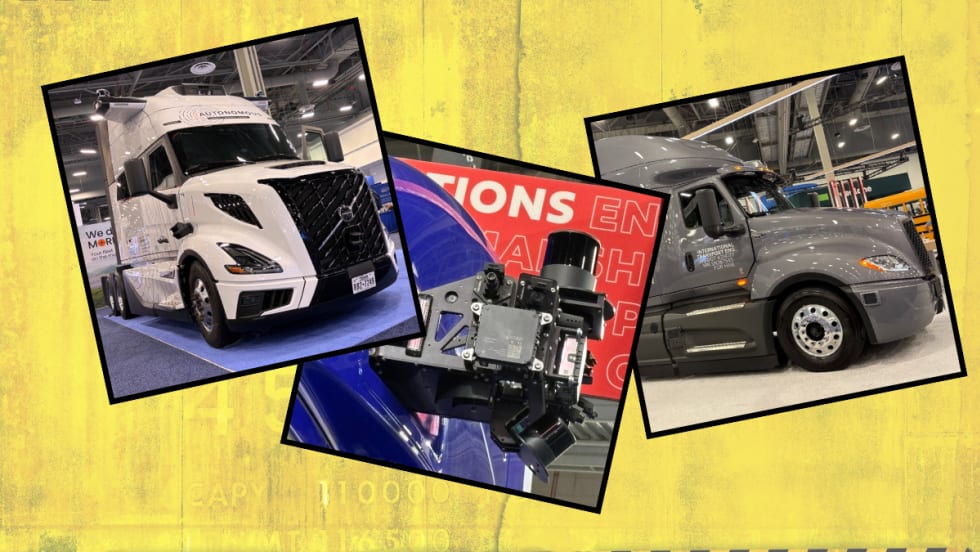
The Biggest Gap in Driverless Trucking Isn’t Tech. It’s Safety Validation
Nauto’s Stefan Heck says autonomous trucks are advancing quickly but proving they’re safe enough for large-scale deployment may be the industry’s hardest challenge.
Read More →
Truck Crash Rates Are Down. So Why Do Insurance Costs Keep Rising?
ATRI’s latest research points to litigation, social inflation, and soaring claims costs as key drivers behind record-high liability premiums for trucking fleets. But there are things motor carriers can do.
Read More →
FMCSA Removes More Than a Dozen ELDs from Registered List
The FMCSA continues its efforts to fight electronic logging devices that don't meet federal requirements, removing more than a dozen from the registered ELD list in May.
Read More →
How the Supreme Court Broker Liability Ruling Could Reshape Trucking’s Safety Landscape
The Supreme Court’s May 11 broker-liability ruling may not radically rewrite transportation law overnight. But industry experts say it will intensify pressure on brokers, carriers, and shippers to prove they are prioritizing safety.
Read More →
Recall of Fontaine Fusion Flatbeds Warns Owners Not to Use the Trailers
Some Fontaine Fusion flatbed trailer manufactured between February 2025, and March 2026 could have mainbeams weakened by hydrogen embrittlement because of a problem in the galvanizing process.
Read More →