




Logistics Consulting: Convert Inefficiencies to Bottom Line Savings
With recent reports showing that the nation's transportation costs were up 10% over the previous year, it's no wonder U.S. businesses continue to look for every avenue of cost-savings possible

With recent reports showing that the nation's transportation costs were up 10% over the previous year, it's no wonder U.S. businesses continue to look for every avenue of cost-savings possible.
And since trucking makes up nearly 80% of those transportation costs, finding ways to correct fleet inefficiencies should be at the top of everyone's list. The challenge to executives is how to identify those hidden inefficiencies so they can be eliminated and converted to bottom line cost savings.
The answer for many fleets, even those with as few as five or six trucks, is getting professional advice from a logistics consulting provider. Once a service available only to the largest fleets, logistics consulting is now accessible to small- and medium-sized companies. It enables fleets to study and simulate fleet activities using sophisticated computer models. With the newly acquired knowledge, fleet operators can get a crystal clear view of their operation and can then take the right steps towards improvement, before spending unnecessary time and money making ill advised changes.
One of the most common logistics services is route optimization. Simply put, it involves finding the way to travel the least miles, using the minimum manpower, while maintaining or achieving a high level of customer service. The best route optimization study should link robust computer routing tools with the real-life knowledge and experience of veteran transportation professionals who understand the vagaries of the trucking industry. Even the best software program can't fully understand each client's unique needs to help them find the solution that's right for them.
The first step in a route optimization is developing an operational analysis, which gathers information on fleet behavior. Weekly or monthly statistics are gathered on activities that include current routes; pickup and delivery orders; numbers and sequence of deliveries; distance and time traveled; and hours spent with the customer. Every detail can matter, whether it's an upstairs or downstairs delivery or if there is a narrow time window for the delivery. There can be a vast difference between making an 8 a.m. delivery in a major U.S. city vs. one at mid-day.
A second type of analysis looks at fleet utilization. In this type of study, we take a look at which vehicles are being used on which days and which are sitting idle. Does it make sense to own every vehicle in a fleet or perhaps rent or lease others? Is a dedicated contract carriage arrangement a reasonable choice? Which situations call for straight trucks and which for tractor trailers? One client might be better served with a lighter Gross Vehicle Weight (GVW) truck on one route so that fuel economy will be improved and maneuverability will be increased, reducing the driver's travel time. Or another business might maximize the use of their trucks by reassigning routes to different trucks and drivers without changing dispatching times.
One study done by AmeriQuest Transportation Services, a fleet management services provider, for an Ohio company reduced its fleet by seven units and increased the fleet's utilization time. This was accomplished in part by shifting several routes to different days of the week and converting to truck rentals in some situations. Changes made as result of the study reduced miles driven by 6%, increased fleet utilization by 20%, and upped load capacity significantly.
A professionally executed route optimization or fleet utilization analysis can accomplish many things, which can include:
- Decrease on fuel, tire, and other equipment costs
- Decrease in non-productive labor costs
- Improvement in timely deliveries, customer service
- Improvement in quality control
- Reduction of carbon emissions
- Ability to plan profitable backhaul opportunities.
Bottom line: By implementing such analyses like these - and their recommendations for improvement - a fleet can routinely reduce its expenses by 10% to 25%.
Logistics consulting services are not limited to route and fleet utilization analyses. They can also include:
Site selection/facility network analysis. When a company with a private fleet is considering a move of its facility or distribution center or is going into a new market, they need to take transportation issues into consideration before making the decision. This analysis will assist in weighing all factors from a transportation network point of view.
Driver compensation analysis. With the demand for top-notch drivers increasing, fleets are trying to weather the current economic storm while retaining or attracting quality drivers. Companies need to be apprised of competitive compensation on a regional and national basis, according to carrier type, whether it's flatbed, refrigerated, or tank truck. An analysis like this can provide the data they need to accomplish their personnel goals.
Productivity and customer service analysis. Using computer models, fleets can gauge and measure on-time performance of its shipments and deliveries. Whether the delivery is scheduled at 8 a.m. or between 8 and 10 a.m., a study such as this can determine how well a fleet is meeting that goal. If there are opportunities for improvement, they will be identified.
To remain competitive, middle-market and small fleet owners need to be able to look to outside partners to deliver areas of expertise and efficiencies that their customers are demanding and the majors are providing. Many companies may find that they have evolved from the smaller company they started out as to a much larger one, but are still continuing many of the same processes they have done manually in the past. It's time to take a big step forward by making the most cost-effective use of the advanced logistics software and industry consulting that's available today.
David Beaudry is director of Logistics Engineering and Consulting for AmeriQuest Transportation Services. He brings 25 years experience to AmeriQuest in surface transportation, logistics engineering, and consulting. His earlier career includes management posts with Ryder System Inc. and National Freight. This article originally appeared on AmeriQuest's blog. It is used here with permission.
More Fleet Management
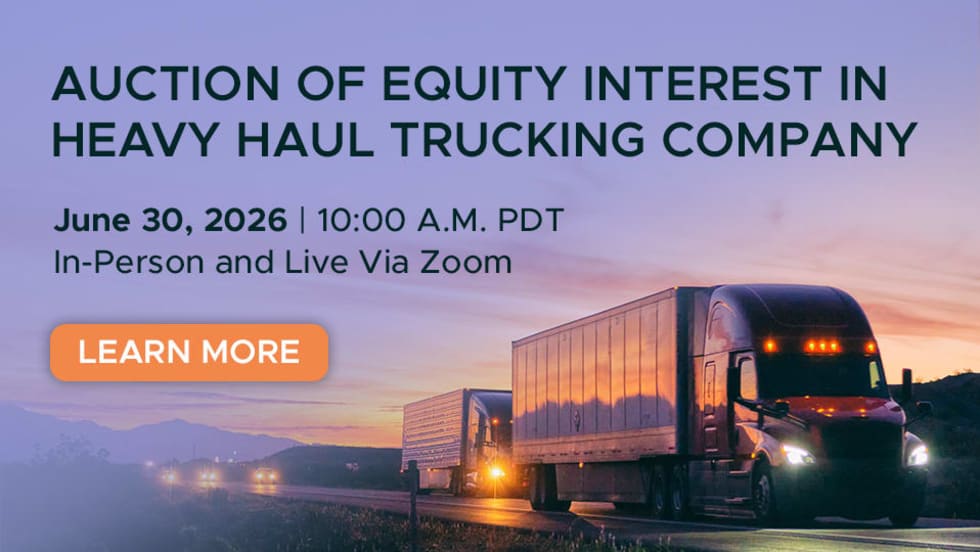
AUCTION OF EQUITY INTEREST IN HEAVY HAUL TRUCKING COMPANY!!
Mark your calendar: June 30, 2026 (10:00 a.m. PDT). MagnaTrans, LLC, a California limited liability company doing business as Magna Transportation Group is going to auction! Bid on a 37.5% ownership interest in this Rancho Cucamonga-based heavy haul and over-dimensional trucking company operating across California, Oregon, and Arizona. The equity interest will be sold to the highest bidder or bidders under Article 9 of the Uniform Commercial Code at 10:00 a.m. PDT.
Read More →
Volvo Trucks Adds Unattended Over-the-Air Software Update Capabilities
The latest evolution of Volvo’s over-the-air update technology allows software updates to run while trucks are parked, helping fleets keep vehicles current without disrupting operations.
Read More →
How Waste Connections is Using Data, Telematics, and AI
How do you manage and maintain more than 18,000 connected trucks? Data. Lots of it.
Read More →
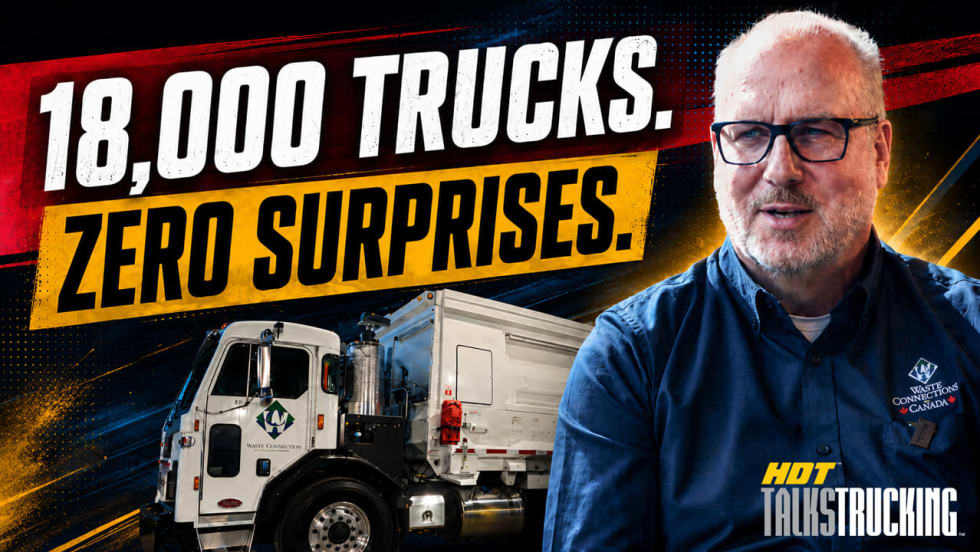
Why Fleet Data Matters More Than Ever at Waste Connections [Watch]
Waste Connections' Chuck Palmer explains how telematics, predictive maintenance, safety analytics, and AI help keep vehicles on the road and drivers safe in this episode of HDT Talks Trucking.
Read More →
NMFTA Launches Free, Anonymous Cybersecurity Threat Report Portal
Organizations are encouraged to anonymously report freight fraud, cargo crime, and cyber threats while gaining visibility into incidents reported across the transportation sector.
Read More →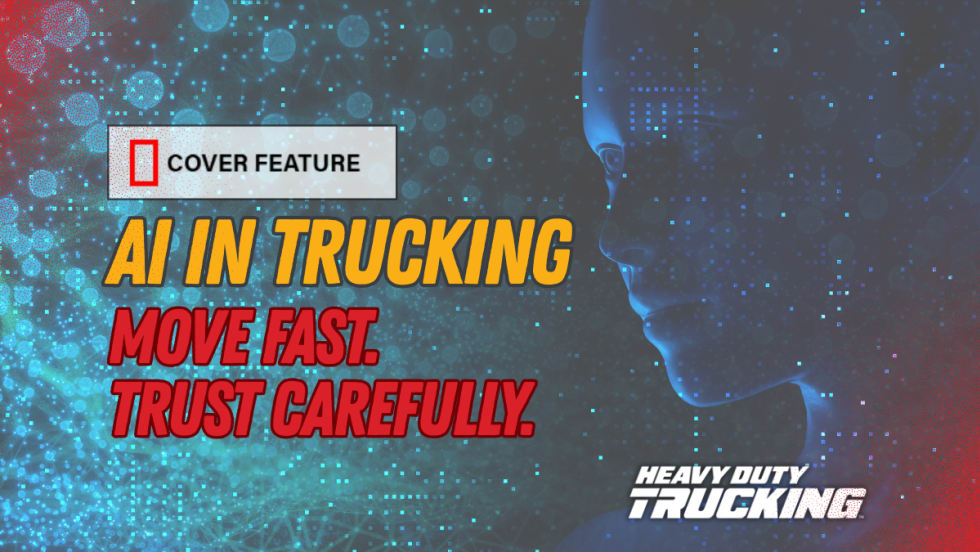
AI Can Optimize a Fleet. Can It Replace Human Judgment?
Fleets fear falling behind if they don’t adopt AI quickly enough. They also fear what happens if the technology makes the wrong decision.
Read More →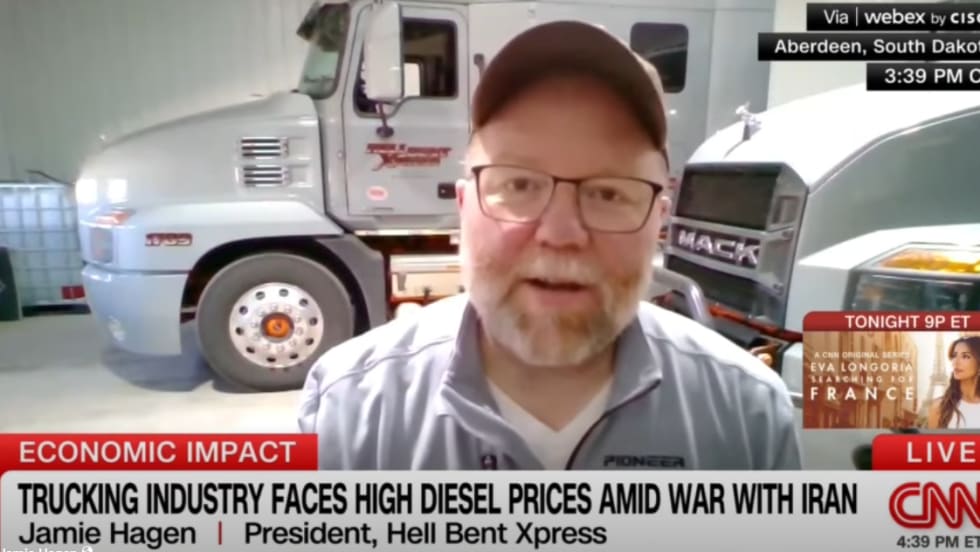
Jamie Hagen Gets Real About Running a Small Fleet in an Uncertain Economy
Small fleet owner Jamie Hagen says new legal risks, volatile fuel prices, and a changing freight market are forcing small carriers to rethink how they operate — and what they can afford.
Read More →
Jamie Hagen Gets Real About Freight, Fuel Prices, Safety, and Small-Fleet Survival
Running a small trucking fleet right now isn’t easy, especially right now. And Jamie Hagen doesn’t sugarcoat it.
Read More →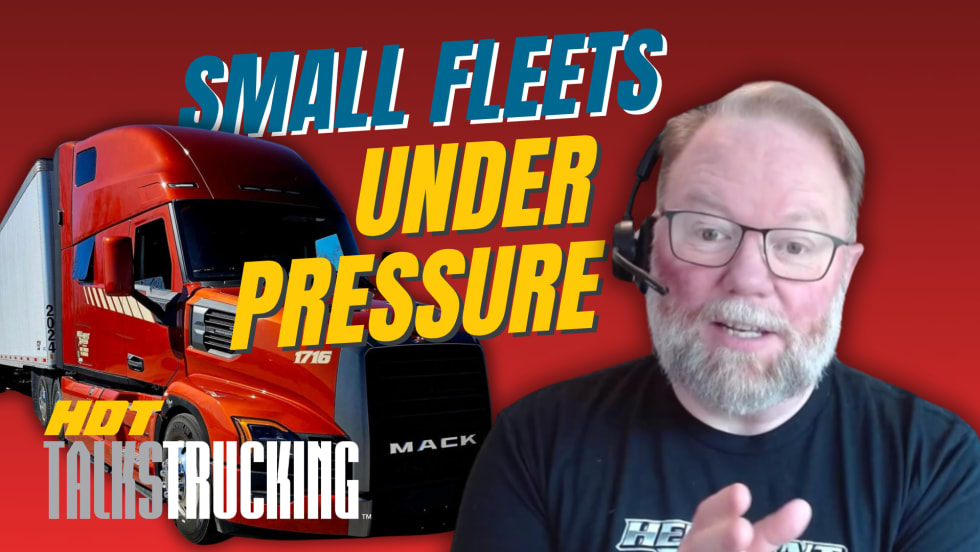
Jamie Hagen Gets Real About Freight, Fuel Prices, Safety, and Small-Fleet Survival
Running a small trucking fleet right now isn’t easy, especially right now. And Jamie Hagen doesn’t sugarcoat it.
Read More →
Data Lock‑In or Integration Lock‑Out?
Data fragmentation is costing dealerships, OEMs, fleets, and upfitters millions. Here’s why interoperability may be the fix the trucking industry needs.
Read More →