




It Takes a Good Attitude to Make a Successful Owner Operator
Peter Pekala is an owner-operator with an attitude. His attitude is, find business partners who do right by you and do the same for them

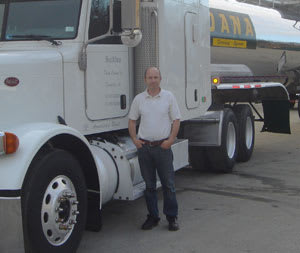
For Pekala, managing his business begins with managing his costs. He uses a company fuel card to get the volume discount, and likewise takes advantage of the company's program for insurance and workmen's compensation.
Peter Pekala is an owner-operator with an attitude. His attitude is, find business partners who do right by you and do the same for them.
It has worked pretty well for a guy who immigrated to the United States as a young man, knowing no one and with no particular occupation in mind. For him, truck driving became a way to build a rewarding, successful small business.
Piotr Pekala (now Peter) left his home in Poznan, Poland, in 1983. He was 22, a medical student who loved cars and motorcycles and he went west, to Austria.
Things were really bad in Poland at that time, he says. The Communist government was cracking down against the anti-Soviet Solidarity Movement led by Lech Walesa.
"There was martial law and all that stuff," Pekala says in his still-accented English. "And once you left Poland for West, you know, if you came back they would never let you out again. So I decided to stay."
From Austria he went to Hamburg, Germany, for work. But Germany did not permit immigration, so again he had a choice to make: Canada, South Africa, Australia or the United States.
He picked the U.S. because an acquaintance was going there, and in 1985, under the sponsorship of a Polish church, he immigrated with his wife to Massachusetts.
That he might drive a truck had not occurred to him. He knocked around at various jobs, making a living while his wife went to school, until he heard there was pretty good money in driving.
Driver training school took six months of weekends, while he worked construction during the week. By 1986, a year after he arrived in the U.S., he had his commercial license and was hauling gasoline for a small operator in Massachusetts, Rhode Island and Connecticut.
He spent the next 11 years with that company, a period in which he also obtained a Green Card and applied for U.S. citizenship. The company grew slowly and the owner, "a very good guy," treated him well.
"But finally I said, I just want to try something else, you know?"
In1997 he bought his first truck, a 1995 Peterbilt, and signed on as a contractor for a small chemical hauler that a several years later was bought by Dana Companies, which provides a variety of tanker services throughout the eastern half of the country.
He has since replaced that tractor with a newer model, a 2006 Peterbilt 379 with a 63-inch sleeper.
His Green Card status ended in 1999, when he passed the exam and took the oath to become a U.S. citizen.
Although he has driven the length and breadth of the country, these days, Pekala's routes take him through New England and occasionally up to Canada, covering around 2,500 miles a week and getting him home every two or three days.
He hauls "whatever is liquid," including hazardous materials, solvents, oils and resins in the company's tanks.
Managing his business begins with managing his costs. He uses a company fuel card to get the volume discount, and likewise takes advantage of the company's program for insurance and workmen's compensation.
"They're a big company and are getting a much better deal than I can do myself."
His tolls are reimbursed, and whatever fuel surcharge that's in place gets passed through to him.
To control fuel consumption, he keeps his speed to 60 or 62 mph - his sweet spot. He uses a Webasto heater on cold days so he won't have to idle the engine, and New England summer nights usually are cool, so he mostly doesn't run the air conditioner.
He covers about 100,000 miles a year, but his tractor is still young enough not to have big maintenance problems. If there is an issue, his years of doing business in New England have given him ties to many local repair shops.
For scheduled maintenance, he simply drops the tractor off overnight at a 24-hour dealership in Shrewsbury, a couple of miles from home. He picks it up in the morning, and he's off and running.
Oil changes he does at truck stops - he uses TA and Speedco - because they have good service and prices.
He gets paid by the load, and the loads come to him through the company dispatcher. He calls in twice a day, reports his hours-of-duty status, and the dispatcher lines up his next trip.
He takes the loads as they come. "I've been a long time with this company and they help me, I help them. If they have a load to where I don't want to go, they also have a load from there that will take me home."
It works out: "(Otherwise), I wouldn't be here for 12 years, you know?"
Work dropped off during the Great Recession, but not too much, he recalls.
"I remember that it slowed down, but I was still working. I have some friends who go somewhere, wait three days for a load, but that never happens to me. They always find me something."
His biggest worry is the ever-increasing cost of running the business.
"In trucking, everything is related to the price of oil. When oil goes up, basically everything goes up - tires, parts and labor because repair shops have to heat."
And fuel, of course: "Not long ago, my fuel bill was $2,000 to $3,000 a month. Now it's $7,000 to $8,000."
At 51, he's starting to think about what's next. "I'll tell you honestly, I don't know how much longer I'm going to drive a truck - to the end of this truck, at least."
"I'm happy here, I have steady work and they treat me fair. I like to drive, I like the open road, but maybe five, six years I'm going to start looking for something else."
More Fleet Management
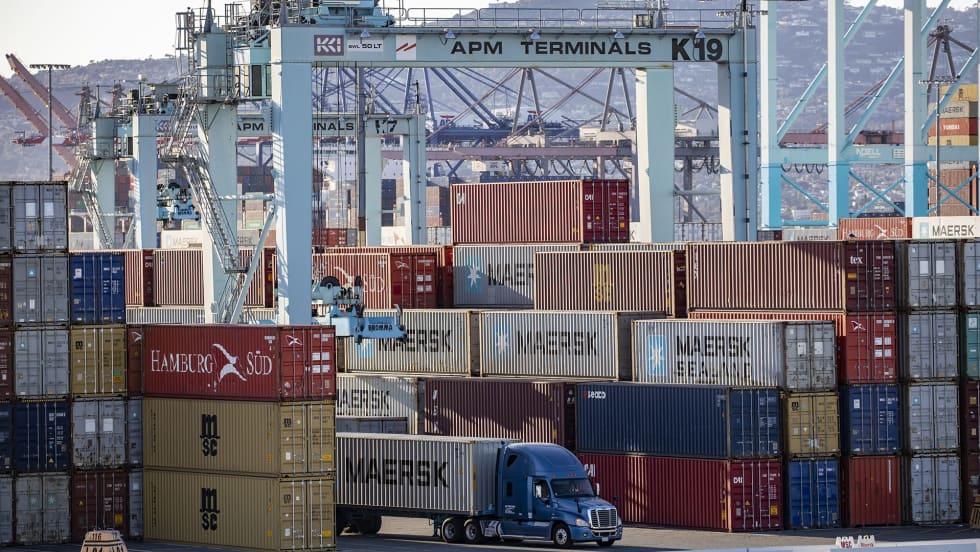
Import Cargo Volume to See Year-Over-Year Gain Again in June, Then Remain Below 2025 Levels Into Fall
After July, the report predicts a weakening in import volume as consumer uncertainty remains high and the impact of increasing inflation takes its toll.
Read More →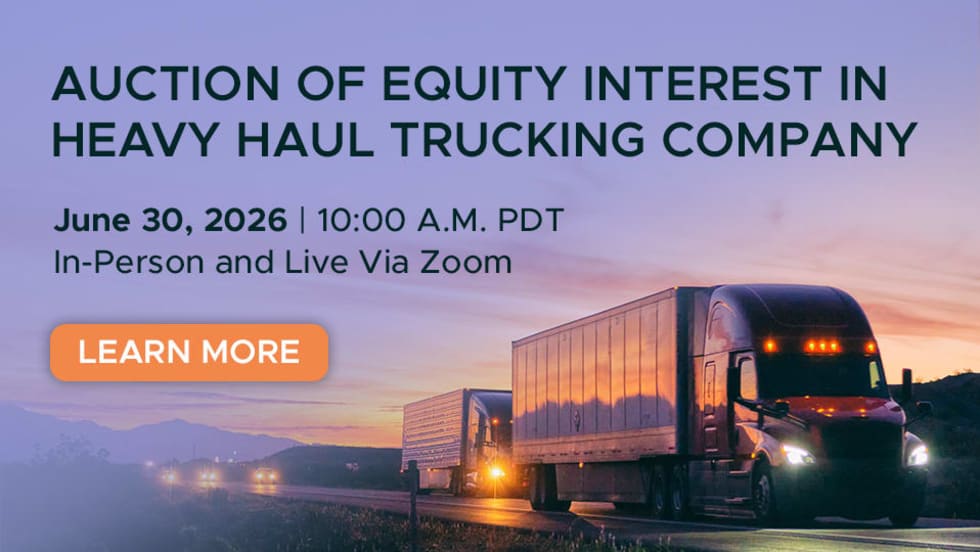
AUCTION OF EQUITY INTEREST IN HEAVY HAUL TRUCKING COMPANY!!
Mark your calendar: June 30, 2026 (10:00 a.m. PDT). MagnaTrans, LLC, a California limited liability company doing business as Magna Transportation Group is going to auction! Bid on a 37.5% ownership interest in this Rancho Cucamonga-based heavy haul and over-dimensional trucking company operating across California, Oregon, and Arizona. The equity interest will be sold to the highest bidder or bidders under Article 9 of the Uniform Commercial Code at 10:00 a.m. PDT.
Read More →
Volvo Trucks Adds Unattended Over-the-Air Software Update Capabilities
The latest evolution of Volvo’s over-the-air update technology allows software updates to run while trucks are parked, helping fleets keep vehicles current without disrupting operations.
Read More →

How Waste Connections is Using Data, Telematics, and AI
How do you manage and maintain more than 18,000 connected trucks? Data. Lots of it.
Read More →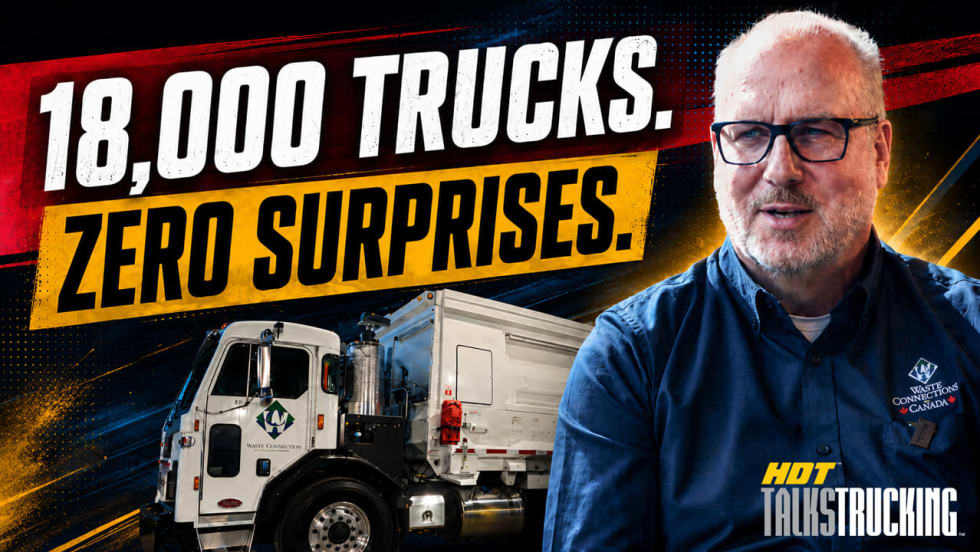
Why Fleet Data Matters More Than Ever at Waste Connections [Watch]
Waste Connections' Chuck Palmer explains how telematics, predictive maintenance, safety analytics, and AI help keep vehicles on the road and drivers safe in this episode of HDT Talks Trucking.
Read More →
NMFTA Launches Free, Anonymous Cybersecurity Threat Report Portal
Organizations are encouraged to anonymously report freight fraud, cargo crime, and cyber threats while gaining visibility into incidents reported across the transportation sector.
Read More →
AI Can Optimize a Fleet. Can It Replace Human Judgment?
Fleets fear falling behind if they don’t adopt AI quickly enough. They also fear what happens if the technology makes the wrong decision.
Read More →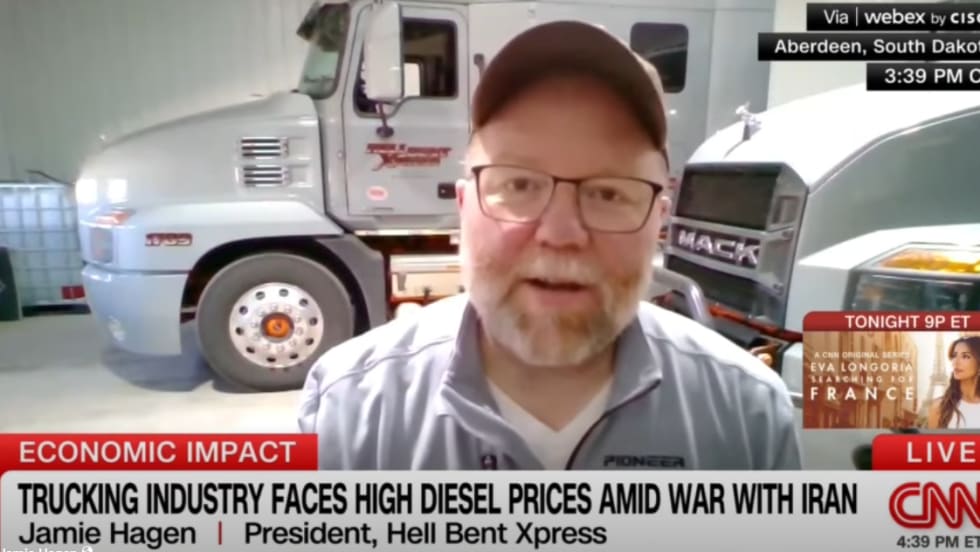
Jamie Hagen Gets Real About Running a Small Fleet in an Uncertain Economy
Small fleet owner Jamie Hagen says new legal risks, volatile fuel prices, and a changing freight market are forcing small carriers to rethink how they operate — and what they can afford.
Read More →
Jamie Hagen Gets Real About Freight, Fuel Prices, Safety, and Small-Fleet Survival
Running a small trucking fleet right now isn’t easy, especially right now. And Jamie Hagen doesn’t sugarcoat it.
Read More →
Jamie Hagen Gets Real About Freight, Fuel Prices, Safety, and Small-Fleet Survival
Running a small trucking fleet right now isn’t easy, especially right now. And Jamie Hagen doesn’t sugarcoat it.
Read More →