




2012 Truck Fleet Innovators: Bill Malone -- Investing in alternative fuels
For Bill Malone, president of Enviro Express, trucking was a way to fulfill his goal of being an entrepreneur

For Bill Malone, president of Enviro Express, trucking was a way to fulfill his goal of being an entrepreneur.
Back in 1976, he dropped out of college to buy a two-truck refuse operation in Connecticut.
Fast-forward to the mid-'80s, when he found another great business opportunity in the overflowing Northeast landfills. Remember the wandering Mobro 4000 garbage barge that spent months looking for a place to dump its New York garbage before finally giving up and returning to New York?
That crisis led to waste energy plants, which would burn solid waste for energy.
"We saw an opportunity to provide ash hauling and operating municipal transportation throughout Connecticut," says Malone, president of Enviro Express in Bridgeport, Conn. "We've had that job for 24 years."
Waste energy plants depend on hundreds of thousands of tons of municipal solid waste to fuel their boilers so they can produce electricity. Enviro Express hauls trash for governments to the waste energy plants, seven days a week, 24 hours a day, and hauls away the ash to a landfill on the Rhode Island-Massachusetts border about 120 miles away.
The fleet is made up of about 40 trucks, and 19 of them are powered by natural gas.
Natural gas is where this entrepreneur saw yet another business opportunity. Not only is he buying natural-gas-powered trucks, but he's also opened the first liquefied natural gas fueling facility east of the Mississippi River. Located near busy Interstate 95, it's open to other transportation customers.
After spending some time in California in 2008 and seeing how natural-gas trucks were being used to clean up the air at the Los Angeles ports, Malone says, "we decided to pursue that as an edge, an advantage, to cut our costs and try to clean up the air." LNG fuel typically costs about $1 per gallon less than the diesel fuel equivalent.
Enviro Express bought 18 T800 LNG trucks from MTC Kenworth in Ridgefield Park, N.J. The 15-liter, 450-horsepower Westport GX engine uses 5% diesel and 95% LNG.
Part of the funding for Enviro Express' $7.2 million project came from the American Reinvestment Act, Malone explains. "For every 55 cents we put up, the federal government put up 45 cents."
Because of the grant, Malone says, the ROI, gained on fuel savings in their own trucks and from selling retail LNG and CNG to others, will be about 40 months.
The fueling station, which has equipment to capture, compress and store natural gas from LNG as it evaporates during storage, will allow other companies, government agencies and transit agencies to deploy more CNG and LNG vehicles.
"We went and bought our own 12,000-gallon cryogenic tanker, so we now have the ability to pick up LNG from four wholesalers. We bring it back to our transfer facility here in Bridgeport, offload it into the station, and the station has the ability to do CNG for retail users like AT&T and Metrocab."
Malone explains that LNG is primarily used for over-the-road Class 8 tractors, and CNG is typically used by garbage trucks and rolloff trucks that don't go long distances or carry as much weight. In fact, Enviro Express just bought a CNG-fueled rolloff and plans to convert the entire fleet to CNG and LNG.
"LNG is a cryogenic, 260 degrees below zero," he says. "So the gas comes out of the well as a vapor, gets liquefied at the pipe, and then it gets transported and stored as a cryogenic. It's like an orange juice concentrate. We warm up the LNG, vaporizing it, to bring it back to a gas to put it into taxicabs, buses and trash trucks (as CNG.") To help prepare Enviro Express for the trucks' operation and maintenance, MTC Kenworth held a three-day training session for the fleet's service technicians and drivers.
The new fueling station and truck purchase were part of a four-year, $29.8 million program involving federal and private funding called the Connecticut Clean Cities Future Fuels Project.
There was also training for the local fire department. "We've had probably 30 fire companies along the routes we travel to and from the landfill come through our plant to familiarize themselves with the safety features and how to react to an LNG spill or fire," Malone says.
When asked what lessons he's learned from the experience, Malone recommended that anyone interested in natural gas have a good relationship with local officials. "It all starts with the local government," he says. "If your mayor and your fire department are open to new ideas, it's a winner. If they're resistant, move to another town."
There's a perception, Malone says, that natural gas in vehicles is dangerous, but he points out that people use natural gas in kitchen stoves every day. "You wouldn't bring gasoline into your kitchen range," he says.
The fueling facility opened in late 2010 and, so far, has exceeded expectations. In fact, it's been so successful, they are building another natural gas fueling station in Newark, N.J., and looking to build one in Pennsylvania.
Malone explains, "We're trying to build a Boston-to-Washington corridor."
From the March 2012 issue of HDT.
More Fleet Management
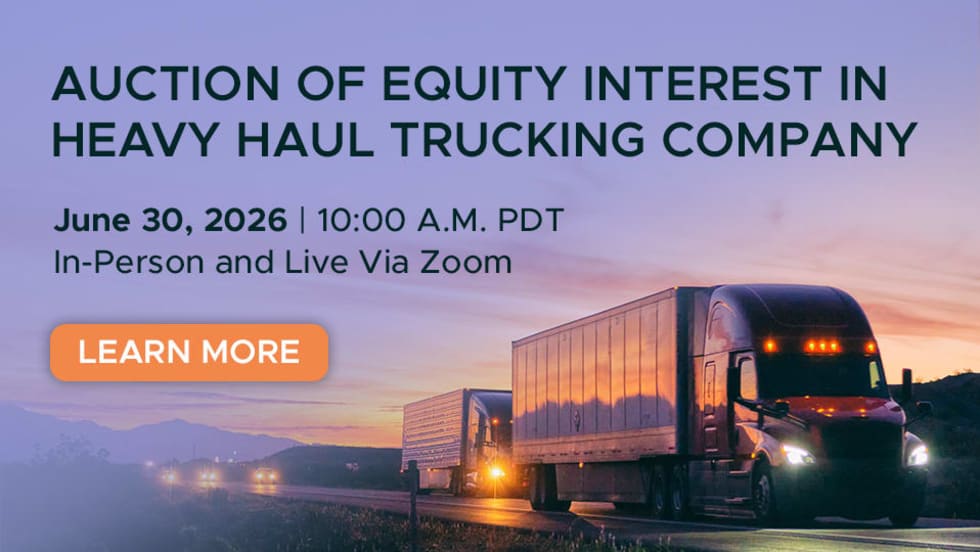
AUCTION OF EQUITY INTEREST IN HEAVY HAUL TRUCKING COMPANY!!
Mark your calendar: June 30, 2026 (10:00 a.m. PDT). MagnaTrans, LLC, a California limited liability company doing business as Magna Transportation Group is going to auction! Bid on a 37.5% ownership interest in this Rancho Cucamonga-based heavy haul and over-dimensional trucking company operating across California, Oregon, and Arizona. The equity interest will be sold to the highest bidder or bidders under Article 9 of the Uniform Commercial Code at 10:00 a.m. PDT.
Read More →
Volvo Trucks Adds Unattended Over-the-Air Software Update Capabilities
The latest evolution of Volvo’s over-the-air update technology allows software updates to run while trucks are parked, helping fleets keep vehicles current without disrupting operations.
Read More →
How Waste Connections is Using Data, Telematics, and AI
How do you manage and maintain more than 18,000 connected trucks? Data. Lots of it.
Read More →
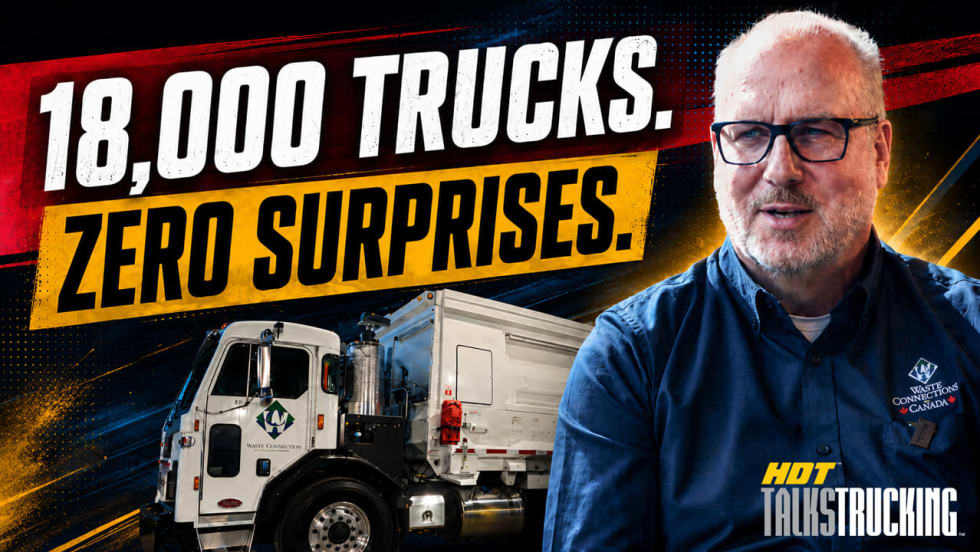
Why Fleet Data Matters More Than Ever at Waste Connections [Watch]
Waste Connections' Chuck Palmer explains how telematics, predictive maintenance, safety analytics, and AI help keep vehicles on the road and drivers safe in this episode of HDT Talks Trucking.
Read More →
NMFTA Launches Free, Anonymous Cybersecurity Threat Report Portal
Organizations are encouraged to anonymously report freight fraud, cargo crime, and cyber threats while gaining visibility into incidents reported across the transportation sector.
Read More →
AI Can Optimize a Fleet. Can It Replace Human Judgment?
Fleets fear falling behind if they don’t adopt AI quickly enough. They also fear what happens if the technology makes the wrong decision.
Read More →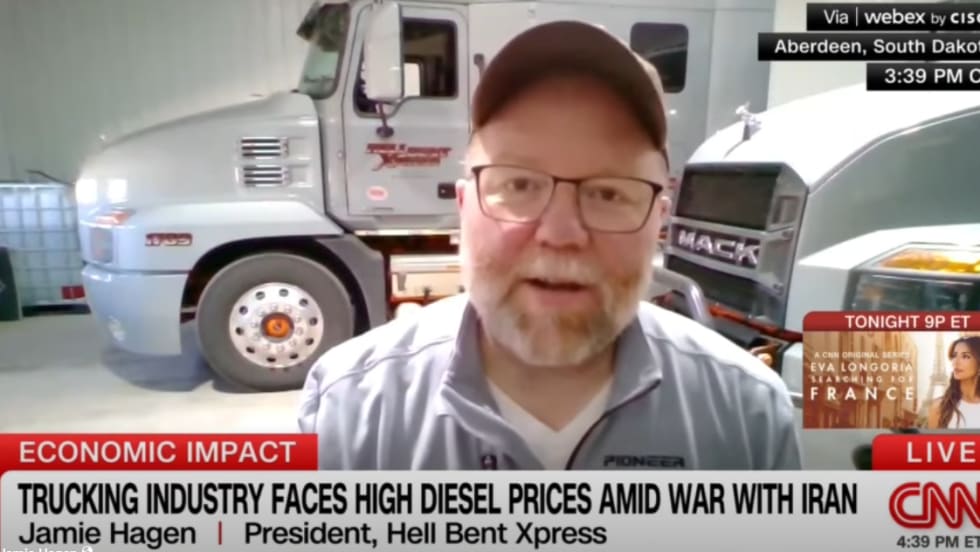
Jamie Hagen Gets Real About Running a Small Fleet in an Uncertain Economy
Small fleet owner Jamie Hagen says new legal risks, volatile fuel prices, and a changing freight market are forcing small carriers to rethink how they operate — and what they can afford.
Read More →
Jamie Hagen Gets Real About Freight, Fuel Prices, Safety, and Small-Fleet Survival
Running a small trucking fleet right now isn’t easy, especially right now. And Jamie Hagen doesn’t sugarcoat it.
Read More →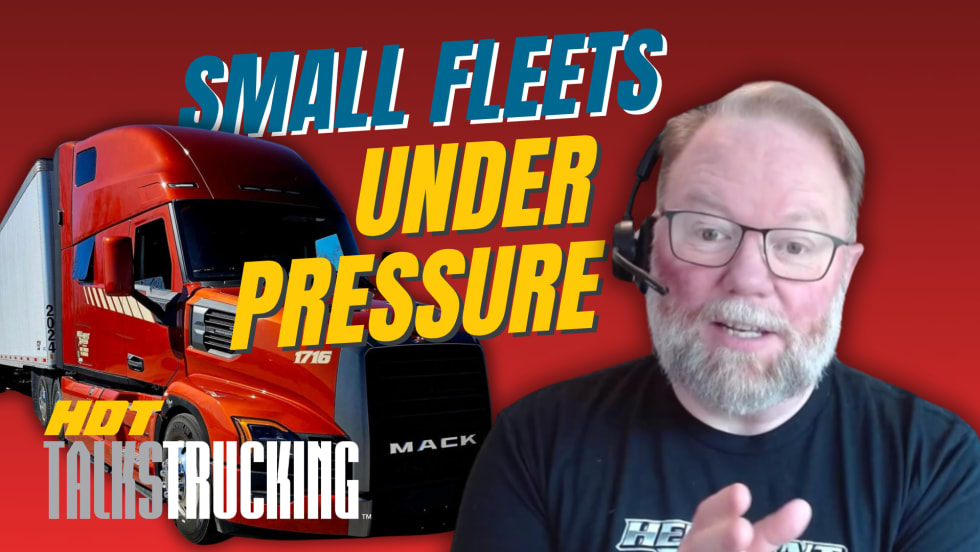
Jamie Hagen Gets Real About Freight, Fuel Prices, Safety, and Small-Fleet Survival
Running a small trucking fleet right now isn’t easy, especially right now. And Jamie Hagen doesn’t sugarcoat it.
Read More →
Data Lock‑In or Integration Lock‑Out?
Data fragmentation is costing dealerships, OEMs, fleets, and upfitters millions. Here’s why interoperability may be the fix the trucking industry needs.
Read More →