




Driver Recruiting and Retention: It's All About Respect
It was clear at last week's Recruitment & Retention Conference, put on by the Truckload Carriers Association and ACS Advertising, that forward-thinking carriers are realizing that recruiting and retention in the new environment means treating drivers are more than steering-wheel holders


It was clear at last week's Recruitment & Retention Conference, put on by the Truckload Carriers Association and ACS Advertising, that forward-thinking carriers are realizing that recruiting and retention in the new environment means treating drivers are more than steering-wheel holders.
The audience of more than 200 truck driver recruiting and retention professionals at the event in Nashville, Tenn., enjoyed sessions on topics such as recruiting in an electronic age, innovation in recruiting and retention, and in-depth workshops on topics such as recruiting and retaining owner-operators, how to recruit ex-military, and driver development and retention strategies for the first 90 days and beyond.
Throughout many of the sessions there was a message of "drivers are people, too."
Yes, compensation is one of the first things people ask about when looking for a job. Mark Murrell is president of CarriersEdge, which does the Best Fleets to Drive For program for TCA. He reported that company drivers working for carriers in the Best Fleets program averaged $53,673 annually, on an average of 111,851 miles, while owner-operators averaged revenue of $162,985 a year on 116,021 miles.
Interestingly, Murrell said, year-over-year those numbers are essentially flat. Part of that, he said, appears to be drivers jumping from company to company. Yet "Even though the income isn't going up dramatically, a higher level of satisfaction is happening at these fleets," he said - in other words, even if your pay is average but you've got a supportive company, people are sticking around.
In a session aimed at owner-operator fleets, David Pike, director, recruiting and contractor relations, Universal Truckload Services, presented the results of an informal driver survey of about 200 drivers. When asked what attributes they consider the most when selecting a company to drive for, 43% said compensation, and 18% said fair treatment and respect. But when asked about what influences them most to leave a company, lack of fair treatment edged out compensation issues, 44% to 43%.
In many cases it boils down to very simple things. Are drivers a name or a number? Are problems with paychecks addressed promptly and other questions answered, or do questions get a "not my job" attitude?
"These drivers have a name," said Pike. "Is the first thing out of a dispatcher's mouth, 'what's your truck number?' Guess what, that's a human being. Have your dispatchers address them as such. They have a name."
Respect starts with recruiters being honest about what to expect. "If you train your recruiters to be honest, drivers stay," Pike said. "Record and listen to your recruiters' phone calls. You'd be amazed at some of the things you will hear from your recruiters and from the drivers on the other end of the phone."
Terry Chappell, safety and recruiting coordinator for Fikes Truck Line, was one of many who stressed the importance of communication - not only the what, but also the how.
"Retention starts with the very first call the recruiter gets from a driver," Chappell said, "but it's everybody's responsibility, right down to the operator who answers the telephone. Every conversation can make a difference."
Jeff Holsinger, director of recruiting at Fleetwood Transportation Services, Diebold, Texas, said there's one thing people say on the phone that makes his skin crawl: "It's not my job."
"It may not be their job, but their job is to get them to the right people," Holsinger said. "Outlaw that in your company. Anyone you hear saying that, discipline that. Because their job depends on having that driver or owner-operator."
Kevin Burch, president of Jet Express in Dayton, Ohio, related a recent tale of a driver, working for an owner-operator contracted to the company, who was complaining about a seat in the truck that was just killing him.
"The dispatcher said 'Listen, it's not your truck, you're just the driver.'" Burch quickly set that dispatcher straight. "I told the dispatcher, what if you had a chair that didn't fit your body, and you had to sit in it for 10 hours? You want that driver to be uncomfortable on the road? Think about it."
Holsinger asked the audience to think about whether everyone in their company is treating the owner-operator with respect, like the businessperson he is. "When drivers call you with a question, it's one more opportunity for you to shine, for you to be better than the last place they worked."
Communication goes both ways, too. Burch also related a recent conversation with a new recruit, who came to Jet Express from a very large, well-known carrier.
"I told him how we communicate and if you've got anything on your run that can be improved, let us know. And he said, 'Mr. Burch, that's why I'm here. I was there for almost a year and I had a couple of suggestions and I was told twice that it was none of my business they had people that it was their job to make those kind of decisions.'" Burch is looking forward to his suggestions.
Communication is especially important during the first one to three months.
Fikes' Chappell makes a point to call each new recruit the Friday after their first full week on the road. "I want to make sure they haven't had any problems, and also make sure they've done things they need to do like turning in their logs. That's always a good time to have that conversation about anything, their family. This is the time to catch up and let them know how much they're wanted and we're glad that they're with us."
Chappell also emphasized that "if they have problems, it's not always going to be something you can take care of, but make sure they get to the right person and make sure it's taken care of one way or the other."
The issue resolution process is important, said Rim Yurkis, president and CEO for employment consulting firm Strategic Programs Inc. "So they know up front if they can walk into the president's office if they have a problem," Yurkis said. "What do they do if they don't like the answer they got from their fleet manager? What do they do if they're not happy with the condition of their tractor? Being dead-ended - if someone has an issue and they feel they're not being treated fairly, if someone says no and there's nowhere to go - that's a fast track for disengagement."
Trent Dye with Paramount Freight Systems, a multiple Best Fleet to Drive For honoree, says his company created a buddy program. Seasoned, veteran owner-operators for the company are paid extra to take a handful of new drivers under their wing for their first 60 days. This not only gives newbies a place to go with questions they might feel intimidated to ask their boss, but also gives them another point of contact with the company besides the dispatcher. There's a waiting list to be a buddy, and Dye said that's not just because of the extra pay, but also because it makes the veteran drivers feel their advanced skills and experience are valued. "It gives both the new driver and mentor a sense of belonging."
It's important for driver managers, dispatchers, whatever the fleet calls them, to have a one-on-one relationship with their drivers. "Every driver has a handicap, and we don't mean that in a bad way," says Jim Subler, president of Ohio-based Classic Carriers Inc., which has about 130 trucks and low turnover. "It's something that's very very important to him or her, and if you work with him on that he'll do a good job. It could be kids, it could be home time by a certain time every week, it could be certain geographic areas he wants to run (or doesn't want to), it could be religious commitments or the personal needs of family. Does your operations department know and understand these needs? Do they comply with them?"
As Chappell said, "The last thing you want to find out from a driver if they've had a pro
More Fleet Management
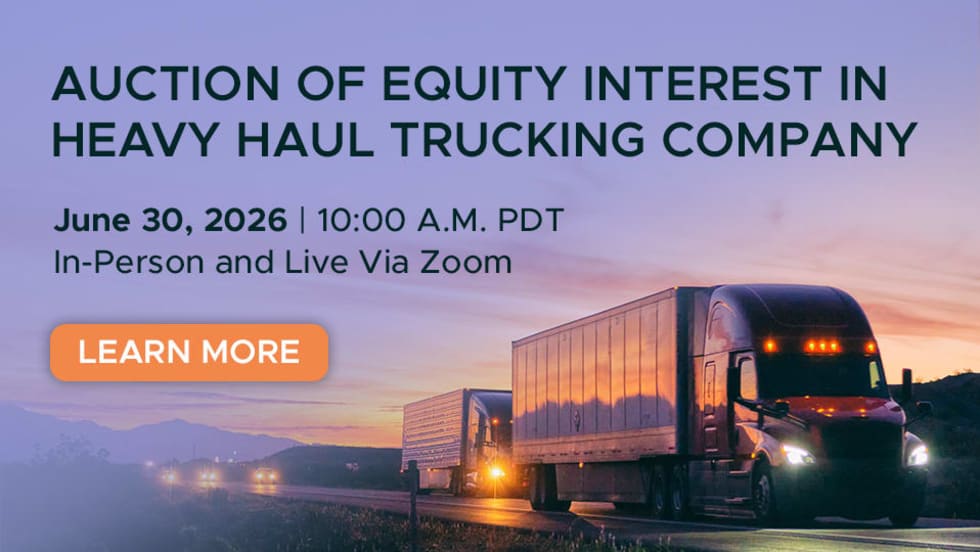
AUCTION OF EQUITY INTEREST IN HEAVY HAUL TRUCKING COMPANY!!
Mark your calendar: June 30, 2026 (10:00 a.m. PDT). MagnaTrans, LLC, a California limited liability company doing business as Magna Transportation Group is going to auction! Bid on a 37.5% ownership interest in this Rancho Cucamonga-based heavy haul and over-dimensional trucking company operating across California, Oregon, and Arizona. The equity interest will be sold to the highest bidder or bidders under Article 9 of the Uniform Commercial Code at 10:00 a.m. PDT.
Read More →
Volvo Trucks Adds Unattended Over-the-Air Software Update Capabilities
The latest evolution of Volvo’s over-the-air update technology allows software updates to run while trucks are parked, helping fleets keep vehicles current without disrupting operations.
Read More →
How Waste Connections is Using Data, Telematics, and AI
How do you manage and maintain more than 18,000 connected trucks? Data. Lots of it.
Read More →
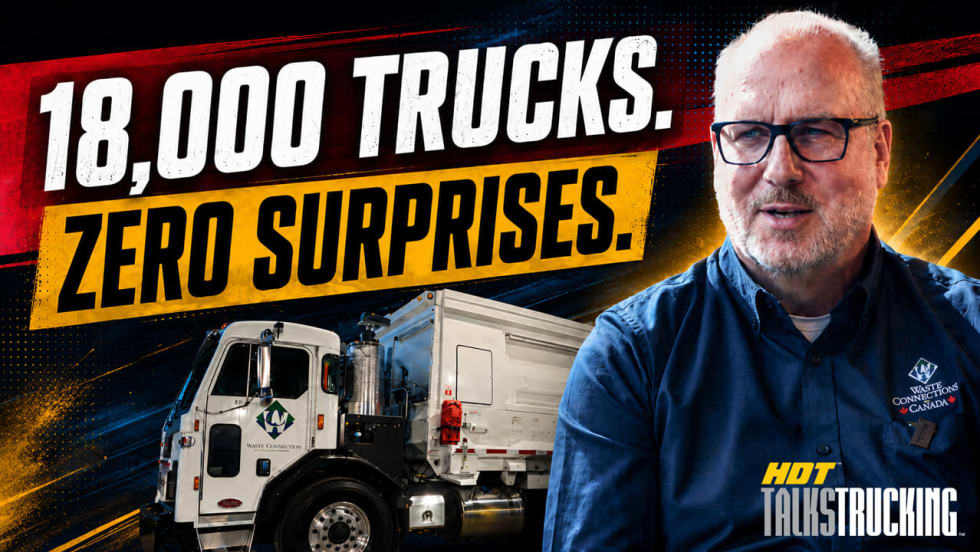
Why Fleet Data Matters More Than Ever at Waste Connections [Watch]
Waste Connections' Chuck Palmer explains how telematics, predictive maintenance, safety analytics, and AI help keep vehicles on the road and drivers safe in this episode of HDT Talks Trucking.
Read More →
NMFTA Launches Free, Anonymous Cybersecurity Threat Report Portal
Organizations are encouraged to anonymously report freight fraud, cargo crime, and cyber threats while gaining visibility into incidents reported across the transportation sector.
Read More →
AI Can Optimize a Fleet. Can It Replace Human Judgment?
Fleets fear falling behind if they don’t adopt AI quickly enough. They also fear what happens if the technology makes the wrong decision.
Read More →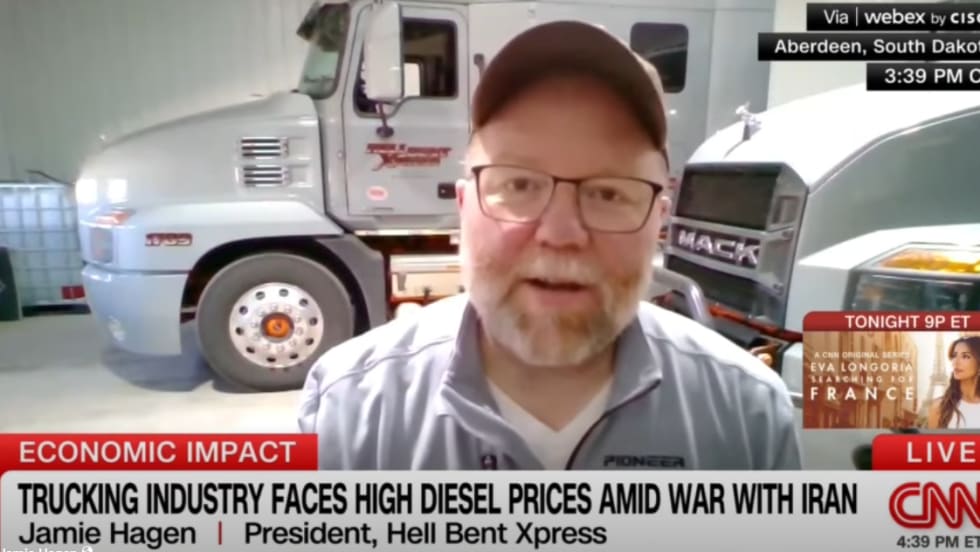
Jamie Hagen Gets Real About Running a Small Fleet in an Uncertain Economy
Small fleet owner Jamie Hagen says new legal risks, volatile fuel prices, and a changing freight market are forcing small carriers to rethink how they operate — and what they can afford.
Read More →
Jamie Hagen Gets Real About Freight, Fuel Prices, Safety, and Small-Fleet Survival
Running a small trucking fleet right now isn’t easy, especially right now. And Jamie Hagen doesn’t sugarcoat it.
Read More →
Jamie Hagen Gets Real About Freight, Fuel Prices, Safety, and Small-Fleet Survival
Running a small trucking fleet right now isn’t easy, especially right now. And Jamie Hagen doesn’t sugarcoat it.
Read More →
Data Lock‑In or Integration Lock‑Out?
Data fragmentation is costing dealerships, OEMs, fleets, and upfitters millions. Here’s why interoperability may be the fix the trucking industry needs.
Read More →