




Test Drive: Kenworth T800 Dump Truck with Latest Powertrain
The "viper yellow" paint on this Kenworth T800 grabs your attention, but there was much more to this dump truck I drove last summer

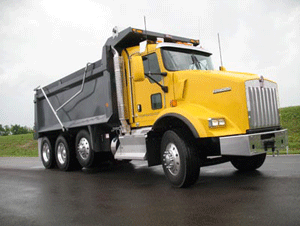
This T800 has a setback steer axle that allows a tight wheel cut and good maneuverability. The hood is steeply sloped for excellent forward visibility.
The "viper yellow" paint on this Kenworth T800 grabs your attention, but there was much more to this dump truck I drove last summer.
It had Paccar's MX diesel, now in its second year on the market, bolted to an 8LL UltraShift Plus, one of Eaton's Vocational Construction Series automated mechanical transmissions that I hadn't driven before.
We were near Columbus, Miss., at Paccar's engine plant, where MXs like this one are now assembled. The plant opened early this year and is taking over North American production from a factory in The Netherlands.
The MX is quiet and pleasant to drive. Its size, at 12.8 liters, is just right for a heavy vocational truck. Like similar diesels from competitors, it can make healthy horsepower and torque. This one, with 485 horsepower and 1,650 pounds-feet, is the strongest rating. We've heard from some owners that the MX is proving to be a strong and economical engine. Others say they've had some problems and disappointing fuel economy. As the saying goes, "Your results may vary," and that's true of almost any product.
The MX is EPA 2010-legal through the use of selective catalytic reduction, using urea injection to chemically break down nitrogen oxide in its exhaust. The aftertreatment equipment sits on the right side, along with the diesel particulate filter and the 9-gallon tank for the diesel exhaust fluid. Some might find this a bother because the fuel tank is on the left side, but drivers and others responsible for topping off fluids will quickly get used to it. There's no odor, and the exhaust gas is so clean that the inside of the stack stays shiny.
Paccar and Eaton engineers have written software to make the UltraShift Plus and the MX compatible, so the two work well together. Clutch operation was flawless and shifts went smoothly almost every time - probably better than I could have done if I'd been operating a manual version. An 8LL has a Low gear, plus eight ratios in Low and High ranges. There are two additional ratios in Low-Low range, accessed in the manual version by flipping a blue thumb switch on the shift lever's knob. These make it a 10-speed tranny.
The start-out gear is among the operating parameters of the automated 8LL that can be programmed at time of delivery, and should be. This one retained the default settings, explained Kenworth and Eaton people, so its normal starting gear was LL-2nd. If the driver wants to use the lowest ratio, LL-1st, he can use a thumb switch on the T-handle selector, which this truck had, or punch it up on the optional keypad selector. He'd usually do this while standing still. But he could attempt it while crawling along, and if it wouldn't overrev the engine, the tranny's electronic control module would engage it.
In any UltraShift Plus, clutch actuation and gear- and range-changing are done by electro-mechanical servos that are directed by electronic controls. These "talk" to the engine's controls while monitoring accelerator position, engine and road speed, and other data. Through these, the transmission controls sense how heavy the truck is, how easy or severe the terrain is, and how much the driver is pushing things. Also, it "learns" the driver's habits and adjusts shifting to match them. I can't say I noticed it adjusting to me, but maybe I'm too gnarly to work with.
As soon as I began driving the T8, I noticed that the tranny seemed to be using all gears instead of skip-shifting. That puzzled me. Skipping gears is a good idea when the truck is empty or it's accelerating on a downgrade, when not much power is needed, because it keeps engine revs low, saving on fuel and engine wear.
The engine also revved to 1,900 or 2,000 rpm in every gear before the tranny upshifted, which makes noise and uses more fuel than necessary. If I used a very light foot, it sometimes upshifted at 1,700 or so. I wondered why this thing didn't short-shift - change gears at lower rpm - and why it didn't shift progressively, at low revs in low gears, then gradually rev higher in the upper gears, when more power is needed. This would be ideal for the MX diesel, which willingly lugs down to 1,100 rpm and less without shuddering and while making strong torque.
Later, I talked by phone with Alan Fennimore, Kenworth's vocational segment marketing manager, and Ben Karrer, Eaton's chief engineer for UltraShift transmissions. They explained that there were three modes available with the transmission. The default mode is Performance, which lets the engine rev high to use horsepower instead of torque, which many drivers of vocational trucks prefer. That's what this unit had.
There are also Standard and Economy modes, which upshift at 150 to 300 rpm less. An operator wanting lower-speed upshifts should have the dealer program the controls to the appropriate mode. In the months since I drove the truck, Karrer and his crew have devised many more calibrations. About 15 are now available to suit a driver or owner. Some are "low-rpm progressive," he said, which I'd probably like, and others are for specific engine models. These can be programmed into an UltraShift's controls using a ServiceRanger tool that Roadranger service representatives and some dealers have.
As to skip-shifting, the automated 8LL doesn't because its ratios are comparatively wide-spread, Karrer explained. Skipping gears could cause the engine to bog, as it would with a manual 8LL. The UltraShift Plus that I had observed skip-shifting a couple of years ago probably was a close-ratio 18-speed, he said. More ratios mean more opportunity to skip over them.
Not aware of a lot of this during the drive, I handled this KW with some consternation. Then I remembered that the UltraShift can be told what to do by changing the selector to Manual and using the switch on the T-handle to direct and up- or downshift. Thumbing the rocker switch upward caused the tranny to shift to the next gear, which I began doing for almost every gear change. Thumbing it downward made the tranny downshift, which I seldom did. (If it's a keypad selector, punching Manual, then Up or Down buttons, has the same effect.)
Even as it was, the UltraShift made for easy cruising up and down nearby U.S. 82 and into downtown Columbus, where I meandered over city streets.
At one arterial stop on an upgrade, I used the transmission's anti-rollback feature, which works with the anti-lock braking system to hold the truck in place. After three seconds it released, as it's designed to do, so I had to punch the brake pedal again, then get on the accelerator and move through the intersection.
The UltraShift took away a lot of the work of driving and left me free to watch out for other traffic. For novices, not having to learn how to shift a non-synchronized manual transmission will remove a big barrier and let them get on with learning the other skills of dump trucking, such as how to back to a paving machine, spread stone or gravel, and so on. They'll soon be productive and non-destructive to the gearbox and driveline.
And they'll enjoy driving the truck, something almost guaranteed in a Kenworth. This one was definitely deluxe, with leather-covered seats, power windows and locks, a complete gauge package, and lots of power under the hood from the MX. The ride from the tandem's modern Hendrickson rubber-spring suspension was fairly smooth, even with the dump box empty, and the cab was stout and almost air-tight. This one had the optional Extended Cab, which adds 5 inches of leg and belly room, something very usable when one doesn't have to snug close to reach a clutch pedal that isn't there.
Once I understood the transmission and how it can be programmed, I retracted any mumbled complaints and still appreciated the opportunity to take it for a spin. As for the yellow pain
More Equipment
Engine Technology Forum Launches SCR, DEF Resource Center Amid Emissions Debate
The Engine Technology Forum’s new online hub aims to provide fleets, policymakers, and equipment owners with fact-based information about selective catalytic reduction technology, diesel exhaust fluid and emissions compliance.
Read More →
Prime Inc. to Open $7.9M Flagship Used-Truck Dealership
A new driver-focused facility to sell Prime Inc's used trucks and trailers will be the first purpose-built location in the company's history.
Read More →
Lessons Learned About Alternative Fuels: Start Small, Stay Flexible
Practical advice on adopting alternative fuels and ZEVs from HDT's 2026 Top Green Fleets, from renewable diesel and natural gas to electric trucks.
Read More →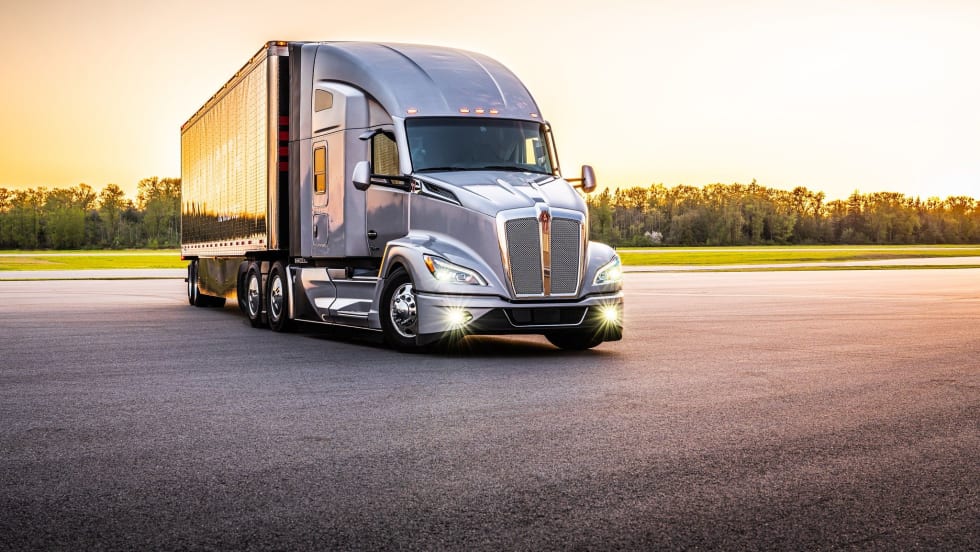
Kenworth Names Peter Ahrens General Manager
Leadership changes at Kenworth take effect July 1 as the OEM promotes two longtime Paccar executives to key management roles.
Read More →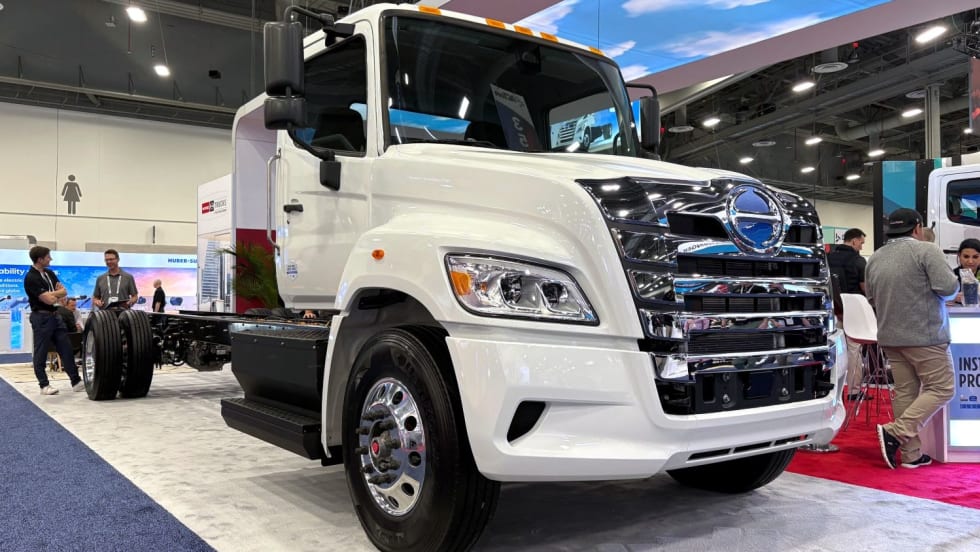
Hino Adds Electric Class 6/7 Truck
Hino says the Le Series is an important step in the company's efforts to reduce environmental impact and support its customers’ sustainability goals.
Read More →
ACT Expo 2026: Highlights in Photos
The 2026 Advanced Clean Transportation Expo featured a broad range of commercial vehicle technologies, from EVs to autonomous trucks to the latest diesel and alternative-fuel engines.
Read More →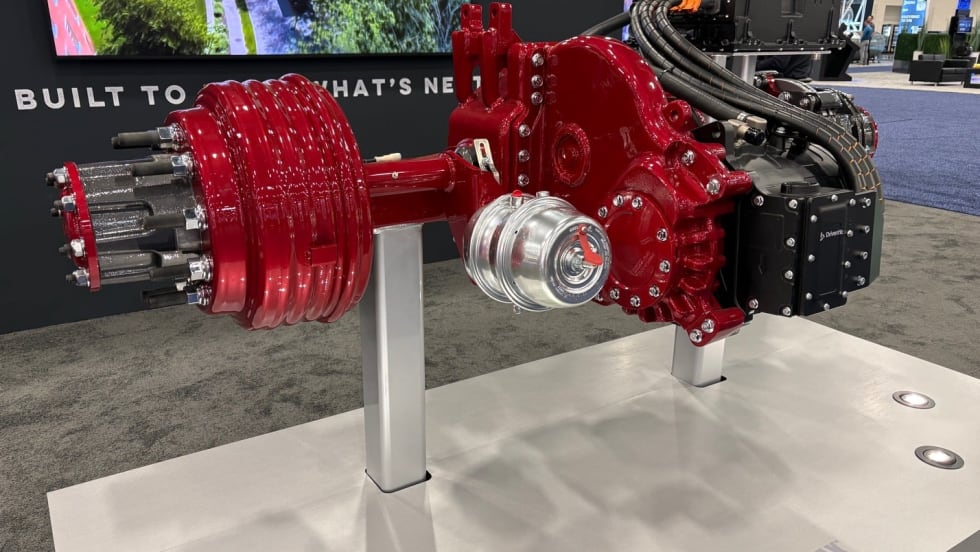
Hendrickson Debuts Electraax E-Axle for Medium-Duty Trucks
Developed with Driventic, Hendrickson's new integrated e-axle is designed to improve efficiency, reduce weight, and extend range in Class 6-7 EV applications.
Read More →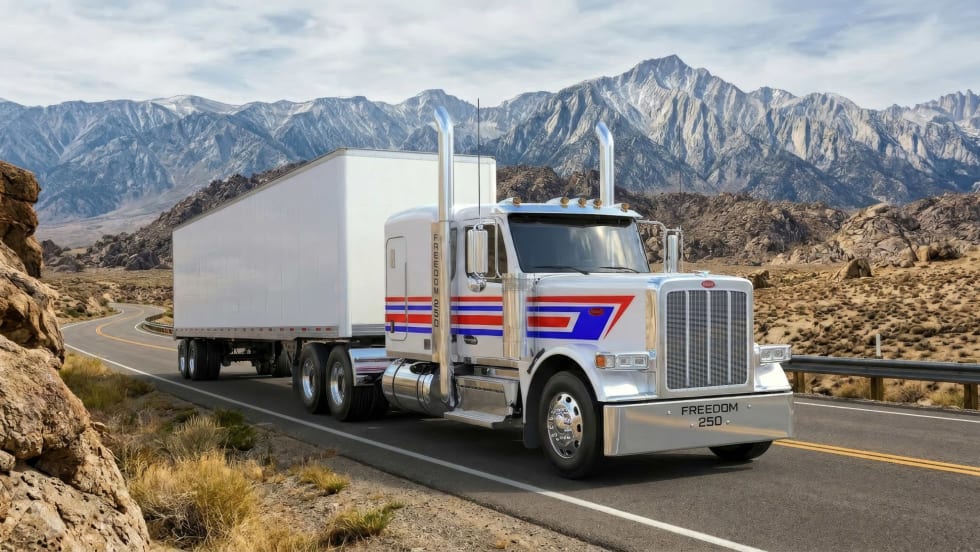
Peterbilt Unveils Freedom 250 Special Edition Model 589
Peterbilt’s just-announced limited-run patriotic Model 579 tractor celebrates America’s 250th birthday with custom styling and premium features.
Read More →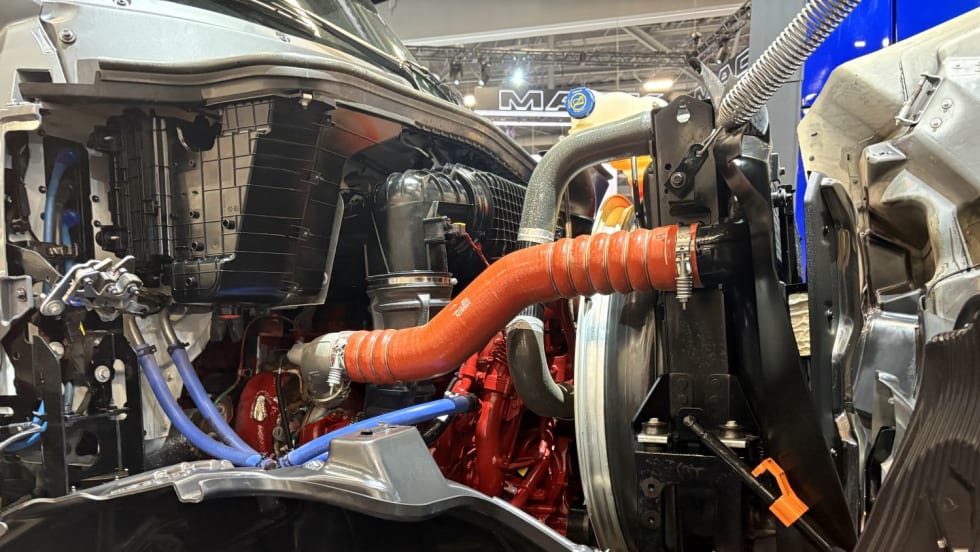
Mack Unveils EPA 2027-Compliant MP13 Engine With More Power, Better Fuel Economy
Along with unveiling its EPA 2027-compliant MP13 engine, Mack outlined powertrain changes across its Class 6-8 lineup, including new Cummins-based X10 engines.
Read More →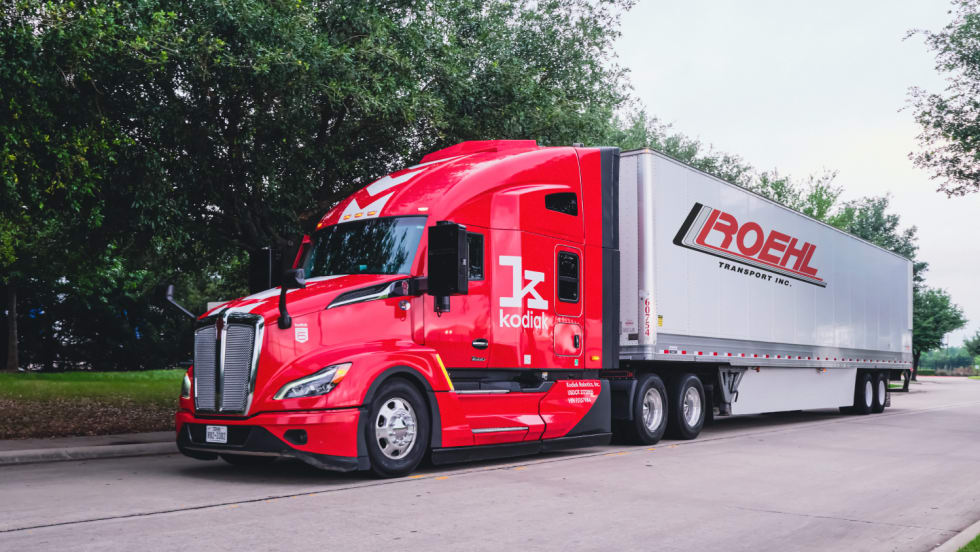
Kodiak and Roehl Transport Launch Autonomous Route Between Dallas and Houston
Kodiak AI and Roehl Transport have begun autonomous freight operations on a regular Dallas-Houston route, marking another step toward Kodiak’s planned driverless launch by the end of 2026.
Read More →