




Getting Ready for More Volatile Fuel Prices with Fuel Purchasing Strategies
Rising and volatile fuel prices are applying significant pressure to commercial fleet operational plans and budgets
Rising and volatile fuel prices are applying significant pressure to commercial fleet operational plans and budgets.
In the first two months of the New Year, fuel prices were 50 cents higher than at the same time last year. This was before the unrest in North Africa and the Middle East that continues today, which has driven a barrel of oil above $100 and diesel prices over $4 per gallon.
Many analysts predict that prices will continue to climb and remain highly volatile - reminiscent of 2008. In fact, 2008 provides some key lessons for fleet managers wanting to reign in runaway fuel costs. Companies that weathered 2008, and are consequently prepared for a tough 2011, streamlined their fuel management approach. Streamlining steps they undertook include:
* Benchmark current operations against industry standards
* Strategize optimal supply options
* Contract preferential supply relationships and terms
* Automate, automate, automate
Henry Ford once said, "Before everything else, getting ready is the secret to success." This is especially true for fleet managers in 2011. Taking these steps provides benefits beyond simply reducing fuel costs and gaining better planning predictability, managers free working capital for other uses within the company and gain a competitive edge in the market with more efficient, cost-effective operations.
Even the best operations can benefit from comparing themselves to established industry best practices and metrics. Most find there are areas in which they can improve, and they gain access to target performance goals that guide operational decisions. In the world of fuel management, it starts with analyses on areas such as:
* Purchase volumes
* Geographic distribution of demand
* Fuel systems infrastructure
* Fuel taxation exemption status by location and use
* Actual invoice line item charges
Based on this analysis, a benchmark study examines the following:
* Best practices
* Published fuel price indices (such as OPIS)
* Time series analysis against published indices
* Ongoing, performance improvement targets
It is difficult to know where to make operational improvements unless you take the time to benchmark against industry best practices. The good news is that there are third-party companies, such as FuelQuest, that provide the people, process, and tools to perform such a benchmark in relatively short order. All a fleet manager has to do is plug into that process.
Before implementing any process improvement steps, it is also important you take a step back and examine the options available in terms of fuel supply including:
* Vendor-managed inventory (VMI)
* Spot or contract delivered sourcing
* Spot or contract FOB sourcing
* Fixed price contracts
* Hedging
Each has advantages and disadvantages depending on the structure of your operations. Also, you can employ some in combination again depending on your operational structure.
When establishing preferential supply contracts, there are important considerations. First, what is your ability and desire to move closer to the rack? In the spectrum of contracting options, the simplest is to cede inventory management to your supplier. Often though, fleet managers lose transparency and pay a premium for this service. Moving up the spectrum, you find delivered spot and delivered contract - each providing more flexibility than the first option, but full transparency and cost savings are not achieved.
The more sophisticated contracting arrangements, and the ones that offer the greatest opportunity to reduce fuel costs, are buying wholesale at the rack or bulk above the rack. These options are clearly for those with sufficient volumes, but, by eliminating the middleman, the opportunity for savings is significant. Of course, as with anything, as the complexity in contracting increases, so does the need for buying expertise and technology - both of which are available through third-party fuel management providers.
When contracting supply for your fleet, it is also important to centralize fuel management operations. It is difficult to implement operational controls when processes and decision-making are distributed. It is also difficult to set up advantaged supply contracts when demand is not aggregated.
Heuristics, manual processes, and spreadsheet-driven fuel management are the anathema of optimized fuel operations. Through automation, fleet managers can gain process control; adopt more sophisticated, advantaged supply arrangements; and drive down fuel costs - typically the highest expense item after headcount. Automation occurs across a number of dimensions:
* Processes
* Inventory, Order, and Financial Management
* Technology
* Price Feeds
Such automation enables Just-In-Time (JIT) delivery of fuel, which lowers working capital requirements. Fuel costs are reduced through best practices such as load shifting. Ultimately, fleet managers gain fuel expertise that leads the market.
Will 2011 be a repeat of 2008? The verdict is still out, but what is clear is that fuel prices will continue to be volatile. If "getting ready is the secret to success" as Henry Ford once said, then fleet managers must take the steps necessary to control their operational plans and budgets. This is best accomplished through benchmarking, strategizing, contracting, and automating fuel operations.
Ryan Mossman is vice president and general manager of FuelQuest's Fuel Services. He leads both of FuelQuest's outsourced fuel services divisions: Fuel Center and Alarm Management Systems. His FuelQuest experience includes leading large-scale supply chain optimization, technology and business process implementations at large fleet and energy companies including UPS, U.S. Freightway, and Chevron. He can be reached at rmossman@fuelquest.com.
More Fleet Management
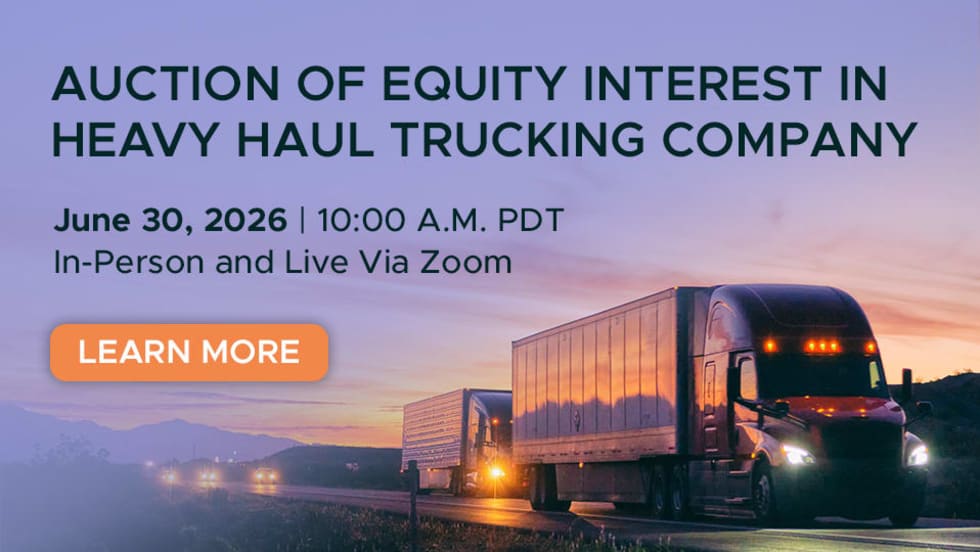
AUCTION OF EQUITY INTEREST IN HEAVY HAUL TRUCKING COMPANY!!
Mark your calendar: June 30, 2026 (10:00 a.m. PDT). MagnaTrans, LLC, a California limited liability company doing business as Magna Transportation Group is going to auction! Bid on a 37.5% ownership interest in this Rancho Cucamonga-based heavy haul and over-dimensional trucking company operating across California, Oregon, and Arizona. The equity interest will be sold to the highest bidder or bidders under Article 9 of the Uniform Commercial Code at 10:00 a.m. PDT.
Read More →
Volvo Trucks Adds Unattended Over-the-Air Software Update Capabilities
The latest evolution of Volvo’s over-the-air update technology allows software updates to run while trucks are parked, helping fleets keep vehicles current without disrupting operations.
Read More →
How Waste Connections is Using Data, Telematics, and AI
How do you manage and maintain more than 18,000 connected trucks? Data. Lots of it.
Read More →

Why Fleet Data Matters More Than Ever at Waste Connections [Watch]
Waste Connections' Chuck Palmer explains how telematics, predictive maintenance, safety analytics, and AI help keep vehicles on the road and drivers safe in this episode of HDT Talks Trucking.
Read More →
NMFTA Launches Free, Anonymous Cybersecurity Threat Report Portal
Organizations are encouraged to anonymously report freight fraud, cargo crime, and cyber threats while gaining visibility into incidents reported across the transportation sector.
Read More →
AI Can Optimize a Fleet. Can It Replace Human Judgment?
Fleets fear falling behind if they don’t adopt AI quickly enough. They also fear what happens if the technology makes the wrong decision.
Read More →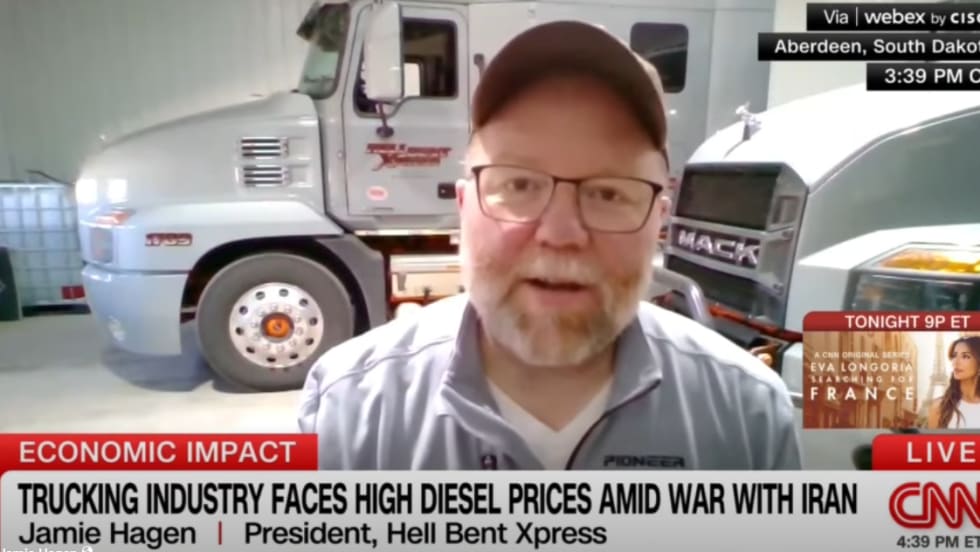
Jamie Hagen Gets Real About Running a Small Fleet in an Uncertain Economy
Small fleet owner Jamie Hagen says new legal risks, volatile fuel prices, and a changing freight market are forcing small carriers to rethink how they operate — and what they can afford.
Read More →
Jamie Hagen Gets Real About Freight, Fuel Prices, Safety, and Small-Fleet Survival
Running a small trucking fleet right now isn’t easy, especially right now. And Jamie Hagen doesn’t sugarcoat it.
Read More →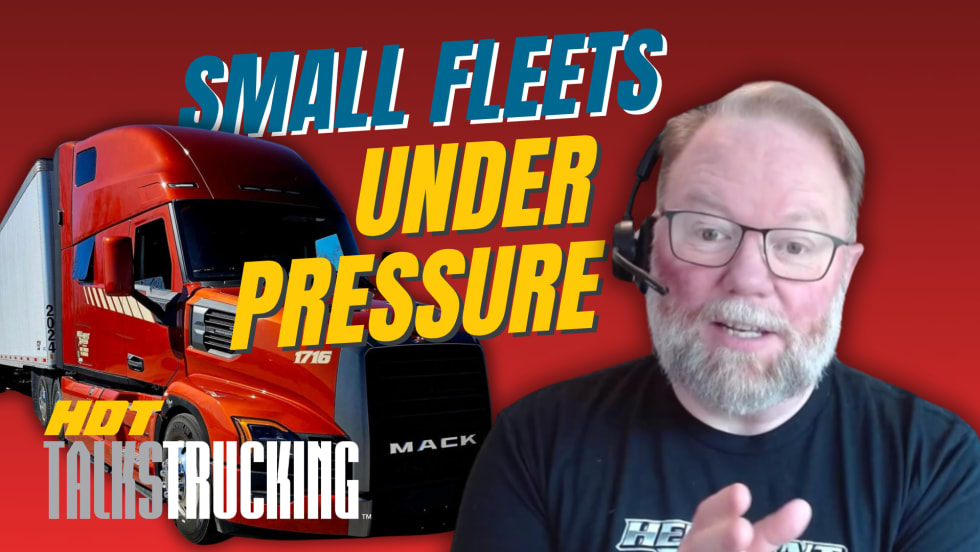
Jamie Hagen Gets Real About Freight, Fuel Prices, Safety, and Small-Fleet Survival
Running a small trucking fleet right now isn’t easy, especially right now. And Jamie Hagen doesn’t sugarcoat it.
Read More →
Data Lock‑In or Integration Lock‑Out?
Data fragmentation is costing dealerships, OEMs, fleets, and upfitters millions. Here’s why interoperability may be the fix the trucking industry needs.
Read More →