




Engine Smarts: SCR vs. EGR - Curiouser and Curiouser
A recent request for help with understanding different emissions technologies to reach the Tier 4 Interim and Final off-highway emissions rules reopened the cooled EGR vs. SCR debate for me
A recent request for help with understanding different emissions technologies to reach the Tier 4 Interim and Final off-highway emissions rules reopened the cooled EGR vs. SCR debate for me.
Cooled exhaust gas recirculation, or EGR, is going to be the route most off-highway engine manufacturers are going to take when the rule hits a big chunk of the off-highway market in January 2011.
It's interesting, but not surprising, because several have already developed the systems to reach the earlier Tier 3 rules. And Tier 4 Interim is nowhere near as demanding as EPA 2010 on-highway regulations. They're more like the Tier 4 Final, which is due in 2015, by which time most off-highway engines will run similar combinations of EGR and selective catalytic reduction (SCR) as the on-highway counterparts and any issues with either technology or their combination will have been ironed out.
But for the looming Tier 4 Interim, one equipment manufacturer, Case, is going down both routes simultaneously, using EGR and SCR individually according to application, duty cycle and so on. That way, Case customers will get either the operator simplicity of EGR or the economy benefits of SCR according to how the construction or agricultural equipment is used. However, customers don't get to chose: Case will make the evaluation and select the technology it thinks will work best.
In the technology transfer from on-highway to off-highway emissions, it would be easy to think of Volvo Construction and the equipment manufacturers using Cummins power as the big winners because those companies have already taken engines to close-to-Tier 4 for their highway products. But Case has that advantage, too, as it is part of the mighty Fiat empire and has access to Fiat Powertrain Technologies (a company that commercialized the common-rail diesel engine), and has lots of on-highway experience through the commercial vehicle Iveco brand that is big in southern Europe and elsewhere around the world.
So far, there appears to be little being said about reaching Tier 4 Final. Interestingly, John Deere Power is looking at a different approach altogether, perhaps even using an electric drive and a diesel engine running at a constant speed generating the electrical power. That's an interesting approach, allowing for a single speed optimization of the engine and none of the transients to deal with that give the on-highway guys such heartburn.
That brings us to Navistar's latest announcement that it will certify the MaxxForce at 0.2 g NOx (currently it is at the 0.5 g level, with emissions credits closing the gap). But the plan is to not sell that engine immediately, but soldier on with the current 0.5 g calibrations.
The thought here is that, as Navistar has claimed all along, 0.2 g is doable will all-EGR, but it may bring some fuel economy compromises that the market cannot live with. By delaying the commercial launch of the cleaner engine, Navistar engineers have more time to work out the technological solutions to deliver low engine-out NOx and fuel economy at the same time.
Speculation has it that to get down to 0.2 g, there will have to be some sort of add-on technology, similar to the concept proposed by Deere. But that may be a little too radical for truckers at the moment.
Far more likely will be an SCR solution that is not urea in solution, if you'll pardon the pun. No messing with a new fluid on the truck, but using ammonia nevertheless.
This could be through on-board generation from the diesel fuel, a technology that exists but currently is very expensve. Or it could be from a solid storage medium that has a cartridge that is renewed at oil-change intervals. Navistar has the technology in the Danish company Amminex, which it invested in at the end of last year. This contains the ammonia in a solid salt matrix and gives it up when the cartridge is heated. The big question here is whether the technology which works on smaller diesel engines is scalable to the big-bore truck engine and the duty cycles it sees.
Or maybe there's another ace just waiting up the Navistar sleeve.
More Equipment
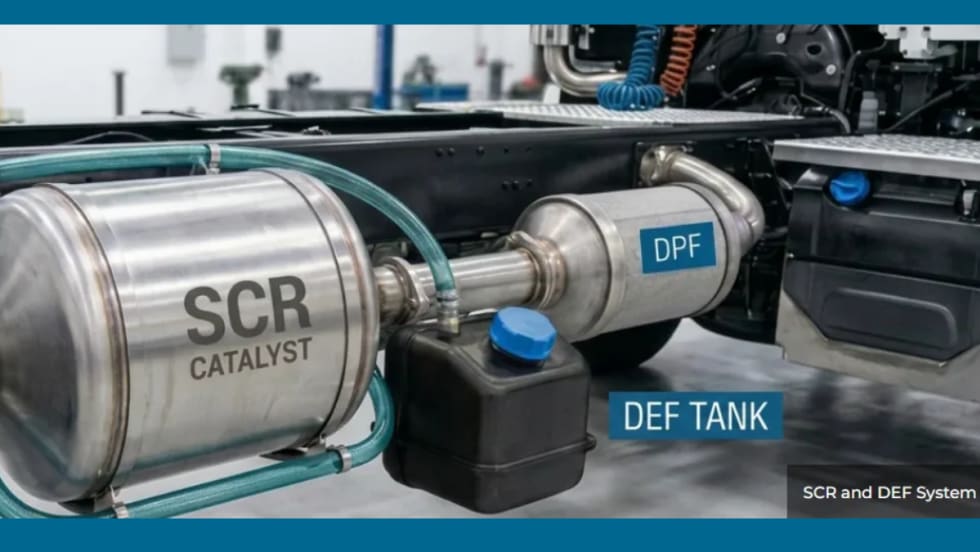
Engine Technology Forum Launches SCR, DEF Resource Center Amid Emissions Debate
The Engine Technology Forum’s new online hub aims to provide fleets, policymakers, and equipment owners with fact-based information about selective catalytic reduction technology, diesel exhaust fluid and emissions compliance.
Read More →
Prime Inc. to Open $7.9M Flagship Used-Truck Dealership
A new driver-focused facility to sell Prime Inc's used trucks and trailers will be the first purpose-built location in the company's history.
Read More →
Lessons Learned About Alternative Fuels: Start Small, Stay Flexible
Practical advice on adopting alternative fuels and ZEVs from HDT's 2026 Top Green Fleets, from renewable diesel and natural gas to electric trucks.
Read More →
Kenworth Names Peter Ahrens General Manager
Leadership changes at Kenworth take effect July 1 as the OEM promotes two longtime Paccar executives to key management roles.
Read More →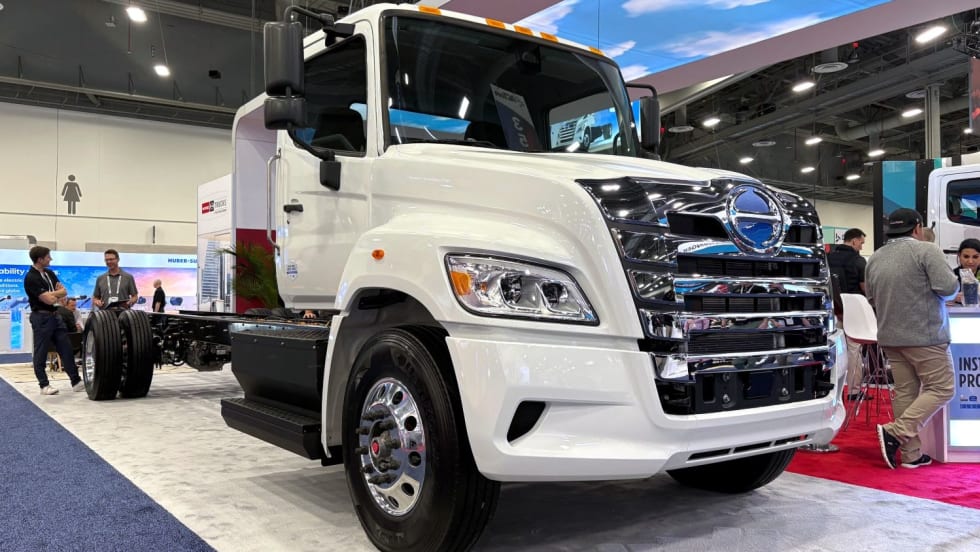
Hino Adds Electric Class 6/7 Truck
Hino says the Le Series is an important step in the company's efforts to reduce environmental impact and support its customers’ sustainability goals.
Read More →
ACT Expo 2026: Highlights in Photos
The 2026 Advanced Clean Transportation Expo featured a broad range of commercial vehicle technologies, from EVs to autonomous trucks to the latest diesel and alternative-fuel engines.
Read More →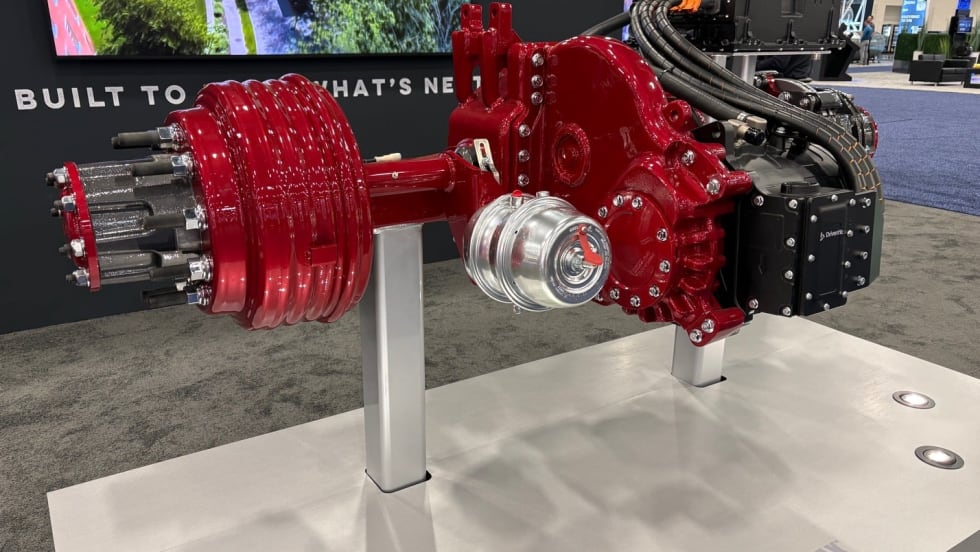
Hendrickson Debuts Electraax E-Axle for Medium-Duty Trucks
Developed with Driventic, Hendrickson's new integrated e-axle is designed to improve efficiency, reduce weight, and extend range in Class 6-7 EV applications.
Read More →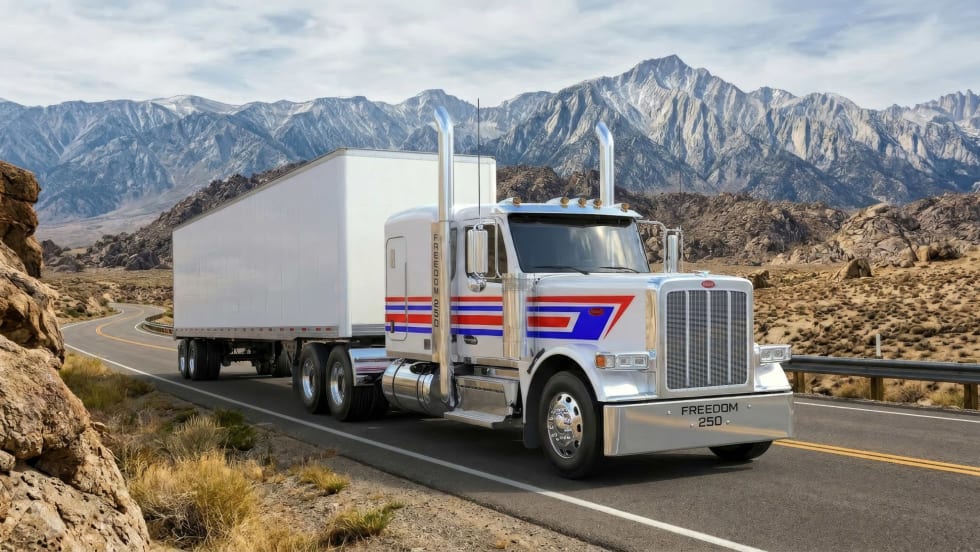
Peterbilt Unveils Freedom 250 Special Edition Model 589
Peterbilt’s just-announced limited-run patriotic Model 579 tractor celebrates America’s 250th birthday with custom styling and premium features.
Read More →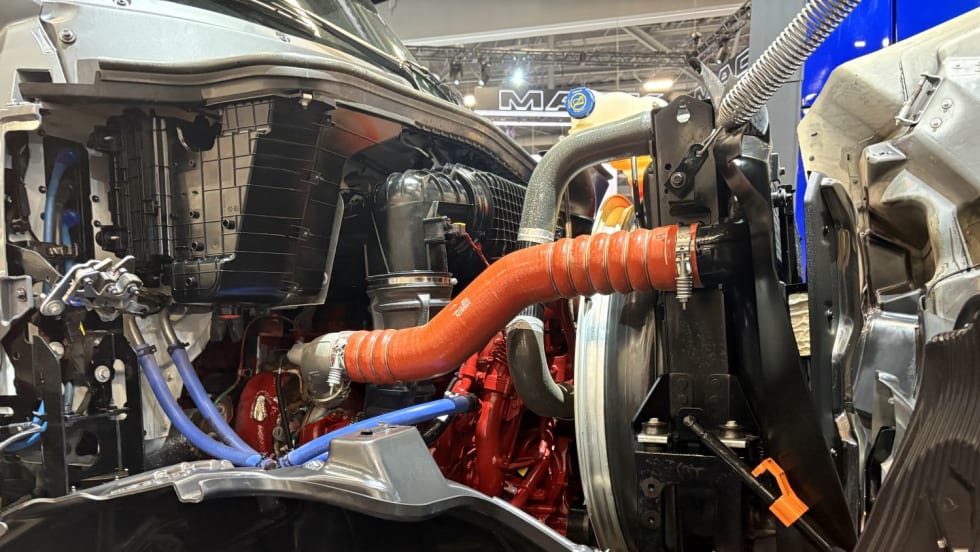
Mack Unveils EPA 2027-Compliant MP13 Engine With More Power, Better Fuel Economy
Along with unveiling its EPA 2027-compliant MP13 engine, Mack outlined powertrain changes across its Class 6-8 lineup, including new Cummins-based X10 engines.
Read More →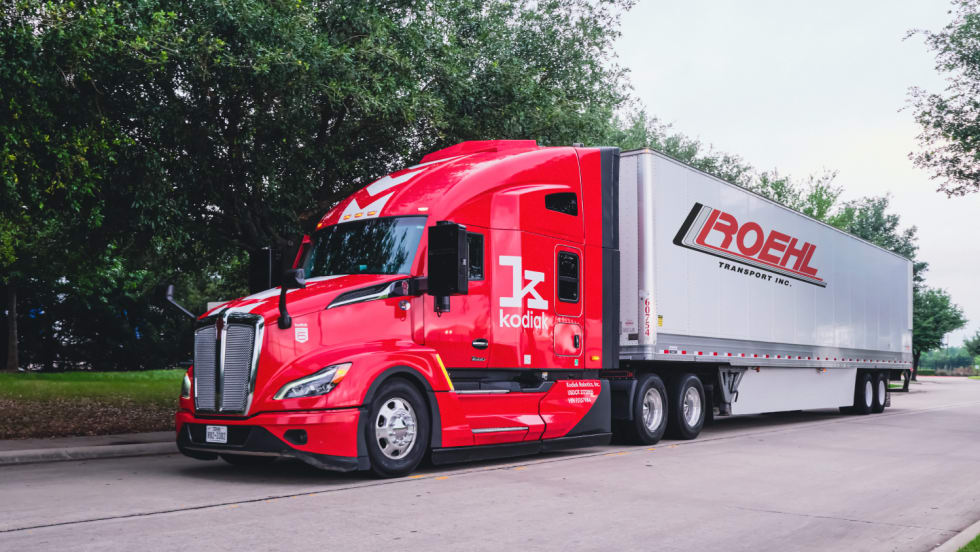
Kodiak and Roehl Transport Launch Autonomous Route Between Dallas and Houston
Kodiak AI and Roehl Transport have begun autonomous freight operations on a regular Dallas-Houston route, marking another step toward Kodiak’s planned driverless launch by the end of 2026.
Read More →