




Going Green: Canadian Fleet Investing in Natural Gas
What prompts a very successful and highly visible carrier to wade deeply into uncharted territory and invest millions in yet-to-be proven technology? "It's the right thing to do and the right time to do it," says Claude Robert, president of privately held Groupe Robert in Boucherville, Quebec

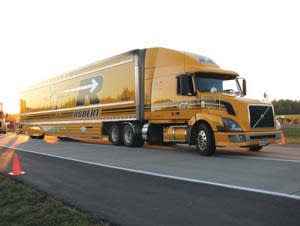
Groupe Robert plans to be the first true for-hire, long-haul fleet to be powered by natural gas in North America.
What prompts a very successful and highly visible carrier to wade deeply into uncharted territory and invest millions in yet-to-be proven technology?
"It's the right thing to do and the right time to do it," says Claude Robert, president of privately held Groupe Robert in Boucherville, Quebec.
A good-sized company by American standards and the seventh largest motor carrier in Canada, Transport Robert intends to put 50 liquefied-natural-gas-powered trucks into service in the next 12 months, with plans to add at least 80 more by 2015. It will be the first genuine for-hire, long-haul natural-gas operation in North America, serving a 700-mile corridor between Windsor, Ontario, and Quebec City.
Currently, no LNG fueling infrastructure exists in the area. Robert is working with a Montreal-based LNG distributor, Gaz Metro, to build refueling sites at company terminals in Boucherville, Quebec, just east of Montreal, and Mississauga, Ontario, a western suburb of Toronto. Eventually, Robert sees at least six sites between Halifax, N.S. and Windsor.
"That would open the entire corridor from Atlantic Canada to the U.S. Midwest to LNG-powered trucks," he says. "If we could achieve harmonization across jurisdictions for investment tax credits, standards for refueling stations and procedures, and favorable fuel tax rates, we could reduce our reliance on diesel fuel a lot."
Carbon Credits
The distributor obviously needs volume to justify the infrastructure investment. Robert believes his 150 trucks will be enough to prime the pump. He's looking to government to respond appropriately from there, taking measures to spur investment in locally abundant natural gas as an alternative fuel. He's motivated not just by the green factor but also by lower operating costs and the accumulation and valuation of carbon credits on some future carbon trading market.
"We are going to generate a lot of carbon credits that we will either keep to offset future emissions, or sell on the open market," Robert says. "Either way, carbon credits are going to become an important factor in a fleet's profitability. Diesel engines are high carbon producers."
The net emissions advantage of natural gas over diesel is somewhat debatable today: NOx and PM output are said to be roughly the same with aftertreatment, but LNG offers a claimed 25 percent reduction in greenhouse gases. (Westport is rumored to be working on a natural gas engine that will not require exhaust gas reduction or a diesel particulate filter. That could turn the tide.)
Recently, the province of Quebec announced accelerated depreciation rates (from 40 to 60 percent) for new trucks purchased after March 31, 2010, and increased the rate to 85 percent for natural-gas-powered commercial vehicles. With incentives like that, uptake should be good.
Challenges
Running LNG trucks in a diesel world won't be easy, at first. Robert says he'll face a few challenges just learning how to maintain the equipment, and he'll have to make modifications to his garage facilities to provide adequate ventilation as a safety measure. And then there are environmental and safety crowds to please.
"It's funny," he says. "If gasoline or diesel were new fuels, we'd never be allowed to use them. The risk of contamination would be seen as too high. With LNG [that risk] tiny. It's a gas. It evaporates. Still, the permits are a lot of work."
Operationally, larger fuel tanks will increase the operating range of the trucks, but strategically located fueling sites will mitigate the problem too. He expects a 600-mile range from a fill, and the terminals are located about 350 miles apart. Trucks will be able to reach up to 300 miles west of Toronto and 300 miles east of Montreal. That gets him to the U.S. border at Detroit and to the Quebec/New Brunswick border in the East. Two fuel outlets cover that entire corridor.
The biggest problem with LNG is sitting in the truck. The fuel evaporates in the tanks as it warms, so they need to be kept running. A round the clock slip-seat operation is where these engines will shine, Robert figures - city work during the day, linehaul overnight.
The Equipment
Robert over-specs his trucks based on a 10-year lifecycle. The LNG trucks will be no different.
With the premium spec, he's looking at close to $225,000 per truck, which doesn't sound viable based on a traditional 4-5 year trade cycle. But Robert is betting cost of diesel will escalate over the long term.
"Fuel economy is comparable to diesel, and with fuel at $0.90 to $1.00 per litre (about $3.75 per gallon), we are in a break-even position. When diesel goes higher, the savings will only improve the return on investment."
At the same time, he's counting on continued - and spreading - provincial support for accelerated depreciation for LNG trucks and the fiscal advantages to carbon offsets.
"We have enough natural gas in this part of Canada to keep us going for at least the next 100 years. There's no question in my mind about its use as a truck fuel, and the environmental benefits are very compelling," he says. "I see no reason not to do this. The cost is justifiable and the ROI is there. And as soon as another supplier comes to market, hopefully with a 13-liter LNG engine, the cost will only improve."
From the October 2010 issue of Heavy Duty Trucking magazine.
More Fuel Smarts
Lessons Learned About Alternative Fuels: Start Small, Stay Flexible
Practical advice on adopting alternative fuels and ZEVs from HDT's 2026 Top Green Fleets, from renewable diesel and natural gas to electric trucks.
Read More →
Kempower Adds Flex EV Charger to Help Support Transition to Megawatt Charging
The Kempower Mega Satellite Flex has both a CCS and MCS connector, allowing operators to serve both types of heavy-duty vehicles.
Read More →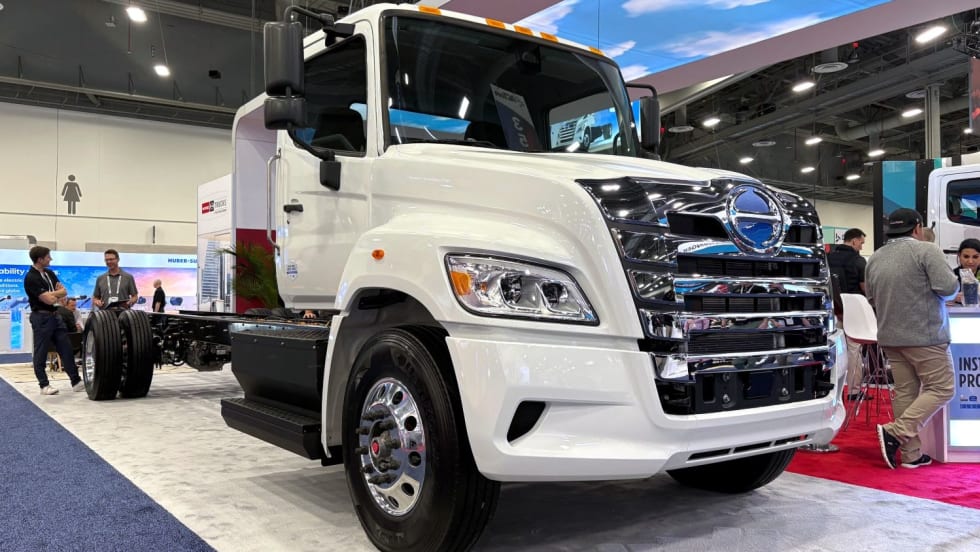
Hino Adds Electric Class 6/7 Truck
Hino says the Le Series is an important step in the company's efforts to reduce environmental impact and support its customers’ sustainability goals.
Read More →
Can Multi-Speed EV Transmissions Solve Heavy Trucking’s Biggest Electric-Vehicle Problems?
A startup called Sigma Powertrain believes purpose-built multi-speed gearboxes can boost efficiency, reduce battery size and improve gradeability for heavy-duty battery-electric trucks.
Read More →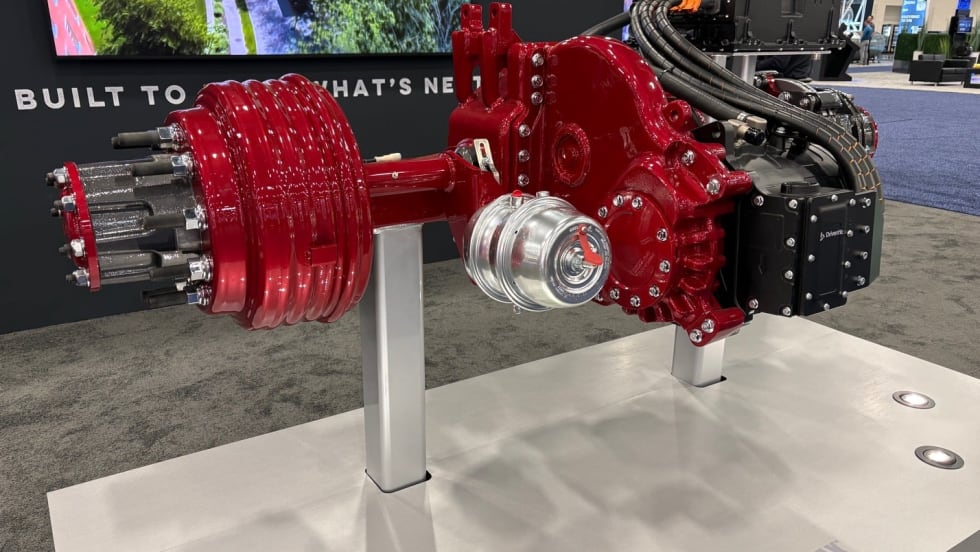
Hendrickson Debuts Electraax E-Axle for Medium-Duty Trucks
Developed with Driventic, Hendrickson's new integrated e-axle is designed to improve efficiency, reduce weight, and extend range in Class 6-7 EV applications.
Read More →
50 Ways Fleets Can Cut Fuel Costs Now — Without Buying New Trucks
Fuel savings don’t come from one big change. They come from dozens of small ones. Here’s how leading fleets are stacking gains across drivers, routing, maintenance, and more.
Read More →
Top Green Fleets 2026: How Fleets Are Reducing Emissions in the Real World
What works in sustainable trucking today? Heavy Duty Trucking's Top Green Fleets are finding practical ways to cut fuel use, reduce emissions, and keep freight moving.
Read More →
California Launching $1 Billion Electric Truck Rebate Program
CARB says the California Clean Fuel Reward program will begin offering point-of-sale rebates of up to $120,000 for electric commercial trucks starting June 26.
Read More →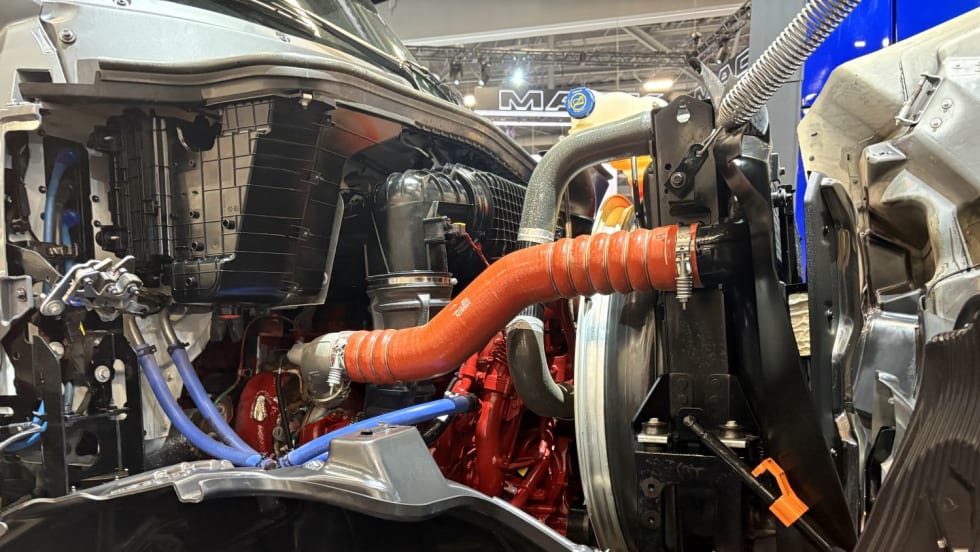
Mack Unveils EPA 2027-Compliant MP13 Engine With More Power, Better Fuel Economy
Along with unveiling its EPA 2027-compliant MP13 engine, Mack outlined powertrain changes across its Class 6-8 lineup, including new Cummins-based X10 engines.
Read More →
How Volvo’s New D13 Engine Meets EPA 2027 Emissions Without Sacrificing Power or Fuel Efficiency
Volvo says advances in combustion and aftertreatment helped its new EPA 2027 D13 engine avoid the fuel-economy penalties many once expected from tighter NOx emissions limits.
Read More →