




Safety Technologies & Lawsuits
Widespread adoption of high-tech safety technologies, such as collision warning systems with adaptive cruise control, lane departure warning systems, stability control, fatigue warning devices and other technologies, could have a significant impact on litigation in the futur

Widespread adoption of high-tech safety technologies, such as collision warning systems with adaptive cruise control, lane departure warning systems, stability control, fatigue warning devices and other technologies, could have a significant impact on litigation in the future
- both good and bad.
The technology itself can help prevent the very types of accidents that lead to lawsuits in the first place. On the other hand, all of the technology used on trucks today, from GPS and electronic logs to lane departure warning systems and collision avoidance technology, collects data. A great deal of that data can be used in litigation - both for and against you.
"You may think, 'Why should I invest in this technology when it can be used against me?'" says Phillip Stanfield, partner and trucking legal expert in the Phoenix firm of Jones, Skelton & Hochuli. "But I think the investment in this technology may well eventually put me out of business. It is my experience, in investigating or defending over 200 fatalities and scores of other serious accidents in my career, that this type of technology could prevent or mitigate a significant portion of them."
First off, of course, there's the argument that these technologies in and of themselves will prevent crashes that otherwise could lead to injuries, death, and litigation. The Federal Motor Carrier Safety Administration is very interested in these technologies and could one day decide to mandate them. But in the meantime, the safety technologies you choose to use (or not to use) and how you use them could very easily wind up in court.
Standard of care
At some point, Stanfield believes, adoption of these safety technologies will reach a tipping point, where attorneys will start asking why the fleet wasn't using this technology to prevent accidents.
Someday, he says, this type of technology could become "the standard of care," like the need to have a fence around a backyard pool to reduce the likelihood and resulting liability of a neighborhood kid wandering in and drowning.
Once lawyers start doing this, he says, it "leads you to the simple calculation of how much the technology would cost and do a profits-over-safety argument," he says. "A single-death accident costs about $3 million per death on average, including increased insurance premiums, workers' comp, all that kind of stuff. That's a lot of safety device technology that you could buy. And of course you've got the power unit for 400,000 miles so you amortize that over four years, and if you avoid one death you've paid for a thousand-power unit fleet."
The average judge and jury don't know how tight of a margin trucking companies operate on - and in most cases, they won't care.
Then there's the issue of, if you have the technology, what policies and measures do you have in place to prevent drivers from deactivating it? Stanfield recalls one case where the driver had deactivated his Vorad collision-warning unit and, while egregiously in violation of hours of service regulations, drove straight into the back of a pickup truck on a flat, straight, stretch of roadway in broad daylight, sandwiching the pickup against the back of a flatbed trailer in front of it. Had the Vorad been operational, he says, it could have prevented the accident.
Where's the data?
Stanfield also says litigation issues go beyond the safety technology itself, to the data it collects.
First there's the issue of having that data available in case of a lawsuit. It's a twist on an old legal concept - spoliation, which in the past typically meant intentional destruction of evidence. However, he says, today that also can be the negligent destruction of evidence, the loss of evidence, the failure to keep relevant data that you should have had a reasonable expectation could be called into question.
He recommends that you work with the suppliers of the system to understand what data it keeps, how to preserve it and how to download it. The risk experts with your company should put into place certain thresholds that will trigger how much data should be kept and when.
Monitoring drivers
These systems, and other technology already on today's trucks, will allow fleets to monitor driver behaviors such as hard braking incidents and speeding. Stanfield believes that increasingly, fleets that do nothing with this treasure trove of information will regret it.
"I have seen that data used against trucking companies that didn't review the data prior to the accident in terms of counseling drivers against following distances and that kind of stuff," Stanfield says.
For instance, an attorney could learn that a driver who was involved in a crash had frequent hard braking and sudden accelerations that were measured by the truck's on-board computer equipment. That data is generally considered an indication that a driver's following too closely at too great a speed.
"So when you get a driver with frequent hard braking involved in a rear-end collision where he perhaps was following too closely, you have a pattern of practice based on data that was in the possession of a motor carrier that did nothing about it," Stanfield says. "The extent to which safety [department] doesn't use that data proactively, in the event of an accident will be used against them."
From the May 2010 issue of Heavy Duty Trucking.
More Safety & Compliance

How Waste Connections is Using Data, Telematics, and AI
How do you manage and maintain more than 18,000 connected trucks? Data. Lots of it.
Read More →
Fleet Advantage: Top Logistics Fleets Outperform National Safety Benchmarks
Fleet Advantage's latest TRUST Safety Index found leading logistics fleets maintained significantly lower out-of-service rates and stronger safety scores than national averages, while highlighting persistent challenges related to tires, brakes, and unsafe driving behaviors.
Read More →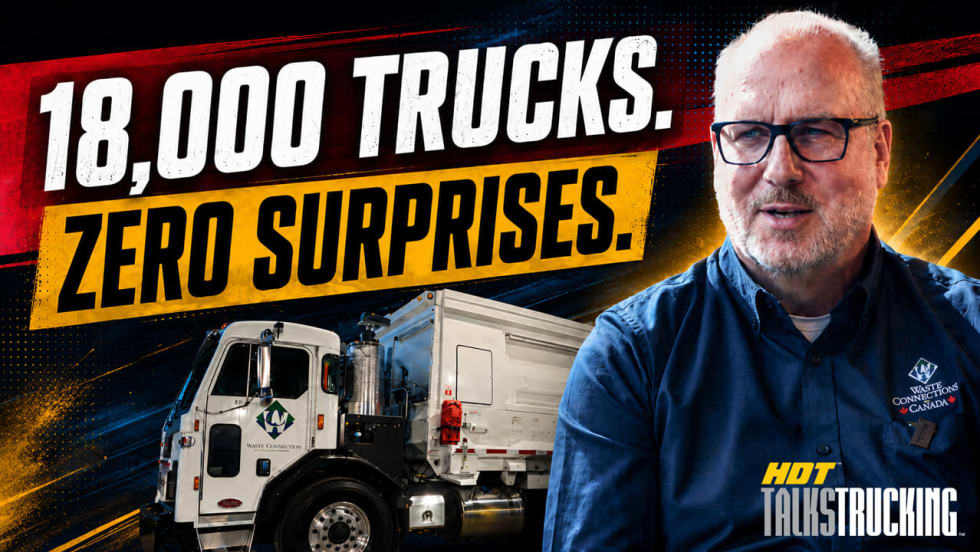
Why Fleet Data Matters More Than Ever at Waste Connections [Watch]
Waste Connections' Chuck Palmer explains how telematics, predictive maintenance, safety analytics, and AI help keep vehicles on the road and drivers safe in this episode of HDT Talks Trucking.
Read More →
Short Takes: How K&B is Using AI
Fleets need to "get on board the train" with AI, says Lance Evans of K&B Transportation in this HDT Talks Trucking Short Takes episode.
Read More →
Short Takes: Inside K&B’s Truck Safety Tech
Listen to learn how K&B Transportation uses cellphone-blocking technology, speed management systems, weather geofencing, bridge avoidance tools, and more to improve driver safety.
Read More →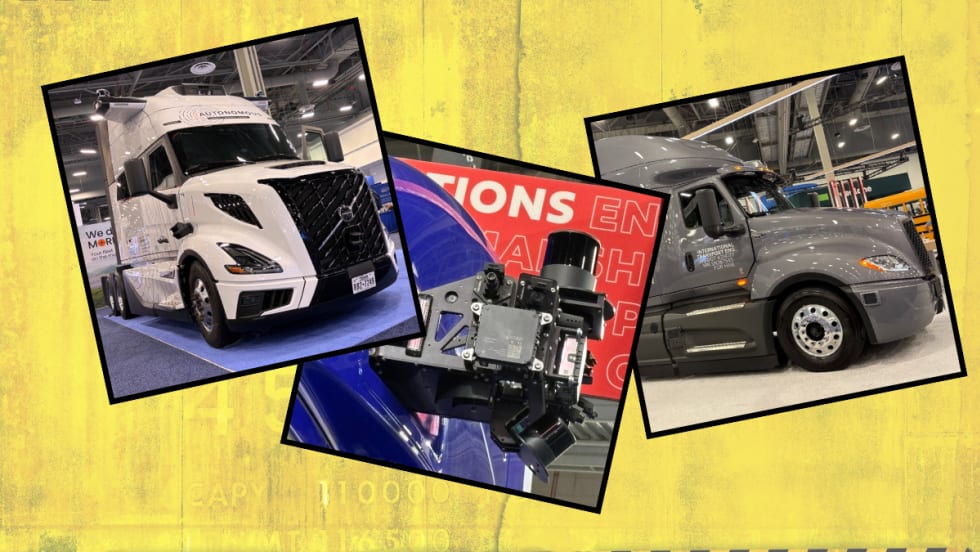
The Biggest Gap in Driverless Trucking Isn’t Tech. It’s Safety Validation
Nauto’s Stefan Heck says autonomous trucks are advancing quickly but proving they’re safe enough for large-scale deployment may be the industry’s hardest challenge.
Read More →
Truck Crash Rates Are Down. So Why Do Insurance Costs Keep Rising?
ATRI’s latest research points to litigation, social inflation, and soaring claims costs as key drivers behind record-high liability premiums for trucking fleets. But there are things motor carriers can do.
Read More →
FMCSA Removes More Than a Dozen ELDs from Registered List
The FMCSA continues its efforts to fight electronic logging devices that don't meet federal requirements, removing more than a dozen from the registered ELD list in May.
Read More →
How the Supreme Court Broker Liability Ruling Could Reshape Trucking’s Safety Landscape
The Supreme Court’s May 11 broker-liability ruling may not radically rewrite transportation law overnight. But industry experts say it will intensify pressure on brokers, carriers, and shippers to prove they are prioritizing safety.
Read More →
Recall of Fontaine Fusion Flatbeds Warns Owners Not to Use the Trailers
Some Fontaine Fusion flatbed trailer manufactured between February 2025, and March 2026 could have mainbeams weakened by hydrogen embrittlement because of a problem in the galvanizing process.
Read More →