




Geofencing Breaks Efficiency Boundaries
Geofencing is a key driver of a paperless environment, with the power to optimize back-office and driver efficiency, customer service, asset protection and safety
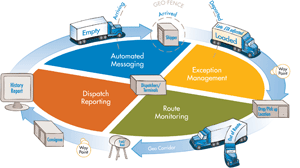
(Photo courtesy of PeopleNet)
Geofencing is a key driver of a paperless environment, with the power to optimize back-office and driver efficiency, customer service, asset protection and safety.
When integrated with dispatch, routing and other back-office applications, geofencing eliminates paper handling, reduces communications costs, and propels workflow processes to run at top speed. Further, when used with an in-cab scanning service, geofencing drives additional back-office and driver efficiency, which further reduces costs, speeds up cash flow and enhances the bottom line.
Back-Office Bonanza
In an integrated environment, geofencing transforms paper-based operations into an automated, faster paced workplace that eliminates human error and countless hours of manual labor. It also improves driver efficiency and optimizes load scheduling and customer service. The data it sends enables routing software to automatically determine whether all remaining stops on a route can be completed on time on a given day, and readjusts routes and re-assigns stops when necessary. The dispatch software notifies customers of the new schedule and ETAs (estimated time of arrival).
Exception notifications driven by geofencing keep communication costs down by communicating only when exception events occur, such as an overdue delivery, excessive detention time, etc. Otherwise, geofencing can be configured to store and send data only when needed for customer service and load management.
Advanced Customer Service and Driver Satisfaction
Geofencing with exception notification gives for-hire fleets a strong, cost-effective competitive advantage over traditional, manual dispatch operations. Communicating changes in delivery times ahead of ETA and giving customers online access to delivery status helps them prepare for deliveries.
Driver Efficiency and Satisfaction
Driver performance and satisfaction go hand in hand. The highest performing drivers understand how geofencing minimizes paper-handling time, so they can drive and earn more:
* Pre-announced ETAs minimize driver detention by allowing customers to prepare for delivery.
* Eliminates manual delivery confirmation by providing pre-populated electronic forms.
* With in-cab scanning, no additional time and costly out-of-route miles to scan or mail paper documents.
Improved Cash Flow, Accounting Costs
With an in-cab scanner connected to a smart device in the cab, geofencing lets drivers and back-office personnel skip handling paper documents days and weeks after load completion. The driver scans in the signed delivery receipt, and is prompted to identify which stop the document is associated with. The geofencing software aligns the information associated with that stop (customer number, location and order or bill of lading, and other load information), immediately indexes it into the workflow, and provides confirmation that indexing was accomplished at a specific time and place.
Invoices are generated faster to speed up payment. Automated indexing reduces hard cost of traditional truckstop scanning and outsourced indexing by approximately 25 percent in addition to soft costs.
Kirsten Lester is a product manager at PeopleNet, which provides Internet-based and integrated onboard computing and mobile communications systems to improve North America's trucking industry's fleet management. More information about the company may be found on the company web site at www.peoplenetonline.com or by calling 888-346-3486.
More Fleet Management
AUCTION OF EQUITY INTEREST IN HEAVY HAUL TRUCKING COMPANY!!
Mark your calendar: June 30, 2026 (10:00 a.m. PDT). MagnaTrans, LLC, a California limited liability company doing business as Magna Transportation Group is going to auction! Bid on a 37.5% ownership interest in this Rancho Cucamonga-based heavy haul and over-dimensional trucking company operating across California, Oregon, and Arizona. The equity interest will be sold to the highest bidder or bidders under Article 9 of the Uniform Commercial Code at 10:00 a.m. PDT.
Read More →
Volvo Trucks Adds Unattended Over-the-Air Software Update Capabilities
The latest evolution of Volvo’s over-the-air update technology allows software updates to run while trucks are parked, helping fleets keep vehicles current without disrupting operations.
Read More →
How Waste Connections is Using Data, Telematics, and AI
How do you manage and maintain more than 18,000 connected trucks? Data. Lots of it.
Read More →
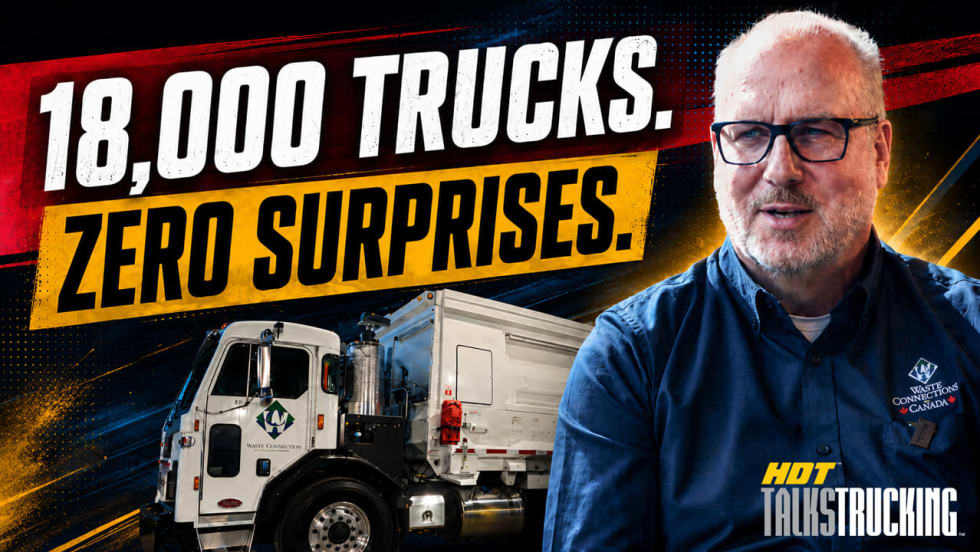
Why Fleet Data Matters More Than Ever at Waste Connections [Watch]
Waste Connections' Chuck Palmer explains how telematics, predictive maintenance, safety analytics, and AI help keep vehicles on the road and drivers safe in this episode of HDT Talks Trucking.
Read More →
NMFTA Launches Free, Anonymous Cybersecurity Threat Report Portal
Organizations are encouraged to anonymously report freight fraud, cargo crime, and cyber threats while gaining visibility into incidents reported across the transportation sector.
Read More →
AI Can Optimize a Fleet. Can It Replace Human Judgment?
Fleets fear falling behind if they don’t adopt AI quickly enough. They also fear what happens if the technology makes the wrong decision.
Read More →
Jamie Hagen Gets Real About Running a Small Fleet in an Uncertain Economy
Small fleet owner Jamie Hagen says new legal risks, volatile fuel prices, and a changing freight market are forcing small carriers to rethink how they operate — and what they can afford.
Read More →
Jamie Hagen Gets Real About Freight, Fuel Prices, Safety, and Small-Fleet Survival
Running a small trucking fleet right now isn’t easy, especially right now. And Jamie Hagen doesn’t sugarcoat it.
Read More →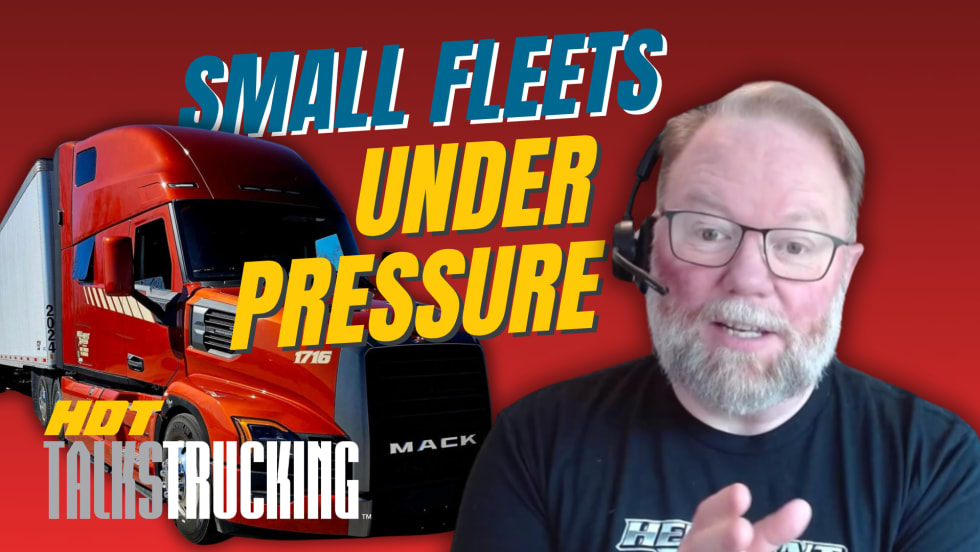
Jamie Hagen Gets Real About Freight, Fuel Prices, Safety, and Small-Fleet Survival
Running a small trucking fleet right now isn’t easy, especially right now. And Jamie Hagen doesn’t sugarcoat it.
Read More →
Data Lock‑In or Integration Lock‑Out?
Data fragmentation is costing dealerships, OEMs, fleets, and upfitters millions. Here’s why interoperability may be the fix the trucking industry needs.
Read More →