




2010 Truck Fleet Innovators: Jim Burg, President/CEO, James Burg Trucking
When Jim Burg bought his first truck in 1984, he thought he was embarking on a lifelong career as a single-truck owner-operator


When Jim Burg bought his first truck in 1984, he thought he was embarking on a lifelong career as a single-truck owner-operator.
But his problem-solving mind, during those long hours behind the wheel, kept coming up with ideas for how to do things better. And in order to implement those ideas, he had to think bigger than one truck.
Today, James Burg Trucking runs regionally out of its Warren, Mich., headquarters. As a flatbed carrier that mainly serves the automotive, manufacturing and construction industries in the Midwest, his business was slammed by the economy last year. But thanks to being proactive on fuel costs, cutting back to a survival-mode budget during the worst few months, as well as a little luck, he's back up to running more than 70 trucks in in-state and regional flatbed operations.
Discovering steel
Burg got his start working for his parents' ice business, including delivering. As the company got bigger, so did the trucks. By 1983, looking for some extra work to do with his parents' flatbed, he discovered steel hauling. The first load he picked up was at Worthington Industries, today his single largest customer. He soon bought his own truck, and the new owner-operator started seeing ways he could improve on the steel-hauling business.
Because steel loads consist of such large, heavy items, there can be tremendous wasted capacity on a truck. One customer in Michigan was shipping 57,000-pound steel coils. Even though the maximum weight he could haul in-state was over 100,000 pounds, that still wasn't enough to put on a second coil. So Burg called an aluminum trailer manufacturer and asked if they could build an eight-axle trailer that could do it. The beams available at the time couldn't take that kind of stress, but the trailer maker suggested a B-train instead. Once he got the customer to listen to the idea, Burg ended up becoming a contract carrier for them. That was in 1991, and was the beginning of becoming a fleet owner.
"We continued on that level of, how do we improve, how do we build a better mousetrap?"
By the late '90s, Burg realized he would be more valuable to the company driving a desk - although he's still happy to jump behind the wheel when he's needed. But the good manager, he says, knows how to delegate, even though teaching someone to do it may take longer than just doing it yourself.
"I said, I'm going to figure out how to do a better job of managing and getting my people to do what needs to be done," Burg says. "Otherwise I'd still be driving a single truck."
Better mousetraps
Burg has continued working on lightweight equipment specs. A big weight savings came from switching to Michelin X One wide-based single tires, which he pairs with the Meritor Tire Inflation System by PSI. Converting 10 axles from duals to singles saved 1,750 pounds.
"If we can reduce the tare weight a thousand pounds, and that allows us to put a second 10,000- or 30,000-pound item on, we can increase our productivity by 30, 40, 50 percent," Burg says. For instance, he says, a typical 80,000-pound rig cannot take two 26,000-pound coils. Burg's highway trucks are spec'ed so they can. The result is more profit for the company and more in the drivers' pockets as well.
Burg is happy to test the latest equipment and technology. Right now he's evaluating the use of Meritor Wabco air disc brakes on three new East flatbed trailers. He has tested and adopted curtainside flatbed trailers with side fairings and automated manual transmissions.
The James Burg Trucking maintenance facility is state-of-the-art with in-ground-oil change bays. A performance-based brake testing machine helps identify brake issues and accurately check suspension wear. Using the right shop tools and processes has helped JBTC increase the quality of periodic inspections and complete them in half the time.
Safety pays
Burg also believes strongly in investing in technology that can make his drivers safer.
"Safety is a component of expenses. If you run a safe operation, you should have less expenses, less claims, less accidents. When the market comes back, the benefits we have will show up on the bottom line, because we continue to invest in safety."
The company's trucks feature roll stability and lane departure warning technology. The automatic tire pressure monitoring and inflation system helps prevent blowouts, and a new wheel end temperature monitor alerts the driver if the wheel end gets overheated, before the bearing fails.
Burg also sings the praises of his video event recorders. These record the view out the front and into the vehicle. The video is only saved and sent to the fleet if triggered by an event such as a hard stop.
Burg says this gives him more insight into his drivers' behavior than simply measuring the number of hard stops. "Was the driver following too close, or did a deer jump in front of the truck?" he says. It's not only a great management tool, he says, but also has helped the company exonerate its drivers in litigation.
Burg's next safety technology investment will be forward-looking collision warning and avoidance.
Bouncing back
As a flatbed hauler of building and automotive materials, James Burg Trucking was hit hard by the recession. A proactive approach to fuel economy, Burg says, turned out to be a big factor in the company's survival. When diesel first crossed the $3 per gallon threshold, the company started looking seriously at how to reduce their fuel expenses. "We were getting our fuel surcharge money, but we felt we could do better."
The lightweight equipment and wide-based tires helped. The company worked with its engine suppliers to re-ratio the fleet for the best fuel mileage. The addition of the Cat Messenger driver display with instant fuel mileage feedback for drivers had a huge effect, Burg says, paying for itself in less than two months.
"Had we not done that, that extra million that didn't go up the stacks last year would have been enough to put us under."
When things started to slow down in the third quarter of 2008, Burg's team realized they "needed to align the company to the diminishing revenues headed our way." They got rid of subcontractors, eliminated the travel and entertainment budget, and the office staff volunteered to take a 15 percent pay cut. Then the bottom fell out in May and June last year when GM and Chrysler filed for bankruptcy. Revenues, already way down, fell again by half.
"That's when we really had to do some soul-searching," Burg says. They went into survival mode, laying off drivers for the first time ever, laying off mechanics and office staff. They prepared for 12 weeks of "near death" in revenues. After only about six weeks, things started looking up, thanks in large part to the Cash for Clunkers program. By August, they were bringing drivers back to fill the idle trucks, "We had a 40 percent increase," Burg says. "That was just as much of a challenge, because now we were understaffed."
It took until November to go through the hiring process to get all 12 idle trucks back up and running, and they also brought back some owner-operators. There are still about 20 trailers parked, because Burg doesn't want to bring back so many drivers that the extra revenue gets spread too thinly.
"I made sure they were full and they had all the overtime they wanted to help them get out of the hole. I want people who work here to remember how we treated them."
From the March 2010 issue of Heavy Duty Trucking.
More Fleet Management
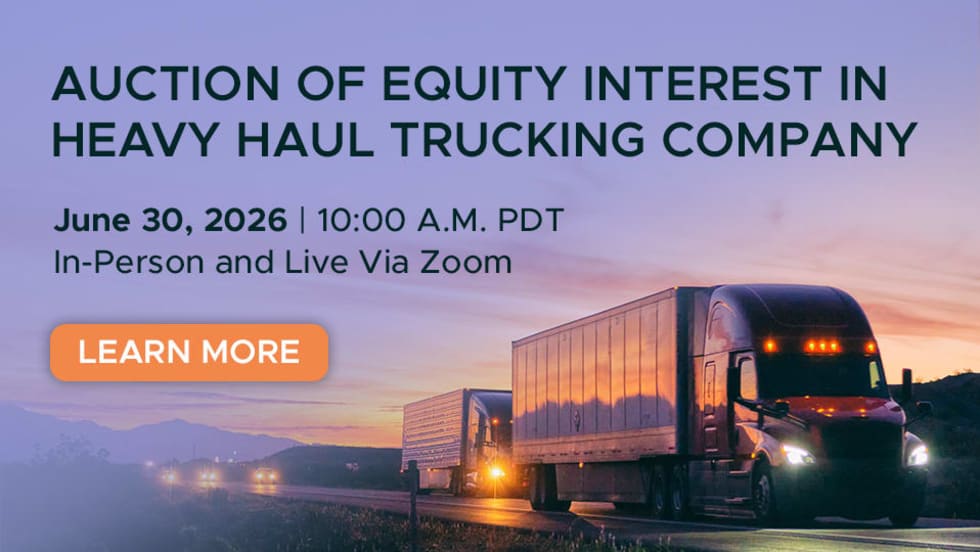
AUCTION OF EQUITY INTEREST IN HEAVY HAUL TRUCKING COMPANY!!
Mark your calendar: June 30, 2026 (10:00 a.m. PDT). MagnaTrans, LLC, a California limited liability company doing business as Magna Transportation Group is going to auction! Bid on a 37.5% ownership interest in this Rancho Cucamonga-based heavy haul and over-dimensional trucking company operating across California, Oregon, and Arizona. The equity interest will be sold to the highest bidder or bidders under Article 9 of the Uniform Commercial Code at 10:00 a.m. PDT.
Read More →
Volvo Trucks Adds Unattended Over-the-Air Software Update Capabilities
The latest evolution of Volvo’s over-the-air update technology allows software updates to run while trucks are parked, helping fleets keep vehicles current without disrupting operations.
Read More →
How Waste Connections is Using Data, Telematics, and AI
How do you manage and maintain more than 18,000 connected trucks? Data. Lots of it.
Read More →
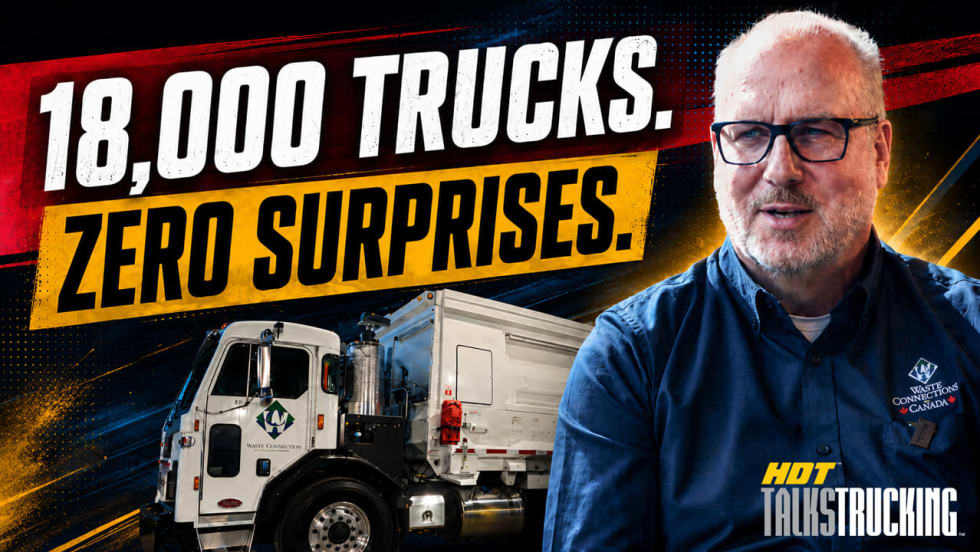
Why Fleet Data Matters More Than Ever at Waste Connections [Watch]
Waste Connections' Chuck Palmer explains how telematics, predictive maintenance, safety analytics, and AI help keep vehicles on the road and drivers safe in this episode of HDT Talks Trucking.
Read More →
NMFTA Launches Free, Anonymous Cybersecurity Threat Report Portal
Organizations are encouraged to anonymously report freight fraud, cargo crime, and cyber threats while gaining visibility into incidents reported across the transportation sector.
Read More →
AI Can Optimize a Fleet. Can It Replace Human Judgment?
Fleets fear falling behind if they don’t adopt AI quickly enough. They also fear what happens if the technology makes the wrong decision.
Read More →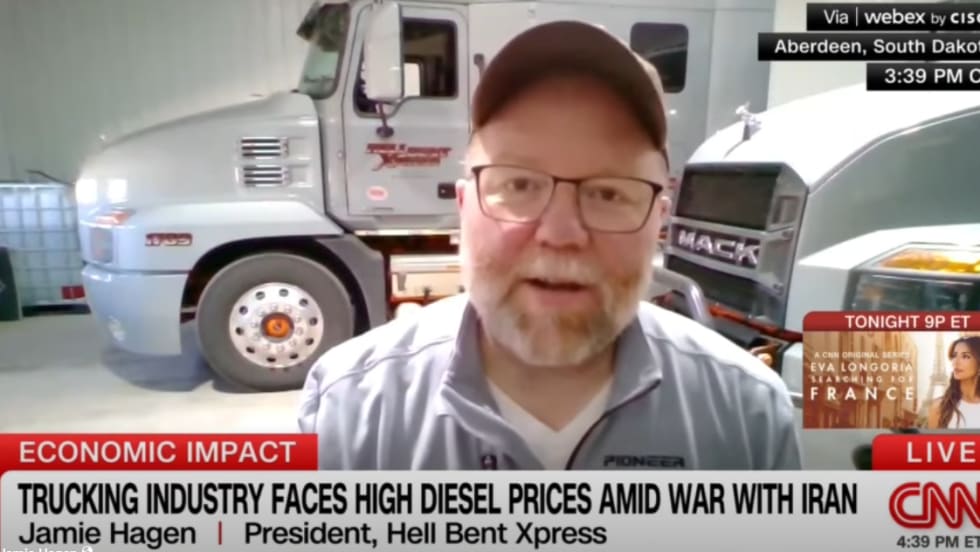
Jamie Hagen Gets Real About Running a Small Fleet in an Uncertain Economy
Small fleet owner Jamie Hagen says new legal risks, volatile fuel prices, and a changing freight market are forcing small carriers to rethink how they operate — and what they can afford.
Read More →
Jamie Hagen Gets Real About Freight, Fuel Prices, Safety, and Small-Fleet Survival
Running a small trucking fleet right now isn’t easy, especially right now. And Jamie Hagen doesn’t sugarcoat it.
Read More →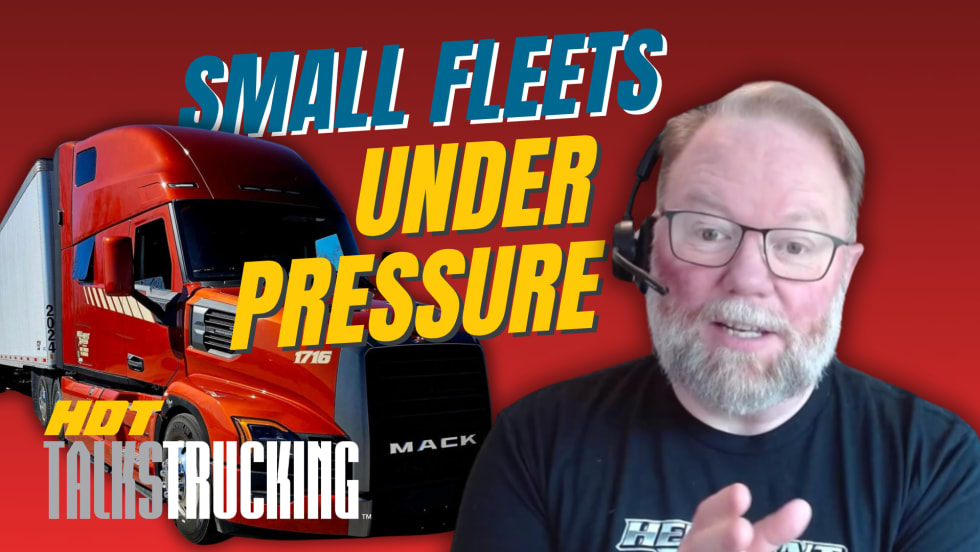
Jamie Hagen Gets Real About Freight, Fuel Prices, Safety, and Small-Fleet Survival
Running a small trucking fleet right now isn’t easy, especially right now. And Jamie Hagen doesn’t sugarcoat it.
Read More →
Data Lock‑In or Integration Lock‑Out?
Data fragmentation is costing dealerships, OEMs, fleets, and upfitters millions. Here’s why interoperability may be the fix the trucking industry needs.
Read More →