




Smith Throws Switch on All-Electric Trucks
Kansas City-based Smith Electric Vehicles is making the first deliveries of its Newton Class 5 through 7 all-electric truck
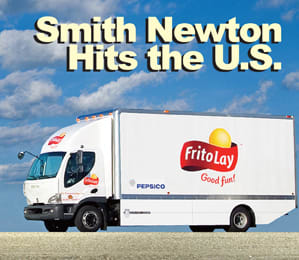
Kansas City-based Smith Electric Vehicles is making the first deliveries of its Newton Class 5 through 7 all-electric truck.
Customers for the first six trucks include the Frito-Lay division of PepsiCo, Staples, AT&T, Coca-Cola, PG&E and Kansas City Power and Light, who are all heavily committed to sustainability and low emissions.
The Smith Newton is a zero emissions vehicle (ZEV) and fully compliant with California ZEV regulation.
Smith's Partners
Smith refers to its initial customers as partners, working very closely with them to develop the specifications that fit the trucks most effectively into the duty cycles proposed for them. While the standard in Europe is an 80 kilowatt hour battery pack, which provides about 100-mile range, U.S. versions are more customizable to a specific route. Customers in the U.S. can choose between the 80 kilowatt hour battery pack, as well as a 40 kilowatt hour battery for less mileage and 120 kilowatt hour pack, which increases range to around 120 miles.
According to Smith Vehicles CEO Bryan Hansel, the customers for the electric truck are quite unlike passenger car purchasers who suffer "range anxiety." Commercial users have predictable routes and duty cycles and, working with the manufacturer, can design a specification that is appropriate to the vehicles' anticipated use. And most return to a central terminal for the six to eight hours charging period.
Production
The trucks are built in a large facility on the Kansas City International Airport site, which used to be an aircraft engine refurbishing facility. As such, the company has plenty of room to expand and plans to quickly ramp up production to meet a substantial demand for the zero-emissions truck. While the truck is very new to North America, Hansel says the company currently has more demand than supply, but wouldn't provide specific numbers.
The truck's design is based on the vehicle produced by Smith Electric Vehicles in the United Kingdom, a wholly owned subsidiary of the Tanfield Group. In the UK, Smith has already delivered more than 800 of the new generation of all-electric vehicles, which include the Newton and a smaller van-based vehicle. The American operation is a separately constituted, privately-held corporation, although Tanfield is a shareholder.
That being the case, the Smith Newton that is being introduced here in the U.S. and Canada is based heavily on the model sold in Europe. The chassis and cab is manufactured by Avia in the Czech Republic and is being shipped into Kansas City completely built-up. The powertrain, controllers and lithium-ion batteries are assembled and installed in the U.S. plant.
The powertrain, again, is based on the highly successful European trucks and most components are from the same suppliers. However, according to Hansel, Smith Electric has an extensive R&D operation in Kansas City dedicated to optimizing the electric trucks for American customers, both in the suitability for individual applications and also for the performance of the vehicles, so they are not merely transplanted from the UK. The new vehicles have been upfitted to U.S. highway safety standards, and include several add-on options not available to the UK market, such as air conditioning. However, as he pointed out in an exclusive interview, basing the American vehicles on an established and well-proven design has greatly speeded the homologation process and the California certification.
The company plans to make the truck available in gross vehicle weights from 12,000 to 26,455 pounds. Currently, the company has produced cargo vans and a utility boom truck and says refrigerated vans are also in the pipeline.
Financing the Upcharge
The first six partners are all highly committed "green" companies and are consequently prepared to pay the significant upcharge of these vehicles over conventional diesel powertrain trucks - something like $100,000. Offsetting this immediately are various grants under Clean Cities' initiatives as well as state incentives in New York, California, Texas and Colorado. While there is a federal tax credit for plug-in electrics of up to $7,500, the cutoff is 14,000 pounds GVW, and the Newton is not covered at higher weight. However, U.S. Rep. Sander Levin, D-Mich., has introduced a bill that would grant commercial vehicle tax credits of between $6,000 and $24,000 according to weight.
Smith's Hansel says that there are operational savings to be accrued as well. The cost of operating an electric vehicle is 80 percent cheaper than a diesel truck on a per mile basis, Hansel says. Also, the maintenance requirement for an electric drivetrain is much lower, in the $500 to $600 per year range. Brake maintenance is slashed as the regenerative braking that is part of the control/range strategy conserves the service brakes. The trucks are robustly constructed for commercial application, and should achieve a minimum life of 10 years, with no battery changes.
Although the cost of the vehicles is high, he expects to quickly ratchet down costs with production volume to that of equivalent diesel/electric hybrids. Eventually, he thinks the Smith Newton and other electrics may become competitive with diesel power. While the vehicle is cheaper to build than diesels, the industry will have to wait for the price of the battery to come down, and this depends on battery improvements, Hansel says. He points to the additional upcharge for diesel engines, which sets in Jan. 1. "We're going to meet in the middle at some point," he says.
Marketing Benefits
The partnering companies are using the vehicles to promote the sustainability efforts because studies show that shoppers - especially women - are increasingly basing their purchases on suppliers' efforts towards sustainability. For example, the Staples truck carries a smiley face on the back of the body with a comment that deliveries are being made by a zero emissions electric vehicle.
Given that the trucks operate in highly populous urban situations, this is a hidden marketing benefit that over time may well offset the high price, but this is very difficult to quantify. "One thing about our trucks is that they're very visible," Hansel says.
More Fuel Smarts
Lessons Learned About Alternative Fuels: Start Small, Stay Flexible
Practical advice on adopting alternative fuels and ZEVs from HDT's 2026 Top Green Fleets, from renewable diesel and natural gas to electric trucks.
Read More →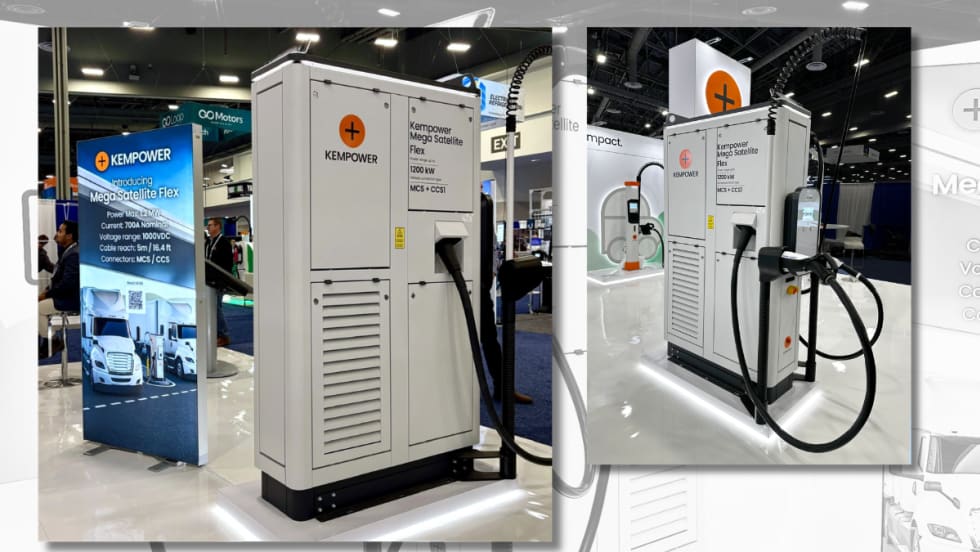
Kempower Adds Flex EV Charger to Help Support Transition to Megawatt Charging
The Kempower Mega Satellite Flex has both a CCS and MCS connector, allowing operators to serve both types of heavy-duty vehicles.
Read More →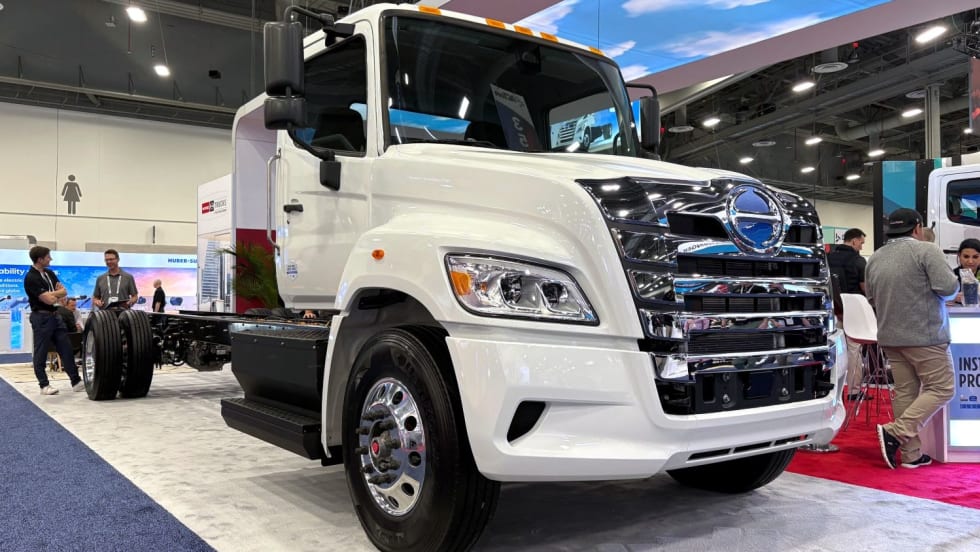
Hino Adds Electric Class 6/7 Truck
Hino says the Le Series is an important step in the company's efforts to reduce environmental impact and support its customers’ sustainability goals.
Read More →
Can Multi-Speed EV Transmissions Solve Heavy Trucking’s Biggest Electric-Vehicle Problems?
A startup called Sigma Powertrain believes purpose-built multi-speed gearboxes can boost efficiency, reduce battery size and improve gradeability for heavy-duty battery-electric trucks.
Read More →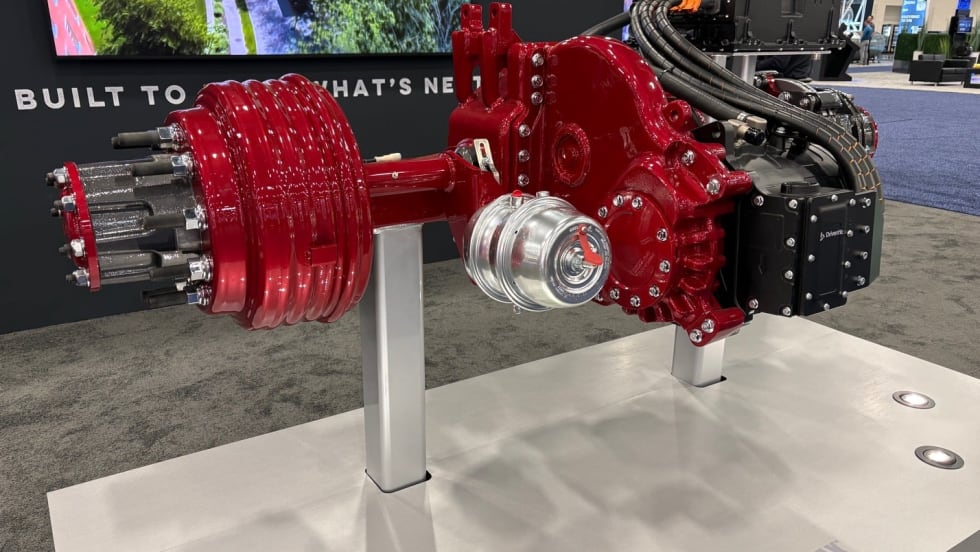
Hendrickson Debuts Electraax E-Axle for Medium-Duty Trucks
Developed with Driventic, Hendrickson's new integrated e-axle is designed to improve efficiency, reduce weight, and extend range in Class 6-7 EV applications.
Read More →
50 Ways Fleets Can Cut Fuel Costs Now — Without Buying New Trucks
Fuel savings don’t come from one big change. They come from dozens of small ones. Here’s how leading fleets are stacking gains across drivers, routing, maintenance, and more.
Read More →
Top Green Fleets 2026: How Fleets Are Reducing Emissions in the Real World
What works in sustainable trucking today? Heavy Duty Trucking's Top Green Fleets are finding practical ways to cut fuel use, reduce emissions, and keep freight moving.
Read More →
California Launching $1 Billion Electric Truck Rebate Program
CARB says the California Clean Fuel Reward program will begin offering point-of-sale rebates of up to $120,000 for electric commercial trucks starting June 26.
Read More →
Mack Unveils EPA 2027-Compliant MP13 Engine With More Power, Better Fuel Economy
Along with unveiling its EPA 2027-compliant MP13 engine, Mack outlined powertrain changes across its Class 6-8 lineup, including new Cummins-based X10 engines.
Read More →
How Volvo’s New D13 Engine Meets EPA 2027 Emissions Without Sacrificing Power or Fuel Efficiency
Volvo says advances in combustion and aftertreatment helped its new EPA 2027 D13 engine avoid the fuel-economy penalties many once expected from tighter NOx emissions limits.
Read More →