




Rollover Control: Electronic stability technology
Not a lot of truck buyers are choosing electronic stability enhancement devices, but maybe they should - because they could be saving big bucks

Not a lot of truck buyers are choosing electronic stability enhancement devices, but maybe they should - because they could be saving big bucks.
One supplier estimates that about 14 percent of those purchasing heavy trucks and tractors specify the option. The rest pass on it, probably because they don't know anything about it. And even if they do, they don't like the $2,000 to $3,000 upcharge. In troubled times like these, anyone who's buying new trucks tries to keep purchase prices as low as possible.
That might be false economy. Some of the most financially hard-nosed fleets are spending the extra money on this safety equipment and are seeing a healthy return on their investments. The money comes back via crash prevention and, in at least one case, by reduction in driveline maintenance. Sometimes the savings are difficult to quantify - how do you put dollar numbers on accidents you don't have? - but savings can be inferred and valued based on experience.
Electronic stability and anti-rollover products from three suppliers were developed in Europe and adapted for use here. Among other things, units sold here run on 12 volts instead of 24, and their software is designed for North American vehicles, which have different axle configurations and centers of gravity than those of European rigs. Writing the software is time-consuming and must be verified by testing actual vehicles.
The devices piggyback on electronic controls and sensors already used by anti-lock braking systems now standard on air-braked trucks, tractors and semitrailers. A roll-control type concentrates on center of gravity and g-forces caused by hard braking and sudden lateral movements. Stability control products have additional sensors to measure steering input and yaw, or side-to-side rotation.
When the electronic controls sense an impending slide or roll-over, the devices cut the engine's throttle and apply brakes to slow a vehicle and get it back under control. The systems react in milliseconds and it's all over in a second or two, usually before drivers realize what's happening. Drivers are often reluctant to report any stability or roll-control intervention because they don't want to get into trouble ("Ha ha, I almost rolled 'er, but that gizmo got me outta it!").
However, the devices will usually record such events and have the data ready for downloading, if managers want to bother with it. If they do, they can counsel drivers; if not, they're getting less than full value out of the equipment, though it's still probably preventing accidents.
The products go by various names:
• Electronic Stability Program (ESP), also called Electronic Stability Control (ESC), from Bendix Commercial Vehicle Systems. This is an option on various models from Kenworth and Peterbilt, and it's standard on highway tractors and mixer chassis from Volvo and Mack. Those two builders hang on their own names - Volvo Enhanced Stability Technology (VEST) and Mack Road Stability Advantage (RSA).
• Roll Stability Control (RSC) for trucks and tractors, from Meritor Wabco. This is optional from Freightliner, Sterling, Western Star and other builders who use Meritor Wabco ABS. It also makes Roll Stability Support (RSS), which can be spec'd on many new trailers. RSS monitors lateral movements and forces in the braking system and air-bag suspension, and applies a trailer's brakes during dangerous maneuvers to keep it from rolling over and pulling the tractor with it.
• Trailer Roll Stability (TRS) from Haldex Commercial Vehicle Systems. TRS is available from some trailer builders. TRS watches what the Haldex anti-lock braking system does and observes pressures in the air bags, then quickly reacts when it sees an impending rollover by applying the trailer's brakes. Trailer-only systems are valuable because drivers cannot feel what their trailers are doing, Haldex says. Oversteering by a driver can send a trailer into a rollover, and by the time he or she sees it in the mirrors, it's way too late to do anything but hang on.
That's true of tractor rollovers and jackknifes, too, says Jeff Hall, president, J&R Hall Transport, Ayr, Ontario. While ABS is thought of as an anti-jackknife device, sometimes it alone can't stop jackknifing on very slick and uneven road surfaces. In winter of 2005, the 70-tractor fleet, whose rigs run regularly to western Canada, had three weather-related jackknifes, so Hall decided to go with Bendix ESC on his Kenworth T600 tractors. He had seen it demonstrated and was so impressed that "we couldn't get our hands on it fast enough."
Jackknifes have been all but eliminated, and so have a lot of insurance claims. Hall continued ordering ESC and it now comes on new T660s. About 45 of his tractors now have it, and all will in the near future. Drivers were at first miffed because they consider themselves professionals, he said, but they accepted it after supervisors explained how ESC works.
Schneider National Carriers generally doesn't spend a dollar unless it can get back at least $1.15, says Don Osterberg, vice president of safety and driver training at the giant fleet's headquarters in Green Bay, Wis. And it's getting back far more than that with the Meritor Wabco Roll Stability Control systems it began buying on its Freightliner Century S/T tractors in 2004. Now nearly all of its 15,000 tractors have RSC.
"We constantly track our safety performance in several categories and sub-categories," Osterberg explains. "And in 2003, our rollover rates were somewhere in the neighborhood of five rollovers per 100 million miles. Now that doesn't sound like a lot" - until you think about the fact that the fleet runs 1.5 billion miles a year - "but we decided to go with Roll Stability Control. There are a number of different types of rollovers; exit ramps and highway curves were the two most typical caused by speed being too fast. By 2008, we've seen a 40 percent reduction in the rollover rate."
The mean cost of Schneider's rollover accidents - half cost more and half cost less - is $20,725, Osterberg said. For jackknife accidents it's $1,362; he credits RSC with reducing those and certain other loss-of-control crashes by 35 to 40 percent. "So we've been delighted with the performance of those systems, and I wouldn't spec a truck today without it."
There are maintenance benefits, as well. "Beyond the safety aspects - and this is one of the unexpected functionalities - we've reduced our drivetrain damage by 50 percent," Osterberg adds. "This is because drive wheels would spin on ice and then come in contact with pavement," damaging U-joints and differential gears. RSC reduces engine power and applies brakes if necessary when drive wheels begin spinning, so they're back to rolling at vehicle speed when they hit dry pavement, and diff gears also continue rolling without being shocked. This saves about $150,000 per year.
As to the return on any investment, "In many cases you want to get as much as you can, and you want to get it back as quick as you can," Osterberg says. "It's different for safety, and if it's that alone, you default to safety. We have a core value of safety, but let's face it, we're in business to make money and we have an obligation to." Careful analysis predicted ROI would be about 70 percent with Roll Stability Control, and Schneider executives have not been disappointed.
That not everyone wants the electronic stability enhancement systems is evident to Terry Garsey, sales manager at Indiana Truck Sales & Service, the Mack and Volvo dealer in Indianapolis. "Volvo is all about safety," he says, "and so it's standard on all highway tractors, and it's non-deleteable. That's good in a way, but when you're trying to sell trucks to a fleet guy who isn't interested in it, and it's built into the price and he doesn't want to pay for it, it makes it kind of hard to bid on the deal."
Yet he has sold tractors with the Bendix s
More Fleet Management
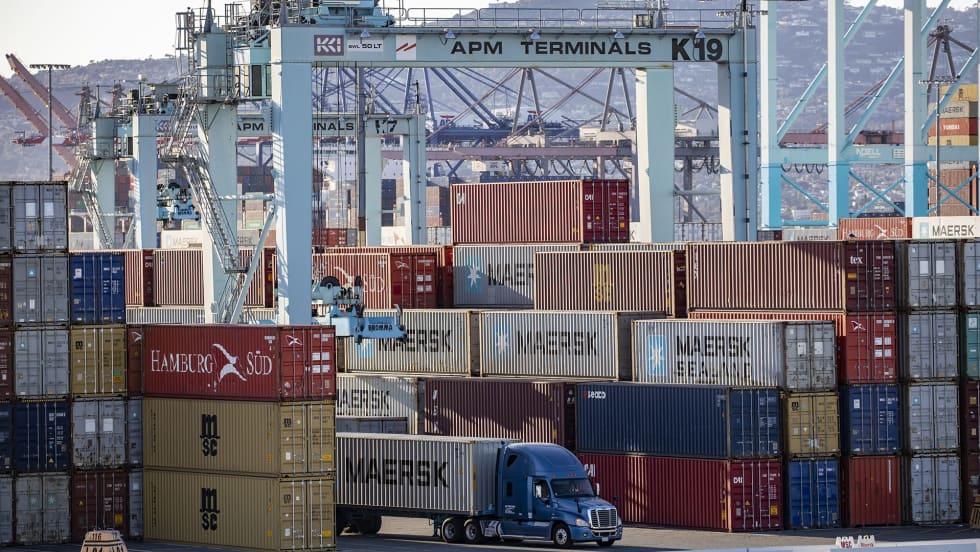
Import Cargo Volume to See Year-Over-Year Gain Again in June, Then Remain Below 2025 Levels Into Fall
After July, the report predicts a weakening in import volume as consumer uncertainty remains high and the impact of increasing inflation takes its toll.
Read More →
AUCTION OF EQUITY INTEREST IN HEAVY HAUL TRUCKING COMPANY!!
Mark your calendar: June 30, 2026 (10:00 a.m. PDT). MagnaTrans, LLC, a California limited liability company doing business as Magna Transportation Group is going to auction! Bid on a 37.5% ownership interest in this Rancho Cucamonga-based heavy haul and over-dimensional trucking company operating across California, Oregon, and Arizona. The equity interest will be sold to the highest bidder or bidders under Article 9 of the Uniform Commercial Code at 10:00 a.m. PDT.
Read More →
Volvo Trucks Adds Unattended Over-the-Air Software Update Capabilities
The latest evolution of Volvo’s over-the-air update technology allows software updates to run while trucks are parked, helping fleets keep vehicles current without disrupting operations.
Read More →
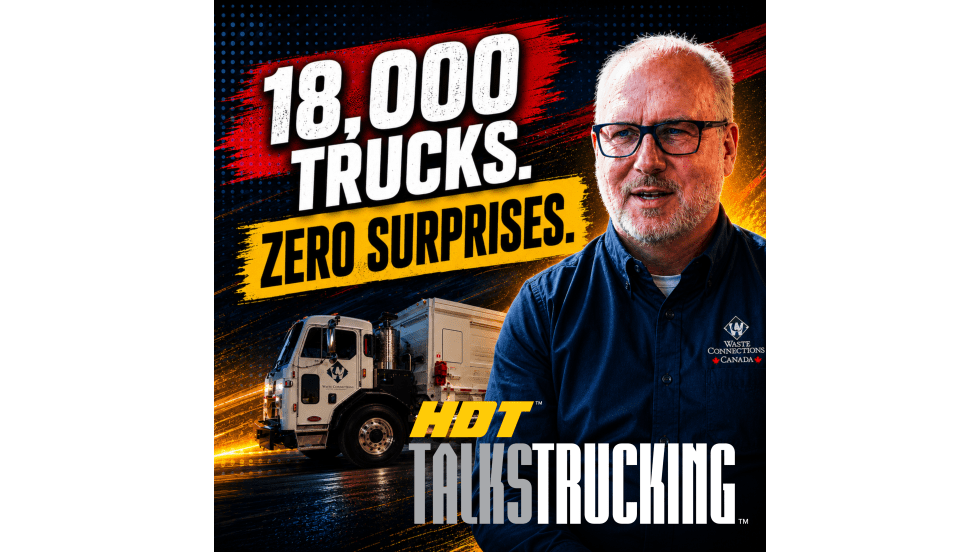
How Waste Connections is Using Data, Telematics, and AI
How do you manage and maintain more than 18,000 connected trucks? Data. Lots of it.
Read More →
Why Fleet Data Matters More Than Ever at Waste Connections [Watch]
Waste Connections' Chuck Palmer explains how telematics, predictive maintenance, safety analytics, and AI help keep vehicles on the road and drivers safe in this episode of HDT Talks Trucking.
Read More →
NMFTA Launches Free, Anonymous Cybersecurity Threat Report Portal
Organizations are encouraged to anonymously report freight fraud, cargo crime, and cyber threats while gaining visibility into incidents reported across the transportation sector.
Read More →
AI Can Optimize a Fleet. Can It Replace Human Judgment?
Fleets fear falling behind if they don’t adopt AI quickly enough. They also fear what happens if the technology makes the wrong decision.
Read More →
Jamie Hagen Gets Real About Running a Small Fleet in an Uncertain Economy
Small fleet owner Jamie Hagen says new legal risks, volatile fuel prices, and a changing freight market are forcing small carriers to rethink how they operate — and what they can afford.
Read More →
Jamie Hagen Gets Real About Freight, Fuel Prices, Safety, and Small-Fleet Survival
Running a small trucking fleet right now isn’t easy, especially right now. And Jamie Hagen doesn’t sugarcoat it.
Read More →
Jamie Hagen Gets Real About Freight, Fuel Prices, Safety, and Small-Fleet Survival
Running a small trucking fleet right now isn’t easy, especially right now. And Jamie Hagen doesn’t sugarcoat it.
Read More →